Your First Two Weeks in Germany: Paying for Things Before You Have a Local Account
Moving to a new country like Germany is a whirlwind of emotions – excitement, anticipation, and let's be honest, a fair bit of bureaucratic dread. One of the first, most pressing challenges you'll face in those initial two weeks is simply paying for things before your German bank account is fully set up. This guide is here to walk you through how to manage your finances smoothly, ensuring you don't get caught out, and introducing you to the invaluable services that can make this transition a breeze.
Disclosure: This post may contain affiliate links. We may earn a commission at no extra cost to you if you make a purchase through these links. Read full disclosure.
The Initial Financial Shock: Why Germany Isn't Always "Cashless"
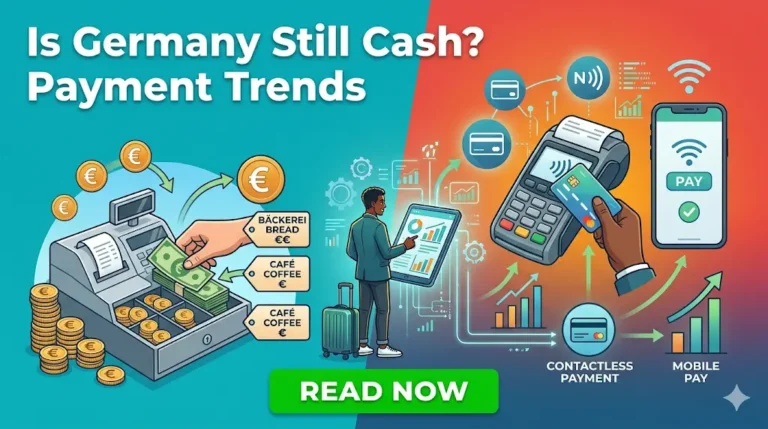
Oh, Germany. The land of efficiency, punctuality, and… surprisingly, a strong preference for cash. Many expats arrive here expecting to tap their card for everything, only to find themselves awkwardly fumbling for euros at the bakery, the local Späti (late-night shop), or even some smaller restaurants. This isn't London or New York, where cards rule supreme. While things are slowly changing, especially in bigger cities and with more international chains, relying solely on your foreign card or digital payments can leave you stranded.
Understanding Germany's Payment Landscape
It's a common misconception that Germany is fully embracing the digital payment revolution. While larger supermarkets like Edeka or Rewe, and most major department stores, certainly accept card payments – often EC-Karte (Girocard) being the preferred local method, followed by Visa and Mastercard – you'll quickly discover a different story in many other places. Small independent shops, charming little cafés, local weekly markets, and even some Ärzte (doctors) often operate on a cash-only basis. Imagine trying to pay for your first crucial trip to the Apotheke with a foreign credit card only to be met with a shake of the head and a firm "Nur Bargeld, bitte!" (Cash only, please!). It's a rite of passage, really, but one you'd rather avoid when you're feeling stressed and just want your paracetamol.
This cultural quirk means you absolutely cannot ignore the need for physical cash in your first days. It's not about being backwards; it's just how things are often done here, deeply rooted in a cautious approach to personal data and a long-standing trust in tangible currency. Therefore, planning how you'll access cash from day one is paramount. You don't want to be caught off guard when you desperately need to pay for your Anmeldung (address registration) appointment at the Bürgeramt or a late-night kebab after a long day of unpacking.
The Dreaded Foreign Transaction Fees
Beyond the cash preference, another significant hurdle for newcomers is the dreaded foreign transaction fee. Every time you use your non-German debit or credit card, your home bank often charges a percentage for currency conversion and a transaction fee. These seemingly small amounts add up shockingly fast. Think about it: a coffee here, a grocery run there, that urgent train ticket – before you know it, you've spent a significant chunk of your initial budget just on fees.
For example, a typical foreign transaction fee might be 2-3% of the purchase amount, plus a flat fee for ATM withdrawals. If you're withdrawing €200 from an ATM every few days and making several card purchases, that €2-€6 per transaction quickly becomes €20, €30, or even more over two weeks. This is where services like Wise become an absolute game-changer. They offer a transparent, low-cost way to convert your money at the real exchange rate, saving you a small fortune compared to traditional banks. By anticipating these fees, you can consciously choose payment methods that keep more money in your pocket, making your initial German experience less financially taxing. This foresight is crucial when you're trying to stretch every euro in those expensive first few weeks.
Your Wallet's Lifelines: Using Your Home Country Cards in Germany
Okay, so we know cash is king in many situations, but what about when you can use your cards? Your existing debit and credit cards from your home country will be your primary tools before you get a German bank account set up. However, not all cards are created equal in Germany, and understanding their nuances is key to avoiding frustration and unexpected charges.
Credit Cards: Visa and Mastercard are Your Best Bet
When it comes to credit cards, Visa and Mastercard are widely accepted at most larger establishments across Germany, including supermarkets, department stores, hotels, and many chain restaurants. You'll often see their logos prominently displayed at the checkout. While American Express is also accepted in some places, it's far less common, especially outside of major international hotels or high-end stores in cities like Berlin or Munich. Always have a Visa or Mastercard handy if you plan to use a credit card.
However, even with these widely accepted cards, be prepared for some minor inconveniences. Some smaller shops might impose a minimum purchase amount for credit card transactions (e.g., €10-€20), or they might only accept local EC-Karte payments. The key is to always ask "Kann ich mit Karte zahlen?" (Can I pay with card?) or simply "Karte?" if you're feeling brave and a bit lazy. It's a good habit to develop early on. Remember, while convenient for larger purchases, those foreign transaction fees we just talked about still apply. This is where Wise's debit card really shines, letting you spend in euros directly without those hidden fees, acting like a local card even before you have a German bank account.
Debit Cards: EC-Karte (Girocard) Dominance and International Cards
The German banking system has a unique preference for the EC-Karte, now officially known as the Girocard. This is the standard debit card issued by German banks, and it's incredibly prevalent. Many smaller businesses that accept card payments will only accept Girocard, not international debit or credit cards. This can be a real shocker for expats. You might confidently pull out your Visa debit card at a local Bäcker (bakery) and be told, "Nein, nur EC-Karte."
Your international debit card, even if it's a Visa or Mastercard debit, functions more like a credit card in Germany in terms of acceptance. While it's generally accepted in places that take Visa/Mastercard credit cards, it might not work where only Girocard is accepted. This is a crucial distinction. For instance, if you're trying to pay for something with your Canadian Visa debit card, it's treated differently from a German Girocard by many merchants. Again, transaction fees will almost certainly apply with your foreign debit card. This is where the Wise debit card becomes an absolute lifesaver. It functions much more like a local card, allowing you to seamlessly spend pre-converted euros with minimal fuss. Setting up your finances with a service like Wise early on will truly prevent headaches and unnecessary expenses.
Getting Your Hands on Cash: ATMs and Exchange Options
Since cash is still a big deal in Germany, you'll need a reliable way to get it. Knowing where to find an ATM and how to minimize costs is crucial in your first two weeks. You can't just rely on tapping your phone everywhere you go.
Finding ATMs and Avoiding Fees
When you need cash, an ATM is your go-to. Most major German banks like Sparkasse, Deutsche Bank, Commerzbank, and Volksbank Raiffeisenbank have ATMs everywhere. You'll find them at bank branches, in shopping centers, and often in smaller towns. Here’s the critical part: try to use ATMs associated with major banks rather than standalone, non-bank ATMs you might find in convenience stores or tourist areas. These independent ATMs often charge exorbitant fees on top of whatever your home bank charges.
When using a foreign card, you'll often be asked if you want to be charged in euros or your home currency. Always choose to be charged in euros (EUR)! If you choose your home currency, you're opting for dynamic currency conversion (DCC), where the ATM operator (not your bank) sets the exchange rate, and it's almost always a terrible rate, significantly worse than your bank's or the real market rate. This is a classic expat trap, costing people unnecessary money. Keep an eye out for any prompts that sound like "conversion" or "guaranteed rate" and decline them. Your best bet for low-fee withdrawals is often using a debit card from a service like Wise, which allows you to hold and withdraw euros directly, cutting out those conversion fees altogether. They typically offer a certain amount of fee-free withdrawals per month, which can be a huge relief in those initial weeks.
Emergency Cash Exchange: When All Else Fails
While ATMs are generally the most cost-effective way to get cash, there might be rare instances where you need to exchange physical currency. Perhaps your card is lost, blocked, or not working. In such emergencies, you can visit currency exchange offices (Wechselstuben), often found at airports, train stations, or in major tourist areas. Banks used to offer currency exchange more readily, but it's becoming less common for non-customers, and they often have very restrictive hours.
Be warned: currency exchange offices usually offer terrible exchange rates and high service charges. They are designed for convenience, not savings. Think of them as a last resort. For example, exchanging $100 might net you €85 at a Wechselstube when the market rate would give you €92, a significant loss. This is why having multiple payment strategies, especially a reliable international money card like Wise, is so important. You never want to be in a situation where you're forced to use a Wechselstube because you have no other options. Always prioritize direct euro withdrawals from a bank ATM using a card that offers good exchange rates and low fees.
The Smart Way to Manage Your Money from Day One: Enter Wise
Okay, let's talk about the real game-changer for new expats: Wise. Formerly known as TransferWise, this service has revolutionized how international transfers and spending work, making it incredibly simple and cost-effective to manage your money across borders. For your first two weeks in Germany, or even your first few months, it’s practically indispensable.
Setting Up Your Wise Account and Debit Card
Getting started with Wise is surprisingly straightforward, especially compared to some of Germany's local bureaucracy. You can sign up for an account online from your home country, often before you even step foot in Germany. The process usually involves verifying your identity with a photo ID and potentially a proof of address. Once verified, you can open a multi-currency account, which allows you to hold balances in various currencies, including euros.
The real magic happens when you order their debit Mastercard. This card is linked directly to your Wise account and allows you to spend in euros at the real mid-market exchange rate. You simply transfer money from your home bank account to your Wise account, convert it to euros within the app (usually with a tiny, transparent fee), and then you're ready to spend. This means no more sneaky foreign transaction fees from your home bank when you buy groceries or that all-important Döner. The card arrives in the mail, usually within a week or two, making it perfect for your pre-arrival setup. It’s like having a local German debit card before you've even had your Anmeldung.
Benefits of Using Wise for Expats
The benefits for expats in Germany are numerous and significant. First and foremost, you get the real exchange rate. This isn't some inflated "tourist rate" or a rate with a hidden markup; it's the rate you see on Google. Wise makes their money from a small, upfront, transparent fee, which is almost always much lower than traditional bank fees. This saves you a substantial amount, especially on larger transfers or frequent small purchases.
Secondly, the Wise card allows you to spend like a local. You hold euros in your account, so when you use the card, it's just like a German debit card transaction. This eliminates those annoying foreign transaction fees from your home bank and helps with acceptance at places that take Mastercard. Many German businesses are more familiar with a Mastercard debit card than, say, a random bank's card from outside the EU. You can also withdraw cash from ATMs in Germany with minimal or no fees, depending on their tiered system, usually a generous amount of fee-free withdrawals per month.
Furthermore, Wise offers local bank details for several currencies, including EUR. This means you can even receive payments in euros into your Wise account as if it were a German bank account, which is incredibly useful for freelancers or if someone needs to pay you directly. This bridging functionality is fantastic while you're in the process of setting up an actual German bank account. It can literally tide you over for your first few rent payments or salary advances if your employer is flexible. When you're ready to apply for a German bank account, having proof of these initial Wise transactions can also sometimes help demonstrate financial activity. It's truly a powerful tool for anyone just starting their journey in Germany.
Navigating Daily Expenses: Essential Payments Before Your German Bank Account
Life doesn't stop just because your bank account is pending. You'll have immediate needs for housing, food, and getting around. Understanding how to manage these critical expenses without a local German account is vital.
Paying for Initial Accommodation
Finding and paying for your initial accommodation is usually one of the biggest financial outlays when you first arrive. Whether it's a short-term Airbnb, a serviced apartment, or your first longer-term rental, you need a strategy. For short-term options, most online platforms like Airbnb, Booking.com, or even specialized expat rental sites will accept international credit cards (Visa/Mastercard) or PayPal. These are generally reliable methods, but remember those foreign transaction fees.
For your first actual rental apartment, it gets a bit trickier. Landlords in Germany usually expect the first month's rent and the security deposit (Kaution) to be paid via bank transfer (Überweisung). This can be a huge hurdle if you don't have a German bank account yet. Some landlords might be understanding if you explain your situation and allow you to pay the first month's rent and deposit in cash upon arrival, but this is rare and might raise red flags if you're not careful. A safer bet is to use a service like Wise. You can transfer the euros directly from your Wise multi-currency account to the landlord's German bank account using their local EUR bank details (IBAN). This makes the payment appear as a local transfer, which is exactly what German landlords expect, and it saves you immense hassle compared to trying to send a large sum via an international wire transfer from your home bank, which can be slow and expensive. When you're looking for your first place, especially for long-term options, it’s always good to be upfront about your financial situation and how you plan to pay while you await your local bank account. You might also find some helpful information in our guide on How to Pay Rent and Bills in Germany: Banking Tips for Expats.
| Payment Method | Best For | Typical Fees (Approx.) | Pros | Cons |
|---|---|---|---|---|
| Wise Debit Card | Daily spending, ATM withdrawals, online payments, large transfers | Low, transparent conversion fee (e.g., 0.5-1.5%) + small ATM fees after free limit | Real exchange rate, multi-currency, functions like a local card, often fee-free ATM withdrawals up to a limit | Requires setup time, not universally accepted where only EC-Karte is taken |
| Home Country Credit Card (Visa/MC) | Online purchases, larger stores, hotels, emergencies | 2-3% foreign transaction fee per purchase | Wide acceptance in large establishments, emergency backup | High fees, not accepted in many small shops, cash advances are very expensive |
| Home Country Debit Card | ATM withdrawals (EUR), online purchases | 2-3% foreign transaction fee per purchase + ATM withdrawal fee | Easy ATM access, direct from your account | High fees, not accepted in many small shops, often treated as credit card by merchants |
| Cash | Small shops, bakeries, markets, some doctors, Anmeldung fees | None (once you have it) | Universally accepted by small businesses, no transaction fees | Need to physically carry it, risk of loss, requires ATM withdrawal first |
| PayPal | Online shopping, some service payments | Conversion fees may apply if currency differs | Convenient for online | Less common for physical purchases, conversion fees if not paying in EUR |
Groceries and Transportation
These are your bread-and-butter expenses (pun intended!). For groceries, as mentioned, major supermarkets like Edeka, Rewe, Lidl, and Aldi generally accept international Visa and Mastercard debit and credit cards. However, having some cash on hand is always a good idea for smaller grocery trips, a quick snack at a kiosk, or if you happen upon a local market stand that only takes euros. Again, the Wise debit card is a winner here, allowing you to spend directly in euros without worrying about those insidious conversion fees adding up on every single loaf of bread and bottle of milk.
Transportation is another daily necessity. Public transport tickets (for U-Bahn, S-Bahn, trams, and buses) can usually be purchased at ticket machines. Many of these machines accept international credit cards, but some might only take EC-Karte or cash. It's prudent to keep some coins and small bills for this purpose. If you're planning on longer train journeys with Deutsche Bahn, you can book tickets online, which accepts international credit cards, or use the DB Navigator app. For city-specific transport apps, payment options vary, but often include PayPal or linking an international credit card. Consider getting a short-term public transport pass, like a weekly or monthly pass if available, as a cost-effective way to get around once you're sure about your local routes. You can learn more about Public Transport Tickets and Passes: Navigating German Transit Systems. Being financially agile here means being ready for both digital and cash-based systems, ensuring you're never left stranded.
Planning for the Long Haul: Setting Up Your German Financial Base
Once you've survived your first two weeks, it's time to solidify your financial foundation in Germany. This involves getting a local bank account and understanding the bigger picture of German finance.
Opening Your German Bank Account
This is a critical step that unlocks so much of daily life in Germany. Most traditional banks like Sparkasse, Deutsche Bank, Commerzbank, or Postbank, as well as challenger banks popular with expats like N26 or Comdirect, will require your Anmeldung (address registration) and your Steuer-ID (tax ID number) to open a full current account (Girokonto). Some online banks, particularly N26, might allow you to open an account with just your passport and visa/residence permit, providing your Anmeldung is imminent, but having it completed is always best.
The process typically involves an online application or an in-person appointment, followed by a video identification process (e.g., Postident, Videoident) or visiting a Post office with your ID. It can take anywhere from a few days to a couple of weeks to get your account fully active and your EC-Karte (Girocard) delivered. Patience is a virtue here! While you wait, remember that your Wise account can continue to bridge the gap, allowing you to receive your first salary payments (if your employer agrees) and manage your daily spending. Our guide on Opening a Bank Account in Germany: Step-by-Step for Newcomers provides a detailed walkthrough to help you navigate this process.
Understanding German Banking Culture and Fees
German banking has its quirks. Direct debits (Lastschrifteinzug) are common for recurring bills like rent, utilities, and internet. Once your German bank account is set up, you'll provide your IBAN (International Bank Account Number) for these services. While many basic current accounts offer free banking, some may have monthly fees, especially if you don't meet certain criteria like a minimum monthly deposit. Always read the terms and conditions carefully.
Overdraft facilities (Dispokredit) are available but can be very expensive, so it's wise to avoid them. Also, Germans are very particular about their SCHUFA score, which is a credit rating that impacts everything from renting an apartment to getting a mobile phone contract. Managing your money responsibly from day one contributes to building a positive financial history. Learning about the Understanding the German Banking System: IBAN, SEPA, and More will help you get acquainted with how things truly work here. By understanding these nuances, you'll not only save money but also integrate more smoothly into the German financial landscape.
In summary, those first two weeks are a sprint, financially speaking. While you navigate the bureaucracy of getting your German bank account, services like Wise are not just convenient; they are essential tools that save you money and stress. Get your Wise account set up, order that debit card, carry some cash, and you'll be well-prepared to tackle all the amazing (and occasionally cash-only) experiences Germany has to offer.
Disclaimer
Please note that while this guide provides comprehensive information based on current knowledge and typical expat experiences in Germany, financial regulations and service offerings can change. Always verify the latest terms and conditions directly with financial institutions and service providers. This content is for informational purposes only and does not constitute financial or legal advice.