Wise Transfer Limits for Germany: Caps, Thresholds, and Verification Tiers
Navigating international money transfers can feel like deciphering a secret code, especially when you're an expat trying to manage your finances in Germany. The sheer amount of paperwork, the often-opaque fee structures of traditional banks, and the confusing array of limits can make sending or receiving money across borders a real headache. This guide is here to demystify Wise's transfer limits for Germany, breaking down caps, thresholds, and the verification steps you’ll need to understand to move your money smoothly and without unnecessary stress.
Disclosure: This post may contain affiliate links. We may earn a commission at no extra cost to you if you make a purchase through these links. Read full disclosure.
Understanding Why Transfer Limits Exist
You might wonder why there are even limits on how much money you can send. It’s not just to make your life harder, I promise! These limits are actually a crucial part of the global financial system, designed to protect everyone involved – including you. Think of them as a necessary safeguard, even if they sometimes feel like bureaucratic hurdles.
Regulatory Framework in Germany
Germany, like all other developed nations, has strict financial regulations in place. These aren't just for show; they're designed to combat serious issues like money laundering (AML) and terrorist financing (CTF). Every financial institution operating here, including services like Wise, must adhere to these rules. This means they need to know who their customers are (Know Your Customer, or KYC) and monitor transactions for suspicious activity. If you've ever felt like you're constantly proving your identity, it's usually because of these stringent requirements. For instance, if you're sending or receiving significant amounts, the system needs to understand the source of the funds and the purpose of the transfer. This due diligence can feel intrusive, but it's what keeps the financial landscape secure and compliant. It’s a bit like getting your local German bank account set up; they need to see all your documents, from your passport to your Anmeldung, to ensure everything is above board.
Common Reasons for Limits and Delays
Beyond the broad regulatory umbrella, specific limits and delays often pop up due for a few practical reasons. For one, different currencies and countries have varying risk profiles. Sending money from Germany to a lower-risk EU country might have higher limits than sending it to a region considered higher risk, simply because the compliance requirements are different. Also, the recipient's bank in Germany or abroad might have its own receiving limits. You can send €50,000 from Wise, but if the receiving bank only accepts €20,000 per transaction, you'll encounter a problem. Furthermore, if your transfer activity suddenly changes – say, you usually send small amounts to your family but then initiate a very large transfer – this might trigger an automatic review. These reviews, while inconvenient, are there to protect you from fraud. It’s a good idea to remember that when you're dealing with money matters in Germany, transparency and a clear paper trail are always your best friends.
Wise's General Transfer Limits for Germany
Now, let's get into the nitty-gritty of Wise's limits. One of the best things about Wise is its commitment to transparency, which extends to its transfer limits. However, it's crucial to understand that these aren't static figures engraved in stone; they can vary based on the currency, the payment method you choose, and your verification status. Always double-check the latest limits directly on the Wise website or in their app before initiating a large transfer, as they are subject to change due to evolving regulations.
Limits for Sending Money to Germany
If you're sending money to Germany, perhaps from your home country, the limits often depend on the currency you're sending from and the method you're using. For example, sending from USD to EUR, Wise typically allows transfers up to $1,000,000 USD per transaction via wire transfer for personal accounts, and often even more for businesses, though daily or weekly limits might apply depending on your bank and verification level. If you're using a debit or credit card, these limits are generally much lower – often in the range of a few thousand dollars or euros – due to the higher risk associated with card payments. For transfers within the Single Euro Payments Area (SEPA), which includes Germany, you'll often find very generous limits, sometimes up to 1.2 million EUR per transfer. This is fantastic news for expats moving significant savings or making large purchases, as it means Wise can often handle amounts that would make traditional banks charge an arm and a leg in fees. Remember, for these larger amounts, robust identity verification will be required, which we’ll discuss shortly.
Limits for Sending Money from Germany
Conversely, if you're sending money from Germany to another country, the limits will again depend on the destination currency and the payment method you choose. For example, sending EUR to a different currency like USD or GBP often has very high limits for bank transfers, usually in the realm of €1,200,000 EUR per transfer for personal customers, sometimes even more for businesses, again provided you're fully verified. Debit and credit card payments from Germany will have lower limits, generally capping out around €5,000-€10,000 EUR. The good thing about using a service like Wise for your international transfers is that they are explicit about these limits upfront. You won't be caught off guard by hidden fees or sudden caps once you've already started the process. This transparency is a lifesaver when you're already juggling so much as an expat. When you're dealing with the everyday finances in Germany, having clear information like this at your fingertips with a tool like Wise truly simplifies things. For more general guidance, you might find our article on Transferring Money Internationally: Cheapest Ways to Send Money Abroad helpful, as it delves into various options available.
| Payment Method (Sending from EUR) | Typical Single Transaction Limit (Personal Account) | Key Notes |
|---|---|---|
| Bank Transfer (SEPA) | Up to €1,200,000 EUR (or equivalent in recipient currency) | Highest limits, requires full verification. Might have daily/weekly limits depending on your bank. |
| Debit Card | €5,000 – €10,000 EUR | Faster, but lower limits due to higher fraud risk. |
| Credit Card | €5,000 – €10,000 EUR | Similar to debit cards, some banks might charge cash advance fees. |
| SOFORT | Up to €25,000 EUR | Popular in Germany, fast processing, but lower limit than direct bank transfers. |
| Apple Pay/Google Pay | Typically €2,000 – €3,000 EUR | Convenient for smaller, quick transfers. |
Note: These are illustrative limits and can change. Always check the Wise app or website for the most current information for your specific transfer.
Verification Tiers and Their Impact
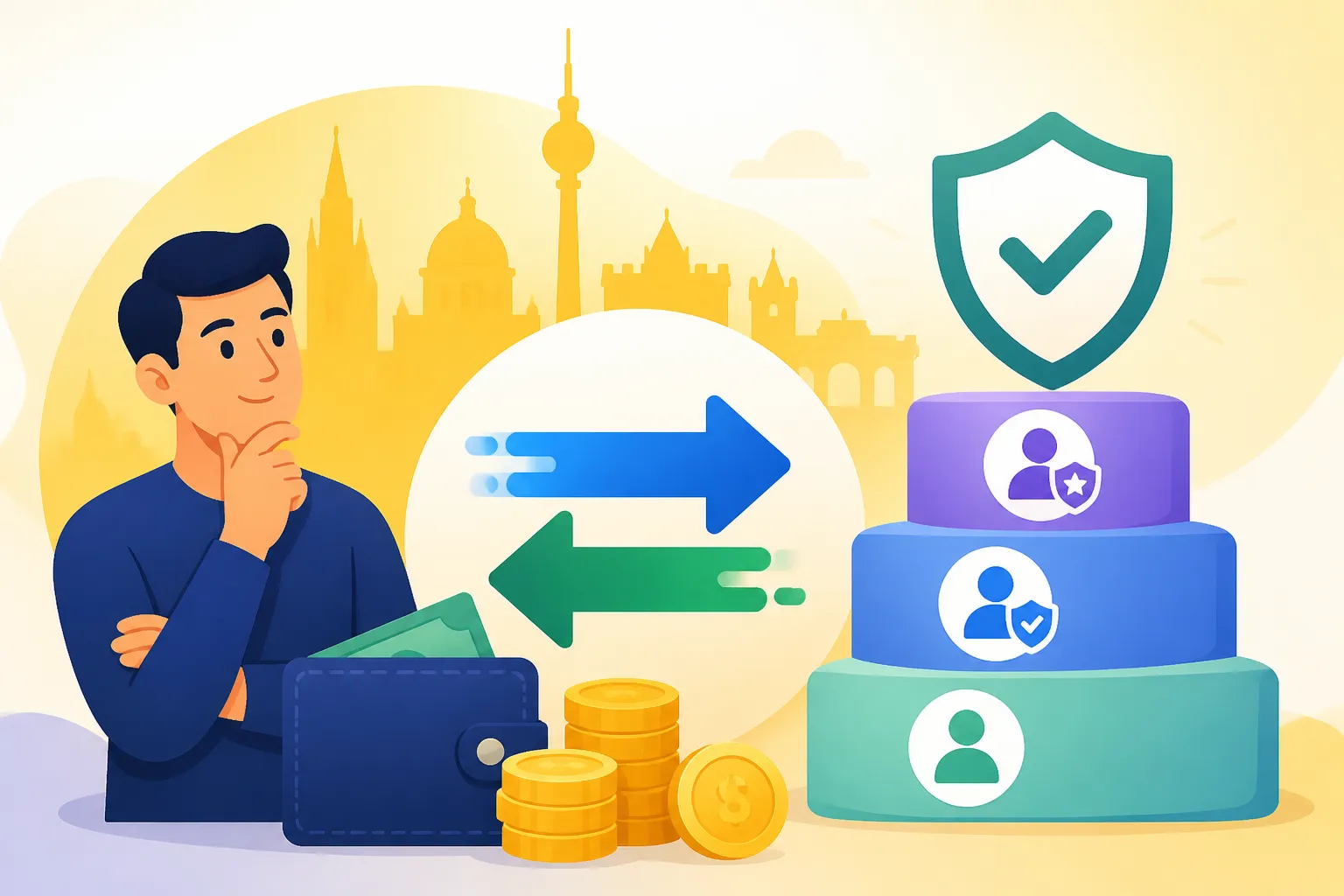
Ah, verification! If you’ve ever opened a bank account or even just signed up for a mobile phone contract in Germany, you know the drill: paperwork, identity checks, and often a bit of waiting. Wise is no different, and for good reason. Their verification process is essential for compliance with those stringent anti-money laundering regulations we talked about. Your verification tier directly impacts how much money you can send.
Standard Verification (Tier 1)
When you first sign up for Wise, you'll go through a basic verification process. This usually involves providing your full legal name, date of birth, address, and a valid government-issued ID (like your German residence permit or passport). For smaller, routine transfers, this level of verification, often referred to as Tier 1, is perfectly adequate. For many expats just sending a few hundred or a couple of thousand euros to family or for online purchases, this will be sufficient. However, if you hit a certain cumulative amount – often around the €15,000 EUR mark in a specific period (e.g., 60 days) – or if you try to send a single transfer above a certain threshold, Wise will likely ask for more information. It's not a punitive measure; it's simply their system flagging that your activity has crossed into a zone requiring a deeper look, just like when your German bank asks you to confirm a large online payment.
Enhanced Verification (Tier 2/Higher)
For those larger transfers, or once you reach certain cumulative thresholds, Wise will request enhanced verification, moving you into what could be considered Tier 2 or higher. This often means providing additional documents beyond your basic ID. They might ask for proof of address (like a utility bill or your Anmeldung confirmation), proof of income (such as a payslip, a bank statement showing consistent income, or your German tax assessment), or even details about the source of funds for a particularly large transfer. This could be a property sale document or an inheritance. This level of scrutiny is standard for financial institutions globally, and it’s especially strict in Germany. It’s designed to ensure that the funds are legitimate and that you are who you say you are. While it might seem like a bit of a hassle to dig up those old utility bills or payslips, going through this process smoothly enables you to take full advantage of Wise's higher transfer limits. It means you can send that deposit for a new apartment or transfer your entire moving fund without hitting a roadblock. Understanding your German Tax Classes (Steuerklassen) Explained or how to read your Understanding Your German Payslip: Gross vs Net Salary Explained can actually help here, as these documents are often needed for proof of income.
Business Accounts vs. Personal Accounts
The verification process, and indeed the transfer limits, also differ significantly between personal and business Wise accounts. For businesses, the verification is naturally more comprehensive, requiring documentation like company registration details, proof of business address, and identification for key stakeholders or directors. However, once verified, business accounts typically enjoy much higher, or even effectively unlimited, transfer limits compared to personal accounts. This makes Wise an indispensable tool for entrepreneurs and small business owners in Germany dealing with international invoices or supplier payments. If you're a freelancer, setting up a proper business account with Wise can be a game-changer for managing your international transactions, saving you significant time and money compared to traditional banks. This is particularly relevant if you're exploring Freelancing in Germany: Freiberufler vs Gewerbe, as your business structure will impact your financial dealings.
Navigating High-Value Transfers with Wise
Making a large international transfer can be nerve-wracking enough without worrying about whether it will go through smoothly. Fortunately, Wise is designed to handle substantial amounts, and with a little preparation, you can ensure your high-value transfers from or to Germany are as stress-free as possible. This is where Wise truly shines as your hero, providing the infrastructure for these large movements of capital.
Planning for Large Transfers
When you're planning to move a significant sum of money, proactive planning is key. First and foremost, verify your Wise account to the highest possible tier well in advance. Don't wait until you're trying to send €50,000 to suddenly realize you need to upload a bank statement from three months ago. Get all your ducks in a row – proof of address, income, and perhaps even a brief explanation for the large transfer – before you even initiate the transaction. Next, confirm the exact transfer limits for your specific currency pair and chosen payment method directly on the Wise platform. These details can sometimes change, so a quick check saves future headaches. You should also consider the timing. Large transfers initiated during banking hours on weekdays generally process faster than those started late on a Friday evening, as they align with traditional banking operations that Wise relies on. Additionally, communicate with your recipient. Ensure they know the transfer is coming and confirm their bank details. A single typo in an IBAN or SWIFT code can cause significant delays. If you're bringing funds to Germany to set up your new life, for instance, for an apartment deposit, Wise is often the most cost-effective and transparent way to do it. You can learn more about managing your initial finances in our Opening a Bank Account in Germany: Step-by-Step for Newcomers guide.
Tips for Smooth High-Value Transactions
To ensure your high-value transactions go off without a hitch using Wise, here are a few seasoned expat tips. Firstly, always fund your Wise transfer using a bank account that is in your own name and that has been previously linked and verified with Wise. Attempting to use a third-party account can lead to immediate delays or even cancellation. Secondly, have all supporting documentation ready. If Wise asks for a "source of funds" document – like a property sale agreement, a recent bank statement showing the large sum, or an inheritance letter – provide it promptly and clearly. The faster you respond with the requested information, the quicker your transfer will proceed. Thirdly, use the Wise app or website's transfer tracker religiously. This real-time update tool is incredibly helpful for monitoring the progress of your money. If you see it stuck on "review" for longer than expected, it’s a sign to reach out to Wise support with your reference number. Finally, be mindful of currency fluctuations if your transfer is particularly time-sensitive. While Wise offers excellent exchange rates, locking in a rate for a large sum requires completing the funding quickly. Wise stands out as the core solution here because it's built to handle these scenarios with far greater efficiency and lower cost than most traditional banks, making it your ideal partner for big financial moves in Germany.
Troubleshooting Transfer Issues and Delays
Even with the best planning and a reliable service like Wise, sometimes things don't go exactly to plan. A delayed transfer can be incredibly frustrating, especially when you're counting on that money for something important, like a rental deposit or a family emergency. As an expat, I know the feeling of helplessness when you're dealing with financial admin in a foreign country. But don't worry, there are usually clear reasons and straightforward solutions.
Common Causes of Delays
When a Wise transfer experiences delays, it's often due to one of a few common culprits. The most frequent reason is usually related to verification. If your account hasn't been fully verified for the amount you're trying to send, or if your activity has triggered an additional security check, Wise might temporarily hold the funds until they receive the necessary documents from you. Another common issue is incorrect recipient details. A wrong digit in the IBAN, a misspelled name, or an incorrect SWIFT/BIC code can send your money into banking limbo, requiring manual intervention to track it down. This is where the initial double-checking is so important. Bank processing times can also play a role, especially for bank holidays in Germany or the recipient country. Even if Wise processes the transfer quickly, the receiving bank might have its own internal cut-off times or weekend policies. Finally, source of funds checks for very large or unusual transfers can sometimes cause delays. If Wise needs to confirm where the money came from, and you haven't provided documentation proactively, it will naturally take longer. Keep in mind that a lot of these checks are preventative measures against Financial Scams to Watch Out for in Germany: How to Protect Your Money, so they're ultimately for your benefit.
How to Contact Wise Support
If you've checked all the common causes and your transfer is still stuck, it's time to reach out to Wise's excellent customer support. Wise makes it relatively easy to get help. The best way to start is usually through their in-app chat function or by logging into your account on their website and navigating to the 'Help' section. There, you'll often find a direct link to contact support for a specific transfer. When you contact them, always have your transfer reference number ready – this is crucial for them to quickly locate your transaction. Clearly explain the issue, the amount, and when you initiated the transfer. Wise's support team is generally quite responsive and can provide specific reasons for delays and guide you through any additional verification steps needed. They often have multilingual support, which is a huge relief when you're trying to explain complex financial issues. Remember, the more information you can provide upfront, the faster they can help you resolve the issue. Leveraging Wise as your primary tool for international money transfers gives you access to this dedicated support, making the whole process much smoother than navigating the often labyrinthine customer service of traditional banks.
Disclaimer
Please note that this guide provides general information based on typical Wise transfer policies and German financial regulations. Specific transfer limits, verification requirements, and processing times can change. It is always advisable to consult the official Wise website or app for the most up-to-date information before initiating any transfer. This content is for informational purposes only and does not constitute financial or legal advice.