Insurance for Americans Moving to Germany: Why US Plans Stop at the Border
Picture this: you’ve finally landed in Germany, full of excitement, maybe a little jet-lagged. Then, reality hits – that trusty health insurance card from back home, the one that covered you through thick and thin in the US, is essentially a useless piece of plastic here. This isn't just an inconvenience; it's a massive, confusing hurdle. This comprehensive guide is specifically for my fellow Americans, delving into why US health insurance plans don't work in Germany, exploring your crucial options, and shining a light on robust, expat-friendly solutions like SafetyWing to ensure you're covered from day one.
Disclosure: This post may contain affiliate links. We may earn a commission at no extra cost to you if you make a purchase through these links. Read full disclosure.
The Harsh Reality: Why Your American Health Insurance Fails You in Germany
Moving to a new country like Germany is exhilarating, but it also means untangling a web of administrative differences, and perhaps none is more critical than health insurance. Many Americans, myself included, arrive with the assumption that their existing US-based health insurance will somehow "stretch" to cover them abroad. Unfortunately, that's almost never the case. Your carefully chosen PPO, HMO, or even that comprehensive travel rider from a US provider, simply doesn't cut it here.
The disappointment hits hard when you realize your plan, which might have seemed so robust in North America, is practically worthless for routine or even emergency care in Europe. It's not just about finding a doctor; it's about legal compliance, immediate access, and understanding a completely different system. This disconnect can leave you feeling exposed and, frankly, quite vulnerable during a time when you need to focus on settling in.
Geographical Limitations and Coverage Gaps
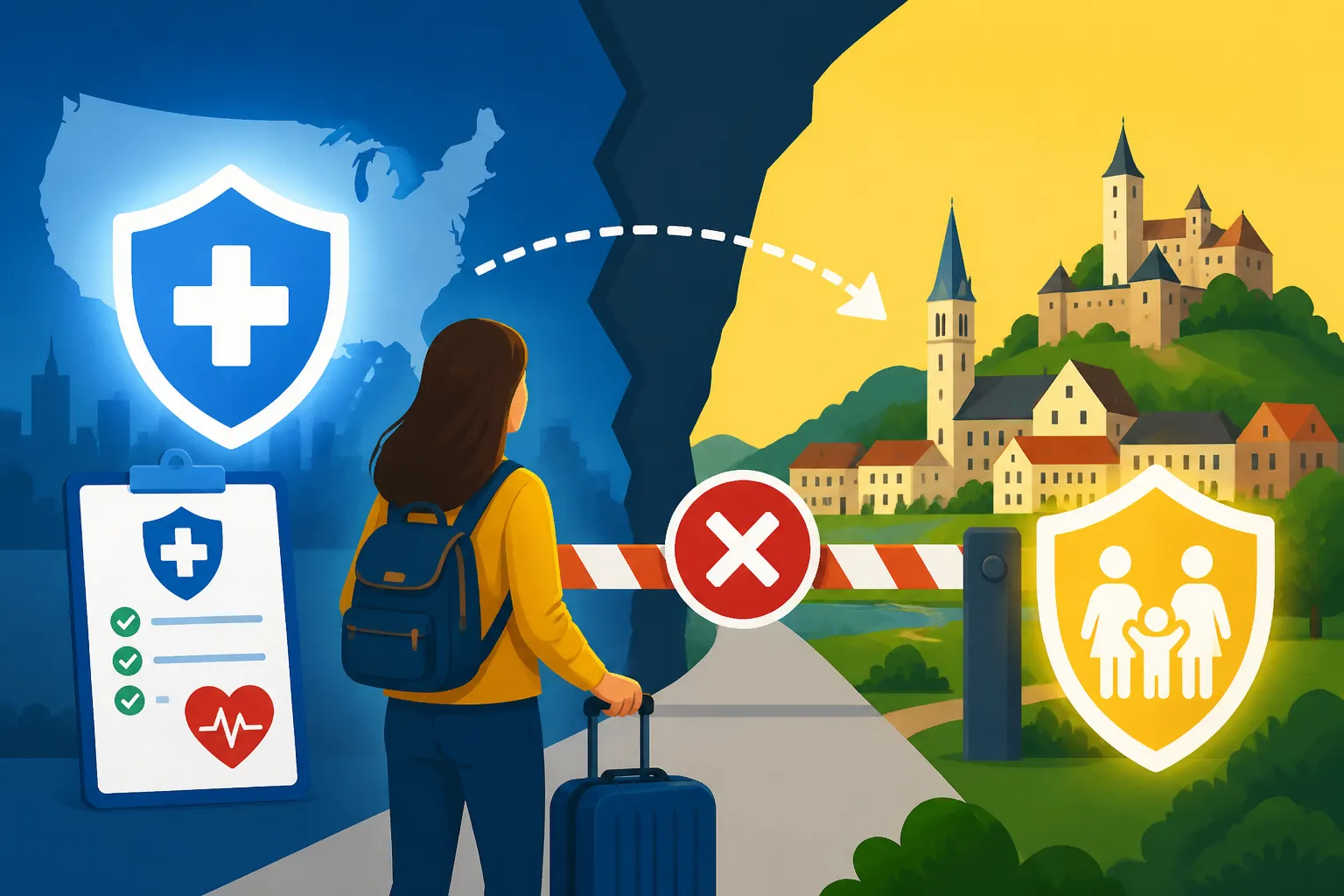
The primary reason your US health insurance won't work in Germany boils down to geographical limitations. Most American insurance policies are designed to operate exclusively within the United States and its territories. They are built around US healthcare networks, billing codes, and regulatory frameworks. Once you cross international borders, you typically step outside their operational sphere.
Imagine this scenario: you've just arrived in Berlin, feeling a bit under the weather. That nagging cough you picked up on the flight turns into a full-blown fever. You remember your US insurance card, pull it out, and then stare blankly at it, wondering how on earth to use it at a local German Arztpraxis (doctor's office) or a hospital. The doctor will likely look at it, politely hand it back, and ask for proof of German-compliant health insurance. They won't recognize your US provider, they won't be in their network, and they certainly won't bill them directly. You'd be expected to pay out of pocket, upfront, and then try to seek reimbursement from your US provider – a process that's often lengthy, complicated, and frequently denied or only partially covered, especially for non-emergency care. It’s a frustrating and often costly lesson that many expats learn the hard way.
German Legal Requirements for Health Insurance
Beyond the practical limitations, there's a crucial legal aspect: health insurance is mandatory in Germany. It’s not an optional perk or a "good idea"; it’s a non-negotiable requirement for anyone residing here, whether you’re working, studying, or even just visiting long-term. This isn't just about covering your medical bills; it's fundamental to your legal right to stay in the country. The German Residence Act (Aufenthaltsgesetz) explicitly states that all residents must have adequate health insurance coverage.
When you apply for a visa at a German consulate or embassy, or later when you apply for your residence permit (Aufenthaltstitel) at the local Ausländerbehörde (Foreigners' Office), they will scrutinize your health insurance documentation very closely. If your plan doesn't meet their stringent requirements – which often include specific coverage amounts and the guarantee that it's valid within Germany for the entire duration of your stay – your application will be rejected. This is where many newcomers face their first bureaucratic wall, realizing that their American plans, even those with "international travel" clauses, often fall short of Germany's specific demands for long-term residency. You need a plan that German authorities recognize as legitimate and comprehensive, and this is where temporary, flexible solutions like SafetyWing can be incredibly helpful for bridging that initial gap.
Understanding Germany's Dual Health Insurance System
Germany boasts one of the most robust and comprehensive healthcare systems in the world, but it operates on a dual public-private model that can be incredibly confusing for newcomers, especially those from a primarily private-driven system like the US. It's not a matter of simply picking "good" or "better" insurance; it's about understanding which system you're eligible for and which best suits your needs as an expat.
The German system ensures that everyone is covered, but the pathways to that coverage differ significantly based on your employment status, income, and age. Navigating these options is one of the most important tasks you'll undertake when you move here. Forget what you know about deductibles and co-pays back home for a moment; the rules of the game are different, and understanding them is key to not only staying healthy but also legally compliant.
Public Health Insurance (GKV): The Default for Most
For the vast majority of residents in Germany, public health insurance, known as gesetzliche Krankenversicherung (GKV), is the standard. This system is truly the backbone of German healthcare and covers about 90% of the population. If you’re an employee earning below a certain income threshold (which changes annually, currently around €69,300 per year gross), you will automatically be enrolled in the GKV system. Students also generally fall into this category, as do job seekers and those receiving certain benefits.
The beauty of the GKV system is its comprehensive nature. It covers doctor’s visits, hospital stays, prescription medications, many therapies, and even preventative care. A major perk, especially for families, is that it extends coverage to your non-working spouse and children for free, under the family insurance (Familienversicherung) scheme. Contributions are based on a percentage of your gross income, split between you and your employer, ensuring that everyone contributes fairly. Popular GKV providers include giants like AOK, Techniker Krankenkasse (TK), and Barmer, all offering similar core benefits but differentiating with various bonus programs and customer service. For a deeper dive into the specifics, check out our guide on Public Health Insurance (gesetzliche Krankenkasse): What It Covers and Costs.
Private Health Insurance (PKV): When It's Your Only Option or a Choice
While public health insurance is the default, there are specific groups for whom private health insurance, or private Krankenversicherung (PKV), is either mandatory or a desirable alternative. This includes high-earning employees (above the annual income threshold), most freelancers and self-employed individuals, civil servants, and some students. Unlike GKV, PKV premiums are not income-dependent; instead, they are calculated based on your age, health status upon application, and the level of coverage you choose. This means younger, healthier individuals often find PKV to be cheaper than GKV, at least initially.
PKV plans typically offer benefits such as faster access to specialist appointments, treatment by chief physicians (Chefarztbehandlung), and private or semi-private hospital rooms. However, there are significant differences to consider. Each family member must have their own private policy, meaning there’s no free family coverage. If you develop chronic conditions, your premiums can increase over time, unlike the GKV where age or health status doesn't directly impact your monthly contribution once you're in. This choice is especially critical for self-employed individuals and freelancers, who often find themselves automatically directed towards PKV when they start their journey. Understanding these nuances is vital, and you can learn more by reading our detailed article on Private Health Insurance in Germany: Benefits, Costs, and Eligibility.
The Gap for New Arrivals: Tourist vs. Expat Insurance
Here’s where it gets tricky for us Americans fresh off the plane. You’re not yet an employee, perhaps not yet a registered student, and definitely not a long-term resident. You’re in a transitional phase, and during this period, you need health insurance that is both comprehensive enough to be legally accepted for your visa and flexible enough for your uncertain initial months. This is a common pain point for many expats. Standard tourist travel insurance, while great for a two-week holiday, often doesn't meet the rigorous requirements for a long-term German visa, especially for things like job seeker visas or freelance visas. They often have low coverage limits, don't cover pre-existing conditions, or simply aren't recognized by the German authorities as sufficient proof of coverage for residency.
This is precisely the gap that dedicated expat insurance solutions aim to fill. They offer the necessary coverage and meet the visa requirements for longer stays, acting as a crucial bridge until you’re firmly integrated into either the public or private German system. Think of them as a compliant, flexible placeholder that buys you time and peace of mind during those hectic first few months. One such solution that has gained popularity for its flexibility and expat-focused benefits is SafetyWing. It's specifically designed for digital nomads and global citizens, offering a convenient, pay-as-you-go model that starts when you need it and can be canceled once you secure long-term German coverage.
Navigating Initial Health Insurance as an American Newcomer
As an American moving to Germany, the initial phase of securing proper health insurance can feel like an impossible riddle. You're trying to prove you're covered for your visa, but many traditional German insurance providers won't even talk to you without a registered address (Anmeldung) or a confirmed job contract. It’s a frustrating Catch-22 that leaves many new arrivals feeling utterly overwhelmed and stuck in a bureaucratic loop.
This stage is often where expats realize that the standard German insurance landscape isn't built for their specific transitional needs. What you need is an agile, visa-compliant solution that understands the unique challenges of international relocation. It's about finding that sweet spot between satisfying German legal requirements and getting practical, reliable coverage without the usual red tape.
The Chicken-and-Egg Problem: Visa, Anmeldung, and Insurance
This is perhaps the biggest headache for most newcomers: the interconnected and sequential nature of German bureaucracy. To get a German bank account, you usually need an address registration (Anmeldung). To get a standard German health insurance plan (public or private), you often need a German bank account, an Anmeldung, and sometimes even a job contract. But to get your visa or residence permit in the first place, you absolutely need proof of valid health insurance! It’s enough to make your head spin.
Many American expats find themselves stuck here, unable to secure the "right" long-term German insurance because they haven’t completed the initial steps of settling in. They're left needing a solution that is immediately available, accepted by the German immigration authorities for visa purposes, and can cover them from the moment they land until they can seamlessly transition into a permanent German plan. This is where a truly flexible, expat-focused insurance like SafetyWing comes into its own. It’s specifically designed to cut through this bureaucratic deadlock, offering coverage that is widely accepted for various German visas, including those for job seekers or self-employed individuals, even before you have your Anmeldung or a solid job offer. This provides a much-needed breathing room and allows you to progress with other essential tasks like How to Get Health Insurance in Germany: Step-by-Step for Newcomers without the immediate pressure of long-term German insurance commitments.
Short-Term Solutions that Meet Visa Requirements
Given the "chicken-and-egg" dilemma, finding a short-term health insurance solution that is explicitly recognized by German immigration authorities is paramount. This isn't just any travel insurance. Many consulates and the Ausländerbehörde will require proof of "incoming" or "expat" insurance that specifically states coverage for medical treatment in Germany for the duration of your initial visa. These plans usually need to meet certain minimum coverage amounts (often €30,000 or more) and clearly demonstrate that they will cover emergency medical treatment, hospitalization, and often repatriation.
For many Americans, particularly those coming on a job seeker visa, a freelance visa, or a student visa that allows for a job search period, options like SafetyWing are a perfect fit. They understand these specific requirements and offer policies that are designed to be accepted. SafetyWing, for instance, provides comprehensive medical coverage tailored for global citizens, making it an ideal choice for the early stages of your move. Their policies are often available for immediate purchase online, providing instant proof of insurance that you can then submit with your visa application. This bypasses the need for an Anmeldung or a German bank account, removing a significant barrier to your move and allowing you to start your German life with confidence.
Transitioning to Long-Term German Coverage
Once you’ve successfully landed, completed your Anmeldung, possibly secured a job, and opened a German bank account, it’s time to think about transitioning from your temporary solution to a long-term German health insurance plan. This is a natural progression and a sign that you’re truly settling in. Depending on your income and employment status, you'll either move into the public (GKV) system or the private (PKV) system.
If you become an employee under the income threshold, your employer will typically help you with the enrollment process into a public Krankenkasse. If you remain self-employed or move into a high-earning position, you'll need to explore private options. The good news is that by this point, you have all the necessary German paperwork in place, making the process much smoother. When it comes to making this switch, the flexibility of short-term expat insurance like SafetyWing is a huge advantage. Because it's a monthly, subscription-based service, you can simply cancel it once your permanent German insurance policy is active, without complex long-term commitments or penalties. This seamless transition ensures you're never without coverage, a critical aspect of staying legally compliant and healthy. If you're thinking about moving from one German insurer to another, our article on Changing Health Insurance Providers: Can and Should You Switch? offers valuable insights.
Key Considerations for Americans Choosing Health Insurance
Choosing the right health insurance in Germany, whether it's a temporary solution like SafetyWing or a permanent German plan, involves much more than just comparing monthly premiums. As an American, you'll have specific concerns and preferences that are shaped by your experiences with the US healthcare system. Understanding these key considerations will empower you to make an informed decision that truly meets your needs and provides peace of mind.
It’s about striking a balance between cost, coverage, convenience, and ensuring that the plan genuinely works for you in an unfamiliar environment. Don't rush this decision; it's one of the most impactful financial and health-related choices you'll make when moving to Germany.
Pre-Existing Conditions and Coverage Limitations
This is often a major concern for Americans, given how health insurance and pre-existing conditions are handled in the US. In Germany's public health insurance (GKV) system, pre-existing conditions are generally not an issue; everyone is accepted, and all medically necessary treatments are covered regardless of prior health. However, if you are moving into the private health insurance (PKV) system, the situation is different. Private insurers can and will assess your health history. They might apply surcharges for pre-existing conditions, exclude certain conditions from coverage, or even deny your application altogether if your health risks are deemed too high. This makes full and honest disclosure absolutely essential during the application process.
For temporary expat insurance, policies vary. Some, like SafetyWing, offer coverage for acute onset of pre-existing conditions, which is crucial for emergencies that arise from a condition you already have. However, they typically don't cover routine care or planned treatment for pre-existing conditions. Always read the fine print carefully, especially if you have chronic illnesses or ongoing medical needs. Being transparent about your health status from the outset will save you potential headaches and financial strain down the line.
English-Speaking Support and International Networks
Let's be honest, dealing with medical issues in a foreign language is incredibly stressful. Even if you're diligently learning German, trying to explain complex symptoms or understand medical terminology can be daunting. Therefore, having access to English-speaking support, both from your insurance provider and within the healthcare network, is a huge benefit for American expats. Some German public and private insurers offer English customer service lines, but it's not always guaranteed.
This is an area where expat-focused providers truly shine. For instance, SafetyWing prides itself on having a globally minded support team that understands the challenges expats face, and their network often points to international or English-speaking providers. When you’re feeling ill, the ability to simply call a helpline and speak to someone in your native language can be an immense relief. Furthermore, finding English-speaking doctors in Germany is a common necessity for many, and having an insurance provider that can assist with this can greatly simplify your life. You can also explore resources specifically for Finding English-Speaking Doctors: Resources and Tips for Expats to build your local support network.
Costs: Premiums, Deductibles, and Co-Payments
Understanding the financial aspects of German health insurance requires a paradigm shift from the American model. In the public GKV system, your monthly premiums are a percentage of your gross income, capped at a certain amount. There are very few co-payments (Zuzahlungen), typically a small fee for prescriptions or certain hospital stays, and no deductibles in the American sense. It's a very predictable system where costs are transparent.
Private PKV, on the other hand, can involve deductibles (Selbstbehalt), where you pay a certain amount out of pocket before your insurance kicks in. Premiums are fixed based on your plan and health, not income. Expat insurance, like SafetyWing, typically has a clear deductible and a maximum out-of-pocket, which is more familiar to Americans. When comparing options, look beyond just the monthly premium. Consider the full scope of potential costs, including any deductibles, co-pays, and whether family members are covered under a single plan or need separate policies. For a detailed breakdown of what to expect, especially regarding monthly payments, our guide on Health Insurance Premiums: How Much You’ll Pay Per Month and Why is a must-read.
Why SafetyWing is a Lifeline for Americans Moving to Germany
When you're embarking on the huge adventure of moving to Germany, the last thing you need is a rigid, complicated health insurance plan that adds to your stress. This is precisely why flexible, expat-friendly solutions are so invaluable, especially during those initial months of uncertainty. Among these, SafetyWing stands out as a particularly robust option that directly addresses many of the unique pain points faced by American newcomers.
It's not just another travel insurance; it's a product built with the global citizen in mind, offering a level of understanding and adaptability that traditional insurance often lacks. For many, SafetyWing isn't just a policy; it's a practical lifeline that simplifies one of the most complex aspects of international relocation.
Flexibility and Global Coverage for the Undecided Expat
One of the greatest benefits of SafetyWing for Americans moving to Germany is its incredible flexibility. Unlike traditional annual policies, SafetyWing operates on a monthly subscription model. You can start your coverage on any date you choose, and it automatically renews every 28 days until you decide to cancel it. This "cancel anytime" feature is an absolute game-changer for new expats whose plans might still be fluid. Maybe you’re on a job seeker visa and aren't sure how long it will take to find employment, or perhaps you’re a freelancer still navigating the registration process. With SafetyWing, you don't get locked into long-term contracts.
Beyond its flexibility in duration, SafetyWing offers genuine global coverage. This means it covers you not only in Germany but also in virtually any other country you might visit (with a few exceptions, like North Korea). What's more, it even includes brief return trips to your home country (the US) as part of the coverage, allowing you to visit family without losing your safety net. This kind of broad, adaptable coverage is crucial for someone establishing a new life abroad, providing a consistent safety net no matter where your journey takes you. It truly understands the nomadic lifestyle that many Americans embrace when moving to Germany.
Visa Compliance and Ease of Application
For many American expats, obtaining a German visa is the first major hurdle, and proving sufficient health insurance is a cornerstone of that application. This is where SafetyWing truly excels. It is widely recognized and accepted by German consulates and the Ausländerbehörde for various visa types, particularly the German Job Seeker Visa and the Freelance Visa. Unlike generic travel insurance, SafetyWing is specifically structured to meet the requirements for these longer-term stays, providing the necessary documentation to prove adequate coverage.
The application process itself is incredibly straightforward, which is a breath of fresh air amidst Germany’s often-complex bureaucracy. You can apply entirely online in a matter of minutes, receiving instant confirmation of your policy. This immediate proof of insurance is invaluable when you're racing against deadlines for visa appointments. SafetyWing eliminates the need for extensive paperwork, German bank accounts, or local addresses just to get your initial coverage sorted, allowing you to focus on more pressing matters like apartment hunting or learning German. This ease of application, coupled with its visa compliance, makes SafetyWing an ideal temporary solution for securing your Medical Insurance for German Visa Applications: What You Need.
Designed by Nomads, for Expats: Understanding Your Needs
What truly sets SafetyWing apart is its origin: it was created by a team of digital nomads and remote workers who deeply understand the unique challenges faced by global citizens and expats. This isn't just a generic insurance product; it's specifically tailored to the lifestyle and needs of someone moving to and living abroad. They recognize the importance of things like coverage for travel interruptions, emergency dental care, and even certain preventative screenings that traditional travel policies might overlook but are vital for someone living long-term in a foreign country.
SafetyWing's approach extends to its customer service and user experience, aiming to be as intuitive and supportive as possible. They focus on clear communication in English and provide resources that resonate with the expat community. This "by us, for us" philosophy means that the coverage is not only practical but also empathetically designed. For an American expat trying to find their footing in Germany, having an insurance provider that genuinely understands their journey and provides a reliable, flexible, and accessible safety net is not just convenient—it's empowering.
Insurance Comparison for Americans in Germany
Let's break down the typical options you, as an American, might consider when moving to Germany. This table provides a simplified comparison to help you understand where each type of insurance fits into your journey.
| Feature / Criteria | US Domestic Plan (with "travel rider") | SafetyWing (Nomad Insurance) | German Public Health Insurance (GKV) | German Private Health Insurance (PKV) |
|---|---|---|---|---|
| Acceptance in Germany | Generally NO (reimbursement only) | YES (for many visas & emergency) | YES (mandatory for most) | YES (for eligible individuals) |
| Visa Compliance | Often NOT sufficient for long-term | YES (esp. job seeker, freelance) | YES (once enrolled) | YES (once enrolled) |
| Coverage Scope | Limited international (emergency only) | Comprehensive travel medical (expat) | Very Comprehensive (all needs) | Very Comprehensive (chosen benefits) |
| Eligibility for Americans | Already have in US | All global citizens, easy application | Employees below income cap, students, some freelancers | High-earners, most freelancers, students (specific cases) |
| Pre-existing Conditions | Varies by US plan; usually limited abroad | Acute onset covered; not chronic care | Fully covered | Can incur surcharges or exclusions |
| Cost Structure | US premiums + rider fee | Monthly subscription, flexible | Income-based percentage | Age & health-based, fixed premiums |
| Family Coverage | Varies | Individual policies | Non-working spouse & kids FREE | Each family member needs own policy |
| Flexibility / Cancellation | Annual contracts, complex | Monthly, cancel anytime | Hard to leave once in | Long-term contracts, complex to switch |
| English Support | Varies by US provider | Strong | Varies, improving | Varies, some international providers |
| Ideal Use Case | Short vacations, not relocation | Initial months, visa period, freelancers | Long-term employment, families | High-income earners, specific needs, self-employed |
Disclaimer
Please remember that I am an expat blogger and not a licensed financial or insurance advisor. The information provided in this guide is based on my personal experiences, research, and general understanding of German health insurance laws. While I strive to keep everything accurate and up-to-date, regulations can change, and individual situations vary greatly. Always consult with a qualified insurance broker or legal professional in Germany to get advice tailored to your specific circumstances before making any final decisions. This content is for informational purposes only.