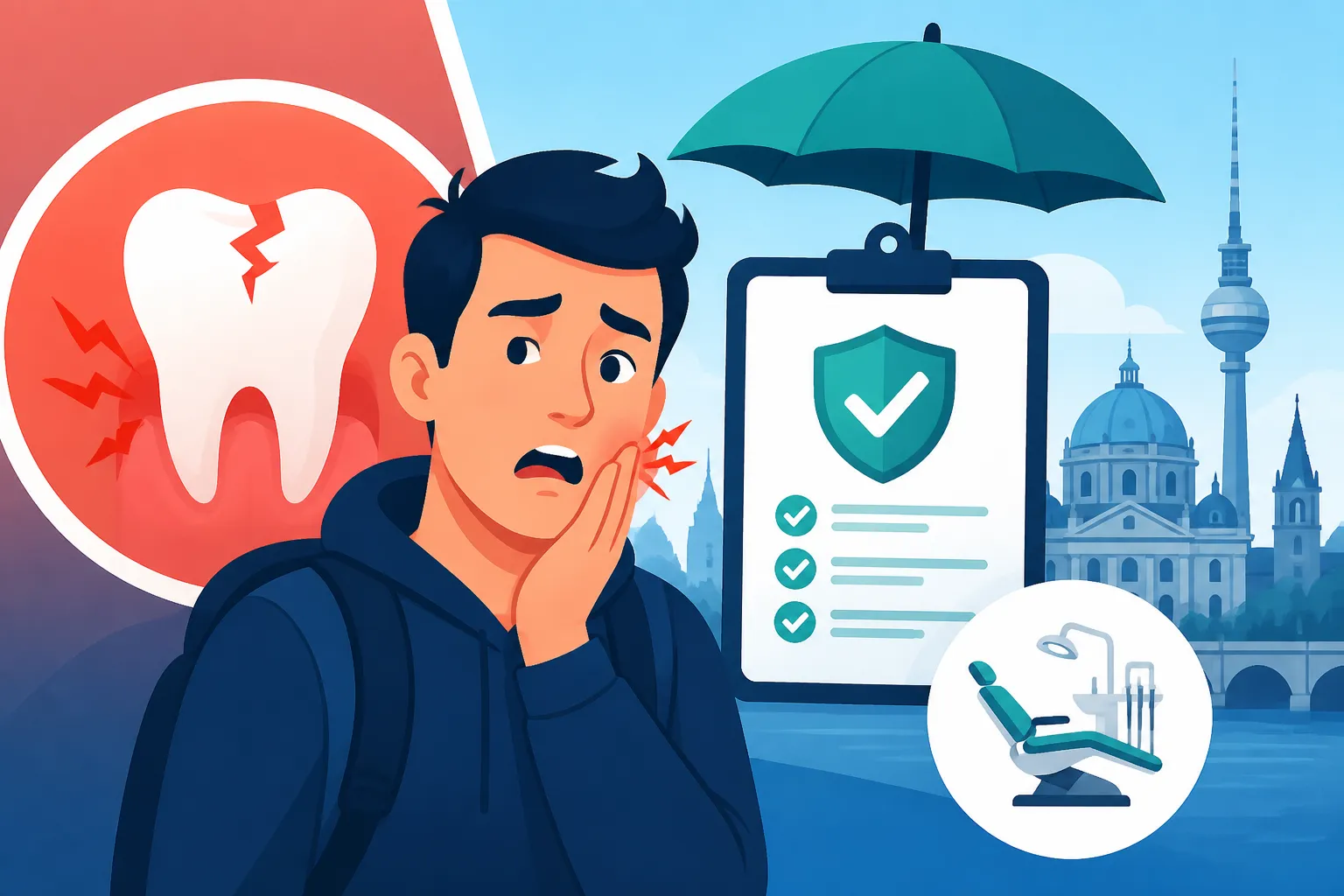
Dental Emergencies in Germany on a Travel Policy: What Actually Gets Paid
There are few things as unsettling as a sudden, throbbing toothache when you’re far from home, exploring the charming streets of Berlin or hiking through Bavaria. You're trying to enjoy your trip to Germany, and suddenly, a dental emergency hits you like a freight train, leaving you wondering if your travel insurance will actually cover anything beyond a shrug and a hefty bill. This guide will walk you through the realistic expectations of using your travel medical insurance for dental emergencies in Germany, focusing on what typically gets covered and how best to navigate this painful situation with a provider like SafetyWing.
Disclosure: This post may contain affiliate links. We may earn a commission at no extra cost to you if you make a purchase through these links. Read full disclosure.
The Harsh Reality of Dental Emergencies in Germany as a Tourist
Let's be brutally honest: nobody plans for a dental emergency on vacation. You're envisioning picturesque castles, hearty German food, and perhaps a refreshing beer or two, not a root canal. But teeth have a cruel way of acting up at the most inconvenient times, and when you’re abroad, the stakes feel even higher.
Why Dental Pain Is Different Abroad
When a tooth starts hurting, it's not just physical pain; it's a cascade of anxieties, especially in a foreign country. Suddenly, you're faced with a language barrier, an unfamiliar medical system, and the terrifying prospect of exorbitant out-of-pocket costs. Back home, you know your dentist, you understand your insurance, and you can communicate your pain clearly. Here in Germany, it's a whole different ballgame. The fear of getting ripped off or not receiving adequate care due to misunderstandings adds an extra layer of stress that can easily ruin your entire trip.
Imagine trying to explain a sharp, shooting pain behind your molar to a receptionist who only speaks German, while you're holding your jaw in agony. Even finding an English-speaking dentist in an emergency can feel like an impossible task, often requiring frantic online searches or desperate calls to hotel staff. This isn't just about finding a quick fix; it's about navigating an entire system under duress, and that can be incredibly isolating for any tourist or new expat.
The German Dental System for Tourists
For residents in Germany, dental care can already be a complex beast. Most people with public health insurance (gesetzliche Krankenkasse) often opt for additional private dental insurance (Zahnzusatzversicherung) to cover anything beyond basic fillings, cleanings, and standard procedures, because the public system tends to be quite minimalist for anything complex. As a tourist, you don't have the luxury of public insurance. You are, in essence, a private patient from the get-go.
This means you’ll be paying the full cost of your treatment upfront, usually based on the Gebührenordnung für Zahnärzte (GOZ), a standardized fee schedule for private dental services. While the quality of dental care in Germany is exceptionally high – you'll find modern clinics with state-of-the-art equipment and highly trained professionals – the price tag for private treatment can be a significant shock if you're not prepared. Expect appointments to be punctual, thorough, and professional, but also expect precision reflected in the bill. This is why having a reliable travel medical policy becomes absolutely crucial; it’s your only financial buffer against these unexpected costs.
Understanding Your Travel Insurance and Dental Coverage
So, you have travel insurance – great! But what does it actually cover when it comes to your pearly whites? This is where the devil is truly in the details. Many travelers assume "medical emergency" covers everything, but dental provisions often have specific, and sometimes frustratingly narrow, definitions.
Emergency vs. Routine: What Travel Insurance Actually Covers
The absolute most critical distinction to grasp is the difference between a genuine dental emergency and routine dental care. Travel insurance policies, like those offered by SafetyWing, are designed to cover unforeseen, acute medical and dental situations that arise during your trip. They are not meant to replace your regular dental insurance back home, nor are they a substitute for a long-term dental plan like the aforementioned Zahnzusatzversicherung that residents might have.
A true dental emergency, in the eyes of an insurance provider, typically means:
- Acute pain that requires immediate professional intervention to alleviate.
- An infection (like an abscess) that poses a health risk if left untreated.
- Damage to sound, natural teeth due to an accident (e.g., you fall and chip a tooth, or get hit in the mouth). This often includes things like fractured teeth, dislodged teeth, or lacerations to gums.
What isn't usually covered?
- Routine check-ups, cleanings, or scaling.
- Cosmetic procedures (whitening, veneers).
- Any pre-existing dental conditions that flare up, unless your specific policy has an add-on for pre-existing conditions (and even then, dental might be an exclusion).
- Replacement of lost or broken dentures, crowns, or bridges (unless the loss/breakage was due to a new accident during your trip and required immediate emergency attention).
- Long-term restorative work like root canals, crowns, or implants that aren't immediately necessary to stop pain or infection and can reasonably wait until you return home.
It’s about immediate relief and stabilizing the situation, not comprehensive treatment. Think of it as patching up the problem so you can get home, rather than completely fixing it forever.
The "Acute Pain Relief" Clause and Its Limitations
This is the big one, and it's where many travelers find themselves caught off guard. Most travel medical policies, including those like SafetyWing, often state that they cover "emergency dental treatment necessary to alleviate acute pain." This sounds good, right? And it is, to a point. However, "alleviate acute pain" is a very specific phrase that carries significant limitations.
Let's say you develop a severe toothache due to a deep cavity or a pulpitis. Your insurance will likely cover the initial consultation, an X-ray, and perhaps an emergency filling or even an extraction if it's the most expedient way to stop the pain and prevent further infection. What it probably won't cover is the full, multi-session root canal treatment, followed by a post and core, and then a porcelain crown. The philosophy is often: stop the pain now, get you stable, and let your regular insurance handle the complex, expensive restorative work once you're back in your home country.
For instance, if you chip a tooth eating a particularly tough German pretzel, and it's not causing agonizing pain or exposing the nerve, your travel insurance might deem it non-emergency. If, however, that chip exposes the nerve and causes immediate, severe pain, they might cover a temporary filling to protect the nerve, but not the long-term cosmetic bonding or crown. It’s a pragmatic, rather than comprehensive, approach to dental care while traveling. Always read your policy documents carefully, paying special attention to the dental section, as coverage limits (e.g., maximum reimbursement amounts) for dental emergencies can also be lower than for general medical emergencies.
Navigating a Dental Emergency in Germany with Travel Insurance
Okay, so you've got a dental emergency. The pain is real, and the worry is setting in. Don't panic! Here’s a step-by-step guide to help you through it, maximizing your chances of a smooth experience and successful claim with your travel insurance.
Step-by-Step: What to Do When Dental Pain Strikes
When that agonizing toothache hits, your first instinct might be to rush to the nearest dentist. However, taking a moment to breathe and follow these steps can save you a lot of headache (and wallet-ache) later on.
-
Assess the Situation and Your Pain Level: Is this truly an emergency? Are you in excruciating pain? Is there swelling, bleeding, or has a tooth been knocked out due to trauma? Or is it a dull ache that could wait? Be honest with yourself. Travel insurance is for emergencies, not for that minor sensitivity you've ignored for weeks. For something like sudden, severe toothache, you'll need immediate attention. For milder issues, you might explore options like visiting a German pharmacy for Over-the-Counter Medicine in Germany: What You Can Get Without a Prescription for temporary relief, while still considering contacting your insurer.
-
Contact Your Insurance Provider FIRST: I cannot stress this enough. This is the most crucial step. Before you even Google "English-speaking dentist near me," call your travel insurance provider's 24/7 emergency assistance line. Providers like SafetyWing are specifically designed for travelers, and their support teams are often multilingual and experienced with international medical situations.
- Why call first? They can:
- Confirm your coverage for the specific situation.
- Guide you on what treatments are likely to be covered.
- Recommend approved dentists or clinics in your area that speak English and understand international insurance procedures.
- Potentially pre-approve certain treatments, which can make the payment and reimbursement process much smoother.
- Advise you on the typical billing practices in Germany and what documentation you'll need for your claim.
- Going to a dentist without informing your insurer first can sometimes complicate or even jeopardize your reimbursement, especially if they deem the treatment unnecessary or outside policy terms.
- Why call first? They can:
-
Finding a Dentist in Germany: Once you've spoken to your insurer, they might give you recommendations. If not, or if you need to find someone yourself:
- Online Directories: Websites like Jameda.de or Doctolib.de are popular in Germany for finding doctors and dentists. You can often filter for language (e.g., "Englisch") and specialty ("Zahnarzt").
- Emergency Dental Service (Zahnarzt Notdienst): For evenings, weekends, or public holidays, Germany has an emergency dental service. You can usually find the nearest Notdienst via local hospital websites or by searching "Zahnarzt Notdienst [your city name]". For urgent medical advice that isn't life-threatening, you can also call The 116117 Medical On-Call Service in Germany Explained.
- Hotels/Expat Groups: Ask your hotel reception or join local expat social media groups for recommendations for English-speaking dentists.
- For general information on how to find a local dentist, our guide on Dental Care in Germany: Finding Dentists and Understanding Costs can offer broader context, even if you’re only seeking emergency care.
-
At the Dentist's Office:
- Explain Clearly: Be as clear as possible about your symptoms. If there's a language barrier, use a translation app or ask if they have staff who speak English. Our guide on Common German Medical Terms: A Mini Dictionary for Patients might also be helpful here.
- Discuss Treatment & Cost: Once the dentist has examined you and proposed a treatment plan, ask for a written estimate (Heil- und Kostenplan). Explain you have travel insurance and need to know what they recommend for emergency pain relief versus long-term solutions. Remind them your policy focuses on acute, medically necessary intervention.
- Payment: Be prepared to pay upfront. As a private patient, this is standard. You will then claim reimbursement from your insurer.
The Financial Side: Paying Upfront and Claiming Reimbursement
In Germany, especially when you're seen as a private patient (which you are with travel insurance), you almost always pay for your dental treatment upfront. Dentists don't typically bill foreign travel insurance companies directly. This can be a substantial cost, so make sure you have sufficient funds or a credit card available.
Your dentist will provide you with a detailed invoice, known as a Rechnung. This Rechnung needs to be comprehensive for your insurance claim. It should typically include:
- Your full name and address (or your temporary German address).
- The date of treatment.
- A breakdown of all services provided, using the GOZ (Gebührenordnung für Zahnärzte) codes.
- The cost of each service.
- Any materials used (e.g., specific filling materials).
- The diagnosis.
- The dentist's stamp and signature.
It’s crucial to keep all original receipts, invoices, X-rays, and any medical reports. If you receive a prescription for pain medication, keep that too. These documents are vital for your reimbursement claim. Once you have all the necessary paperwork, you will submit it to your travel insurance provider, like SafetyWing. They will review the claim, cross-reference it with your policy terms, and then reimburse you for the covered expenses, minus any deductible (excess) you might have on your policy. The reimbursement process can take a few weeks, so patience is key. Understanding German Medical Bills: Decoding Private Invoices and Co-Pays can give you more insight into what to expect from the documentation.
Why SafetyWing Stands Out for Digital Nomads and Travelers
When you're out there exploring the world, whether you're a full-time digital nomad or just on an extended trip, you need insurance that understands your unique lifestyle. This is where SafetyWing truly shines. Their Nomad Insurance and other travel medical plans are specifically designed with the global traveler and remote worker in mind, which means they're built to handle the complexities of unexpected emergencies, including those pesky dental issues, no matter where you are – even in Germany.
One of the biggest advantages of SafetyWing is its commitment to global coverage and ease of use for people on the move. They understand that you might not be able to "go home" for every little thing, so their policies generally cover emergency dental treatment necessary to alleviate acute pain, dental injury due to accident, or infection. This aligns perfectly with the "acute pain relief" clause we discussed earlier, providing a vital safety net for genuine emergencies. Imagine the relief of calling their 24/7 emergency support line, knowing that a human will guide you through finding a dentist and understanding what's covered, rather than leaving you floundering in a foreign system.
While SafetyWing isn't a comprehensive long-term dental plan – no travel insurance is – it acts as a robust emergency medical safety net that includes dental. For instance, if you're traveling through Munich and suddenly get a severe tooth infection that requires immediate attention, SafetyWing can cover the emergency intervention to stop the pain and prevent further complications. Their transparent policies and global assistance make them a strong choice for anyone who needs reliable coverage for those unforeseen moments while adventuring in Germany or beyond. You can confidently explore, knowing that major, unexpected health scares, including acute dental pain, are managed. It's truly a policy designed for the freedom of travel, with the practicalities of real-world problems in mind.
| Dental Treatment Type | Typical Travel Insurance Coverage (e.g., SafetyWing) | Notes & Cost Implications in Germany |
|---|---|---|
| Emergency Dental Care | ||
| Acute Pain Relief | Likely Covered (up to policy limit) | Emergency exam, X-ray, temporary filling, or extraction to stop severe pain. |
| Dental Injury (Accident) | Likely Covered (up to policy limit) | Treatment for teeth damaged by an accident (e.g., fall, impact). |
| Acute Infection/Abscess | Likely Covered (up to policy limit) | Drainage, antibiotics, emergency extraction. |
| Non-Emergency/Routine | ||
| Routine Check-up/Cleaning | Unlikely Covered | Expect to pay 100% out-of-pocket. These are preventative, not emergency. |
| Cosmetic Procedures | Unlikely Covered | Whitening, veneers. Not medically necessary. |
| Fillings (non-emergency) | Unlikely Covered (unless acute pain related) | If a cavity is found but not causing severe pain, often excluded. |
| Crowns/Bridges/Implants | Unlikely Covered (unless emergency temporary) | Long-term restorative work typically not covered, only temporary measures for pain. |
| Orthodontics | Unlikely Covered | Braces, aligners. Planned, long-term treatment. |
| Pre-existing Conditions | Unlikely Covered (unless specific add-on) | If your policy doesn't cover pre-existing conditions, a flare-up might not be. |
Conclusion
Facing a dental emergency in a foreign country like Germany is undoubtedly daunting. The unfamiliar medical system, language barriers, and the thought of unexpected costs can quickly turn your dream trip into a nightmare. However, with the right travel medical insurance, such as SafetyWing, you have a crucial safety net that can alleviate much of that stress. While travel policies are specifically designed for emergencies and not routine care, they are an invaluable resource for managing acute pain, infections, or injuries that strike unexpectedly. By understanding your policy's limitations, contacting your insurer first, and knowing what documentation to gather, you can navigate these situations with confidence. Don't let the fear of a dental disaster keep you from exploring; just make sure you're well-prepared with the right coverage before you go!
Disclaimer
Please remember that I am a travel blogger and not a licensed insurance or financial advisor. The information provided here is for general guidance only and reflects common practices in travel insurance and the German healthcare system. Insurance policies can vary significantly. Always read your specific policy documents carefully, understand your coverage, exclusions, and claims process, and contact your insurance provider directly for clarification on your individual plan. For official legal or medical advice, consult qualified professionals.