Reading German Hotel Listings: Room Types, Bed Sizes, and Terms Decoded
Oh, the joys and bewildering complexities of booking a hotel in Germany! You’ve found the perfect little guesthouse in Bavaria or a chic city pad in Berlin, but then you stare at the listing and a whole host of German terms jump out at you, leaving you scratching your head. What's a "Französisches Bett" anyway? And is a "Doppelzimmer" always what you expect? Don't worry, my fellow expat and traveler, you are not alone in this linguistic labyrinth. This guide is here to untangle those German hotel listings, helping you understand room types, bed sizes, and crucial booking terms, so you can confidently find and book your ideal German stay, perhaps even with the user-friendly interface of a platform like Booking.com.
Disclosure: This post may contain affiliate links. We may earn a commission at no extra cost to you if you make a purchase through these links. Read full disclosure.
Decoding German Room Types (Zimmertypen)
When you're browsing hotel options in Germany, the room type is probably one of the first things you'll look for. But German hotels often use terms that don't directly translate to what you might be familiar with. Let's break down the common ones so you know exactly what you're getting.
Standard Room Terminology
These are your basic building blocks, the most common room types you'll encounter, each with its own specific expectations.
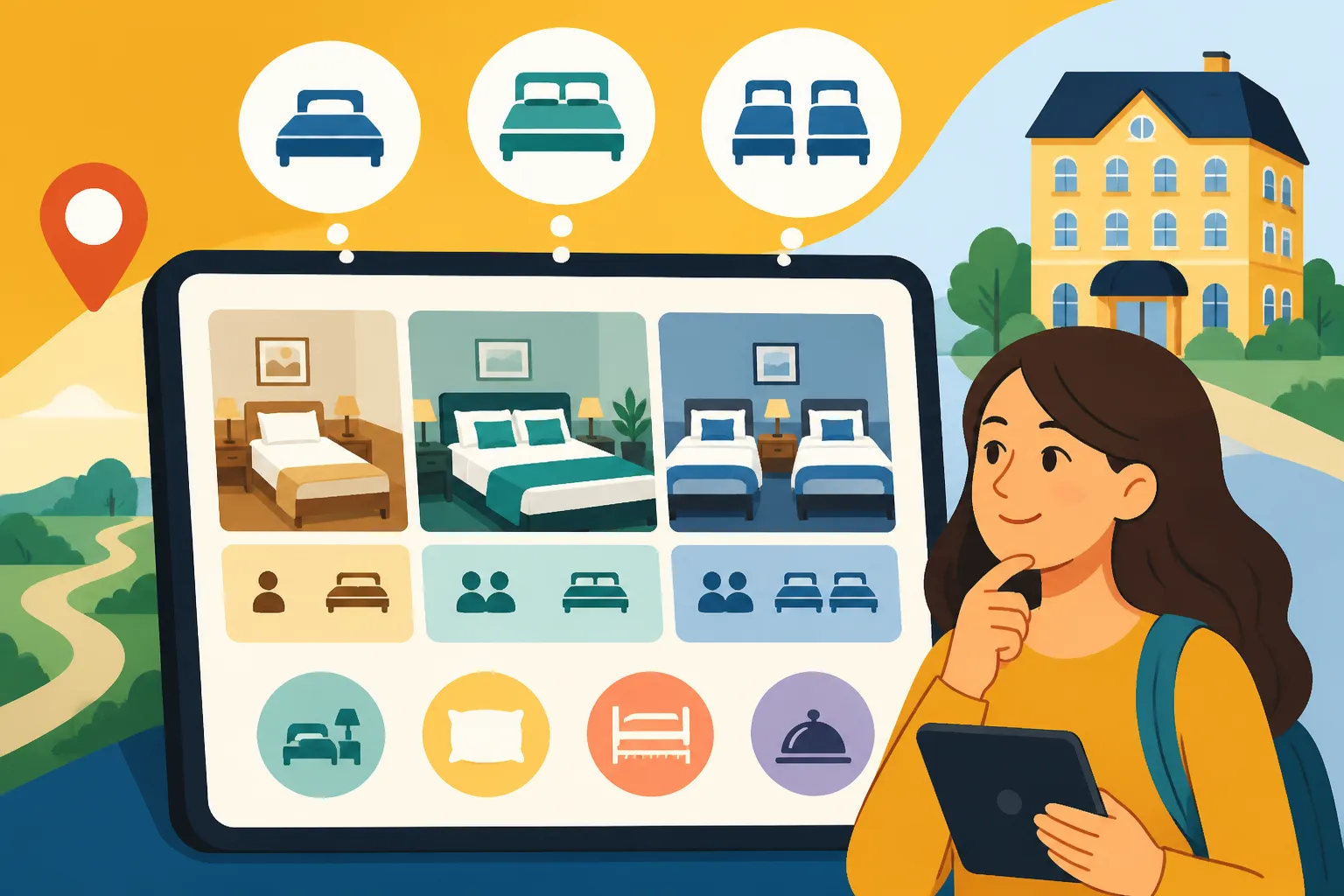
- Einzelzimmer (Single Room): This is pretty straightforward. An Einzelzimmer is designed for one person and will typically come with a single bed. The size of the room itself can vary wildly – from cozy and compact in older, charming city hotels to surprisingly spacious in more modern establishments. Don't expect a lot of extra space, but it should be perfectly comfortable for a solo traveler. If you're traveling solo and want to save some cash, this is usually your most economical option.
- Doppelzimmer (Double Room): Now, this is where it can get a little tricky for non-German speakers. In many countries, a "double room" implies one large bed for two people. In Germany, a Doppelzimmer also means a room for two people, but it often comes with one large bed that has two separate mattresses and two separate duvets. Yes, you read that right – two duvets! This is a classic German sleeping arrangement and one that many expats come to appreciate, as it means no duvet hogging! It's important to remember that while it's a double room for two occupants, the bed itself might feel like two singles pushed together, even if they share a common frame.
- Zweibettzimmer (Twin Room): If the idea of two separate mattresses within one frame isn't quite what you had in mind, or if you're traveling with a friend and prefer truly individual sleeping spaces, then a Zweibettzimmer is what you should look for. This room type explicitly means there will be two entirely separate beds, each with its own frame, mattress, and duvet, within the same room. It’s perfect for friends or colleagues traveling together who don't want to share a bed.
- Dreibettzimmer / Vierbettzimmer (Triple/Quadruple Room): These rooms are designed for larger groups or families. A Dreibettzimmer will typically feature one double bed (likely with the two-duvet setup) and an additional single bed, or sometimes three separate single beds. A Vierbettzimmer follows suit, often with two double beds or a combination of double and single beds to accommodate four guests. When booking these, it's always a good idea to check the specific bed configuration in the room description on platforms like Booking.com, as it can vary.
Specialized and Upscale Room Options
Beyond the standard, many hotels offer more luxurious or specific options to cater to different needs and budgets.
- Komfortzimmer (Comfort Room): This is a step up from a standard room. When a listing mentions "Komfortzimmer," it generally suggests that the room will be larger, have a slightly better view, or come with additional amenities like a more spacious bathroom, a sitting area, or perhaps a coffee machine. It's designed to provide a more pleasant and comfortable stay without necessarily being a full suite.
- Superiorzimmer / Deluxe Zimmer: These terms signify an even higher tier of comfort and luxury. Expect more generous space, potentially a premium view (e.g., [City View / Garden View] or overlooking a landmark), upgraded furnishings, and a broader range of in-room amenities, perhaps even complimentary snacks or drinks. These rooms are often found in higher-star hotels.
- Suite (Suite): A suite typically offers a separate sleeping area from a living or sitting area. This separation provides more privacy and space, making it ideal for longer stays, business travelers needing a small meeting area, or couples desiring more room to spread out. Some suites might even include a kitchenette, though this is more common in apartment-style hotels.
- Appartement / Ferienwohnung (Apartment/Holiday Flat): While technically not a "hotel room" in the traditional sense, many hotels, especially those catering to longer stays or families, offer "Appartements" or "Ferienwohnungen." These are self-catering units, meaning they come with a fully equipped kitchen or kitchenette, allowing you to prepare your own meals. They offer much more space and privacy than a standard hotel room and are an excellent option for extended visits or if you simply prefer to have your own kitchen facilities. You'll find plenty of these options available when searching on Booking.com if you filter for apartment-style accommodations.
Understanding Room Features and Views
The little details often make a big difference! Pay attention to these common additions to room descriptions.
- Mit Balkon / Terrasse (With Balcony / Terrace): Especially lovely during Germany's warmer months! This indicates your room will have its own private outdoor space, whether it's a small balcony or a larger ground-floor terrace. Perfect for enjoying a morning coffee or an evening drink.
- Meerblick / Seeblick (Sea View / Lake View): If you're near Germany's beautiful coasts (like the Baltic or North Sea) or one of its stunning lakes (Bodensee, Chiemsee), this means your room offers a direct view of the water. Definitely worth splurging on if the view is important to you!
- Stadtblick / Gartenblick (City View / Garden View): These terms describe the outlook from your window. "Stadtblick" means you'll see the urban landscape, which can be bustling and vibrant, while "Gartenblick" promises a more tranquil view of a hotel garden or courtyard.
- Barrierefrei (Accessible): This is an important term for travelers with disabilities. It indicates that the room is designed to be accessible, often featuring wider doorways, roll-in showers, grab bars, and other modifications for ease of movement.
- Nichtraucherzimmer (Non-smoking room): While most hotels in Germany are now entirely non-smoking, some older establishments might still have designated smoking areas. "Nichtraucherzimmer" confirms your room will be smoke-free. It’s almost a given these days, but it doesn't hurt to see it specified.
Navigating German Bed Sizes and Configurations (Bettengrößen und Konfigurationen)
The bed is often the most important part of your hotel room, and understanding the nuances of German bed terminology will save you from any surprises when you pull back the duvet.
Common Bed Sizes in German Hotels
German beds have their own standard sizes, which might differ slightly from what you're used to in other countries.
- Einzelbett (Single Bed): A standard single bed in Germany is typically 90×200 cm (approximately 35×79 inches). It's perfectly adequate for one person and comfortable, but don't expect to sprawl out like a starfish unless you're quite petite!
- Französisches Bett (French Bed): This is a term that catches many foreigners off guard. A "French bed" is generally a single, continuous mattress that can accommodate one or two people, but it’s narrower than a typical "American" queen or king. Common sizes are 140×200 cm (approx. 55×79 inches) or 160×200 cm (approx. 63×79 inches). While two people can sleep in it, it's a cozier fit than a German Doppelbett. It's common in smaller rooms or for couples who prefer to sleep very close. If you see this term, check the dimensions carefully, especially if you value your personal sleeping space. Many a traveler has booked a "double" expecting space and found a French bed instead! You can often find detailed bed dimensions on Booking.com listings.
- Doppelbett (Double Bed): As mentioned, this typically refers to a bed frame holding two separate mattresses, each often 90×200 cm or 100×200 cm, forming a combined sleeping area of 180×200 cm or 200×200 cm. Each mattress will have its own duvet. This is the most common setup for couples in Germany and offers a good balance of togetherness and individual comfort.
- Kingsize / Queensize Bett: These terms are becoming more common in international hotel chains in Germany. A "Queensize" bed might be around 160×200 cm, while a "Kingsize" bed is usually 180×200 cm or larger. They generally imply a single, large mattress. If a hotel uses these English terms, it's often catering to an international clientele and you might get a more familiar single-mattress experience.
Other Sleeping Arrangements
Sometimes you need a little extra space for kids or an unexpected guest.
- Schlafsofa / Ausziehcouch (Sofa Bed / Pull-out Couch): Commonly found in suites, family rooms, or "Appartements," these provide additional sleeping space by converting a sofa into a bed. They're usually fine for a night or two but might not be as comfortable as a dedicated bed for longer stays.
- Zustellbett (Extra Bed): If you're traveling with an odd number of people or have a child who needs their own bed, hotels can often provide a "Zustellbett." This is typically a rollaway cot. Be aware that there might be an extra charge for this, and it can sometimes make a room feel a bit cramped. Always check with the hotel or the booking platform, like Booking.com, if an extra bed can be added to your chosen room type.
- Kinderbett (Cot/Crib): For families with babies or toddlers, most German hotels can provide a "Kinderbett" free of charge or for a small fee. It's always best to request this in advance when booking to ensure availability.
The "Two Separate Duvets" Phenomenon
Let's circle back to this because it truly is a cultural staple! Many foreigners arrive in Germany and are puzzled, then delighted, by the two separate duvets on a double bed. It’s a pragmatic approach to sleeping – no fighting over the covers! While some modern or international hotels might offer one large duvet on request, it's very much the norm to have two separate ones. Embrace it; it’s one of those charming little German quirks that actually make a lot of sense.
Essential German Hotel Terms Beyond Rooms and Beds
The room is important, but there are other terms you'll encounter that are vital for a smooth German hotel stay.
Booking and Boarding Terms
These terms cover the financial and logistical aspects of your reservation.
- Frühstück inklusive / Ohne Frühstück (Breakfast Included / Without Breakfast): This is pretty self-explanatory, but crucial. German breakfasts are often substantial and delicious, featuring fresh bread, cheeses, cold cuts, eggs, muesli, and more. Deciding whether to include breakfast can significantly impact your daily budget. If you prefer to explore local bakeries or have dietary restrictions, "Ohne Frühstück" might be a better choice.
- Halbpension / Vollpension (Half Board / Full Board): More common in holiday resorts or wellness hotels, "Halbpension" typically includes breakfast and dinner, while "Vollpension" includes breakfast, lunch, and dinner. These are meal packages, so be sure to check what drinks are included.
- Stornierungsbedingungen (Cancellation Policy): Always pay close attention to this! German hotels and booking platforms like Booking.com will clearly state their cancellation policies. This could range from free cancellation up to a certain date to strict non-refundable policies. Understanding this could save you a lot of money if your travel plans change.
- Anreise / Abreise (Check-in / Check-out): Standard times are usually "Anreise" from 3:00 PM and "Abreise" by 11:00 AM or 12:00 PM. If you need an early check-in or late check-out, it's best to contact the hotel directly in advance.
- Rezeption (Reception): The front desk. Be aware that in smaller hotels or guesthouses, the reception might not be open 24/7. Check the operating hours if you anticipate a very late arrival.
Amenities and Facilities
These details determine what services and comforts will be available during your stay.
- WLAN / Kostenloses WLAN (Wi-Fi / Free Wi-Fi): Wi-Fi is almost universally available now, but it's worth checking if it's free. Some hotels (especially older or budget ones) might still charge a fee, or it might only be "kostenlos" in public areas.
- Parkplatz / Tiefgarage (Parking Lot / Underground Parking): If you're driving in Germany, parking is a big deal, especially in cities. "Parkplatz" means an outdoor parking lot, while "Tiefgarage" indicates underground parking. Check if there's a charge, as it's common for city hotels to charge a daily fee. For more on navigating driving, see Car Registration and Insurance in Germany: What Expats Need to Do.
- Haustiere erlaubt (Pets Allowed): Traveling with your furry friend? This indicates if the hotel welcomes pets, though there's almost always an additional charge per night.
- Wellnessbereich / Sauna (Wellness Area / Sauna): Many German hotels, especially those outside major cities, feature a "Wellnessbereich" (spa area) which might include a "Sauna," steam room, or small pool. It's a fantastic way to relax after a day of sightseeing. Don't forget, German sauna culture is typically textile-free!
- Aufzug (Elevator): Important if you have heavy luggage or mobility issues, particularly in older buildings that might not have one.
- Klimaanlage (Air conditioning): This is not as standard in German hotels as it might be in some other countries. While many newer or higher-end hotels have it, older buildings often rely on open windows for cooling. If you’re visiting during a summer heatwave, this could be a deal-breaker! For tips on coping with German summers, check out Heatwave Health: Coping with Hot Summers in Germany (Hydration, Cooling).
Location and Classification Terms
These terms help you understand the hotel's setting and general style.
- Stadthotel / Landhotel (City Hotel / Country Hotel): Self-explanatory, indicating whether the hotel is in an urban center or a more rural, scenic location.
- Garni Hotel: This is a common type of hotel in Germany. A "Garni" hotel typically offers breakfast but does not have a full restaurant serving lunch or dinner. It's often family-run, smaller, and a great option if you plan to eat out for most meals.
- Pension / Gasthof: These are usually more traditional, often family-run guesthouses, particularly prevalent in smaller towns or scenic regions. They are generally simpler than hotels, often with a more rustic charm, and might also include a restaurant serving regional cuisine (especially "Gasthof"). For broader accommodation types, you might find our guide Accommodation in Germany: Hotels, Pensionen, and Hostels useful.
- Sterne-Kategorie (Star Rating): Germany uses a star rating system (1 to 5 stars) that helps you quickly gauge the level of service and facilities. A 3-star hotel is usually a good balance of comfort and value, while 4- or 5-star hotels offer more luxury and amenities.
Making Your Booking Seamless: Why Booking.com is Your Go-To
Now that you're armed with the knowledge of German hotel terminology, putting it to use is the next step! And this is where a platform like Booking.com truly shines, especially for expats and international travelers in Germany. Navigating foreign language websites or calling individual hotels can be incredibly frustrating, but Booking.com bridges that gap beautifully.
One of the biggest advantages of Booking.com is its comprehensive, multilingual interface. You can search directly in English, and it typically provides clear translations for most room types and amenities. This means you can type "single room" and it will match "Einzelzimmer," or filter for "two separate beds" and find "Zweibettzimmer" options. It takes the guesswork out of decoding individual hotel websites.
Furthermore, Booking.com offers an incredible array of filters. You can zero in on exactly what you need: whether it's a hotel with a specific bed configuration (two separate beds for your "Zweibettzimmer" need), a "Nichtraucherzimmer," or an "Appartement" with a fully equipped kitchen. Need "Kostenloses WLAN" and a "Parkplatz"? No problem – just tick those boxes. This level of detail makes it effortless to tailor your search to your precise preferences and requirements, ensuring you find the perfect German hotel, guesthouse, or apartment.
Beyond the language and filters, Booking.com excels in transparency. Every listing includes detailed descriptions, high-quality photos, and crucially, thousands of genuine guest reviews. These reviews are invaluable. Other travelers will often comment on the actual bed setup (especially that two-duvet system!), the effectiveness of the "Klimaanlage" in summer, or the convenience of the "Wellnessbereich." Reading a few recent reviews can give you an authentic picture of what to expect, often clarifying nuances that even the hotel's own description might miss.
And let's not forget the flexibility that Booking.com often provides with its "Stornierungsbedingungen." Many listings offer free cancellation options, allowing you to book with confidence and adjust your plans if unforeseen circumstances arise. This peace of mind is incredibly valuable, especially when navigating travel in a foreign country. They also clearly lay out payment options, whether you pay at the property or in advance.
From finding charming "Pensionen" in quaint villages for a Day Trips and Weekend Getaways Across Germany to securing a modern "Stadthotel" in the heart of Berlin for exploring Germany's Great Cities: Berlin, Munich, Hamburg, and Beyond, Booking.com is an indispensable tool. It aggregates options from vast ranges of providers, often giving you competitive prices and exclusive deals you might not find elsewhere.
So, when you're ready to explore Germany, confident in your understanding of its hotel lingo, why not head over to Booking.com? It's your reliable companion for finding, comparing, and reserving the perfect accommodation, making your German travel experience as smooth and enjoyable as possible.
German Hotel Terms: Quick Reference Table
| German Term | English Equivalent | Description |
|---|---|---|
| Zimmertypen | Room Types | |
| Einzelzimmer | Single Room | Room for one person, usually with one single bed. |
| Doppelzimmer | Double Room | Room for two people, typically with one large bed (often two mattresses/duvets). |
| Zweibettzimmer | Twin Room | Room for two people, with two separate single beds. |
| Dreibettzimmer | Triple Room | Room for three people (e.g., double bed + single bed). |
| Komfortzimmer | Comfort Room | Larger or better-equipped room than standard. |
| Superiorzimmer | Superior Room | Higher category room with more amenities and often better views. |
| Suite | Suite | Room with separate sleeping and living areas. |
| Appartement | Apartment/Holiday Flat | Self-catering unit, usually with a kitchen. |
| Barrierefrei | Accessible | Room designed for guests with disabilities. |
| Nichtraucherzimmer | Non-smoking room | Room where smoking is prohibited. |
| Bettengrößen | Bed Sizes | |
| Einzelbett | Single Bed | Approx. 90×200 cm. |
| Französisches Bett | French Bed | One continuous mattress, approx. 140×200 or 160×200 cm; for 1 or 2 people. |
| Doppelbett | Double Bed | Large bed with two separate mattresses (typically 2x 90/100×200 cm). |
| Schlafsofa | Sofa Bed | Sofa that converts into an extra bed. |
| Zustellbett | Extra Bed | Rollaway bed added for an additional guest. |
| Kinderbett | Cot/Crib | Small bed for babies/toddlers. |
| Verpflegung | Board Basis | |
| Frühstück inkl. | Breakfast Included | Room rate includes breakfast. |
| Ohne Frühstück | Without Breakfast | Breakfast is not included in the room rate. |
| Halbpension | Half Board | Includes breakfast and dinner. |
| Vollpension | Full Board | Includes breakfast, lunch, and dinner. |
| Ausstattung | Amenities/Facilities | |
| WLAN | Wi-Fi | Wireless internet access. |
| Parkplatz | Parking Lot | Outdoor parking facility. |
| Tiefgarage | Underground Parking | Parking facility located underground. |
| Haustiere erlaubt | Pets Allowed | Hotel permits pets (often with a fee). |
| Rezeption | Reception | Front desk. |
| Klimaanlage | Air Conditioning | System for cooling indoor air. |
| Aufzug | Elevator | For access to upper floors. |
Disclaimer
This article is for general informational purposes only and does not constitute professional advice. Laws, prices and regulations vary by location and change over time. Consult a qualified professional for guidance on your specific situation.