How to Choose a German Tutor on iTalki: Screening Questions and Red Flags
Moving to Germany, or even just planning a trip here, the German language often feels like the biggest mountain to climb. You might have tried apps, textbooks, or even group classes, only to find yourself still fumbling with official forms or struggling to order a coffee without a hint of panic. Finding the right German tutor can be an absolute game-changer, and this guide will walk you through exactly how to choose the perfect one on platforms like iTalki, ensuring your learning journey is effective, personalized, and, dare I say, enjoyable.
Disclosure: This post may contain affiliate links. We may earn a commission at no extra cost to you if you make a purchase through these links. Read full disclosure.
Why Finding the Right German Tutor is Absolutely Crucial for Expats
When you’re an expat in Germany, learning the language isn't just a hobby; it's a lifeline. It impacts everything from navigating bureaucracy to making friends and truly feeling at home. The generic language courses often fall short because they can't address the highly specific, often bizarre, real-world scenarios we face daily. That's where a dedicated, well-chosen German tutor comes in, providing a personalized compass for your linguistic journey.
Beyond the Classroom: Tailored Learning for Real-World German Life
Think about it: you’ve just moved to Berlin, and suddenly you need to figure out how to register your address (the infamous Anmeldung). A textbook might give you generic phrases, but it won't prepare you for the specific questions the Bürgeramt official might throw at you, or the nuances of explaining your living situation in German. A private German tutor, especially one familiar with expat challenges, can tailor lessons to these exact needs. They can role-play difficult phone calls, explain complex official letters, or even help you craft an email to your landlord about a leaky faucet, which believe me, is a situation you'll be glad to have practiced in German.
This personalized approach is a huge advantage of platforms like iTalki. Instead of a one-size-fits-all curriculum, you can find a German tutor who specializes in conversational German, business German, or even preparing for specific German language exams like the Goethe-Zertifikat. They can adapt to your pace, focus on your weak points, and integrate topics that are genuinely relevant to your life here, making the learning process far more engaging and efficient. It's about getting practical, actionable language skills, not just theoretical knowledge. Many new residents find themselves drowning in paperwork and forms, and having a tutor who can help decode these real-life linguistic challenges is invaluable. For more on official processes, you might find our guide on The Anmeldung: Registering Your Address in Germany helpful.
Building Confidence and Overcoming the German Language Barrier
Let’s be honest: speaking German can be intimidating. The grammar feels like a labyrinth, the long compound words are terrifying, and the fear of making a mistake can lead to a complete freeze-up. This is where a good German tutor truly shines. In a private 1-on-1 setting on iTalki, there's no judgment, no pressure from classmates, just a supportive environment. Your tutor isn’t there to critique every error with a red pen, but to gently guide you, correct you constructively, and encourage you to speak.
This consistent, low-pressure practice builds immense confidence. You start to realize that mistakes are just part of the process, and that you can express yourself, even imperfectly. For many expats, this psychological hurdle is far greater than the grammatical one. A patient and empathetic German tutor can help you push past that initial shyness, transforming your fear into a willingness to experiment with the language. Over time, you’ll find yourself more comfortable participating in daily conversations, asking questions, and engaging with locals, which is key to really integrating into life here. The journey of adapting to a new country can be tough, and getting a handle on the language significantly eases Coping with Culture Shock: Adjusting to Life in Germany.
Navigating iTalki: Your Strategy for Screening German Tutors
iTalki offers a vast ocean of potential German tutors, which is both a blessing and a curse. While choice is great, it can also feel overwhelming. The key is to approach the selection process strategically, filtering effectively and knowing exactly what to look for and what questions to ask. Don't just pick the first friendly face; invest a little time in screening, and you'll reap massive rewards in your German learning journey.
Initial Filters: What to Look for Before Even Clicking a Profile
Before you even delve into individual tutor profiles on iTalki, use the platform's filtering options to narrow down your choices. This initial sweep can save you a lot of time and quickly identify potential matches for your German learning goals.
Teacher Type: Professional vs. Community Tutors
On iTalki, you'll see two main categories: "Professional Teachers" and "Community Tutors."
- Professional Teachers usually have teaching certifications, degrees in German as a foreign language, or extensive professional experience in education. They often come with a more structured approach, might follow established curricula, and can provide detailed grammar explanations and test preparation. If you’re serious about moving through the A1-C2 levels systematically, or preparing for formal German Language Certificates: TestDaF, DSH, and Goethe, a professional teacher might be your best bet. They understand pedagogy and how to break down complex German concepts.
- Community Tutors are native speakers who offer informal lessons, often focusing on conversation practice. They might not have formal teaching qualifications, but they can be fantastic for improving fluency, pronunciation, and gaining exposure to natural, everyday German. They are often more affordable and can be excellent if your primary goal is to simply speak more German, build confidence, or learn common idioms. For expats wanting to get comfortable with day-to-day German interactions, a good community tutor can be a goldmine. Think of them as your friendly neighbor who patiently chats with you over coffee.
Consider your primary goal: do you need structured grammar drills or just someone to chat with in German? This distinction will help you decide which type of iTalki tutor to prioritize.
Price Range and Availability
Don't break the bank, but also don't go for the absolute cheapest option without due diligence. On iTalki, prices for German tutors vary widely. Set a realistic budget you can commit to weekly. Remember, consistency is more important than one expensive, infrequent lesson. Look at their typical hourly rate for a standard lesson. Many tutors offer discounted trial lessons, which is brilliant for testing the waters without a significant investment.
Availability is equally crucial. As an expat in Germany, your schedule might be packed. Use iTalki's filters to check if tutors have slots that align with your time zone and working hours. There's nothing more frustrating than finding a fantastic German tutor only to realize their availability clashes with yours. Look for tutors who offer consistent slots, not just sporadic ones, especially if you plan to have regular lessons.
Reviews and Ratings
This is your first real insight into a tutor's teaching style and effectiveness on iTalki. Don't just look at the star rating; read the reviews, especially those left by other German learners. Look for consistent themes:
- Do students praise their patience, clear explanations, or ability to make German grammar understandable?
- Do they mention the tutor's effectiveness in helping them with conversational German, exam prep, or specific cultural insights?
- Are there any recurring complaints? (e.g., "often late," "lessons felt unstructured," "too much English").
Pay attention to comments about teaching methods for specific German levels. A good German tutor often gets reviews highlighting their adaptability and encouraging demeanor, which is vital when you're trying to learn the nuances of a complex language like German.
The Profile Deep Dive: Unpacking a German Tutor's Offerings
Once you've used the initial filters on iTalki, you'll have a smaller list of German tutors. Now it's time to click on those profiles and really dig into what they offer. This is where you assess if their teaching philosophy aligns with your personal German learning style and goals.
Specializations and Expertise
Does the German tutor explicitly mention teaching beginners (A1/A2), intermediates (B1/B2), or advanced learners (C1/C2)? Some specialize in specific areas like Business German, preparing for the TestDaF, or simply free-flowing conversation. If your goal is to pass a specific exam, ensure they have experience with that. If you primarily want to improve your conversational German for daily life, look for tutors who emphasize speaking practice and real-world scenarios. A tutor who focuses heavily on grammar might not be the best fit if you're feeling bogged down and just need to speak.
Introduction Video
This is perhaps the most important element on an iTalki profile. Watch it! The video will tell you a lot about the German tutor’s personality, their accent, how clearly they speak, and their general teaching vibe.
- Clarity of Speech: Do they speak clearly and at an appropriate pace for you?
- Personality: Do they seem friendly, engaging, and patient? Learning German can be tough, and a positive, encouraging personality can make a world of difference.
- English Proficiency: Many German tutors will speak some English, which can be helpful, especially at beginner levels. However, if your goal is immersion, you don't want a tutor who relies too heavily on English. Their video might give you a hint of their language balance.
- Teaching Style: Do they explain their methods? Do they seem dynamic or more reserved?
Trust your gut feeling here. You’ll be spending a lot of time with this person, so compatibility is key.
Teaching Materials and Methods
Read through their lesson descriptions. Do they use specific German textbooks (e.g., Menschen, Schritte international)? Do they offer their own custom materials, articles, or exercises? Do they focus heavily on grammar explanations, vocabulary building, pronunciation, or free conversation? For beginners, a structured approach with clear materials is often beneficial. For more advanced learners, a tutor who can bring in authentic German news articles, cultural discussions, or specific industry vocabulary might be more valuable.
Consider what has worked for you in the past. Are you a visual learner? Do you prefer lots of homework or more interactive activities? Your ideal German tutor on iTalki will articulate a methodology that resonates with your learning preferences. For expats, getting insights into German Culture & Etiquette: A Guide to Social Life and Customs can be as important as grammar rules.
Screening Questions for Your Trial German Lesson
You’ve narrowed it down to a few promising German tutors on iTalki. Now, the trial lesson is your moment to shine – not just by speaking German, but by asking smart questions to ensure this tutor is the right fit. Treat it like a mini-interview.
Focus on Your Goals and Their Approach
Don't be afraid to clearly state your specific goals for learning German. Are you aiming for casual conversation? Need help with visa applications? Want to pass the B1 exam? Then ask specific questions that directly relate to these goals.
Here’s a table of example screening questions you might ask during your iTalki trial lesson:
| Category | Example Screening Questions for Your German Tutor |
|---|---|
| Goals & Needs | "My main goal is to improve my conversational German for daily life in city name. How would you typically help a student achieve this?" "I need to understand official letters (like from the Finanzamt). Can you incorporate this into our lessons?" "I find German grammar quite challenging, especially cases. How do you approach teaching grammar?" |
| Methods | "What kind of materials do you usually use for beginner/intermediate German lessons?" "Do you assign homework or practice exercises between lessons?" "How do you provide feedback on pronunciation and grammar during the lesson?" "Do you recommend any specific apps or resources for self-study alongside our lessons?" |
| Flexibility | "If I have a specific topic I want to discuss (e.g., German medical terms), are you open to adapting the lesson?" "I sometimes struggle with specific situations in Germany, like dealing with a tricky landlord. Could we role-play such scenarios?" |
| Experience | "Have you taught many expats living in Germany? What unique challenges have you noticed they face?" "What's your philosophy on using English vs. German in lessons, especially for beginners?" |
Listen carefully to their answers. Does their approach sound structured, or flexible enough for your needs? Do they seem genuinely interested in your unique situation as an expat learning German? A good iTalki tutor will also ask you questions, trying to understand your motivation, prior experience, and learning style. This shows they’re invested in personalizing your German learning journey.
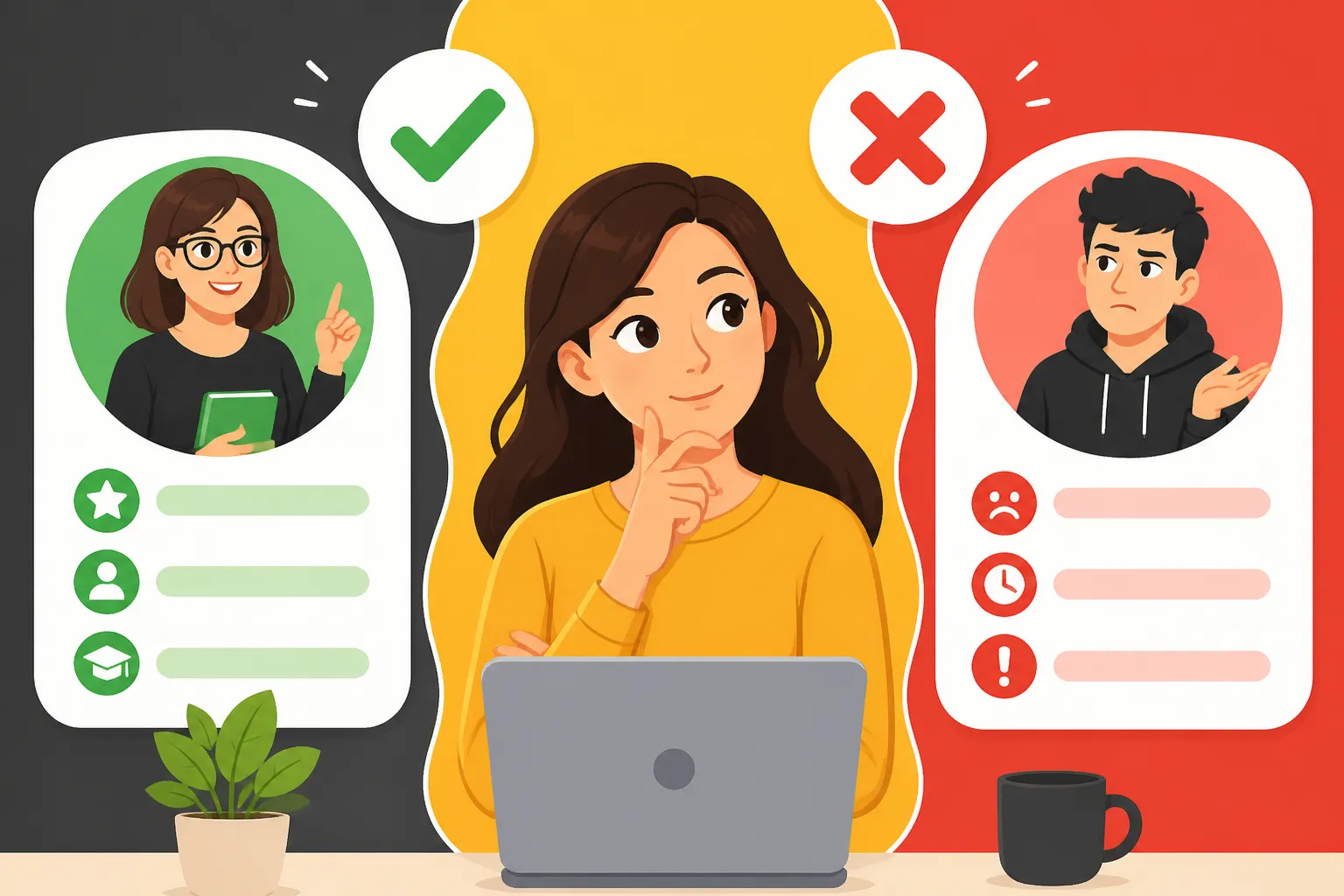
Red Flags and Green Lights: What to Watch Out For During Your German Trial Lesson
The trial lesson on iTalki is your ultimate test drive. It's not just about them assessing your German level; it's your chance to assess them. Pay close attention to subtle cues and trust your instincts. A good fit will make you feel comfortable, challenged, and motivated. A bad fit will leave you feeling frustrated or unheard.
Recognizable Red Flags in a German Tutor
During your iTalki trial lesson for German, keep an eye out for these potential warning signs:
- Lack of Structure or Preparation: Did the German tutor show up without a clear plan, or seem to be improvising completely? While flexibility is good, a complete lack of direction, especially in an introductory lesson, suggests they might not take preparation seriously. Your time and money are valuable, so you deserve a tutor who respects that.
- Too Much English (or not enough, depending on your level): For absolute beginners, some English explanation can be helpful. However, if the German tutor constantly reverts to English even when you could be prompted to use German, it might hinder your immersion and progress. Conversely, if you're a beginner struggling to grasp basic concepts and they refuse to use any English to clarify, that might also be a red flag. The balance needs to be right for you.
- Ignoring Your Stated Goals: You told them you want to improve conversational German for daily errands, but they spend the entire lesson on obscure grammar rules that aren't relevant to your immediate needs. A good iTalki German tutor should actively listen and adapt. If they consistently push their own agenda without considering yours, they're not the right fit.
- Poor Audio/Video Quality or Distractions: While occasional tech glitches happen, persistent poor audio, constant disconnections, or a background full of noise and distractions can severely impact your German learning experience. Learning a new language requires focus, and constant interruptions will make it much harder.
- Rigidity or Unwillingness to Adapt: Did you suggest a different exercise or ask for clarification, only to be met with resistance? A great German tutor is adaptable and willing to try different approaches if something isn't working for you. If they insist on one method regardless of your feedback, you might struggle to make progress.
Encouraging Green Lights for Your German Learning Journey
On the flip side, there are many positive indicators that you've found a fantastic German tutor on iTalki:
- Excellent Communication and Patience: The tutor speaks clearly, at an appropriate pace, and is incredibly patient when you struggle to find the right words in German. They encourage you to speak and give you time to formulate your thoughts. This is especially vital for expats who might feel self-conscious about speaking a new language.
- Tailored and Engaging Approach: They quickly pick up on your interests and integrate them into the German lesson. Perhaps you mentioned loving hiking, and they bring up vocabulary related to nature or discuss German national parks. They remember your previous corrections and build on them. The lessons feel dynamic and relevant to your life in Germany.
- Positive and Encouraging Demeanor: You leave the German lesson feeling motivated and a little more confident than when you started. They celebrate your small victories and make the learning process enjoyable. This positive reinforcement is crucial for long-term motivation.
- Constructive Feedback: They don't just say "wrong." They explain why something was incorrect and offer clear, actionable suggestions for improvement in your German grammar, vocabulary, or pronunciation. They might take notes of your mistakes and review them with you at the end of the lesson.
- Resourcefulness and Follow-up: The German tutor might suggest additional German resources, practice ideas, or even follow up with a summary of what you covered or specific homework. This shows they're invested in your progress beyond the scheduled lesson time. They might even recommend specific self-study tips, which could complement resources like Learning German: Top Language Schools and Resources for Expats.
Making the Most of Your iTalki German Learning Experience
Finding the right German tutor on iTalki is a huge first step, but it’s just the beginning. To truly achieve fluency and integrate into life in Germany, you need to actively engage with the language, both during and outside your lessons. Your relationship with your tutor is a partnership, and consistency, active participation, and open communication are the pillars of success.
Consistency is Key for German Fluency
Learning German, or any language, isn't a sprint; it's a marathon. Regular exposure and practice are far more effective than sporadic, intense bursts. Once you've found a great German tutor on iTalki, try to schedule consistent lessons – ideally at least once or twice a week. This regular rhythm keeps the language fresh in your mind, reinforces new concepts, and builds momentum.
Think of it like building a muscle: you won't see results if you only go to the gym once a month. The same applies to your German skills. Even short, frequent lessons can be incredibly impactful. Commit to a schedule that works for you and stick with it. This consistency is where the magic happens, slowly but surely building your German vocabulary, grammar, and confidence. For those struggling to fit it all in, remember that even fifteen minutes a day of focused practice, combined with your iTalki lessons, can make a significant difference.
Beyond the Lesson: Self-Study and Practice
Your iTalki German tutor is an invaluable guide, but they can't do all the work for you. The hours outside your lessons are just as important for solidifying what you’ve learned and pushing your boundaries. Active self-study and real-world practice are essential.
- Review and Reinforce: After each German lesson, take some time to review your notes, practice new vocabulary, and re-do any exercises your tutor assigned. Don't let new information fade away.
- Immerse Yourself: Living in Germany means you're surrounded by the language! Try to read German newspapers or simple articles online, listen to German radio or podcasts, or watch German TV shows (start with subtitles!). Even trying to understand Common German Medical Terms: A Mini Dictionary for Patients can be a form of self-study.
- Speak Actively: Don't wait for your next iTalki lesson to speak German. Challenge yourself to use new phrases at the supermarket, when ordering coffee, or with friendly neighbors. Embrace mistakes; they are part of the learning process. The more you use German in real-life contexts, the faster you’ll improve. This is a great way to put into practice the lessons you get from your iTalki tutor. Remember, even basic greetings like "Guten Tag" and "Danke schön" make a difference, as you can see in tips on German Etiquette and Social Life for Visitors.
Feedback and Adaptation with Your German Tutor
Your relationship with your iTalki German tutor should be a dynamic one. Don't be afraid to give feedback or ask for adjustments if something isn't working for you. For instance, if you feel there's too much focus on writing and you want more speaking practice, simply communicate that. If a particular teaching method isn't clicking, suggest an alternative.
A good tutor values your input and will adapt their approach to better suit your needs. You are paying for a service designed to help you learn German effectively, so ensure the process is tailored to your learning style and preferences. This open dialogue ensures that every iTalki lesson remains productive and enjoyable, keeping you motivated on your journey to German fluency. Understanding the subtle rules of communication, like when to use Du or Sie? Navigating Formal and Informal German Address, can also be a great topic to discuss with your tutor.
Ready to take control of your German learning journey? Head over to iTalki and use these tips to find the perfect German tutor for you. Your German adventure awaits!
Disclaimer
This article is for general informational purposes only and does not constitute professional advice. Laws, prices and regulations vary by location and change over time. Consult a qualified professional for guidance on your specific situation.