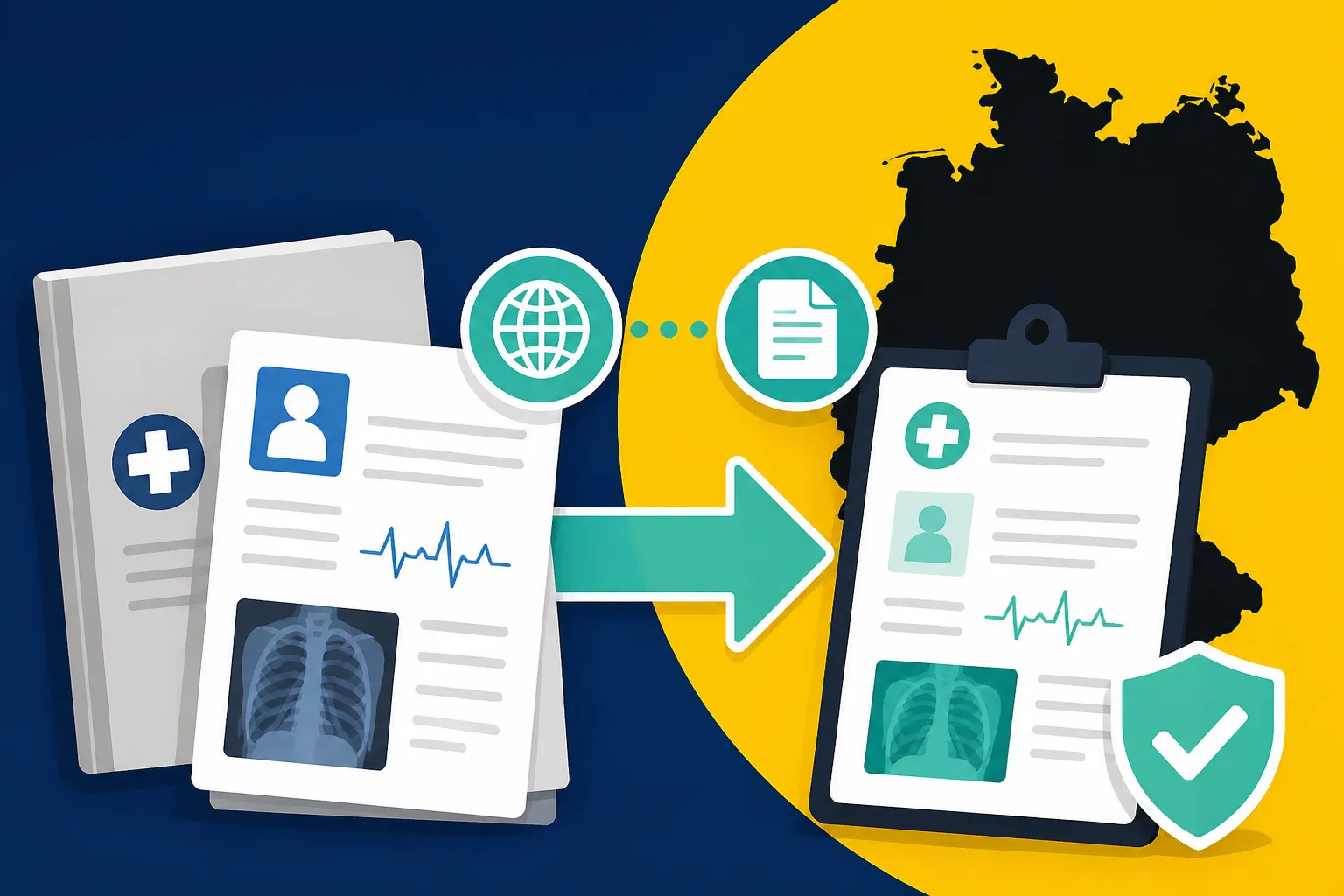
How to Translate Foreign Medical Records for Germany
Navigating the German medical system is already a mountain of bureaucracy, but trying to explain a complex medical history from back home without the right paperwork is where many expats hit a wall. I remember sitting in a sterile waiting room in Munich, clutching a stack of English records, only to have the doctor politely tell me they couldn't officially document my condition without a certified translation. This guide breaks down exactly how to translate your foreign medical records into the format German authorities and doctors actually accept.
Disclosure: This post may contain affiliate links. We may earn a commission at no extra cost to you if you make a purchase through these links. Read full disclosure.
Why You Must Have Translated Medical Records in Germany
The German healthcare system is built on a foundation of meticulous documentation. While many doctors in major cities like Berlin or Frankfurt speak excellent English, their medical software, billing systems, and legal liability requirements are strictly German-centric. When you are Finding a Doctor (Hausarzt) in Germany: How to Choose and Register, you might assume your history follows you digitally. In reality, you are the primary custodian of your health history.
If you have a chronic condition, a history of surgeries, or ongoing prescriptions, a doctor needs to enter this into your file to justify specific treatments or specialist referrals. Without a German translation, a doctor may be hesitant to continue a treatment plan started abroad because they cannot verify the exact dosages or diagnostic criteria used by your previous physician. This is particularly critical when you are dealing with Specialists and Referrals: How to See a Specialist Doctor in Germany, as specialists often require a "clean" history before they will take over your case.
Furthermore, if you are applying for Private Health Insurance in Germany: Benefits, Costs, and Eligibility, the insurance providers will conduct a risk assessment. If your medical records are in a foreign language, they might reject your application or exclude certain conditions simply because they cannot accurately assess the risk. Having professional translations ready can save you thousands of Euros in premium adjustments or help you avoid being denied coverage altogether.
Certified vs. Simple Translations for Medical Documents
In Germany, not all translations are created equal. You will often hear the term "Beglaubigte Übersetzung" (certified translation). This is a translation performed by a "beeidigter Übersetzer"—a translator who has been sworn in by a German court. They provide a signed and stamped document that is legally equivalent to the original.
For routine visits where you just want your new GP to understand your general health, a simple translation or even a clear summary might suffice. However, for anything involving the Ausländerbehörde (Foreigners’ Office), disability claims, or official insurance underwriting, a sworn translation is mandatory.
| Document Type | Translation Requirement | Typical Use Case |
|---|---|---|
| Vaccination Records | Simple/International Form | School enrollment or general GP visit |
| Chronic Illness History | Sworn/Certified | Specialist referrals and long-term care |
| Surgery Reports | Sworn/Certified | Insurance applications and hospital admissions |
| Lab Results | Simple (if using Latin/Standard units) | Routine blood work monitoring |
| Prescriptions | Sworn/Certified | Pharmacy refills for restricted medications |
If you are using a digital-first provider like ottonova, they often have more streamlined processes for handling documents, but even they must adhere to German medical standards. Similarly, if you are covered by Travel Health Insurance: What Expats Need for Schengen Visa & Short Trips through a provider like SafetyWing, you may find that they accept English records for claims, but the local German hospital treating you will still want a German version for your permanent file.
How to Find a Sworn Medical Translator in Germany
Finding a random translator online is easy, but finding one who understands medical terminology and holds the proper German credentials is more difficult. You shouldn't just use a general translator for a pathology report; a mistranslation of a single term could lead to a misdiagnosis or the wrong medication being prescribed.
The most reliable way to find a sworn translator is through the "Justiz-Dolmetscher" database, which is the official nationwide registry of translators and interpreters in Germany. You can filter by language and region to find someone local, though most work can now be done via scanned documents and mail.
When you contact a translator, always ask if they have experience with medical terminology specifically. You are looking for someone who knows the difference between a "myocardial infarction" and a "cardiac arrest" in both languages. It is also worth checking with Feather Insurance if you are one of their policyholders, as they often provide guidance on navigating these administrative hurdles for expats.
Once you have your translated documents, make sure you are Medical Records in Germany: Keeping Track of Your Health Documents by keeping both the original and the certified translation in a dedicated folder. German doctors will often want to see the original "just in case," even if they are relying on the translation.
The Process and Cost of Translating Records
The process of getting your records translated usually starts with a request for a quote. Translators in Germany typically charge by the line or by the word, with prices ranging from €1.50 to €2.50 per standard line (around 55 characters). Medical records are often more expensive because they contain complex terminology and difficult-to-read handwritten notes from doctors.
- Preparation: Scan your records in high resolution. If your doctor has terrible handwriting, try to get a typed summary before you leave your home country. Translators cannot "interpret" what a doctor wrote; they can only translate what is legible.
- Requesting the Quote: Send the scans to 2-3 sworn translators. Specify that you need a "beglaubigte Übersetzung."
- The Timeline: A standard set of records (5-10 pages) can take anywhere from three days to two weeks. Plan ahead—do not wait until the day before your appointment.
- Verification: When you receive the translation, check the spelling of your name and your date of birth. Even sworn translators make typos, and these can cause significant issues with your Gesundheitskarte (health insurance card) later on.
If you are currently Navigating Medical Care in Germany: Doctors, Hospitals, and Pharmacies without these translations, you might feel overwhelmed by the cost. However, consider it an investment. A properly translated record ensures you don't have to repeat expensive tests that your insurance might not cover a second time. If you have private insurance through a company like ottonova, check your policy; sometimes they offer a budget for administrative services or have specific partner translators who can expedite the process.
Handling Language Barriers at the Pharmacy and Clinic
Even with your records translated, the day-to-day reality of being a patient in Germany involves a lot of specialized vocabulary. You might find yourself Seeing a Doctor Who Doesn’t Speak English: Tips for Overcoming Language Barriers, where your translated records act as your voice. Instead of struggling to explain a previous diagnosis, you can simply hand over the certified document.
This is equally important at the Apotheke (pharmacy). If you need a refill for a medication prescribed abroad, the pharmacist will be much more comfortable with a translated document that clearly states the active ingredient (Wirkstoff) rather than just a brand name that might not exist in Germany. To help yourself further, you can study Common German Medical Terms: A Mini Dictionary for Patients to bridge the gap during the conversation.
If you are using a service like SafetyWing while transitioning between countries, keep in mind that they are designed for international flexibility, but the local German pharmacy still operates under strict German law. A translated record helps prove the "medical necessity" required for certain medications to be dispensed or covered by your insurance.
Digital Translations and the e-Prescription System
Germany is finally moving toward a digital health system, including the Elektronische Patientenakte (ePA) or electronic patient file. In the future, you may be able to upload your translated records directly into a central system that all your doctors can access. For now, however, it is largely a "bring your own paper" system.
Some expats try to use AI or Google Translate to save money. While these tools are getting better, they are absolutely not acceptable for official medical use in Germany. A doctor cannot legally rely on a Google-translated document for a diagnosis. If you are using Telemedicine in Germany: Online Doctor Appointments and e-Prescriptions, you might find that the doctors are more tech-savvy, but they will still ask you to upload high-quality, professional translations to your profile before they can issue an e-prescription.
Whether you are visiting English-Friendly Hospitals in Germany: Where to Find International Clinics or a small local practice, the standard remains the same: the more professional your documentation, the better your care will be. Don't let a language barrier prevent you from getting the treatment you need. Take the time to get your history translated properly before you arrive or as soon as you settle in.
Important Disclaimer
The information provided in this article is for educational and informational purposes only and does not constitute legal or medical advice. Translation requirements can vary depending on the specific insurance provider, medical facility, or government office. Always verify requirements with the relevant German authorities or your healthcare provider before commissioning expensive translations.