Public Libraries in Germany: Joining and Using Libraries as an Expat
Finding a quiet, productive corner in a cramped apartment is a struggle many new arrivals face immediately. I remember spending my first winter in Munich huddled in a loud café just to access Wi-Fi because my home internet wasn't set up yet. This guide solves that by showing you how to unlock the massive, affordable resources of the German public library system.
Disclosure: This post may contain affiliate links. We may earn a commission at no extra cost to you if you make a purchase through these links. Read full disclosure.
The Hidden Gem of German Social Infrastructure
When you first arrive in Germany, you are likely overwhelmed by the sheer volume of paperwork. Between finding a flat and Registering Your Address (Anmeldung): Step-by-Step Guide, the last thing on your mind is probably a library card. However, the Stadtbibliothek (City Library) is arguably the most underrated resource for any expat. It is more than just a room full of dusty books; it is a gateway to integration, a free coworking space, and a massive money-saver.
I’ve spent countless hours in the central libraries of Berlin and Hamburg, and I can tell you that the value for money is unbeatable. In a country where you might feel like you are constantly paying for things like the Understanding the Rundfunkbeitrag Fee: Why You’re Charged €18 Every Month, the library feels like a rare win for your wallet. Whether you are a student, a remote worker, or a parent, the library provides a sense of "third space" that is essential for mental health when you are far from home.
If you have just moved into a temporary apartment found through Wunderflats, you might not have much room for a permanent book collection. This is where the library shines. Instead of cluttering your limited space with physical copies that you’ll have to move again in six months, you can borrow and return at your leisure. It’s a sustainable and practical way to handle your media consumption while you are still Settling in Quickly: A Newcomer’s Checklist for Your First Weeks in Germany.
A Sanctuary for Remote Workers and Students
For many expats, working from home in a small studio can lead to serious cabin fever. While coworking spaces are great, they can be incredibly expensive. Most public libraries in Germany offer free, reliable Wi-Fi and designated "silent zones" where you can focus for hours without the pressure to buy a five-euro latte every sixty minutes. I personally used the library as my primary office for three months while I was waiting for a technician to install my router—a situation many of you will recognize if you are currently trying to figure out How to Set Up Internet in Germany Without German Skills (English-Friendly Providers).
Beyond the desk space, libraries often provide access to expensive databases and software that you would otherwise have to pay for. Some branches even have "Maker Spaces" with 3D printers, sewing machines, and recording studios. It’s a level of public service that often shocks newcomers who are used to more "bare-bones" library systems. If you are Living in Berlin: Expat Guide to Neighborhoods and Lifestyle, you’ll find that each district has its own unique library character, from the ultra-modern to the charmingly historic.
Massive Savings on Entertainment and Education
The financial benefit of a library card cannot be overstated. While you might be tempted to buy every English-language novel or German textbook from Amazon Germany, those costs add up to hundreds of euros a year. A standard adult library membership in Germany typically costs between €10 and €25 per year. For that price, you get access to tens of thousands of books, DVDs, Blu-rays, and even board games.
If you are currently managing a tight Cost of Living in Germany: Budgeting Guide for Expats, the library is your best friend. Many libraries also have an "English Corner" with the latest bestsellers, so you don’t have to sacrifice your reading habits just because you moved abroad. I used to feel guilty about my "book habit" hitting my bank account until I realized I could simply request any title I wanted through the inter-library loan system for a tiny fee of about €1.
| Feature | German Public Library (Stadtbibliothek) | Commercial Alternatives |
|---|---|---|
| Annual Membership | €10 – €25 | €100+ (Subscriptions) |
| Physical Workspace | Free / Included | €15 – €30 per day (Coworking) |
| Language Learning | Free Graded Readers & Apps | €20+ per book on Amazon Germany |
| Digital Media | Included (Onleihe) | €10+ per month per service |
| Community Events | Free or nominal fee | €15 – €50 per workshop |
Getting Your Card: The Paperwork and the Process
Germans love their process, and getting a library card is no exception. You cannot simply walk in and borrow a book on your first day without some preparation. I remember my first attempt; I walked in with just my passport and was politely but firmly told I was missing the most important piece of paper in Germany: my Meldebescheinigung.
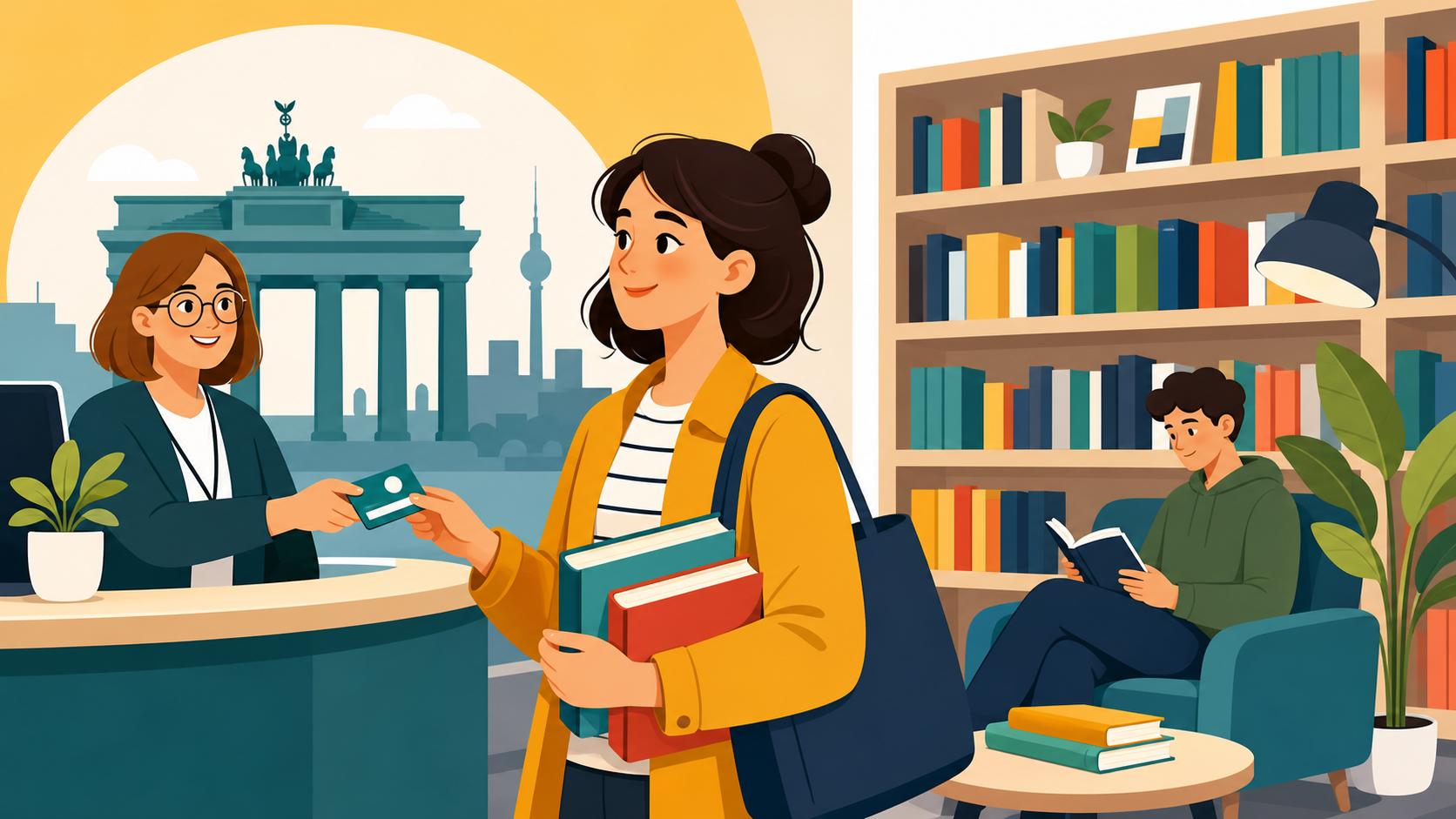
To register, you generally need to visit a branch in person, though some cities are finally moving toward online registration. You will need your valid ID (Passport or Personalausweis) and your official proof of address registration. If you are a student or a freelancer on a budget, be sure to ask about the Ermäßigung (discount). Students, trainees, and those receiving benefits often pay a significantly reduced rate, sometimes as low as €5 per year.
Navigating the Registration Desk
When you approach the desk, don't worry if your German isn't perfect. Most librarians in larger cities speak a fair amount of English. However, if you are Learning German: Top Language Schools and Resources for Expats, this is a fantastic "low-stakes" environment to practice your skills. You will fill out a short form, they will scan your documents, and in most cases, they will hand you your plastic Büchereiausweis on the spot.
Once you have that card, you are part of a network. In cities like Berlin, your card works for the entire VÖBB (Verbund der Öffentlichen Bibliotheken Berlins) system, meaning you can borrow a book in Neukölln and return it in Spandau. This level of interconnectedness is incredibly convenient when you are exploring different parts of the city. If you’ve just moved into a new neighborhood via Wunderflats, the local library is often the best place to pick up flyers for local events and get a feel for the community.
Understanding the Fee Structure
While the annual fee covers your membership, there are "hidden" costs to be aware of—specifically late fees. Germany is a culture of punctuality, and the library is the ultimate enforcer of this rule. If a book is due on Tuesday, and you bring it back on Wednesday, you will be fined. These fines aren't huge—usually cents per day—but they can rack up if you forget a pile of books for a month.
Most libraries have an automated email reminder system, but I highly recommend downloading the library's official app. These apps allow you to renew your books with a single click. Most items can be renewed at least twice, provided no one else has reserved them. This is a lifesaver for those of us with busy expat lives who can't always make it to the physical branch on time.
Digital Frontiers and The Onleihe Experience
One of the most powerful tools included with your membership is "Onleihe." This is the national digital platform for German libraries. Think of it as a government-funded version of a Kindle subscription or an Audible account. Through Onleihe, you can borrow e-books, e-magazines, and audiobooks directly to your smartphone, tablet, or e-reader.
When I first moved here, I spent a fortune on English books from Amazon Germany because I didn't think the local library would have anything for me. I was wrong. The digital catalog usually has a significant section of international media. Plus, for those of you trying to improve your language skills, the digital magazines (like Der Spiegel or Zeit) are perfect for reading on your commute without carrying a heavy paper version.
Language Learning Resources for Every Level
If you are serious about integration, the library is a goldmine for language learners. Most branches have a dedicated DaF (Deutsch als Fremdsprache) section. Here, you will find "Graded Readers"—books written specifically for A1, A2, or B1 levels. These are much more engaging than standard textbooks and help you build vocabulary in a natural way.
Beyond books, many libraries provide free access to premium language learning apps like Rosetta Stone or Busuu. If you were planning to pay for a monthly subscription to one of these, your library card just paid for itself ten times over. I spent my first six months in Germany using the library’s copies of the "Menschen" or "Schritte International" textbooks instead of buying them new, which saved me a significant amount of money during those expensive early days.
Accessing International Press and Film
Homesickness is a real thing, and sometimes you just want to read the news from your home country or watch a movie in your native language. Most central libraries have an international press section where you can read physical copies of newspapers from the UK, US, France, and beyond.
Additionally, the "Filmfriend" streaming service is often included with your library card. It’s a curated streaming platform with a heavy focus on European cinema, documentaries, and international films. If you are tired of the same old algorithms on the big-name streaming sites, this is a breath of fresh air. It’s also a great way to discover German cinema with subtitles, which is a key part of understanding the local culture.
Rules of the House: Punctuality and Silence
To truly use the library like a local, you need to understand the unwritten (and written) rules. Germany has a very specific "library culture." Unlike some libraries in other countries that have evolved into loud community hubs, the German Stadtbibliothek generally remains a place of deep focus.
You must be aware of Neighborhood Noise Rules: Understanding Ruhezeit (Quiet Hours) in Germany, because similar principles apply in public spaces. In the silent study areas, even a loud whisper or a heavy footfall can earn you a stern "shush" from your neighbors. It’s not about being unfriendly; it’s about a shared respect for a productive environment.
Managing Your Loans and Reservations
If a book you want is currently checked out, you can "reserve" it (vorbestellen). The library will send you an email when it arrives at your chosen branch. There is usually a small fee for this (around €1), but it’s worth it for popular titles. Just remember that once it arrives, you usually only have about a week to pick it up before it’s put back into circulation or given to the next person on the list.
Returning books is usually done through an automated machine. Many libraries have a "return slot" that is accessible 24/7, meaning you can drop off your books even when the library is closed. This is incredibly helpful if you are working a 9-to-5 job and can't make it during their standard hours, which—let's be honest—can sometimes be a bit limited in smaller towns.
Food, Drinks, and Etiquette
While most modern libraries have a small café or a designated area where you can eat, bringing a full meal into the stacks is a big no-no. Bottled water is usually allowed everywhere, but coffee and snacks should stay in the social zones.
Also, be mindful of the "bag rule." In some larger or more traditional libraries, you are required to leave your backpack or large purse in a locker (Schließfach) at the entrance. You will often need a €1 or €2 coin to "rent" the locker (you get the coin back when you leave). I learned this the hard way after dragging my heavy laptop bag through three floors, only to be told I had to go all the way back down and lock it up. Carry your laptop and notebooks in a small clear plastic bag or just in your hands to save yourself the hassle.
Important Disclaimer
This guide is for informational purposes only. While the information regarding public libraries in Germany is based on common practices and personal experience, specific rules, fees, and requirements can vary significantly between different federal states (Bundesländer) and individual municipalities. Always check the official website of your local city library for the most current regulations and membership terms. Registration requirements may change based on your residency status and the latest administrative policies in your specific city.