Renewing Your German Visa or Residence Permit: Timeline and Process
Staring at an expiring residence permit while the booking portal continuously crashes is a terrifying expat nightmare. I remember the paralyzing fear of watching my work visa enter its final week while the immigration office ignored every email I sent. This guide breaks down the exact timeline, documentation, and process required to successfully renew your German visa without the crippling anxiety.
Disclosure: This post may contain affiliate links. We may earn a commission at no extra cost to you if you make a purchase through these links. Read full disclosure.
The Administrative Clock When to Start the Renewal Process
The biggest mistake foreigners make in Germany is treating their visa expiration date as the day they need to take action. The German immigration system operates with a massive bureaucratic backlog, meaning your renewal process must begin months before your plastic card actually expires.
The Critical Three Month Window
You should initiate your visa renewal process exactly three months before the expiration date printed on your current residence permit card. The Foreigners Office (Ausländerbehörde) in almost every major German city officially advises against applying earlier than this, as they will likely reject the application for being premature. However, waiting until the final four weeks is an absolute recipe for disaster because securing an appointment can take months.
When that three-month mark hits, your immediate priority is logging onto your local municipal portal and attempting to book an appointment. If you live in an overburdened expat hub like Berlin, Munich, or Frankfurt, you will quickly discover that no appointments are available. Do not panic, but do not close the laptop either. You must formally submit your renewal application via email, by registered mail, or through the city’s digital contact form before your current visa expires.
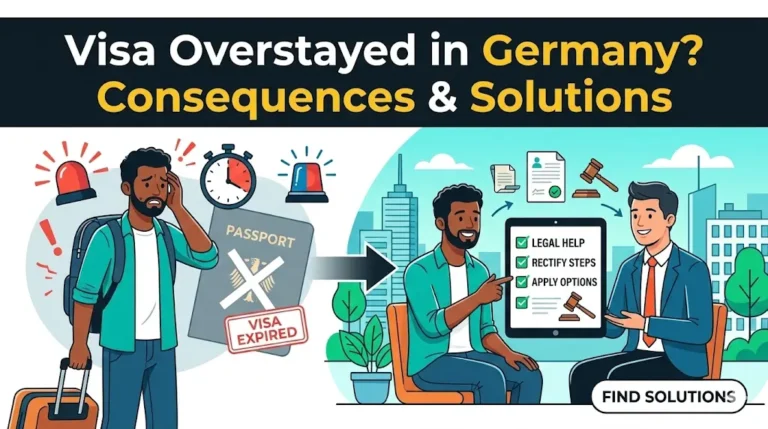
Filing the application electronically serves as your legal anchor. Even if the office does not read your email for six weeks, the timestamp on your submission proves to the German federal government that you attempted to renew your status in a timely manner. If you fail to submit a written request before midnight on your expiration date, you officially slip into an illegal overstay, which can result in deportation orders.
The Fiktionsbescheinigung Safety Net
The most important legal protection you have during the renewal process is the fictional certificate, or Fiktionsbescheinigung. If you apply for your visa extension before your current permit expires, your legal status is automatically extended under Section 81 of the German Residence Act.
Because the immigration office cannot possibly process your renewal in time, they will issue you a Fiktionsbescheinigung. This is a folded green piece of paper that acts as a legal bridge. It guarantees that you can continue living, working, and studying in Germany under the exact same conditions as your old visa while you wait for your official appointment. Your employer cannot legally fire you if you produce this document, and your bank cannot freeze your accounts.
However, you must be hyper-aware of your travel rights. A Fiktionsbescheinigung issued under Paragraph 4 allows you to travel outside of Germany and return without issue. But if it is issued under Paragraph 3, your travel rights are frozen, and leaving the country could result in a denied re-entry. Understanding the nuances of these bridging documents is essential, and you can map out how this impacts your cross-border mobility in Traveling in the Schengen Area with a German Residence Permit: Your Rights and Limits.
Tracking the Status of Your Application
Once your application is submitted and you possess your bridging document, you enter the agonizing waiting game. German immigration offices are notorious for their complete lack of communication. You will not receive weekly status updates, and calling their hotlines usually results in endless hold music or being disconnected.
The processing time for a standard renewal ranges from four to twelve weeks, entirely dependent on your municipality and the complexity of your case. During this period, the caseworker is verifying your tax history, checking your criminal record, and confirming with the Federal Employment Agency that your job still meets local labor market standards. Sending angry emails demanding an update will only slow the process down, as the clerks have to stop processing applications to respond to your complaints.
If your application has been pending for over three months with absolutely zero response, you are legally entitled to file an Untätigkeitsklage (failure to act lawsuit) against the government. While this sounds extreme, hiring an immigration lawyer to file this specific suit instantly forces the office to pull your file from the bottom of the pile and process it to avoid court fines. For a broader look at navigating these specific bureaucratic hurdles, read Navigating the Auslaenderbehoerde: Tips for Dealing with German Immigration Offices.

Gathering the Inflexible Bureaucratic Documentation
When your appointment date finally arrives, you must walk into the office with an impeccably organized folder. The caseworker is looking for absolute consistency between your initial visa application and your current renewal request.
Proving Your Financial Independence Again
The German state wants to verify that you have not become a financial burden on the social welfare system since you arrived. If you are renewing a student visa or a job seeker permit, you must prove you still have the capital to survive. This means you are legally required to fund a blocked account once again.
Relying on a highly recognized digital provider like Expatrio makes this recurring nightmare significantly easier. You can simply log into your existing Expatrio dashboard, initiate a new deposit to meet the updated federal threshold, and instantly generate the fresh blocking confirmation PDF that the caseworker demands. Using Expatrio removes the friction of proving your finances, showing the government a continuous, unbroken chain of self-sufficiency. If you need a refresher on the current financial thresholds, revisit Student Visa Blocked Account Sperrkonto: What It Is and How to Set It Up.
If you are renewing a work visa or an EU Blue Card, your financial proof is your employment contract and your recent payslips. The caseworker will scrutinize your last three to six months of salary statements. They are checking to ensure your employer is actually paying you the gross salary promised on your contract, and that your tax and pension contributions are being correctly deducted. For a detailed breakdown of what the clerks are actually reading on those documents, review Understanding Your German Payslip: Gross vs Net Salary Explained.
Perfecting Your Health Insurance Proof
A frequent reason for visa renewal delays is insufficient or ambiguous health insurance documentation. The immigration office demands proof of continuous, gapless health coverage for your entire previous stay in Germany, as well as valid coverage moving forward.
If you are in the statutory public system (like TK or Barmer), you must request a specific membership certificate for the visa authorities. If you are privately insured, the scrutiny is even higher; your provider must confirm your coverage meets statutory equivalents. Utilizing an expat-centric broker like Feather Insurance completely eliminates the stress of navigating German insurance call centers. The support team at Feather Insurance can instantly generate the exact, visa-compliant digital certificate the immigration office requires.
Handing the caseworker a pristine insurance history provided by Feather Insurance immediately shuts down any interrogations about your healthcare compliance. If you accidentally allowed your insurance to lapse between jobs, the caseworker will catch it, and you could face severe fines or a rejected visa. Ensuring your medical proof is bulletproof is a foundational step in your renewal strategy.
Translating Any New Life Events
During the years between your first visa and your renewal, your life inevitably progressed. You may have gotten married back in your home country, had a child, or earned an advanced degree from a foreign institution. All of these life events must be updated in the German municipal system.
However, a foreign marriage certificate or a new university diploma is bureaucratically meaningless to the German authorities until it is legally certified and translated. You must provide translations executed by a court-approved German sworn translator. If you hand the caseworker an untranslated Spanish marriage certificate during your spouse’s visa renewal, they will pause the application immediately.
To bypass this frustrating bottleneck, organized expats use digital platforms like Lingoking. Before your appointment, you simply upload a clear scan of your foreign civil documents to Lingoking, and they assign them to a certified German sworn professional. The legally binding, officially stamped translations are mailed directly to your address, ensuring the clerk accepts them instantly. Getting your translations sorted via Lingoking is a vital step that bridges the gap between your evolving personal life and your static German file.
Navigating Specific Residence Permit Pathways
The renewal process is not identical for everyone. The specific type of residence permit you hold drastically alters the expectations and the level of scrutiny applied by the caseworker.
Renewing a Student or Job Seeker Visa
Renewing a student visa requires proving academic progress. The German government does not want international students treating universities as a cheap way to live in Europe indefinitely. You must provide a current certificate of enrollment and an official transcript showing you are actively passing exams and earning credits.
If you have been studying for six years and still haven’t completed a three-year bachelor’s degree, the caseworker will demand a formal, written statement from your academic advisor explaining the delay. Furthermore, your financial requirements remain incredibly strict. You must continually provide an Expatrio blocked account confirmation for every year you request an extension. The state will not wave the financial proof requirement just because you survived your first year.
If you have graduated and are transitioning to an 18-month job seeker visa, the process shifts. You must present your official German university degree and prove you have the funds to support your job hunt. This transitional phase is highly delicate, and you must ensure you do not violate the working limits of your new permit while searching for corporate sponsorship.
Extending an EU Blue Card or Work Permit
For expats holding an EU Blue Card or a standard skilled worker permit, the renewal process is primarily a verification of your ongoing employment. The federal government wants to ensure you are still contributing high-level skills to the German economy.
| Visa Type | Primary Renewal Requirement | Financial Proof Needed | Typical Extension Length |
| Student Visa | Academic progress transcripts | Blocked account / Scholarship | 1 to 2 Years |
| EU Blue Card | Ongoing employment contract | Last 3-6 months payslips | Up to 4 Years |
| Freelance Visa | Proof of profit and client base | Tax assessments from Finanzamt | Up to 3 Years |
If you are still working for the exact same employer under the exact same contract terms, the renewal is usually a rubber-stamp process. You provide your current contract, your recent payslips, and a letter from HR confirming your employment is unbroken. However, if you changed jobs during the validity of your initial visa without notifying the immigration office, you are in severe legal trouble. Your original work visa is explicitly tied to the employer listed on the supplementary green sheet of your residence permit.
Transitioning to Permanent Residency
The ultimate goal for most expats is to break the grueling cycle of temporary visa renewals entirely. If you have been renewing your temporary residence permits for several years, you should actively evaluate if you qualify for a settlement permit instead.
A permanent residence permit frees you from the anxiety of the Ausländerbehörde. You no longer need to prove your reason for staying, and you gain unrestricted access to the German labor market. Depending on your visa type, the timeline to qualify varies wildly. An EU Blue Card holder with B1 German language skills can apply for permanent residency in just 21 months, while a standard skilled worker must wait three to four years.
Instead of asking for a simple extension, you should aggressively prepare the additional documentation required for permanent settlement, such as your pension contribution history and formal language certificates. By utilizing Lingoking to ensure all your foreign background documents are perfectly translated, you can confidently request the upgrade.
Surviving the Auslaenderbehoerde Appointment
When the day of your in-person appointment finally arrives, you must execute your plan perfectly. The way you conduct yourself in the municipal office heavily influences how smoothly the bureaucracy processes your file.
Booking the Elusive Appointment Online
If you live in a city that still requires digital appointment booking, you must treat the process like a second job. Municipal portals frequently release canceled appointments early in the morning, often between 6:00 AM and 8:00 AM.
You must bookmark the exact URL for your specific renewal category and refresh it diligently. Do not accidentally book an appointment for a “First Time Issuance” when you need an “Extension,” as the caseworker will simply turn you away for booking the wrong slot. If your visa is expiring within a matter of days and the portal is entirely empty, you must locate your specific office’s emergency email address or contact form. Sending a frantic email with your expiring contract attached is often the only way to trigger a manual appointment assignment from a supervisor.
How to Handle In Person Interactions
German bureaucratic etiquette is highly rigid, and failure to adhere to it can unconsciously bias the caseworker against you. You must arrive exactly on time. If your appointment is at 9:15 AM, be in the waiting room at 9:00 AM. If you show up at 9:20 AM, your number will likely be skipped, and you will have to start the agonizing booking process all over again.
When you sit down at the desk, remain polite, formal, and strictly factual. The caseworkers are not customer service agents; they are legal executors operating under massive administrative strain. Organize your physical folder flawlessly. Have your Feather Insurance certificate, your Expatrio blocking confirmation, and your Lingoking translated documents separated by clear tabs. Do not use staples. When the caseworker asks for your financial proof, handing them a clean, perfectly ordered stack of documents establishes immediately that you are a respectful, prepared applicant. Do not offer information that was not specifically requested, as over-explaining can lead to unnecessary legal scrutiny.
Dealing with Unexpected Rejections or Delays
Sometimes, despite meticulous preparation, the caseworker will demand an obscure supplementary document you didn’t anticipate, or they might question a gap in your employment history.
If the caseworker says your file is incomplete, do not argue or raise your voice. Politely ask them to issue a formal request for subsequent submission. They will print a letter listing exactly what is missing and give you a strict deadline to drop the missing documents in their physical mailbox. As long as you provide the requested paperwork before the deadline, your renewal remains active.
If your renewal is outright rejected, you will receive a formal denial letter with a deadline to leave the country. At this stage, DIY immigration is over. You must immediately hire a certified German immigration lawyer to file an appeal. Navigating the legal fallout of a rejected extension is incredibly complex, and attempting to fix it yourself will only worsen your standing.
Renewing your German visa is a marathon of organization and patience. By initiating the process three months early, ensuring your financial and medical proofs are flawless via Expatrio and Feather Insurance, and certifying your life updates with Lingoking, you can conquer the bureaucracy and secure your continued life in Europe.
References
Primary sources official
- Make it in Germany: The federal government’s official portal outlining the specific requirements, digital application options, and timelines for extending residence permits for skilled workers and students.https://www.make-it-in-germany.com/en/visa-residence/living-permanently/extension
- Federal Office for Migration and Refugees (BAMF): Official directives regarding the issuance and legal protections of the bridging visa, detailing the differences between Paragraph 3 and Paragraph 4.https://www.bamf.de/EN/Themen/MigrationAufenthalt/ZuwandererDrittstaaten/Migrathek/Fiktionsbescheinigung/fiktionsbescheinigung-node.html
- Federal Ministry of the Interior and Community (BMI): The official English translation of the Residence Act (Aufenthaltsgesetz), which dictates the legal framework for visa extensions and mandatory financial proof.https://www.bmi.bund.de/SharedDocs/downloads/EN/gesetztestexte/AufenthG_en.html
Other helpful sources
- Berlin Immigration Office (LEA): The official portal for Berlin’s state immigration office, providing a highly practical example of how municipal booking systems, document checklists, and extension procedures operate in reality.https://www.berlin.de/einwanderung/en/services/appointments/
Disclaimer
The information provided in this article is for general informational and educational purposes only and does not constitute professional legal or immigration advice. German residence permit renewal rules, the legal conditions of the Fiktionsbescheinigung, blocked account financial proof requirements, health insurance documentation demanded by immigration offices and sworn translation regulations for services are highly complex and vary slightly by municipality. Always consult directly with your local Bürgeramt, the Ausländerbehörde, or a certified immigration lawyer regarding your specific legal obligations and residency status in Germany.