Netflix, Spotify, and Subscriptions: Managing Monthly Subscriptions on a German Budget
Moving to Germany often means watching your credit card get declined by your favorite streaming services due to billing address mismatches. I once lost access to my entire Spotify library during a commute simply because my home-country bank flagged the recurring charge. This guide explains how to manage international subscriptions, navigate strict German cancellation laws, and optimize your monthly budget.
Disclosure: This post may contain affiliate links. We may earn a commission at no extra cost to you if you make a purchase through these links. Read full disclosure.
The German Entertainment Budget and the Broadcasting Fee
Before you even begin budgeting for a premium Spotify account or a Netflix subscription, you must account for Germany’s mandatory entertainment tax. The local broadcasting fee fundamentally alters your disposable income before you ever turn on a screen.
Factoring in the Rundfunkbeitrag
The absolute first subscription you will pay in Germany is one you cannot opt out of. The Rundfunkbeitrag (broadcasting fee) currently costs €18.36 per month in 2026. This fee applies to every single registered household in the country, regardless of whether you own a television, a radio, or ever actually consume a single second of German public broadcasting. It is a completely non-negotiable, legally enforced expense that shocks almost every newcomer.
The contribution service (Beitragsservice) locates you the exact moment you register your address at the local citizen’s office. Shortly after your registration, a payment demand will arrive in your physical mailbox. If you move into a shared apartment (Wohngemeinschaft or WG), the fee is split among the household, meaning only one person officially pays the invoice while the flatmates reimburse them. However, if you live alone, you bear the full cost.
Failing to pay this fee results in escalating fines and eventual aggressive debt collection, which can ruin your local credit score. Integrating this mandatory €55.08 quarterly payment into your financial planning is an essential survival step thoroughly decoded in How to Pay Rent and Bills in Germany: Banking Tips for Expats.
Regional Restrictions on Global Platforms
When you finally log into your personal streaming platforms from your new German apartment, you will likely face intense regional geoblocking. The German Netflix and Amazon Prime catalogs are drastically different from the US, UK, or Indian versions. Licensing laws mean that half of your home-country watchlist might suddenly vanish the moment your IP address registers in Europe.
Furthermore, you will encounter the massive German synchronization industry. Many global shows and movies on local streaming platforms default to German dubbing. In some frustrating cases, the original English audio track is completely unavailable due to specific regional licensing rights held by domestic television networks.
Because of this geoblocking, expats frequently find themselves paying for a high-quality Virtual Private Network (VPN) subscription on top of their standard streaming services just to access the content they already pay for. This creates a hidden, stacked subscription cost that slowly inflates your baseline Cost of Living in Germany: Breakdown of Expenses (Rent, Food, Transport).
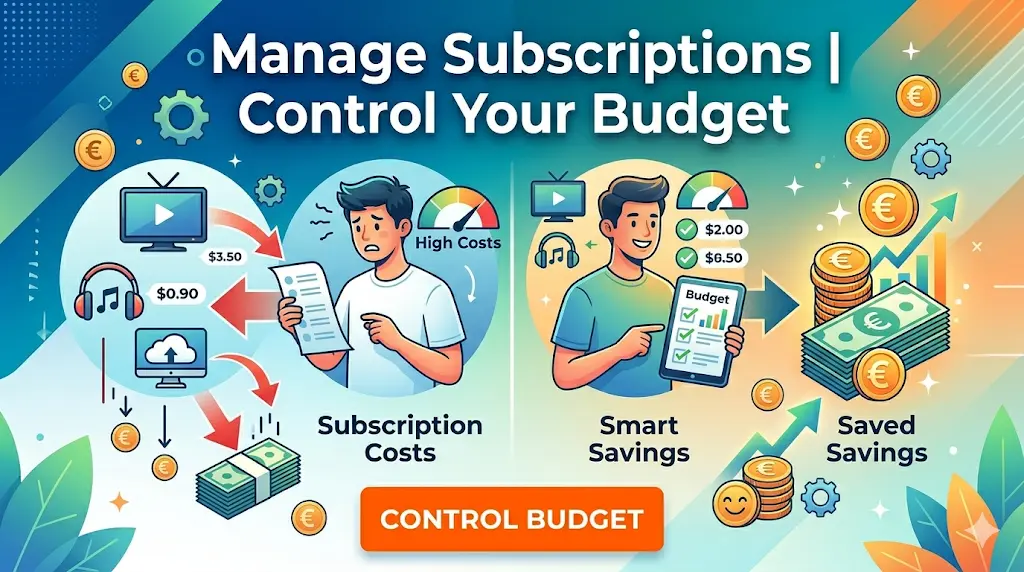
Managing Cross Border Digital Subscriptions
Many international workers refuse to switch their digital accounts to the localized German versions. Retaining your original accounts preserves your curated algorithms, your family sharing plans, and often, much cheaper native pricing. However, executing this creates a complex currency headache.
Keeping Your Home Country Accounts
If you decide to keep your US Netflix or your UK Spotify account active, you are legally bound to pay for those services in dollars or pounds. Attempting to pay for these foreign subscriptions using a traditional German bank card is a terrible financial strategy. Local German banks will hit you with dynamic currency conversion (DCC) markups and flat foreign transaction fees every single month for each individual subscription.
Conversely, if you leave your home-country credit card attached to the accounts, you must continually wire money from your German employer back to your native bank to pay the monthly credit card bill. If you use a legacy bank for this international wire, they will slice off unpredictable intermediary SWIFT fees, making that $15 streaming subscription exponentially more expensive. Balancing these dual financial lives without bleeding capital is a constant administrative chore detailed in Cross-Border Banking: Managing Your Home Country Account While in Germany.
Bypassing Legacy Bank Transaction Fees
To keep your native subscriptions active without losing money to archaic bank fees, you must optimize your payment infrastructure. Veteran expats heavily utilize Wise to manage these specific recurring cross-border costs.
By routing your monthly entertainment budget through Wise, you can hold balances in dozens of different currencies simultaneously. You can generate a digital Wise card and attach it directly to your American Netflix or British software subscriptions, allowing the platform to charge you in pure, native currency without triggering any international markup fees.
When you need to top up your subscription budget, you simply move euros from your German salary into your multi-currency account. Initiating the transfer through Wise ensures you lock in the true mid-market exchange rate. You entirely bypass the predatory exchange spreads that legacy banks rely on, saving you a small fortune over the course of a year. Managing these international capital flows efficiently is a foundational tactic expanded upon in Moving Money to Germany: Declaring Savings and Large Transfers.
Surviving German Cancellation Laws Kuendigungsfrist
If you do decide to sign up for local German subscriptions—such as a neighborhood gym membership, a public transit ticket, or a domestic streaming service like Joyn—you must navigate the country’s notoriously rigid contract culture.
The Auto Renewal Trap
Historically, German consumer contracts were designed to trap you. Signing up for a service usually locked you in for a mandatory twelve to twenty-four months. If you failed to submit a formal cancellation letter (Kündigung) exactly three months before the contract anniversary, the subscription would automatically and legally renew for another full year.
Fortunately, the government passed the Faire-Verbraucherverträge-Gesetz (Fair Consumer Contracts Act) to protect consumers. For contracts signed after March 2022, companies are legally forced to allow monthly cancellations after the initial minimum term expires. While this prevents the dreaded one-year auto-renewal trap, you are still fully legally liable for paying the initial minimum term. If you sign a one-year gym contract and get transferred out of Germany in month four, breaking that contract requires immense bureaucratic arguing. Escaping these binding local agreements requires the same meticulous attention to detail used when navigating German Bureaucracy 101: Understanding the Anmeldung, Schufa, and Tax ID.
Digital Tools for Subscription Control
German companies prefer to extract subscription fees via a SEPA Direct Debit mandate (SEPA-Lastschrift). Instead of charging a credit card, you give the company your IBAN, and they actively pull the money directly from your checking account every month.
Using a sluggish legacy bank to manage SEPA mandates means you often will not realize a subscription has charged you until you check a paper statement weeks later. To survive this system, you must use a modern, mobile-first banking interface. By using N26, you gain absolute real-time control over your monthly debits. N26 sends an immediate push notification to your smartphone the exact second a subscription pulls funds from your account.
Furthermore, you can utilize the Spaces feature within your N26 app to digitally partition your entertainment budget. You can drag your subscription money into a dedicated sub-account, isolating it from your primary rent and grocery funds. If a shady local service tries to pull a hidden fee, your core survival money remains entirely protected. You can also generate virtual N26 cards for free trials and instantly freeze them afterward, guaranteeing you are never charged when a trial period ends. Mastering this level of digital defense is heavily explored in Mobile Banking Apps in Germany: N26, Revolut, and More and Understanding German Bank Statements: Fees and Transactions Explained.
| Subscription Strategy | Best Payment Method | Primary Benefit | Main Drawback |
| Keep Home Country Accounts | Multi-Currency Virtual Card | Retain algorithms and native pricing | Requires manually funding dual-currency balances |
| Switch to German Accounts | Local German IBAN (SEPA) | Easy localized setup, no FX fees | Severe geoblocking and German dubbing |
| Local Gyms & Services | Local German IBAN (SEPA) | Compliant with local contract laws | Strict Kündigungsfrist minimum term traps |
Redirecting Your Saved Subscription Cash
Once you finally conduct a ruthless audit of your bank statements, freeze unused virtual cards, and optimize your cross-border payments, you will likely find yourself saving fifty to a hundred euros every single month.
Beating Inflation with Micro Investments
Leaving this newly saved cash sitting idle in a zero-interest checking account is a massive mistake. European inflation will slowly erode its purchasing power, rendering your rigorous budget auditing useless over the long term. Instead of letting that money stagnate, you should actively redirect your audited subscription budget into an accessible, globally portable brokerage.
By opening an account with Interactive Brokers, you can easily dollar-cost average your small monthly savings into globally diversified ETFs. Because Interactive Brokers charges phenomenally low execution fees and supports fractional shares, investing small amounts of saved subscription cash is highly mathematically viable.
More importantly, utilizing Interactive Brokers protects your geographic mobility. Local German neo-brokers often force expats to liquidate their entire portfolios if they decide to leave the country, triggering devastating capital gains taxes. An international platform allows you to build long-term wealth without locking your money into rigid domestic frameworks. Protecting and compounding these small monthly wins is the ultimate hallmark of a financially integrated expat, a sophisticated strategy comprehensively detailed in Should You Invest in German or International Stocks? Diversifying as an Expat and Taxing Worldwide Income: How Germany Taxes Foreign Income and Assets.
References
Primary sources (official)
- ARD ZDF Deutschlandradio Beitragsservice: The official government portal for the mandatory German broadcasting fee, detailing the current 2026 household rates, payment methods, and legal obligations upon address registration. https://www.rundfunkbeitrag.de/
- Bundesministerium der Justiz (Federal Ministry of Justice): The official legislative breakdown of the Faire-Verbraucherverträge-Gesetz (Fair Consumer Contracts Act), outlining the legal prohibition of automatic year-long contract renewals and the enforcement of monthly cancellation rights. https://www.bmj.de/SharedDocs/Gesetzgebungsverfahren/DE/Faire_Verbrauchervertraege.html
Other helpful sources
- Verbraucherzentrale – Gesetz für fairere Verträge: Germany’s leading independent consumer protection agency providing a plain-English guide on how expats can legally terminate fitness studio and streaming subscriptions under the new fair contract laws. https://www.verbraucherzentrale.de/wissen/vertraege-reklamation/kundenrechte/gesetz-fuer-fairere-vertraege-mehr-schutz-bei-kostenfallen-und-langen-laufzeiten-50233
Disclaimer
The information provided in this article is for general informational and educational purposes only and does not constitute professional financial or legal advice. The German broadcasting fee (Rundfunkbeitrag) is a legally mandated contribution, and failure to pay can result in severe financial penalties and negative credit reporting (Schufa). Consumer contract laws, specifically regarding cancellation notice periods (Kündigungsfrist), are highly strictly enforced in Germany, and the exact minimum terms depend entirely on the specific legally binding agreement you sign.