International Driving Permit in Germany: Do You Need One?
Navigating the labyrinth of German bureaucracy is a rite of passage every expat must endure, and the rules around driving are no exception. I remember the paralyzing fear of being pulled over on the Autobahn without the right paperwork and having no idea how to explain myself. This guide solves the confusion by detailing exactly who needs an International Driving Permit in Germany.
Disclosure: This post may contain affiliate links. We may earn a commission at no extra cost to you if you make a purchase through these links. Read full disclosure.
What is an International Driving Permit and Why Does It Matter
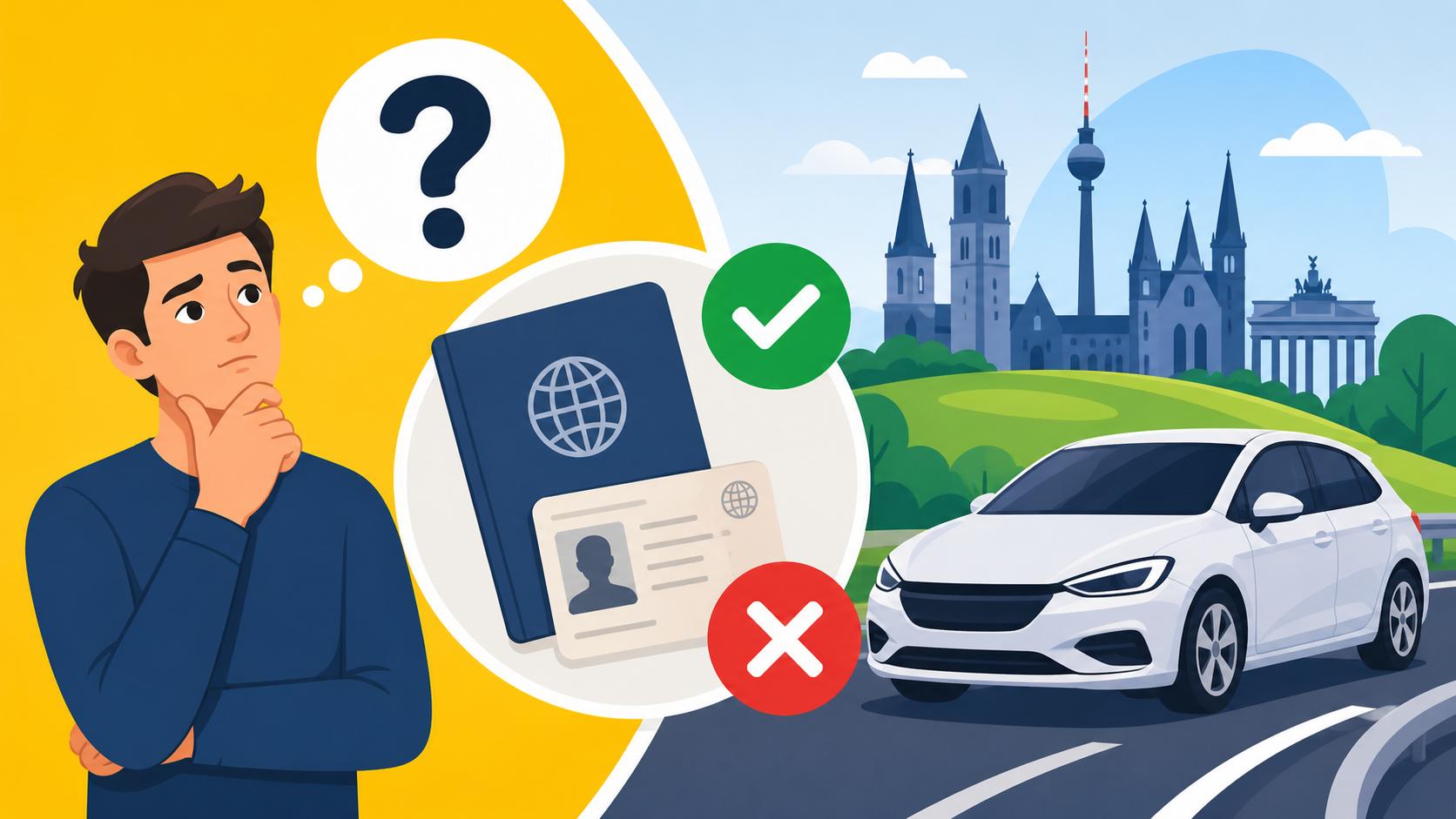
To understand whether you need an International Driving Permit (IDP) in Germany, we first have to clear up what this document actually is. Despite the official-sounding name, an IDP is not a standalone driving license. It is a multi-language translation of your existing, valid home country license. Think of it as a bridge between your local DMV and the German Polizei. It essentially tells a German officer, in a format they recognize, that you are indeed authorized to drive the category of vehicle you are currently operating.
The frustration for many of us is that an IDP looks like a flimsy, grey cardboard booklet that belongs in the 1950s. However, in the eyes of German law, it is a vital supplementary document. If your license was issued by a country outside the European Union (EU) or the European Economic Area (EEA), and it isn't in German or doesn't follow the specific layout of the Vienna Convention on Road Traffic, the authorities cannot technically "read" it. This is where the IDP steps in to save you from a very awkward roadside conversation.
I’ve seen many newcomers assume that because their license is in English, they are fine. While many police officers in big cities like Berlin or Munich speak excellent English, the law is rigid. If the document isn't in German or accompanied by a recognized translation like an IDP, you are technically driving without a valid permit. This can lead to heavy fines or, worse, issues with your insurance coverage if you happen to get into a fender bender.
The Six Month Rule for Residents and Expats
If you are moving to Germany for the long haul, the rules change significantly compared to a tourist visit. This is the part that catches most of us off guard. For the first six months after you complete your Registering Your Address (Anmeldung): Step-by-Step Guide, you are generally allowed to drive with your valid foreign license and an IDP (if required based on your home country).
However, the clock starts ticking the moment you register your residency. Once those 180 days are up, your foreign license—and your IDP—magically lose their validity in the eyes of the German state. I remember the sinking feeling in my stomach when I realized my six-month grace period had expired and I was still driving to the grocery store. Germany considers you a "resident" at this point, and residents are expected to hold a German driving license.
If you plan on staying longer than six months but less than a year, you can sometimes apply for an extension at your local driving license office (Fahrerlaubnisbehörde). You must prove that you will be leaving Germany before the 12-month mark. For everyone else, those first six months are your window to handle the Driving in Germany: Rules, Road Signs, and Getting Your License Converted process. Do not leave this until the last minute, as the bureaucracy involved in license conversion can take months.
Do Tourists and Short Term Visitors Need an IDP
For those just visiting Germany to see the Rhine or zip down the Autobahn in a rental, the rules are slightly more relaxed but still specific. If you hold a license from an EU or EEA member state, you do not need an IDP. Your plastic card is recognized across all member states without question.
If you are coming from a non-EU country like the United States, Canada, Australia, or India, the requirement depends on the language of your license. Technically, if your license is not in German, you are required to carry a translation. An IDP is the most universally accepted form of this translation. While many rental agencies might not ask for it at the counter, the police certainly will if you are stopped.
If you have already moved into one of the many furnished Wunderflats while you look for permanent housing and are using a rental car to scout neighborhoods, make sure you have that IDP in your glove box. It is one of those documents you hope you never have to show, but you’ll be incredibly glad you have it if a routine check occurs. You can often find car kits and document organizers on Amazon Germany to keep your IDP, registration, and insurance papers in one easy-to-reach spot.
How to Obtain Your International Driving Permit
The most important thing to know about getting an IDP is that you must do it in your home country before you arrive in Germany. You cannot apply for an IDP for your foreign license once you are already on German soil. I’ve seen many expats try to visit the local ADAC (the German automobile club) to get one, only to be told it’s impossible.
The process usually involves:
- Contacting your local automobile association (like AAA in the US or CAA in Canada).
- Providing two passport-sized photos.
- Paying a small administrative fee (usually around $20-$30).
- Presenting your valid, original driving license.
There are two main types of IDPs based on different international conventions: the 1949 and the 1968 versions. Germany recognizes both, but the 1968 version is generally valid for three years, whereas the 1949 version is only valid for one. If your home country issues both, opt for the 1968 version for the extra longevity, even if you plan on converting your license soon. It’s a small piece of mind that fits perfectly into the Settling in Quickly: A Newcomer’s Checklist for Your First Weeks in Germany philosophy.
Comparison of Driving Requirements by Status
| Category | IDP Required? | Validity Period | Action Needed |
|---|---|---|---|
| EU/EEA Citizen | No | Until license expires | None |
| Non-EU Tourist | Yes (if license isn't German) | Up to 6 months | Carry IDP with original |
| Non-EU Expat (Resident) | Yes (for first 6 months) | 6 months from Anmeldung | Start license conversion early |
| US/Canadian Tourist | Yes (if license isn’t German) | Duration of visit | Carry IDP to avoid fines |
The Risks of Driving Without a Valid IDP
In Germany, driving is viewed as a privilege accompanied by strict responsibilities. If you are caught driving with a non-EU license that requires an IDP but you don't have one, you aren't just getting a "fix-it" ticket. You are technically "driving without a valid license" (Fahren ohne Fahrerlaubnis). This is a criminal offense in Germany, not just a simple traffic violation.
The legal repercussions can include hefty fines calculated based on your daily income or even a prison sentence in extreme cases. Furthermore, your Liability Insurance (Haftpflicht): The Most Important Insurance in Germany? or your car insurance provider might refuse to pay out if you are involved in an accident while not legally permitted to drive. This could leave you personally liable for thousands of Euros in damages.
I’ve met people who tried to argue their way out of it by showing a digital copy of their license or an expired IDP. The German police are generally not moved by these arguments. They value the physical, original document. If you're out buying car supplies on Amazon Germany, maybe pick up a high-visibility vest and a first aid kit too, as these are also mandatory items that police will check for alongside your paperwork.
Converting Your License: The Ultimate Goal
While the IDP is a great temporary fix, the ultimate goal for any resident should be the "Umschreibung," or the conversion of your foreign license to a German one. Depending on where your original license was issued, this could be as simple as an administrative swap or as complex as retaking both the theory and practical driving exams.
Countries with "reciprocity" agreements with Germany (like many US states and Canadian provinces) allow for an easier transition. However, even in these cases, the paperwork is dense. You will likely need an official translation of your current license—even if you have an IDP. The IDP is a translation for the police; the Umschreibung office often requires a translation from a sworn translator or an organization like the ADAC.
Managing your Cost of Living in Germany: Budgeting Guide for Expats means accounting for these hidden costs. Between translation fees, vision tests, first aid courses, and administrative charges, converting your license can easily cost between €200 and €500, even without the need for driving school. If you do need to attend driving school, expect that number to climb significantly.
Moving Beyond the Car: Public Transport Options
If the thought of the IDP and the subsequent license conversion makes your head spin, remember that Germany has one of the best public transit systems in the world. Many expats living in urban centers find that they don't actually need a car for daily life. When I moved into my first apartment through Wunderflats, I realized I was steps away from an U-Bahn station and a tram line.
Learning the ropes of Transportation in Germany: Using Trains, Buses, and Trams Like a Local can save you a massive amount of stress. Between the Deutschlandticket and the efficiency of the Deutsche Bahn, the need for a private vehicle is often more of a luxury than a necessity. However, if you live in a more rural area or have a large family, understanding the Car Ownership in Germany: Buying vs Leasing and Maintenance landscape becomes essential.
In the end, the International Driving Permit is a small but mighty document. It’s the "safety net" that allows you to explore your new home with confidence during those first few months. Don't let the simplicity of the booklet fool you—it is your ticket to legal freedom on the road until you can finally hold that coveted German "Führerschein" in your hand.
Disclaimer
The information provided in this article is for informational purposes only and does not constitute legal advice. Driving regulations and immigration laws in Germany are subject to change. Always consult with the local Fahrerlaubnisbehörde (Driving License Office) or a qualified legal professional to ensure you are in compliance with current statutes.