German Summer and Air Conditioning: How to Stay Cool
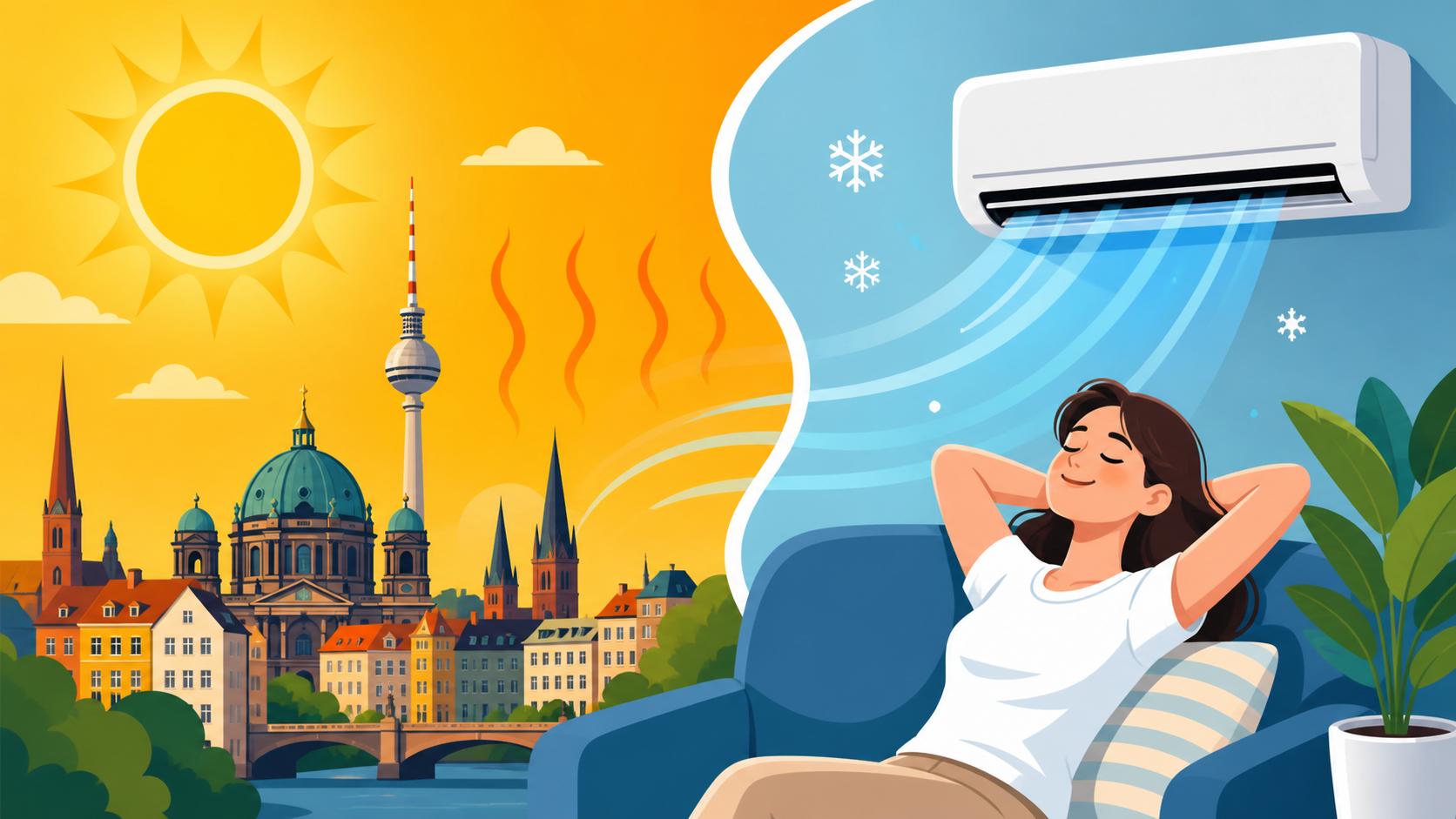
You move to Germany in the winter, survive the grey slush of February, and finally rejoice when the sun comes out in May. But then July hits, and you realize the horrifying truth: your beautiful high-ceilinged apartment has absolutely no air conditioning. I remember sitting in my Berlin flat during my first 38-degree heatwave, literally melting into my sofa, wondering why a G7 nation hadn't discovered the joys of HVAC. This guide solves the mystery of the missing AC and gives you the battle-tested strategies to survive a German summer without losing your mind.
Disclosure: This post may contain affiliate links. We may earn a commission at no extra cost to you if you make a purchase through these links. Read full disclosure.
Why Germany Rejects Air Conditioning
If you come from the US, UAE, or Southeast Asia, the lack of air conditioning in German residential buildings feels like a bizarre oversight. However, it is a deeply rooted cultural and structural phenomenon. Most German residential buildings, especially the coveted Altbau (old buildings built before 1948), were designed to retain heat, not expel it. Thick stone walls and double-glazed windows are fantastic for surviving a Prussian winter, but they turn into thermal batteries during a heatwave. Once that heat penetrates the stone, it stays there for days, even if the outside temperature drops at night.
There is also a significant cultural skepticism toward AC. Many Germans believe that "artificial cold" is unhealthy and that the Zugluft (draft) from a cooling unit will lead to immediate neck pain or a cold. While this might sound like folklore to an outsider, it influences everything from office culture to tenant laws. Furthermore, the Cost of Utilities in Germany: Average Prices for Electricity, Gas, Water is among the highest in Europe. Running a 2000-watt portable AC unit for eight hours a day can lead to a staggering "Nachzahlung" (additional payment) at the end of the year.
If you are currently looking for a place to stay and the heat is a deal-breaker, you might want to look into modern, serviced apartments. Platforms like Wunderflats often list newer builds or renovated units that are more likely to have modern ventilation or, in rare cases, actual cooling systems. These are particularly useful for expats who are just arriving and haven't yet mastered the traditional German ways of "passive cooling."
The Legal Hurdles of Installing AC
Can you just buy a split-unit AC and mount it on your wall? In most cases, the answer is a resounding "No." In Germany, the exterior facade of a building is generally not the property of the tenant, and any modification requires the explicit permission of the landlord or the homeowners' association (WEG). This is covered under German Tenant Rights and Laws: What Expats Need to Know, which outlines that structural changes often lead to legal disputes or the loss of your Kaution (deposit).
Even if your landlord is open to the idea, the bureaucratic hurdles are immense. Installing a split unit involves drilling through the exterior wall, which can affect the building's insulation and energy certification. In historical districts, "Denkmalschutz" (monument protection) laws might strictly forbid any visible units on the exterior of the building. This is why you will see thousands of windows in a city like Frankfurt or Munich, but almost no white compressor boxes hanging outside.
For those stuck in a traditional rental, you must navigate Understanding German Rental Contracts: Key Terms and Conditions before you even think about drilling a hole. Most expats find that the only viable path is a portable unit with a hose that vents out of a tilted window. While less efficient, it doesn't require structural changes and keeps you on the right side of your "Hausordnung" (house rules).
Master the Art of Lüften and Rolladen
Since you likely won't have a thermostat to click, you have to become a manual thermal engineer. The most important skill you will learn is Stoßlüften (impact airing), but the summer version. In the winter, you air out the room to prevent mold; in the summer, you air out the room to survive. The rule is simple: windows must be shut and covered the moment the sun touches your building.
Between 8:00 AM and 9:00 PM, your apartment should be a fortress. If you have "Rolladen" (exterior heavy shutters), pull them down completely. If you only have curtains, make sure they are light-colored and heavy. The goal is to stop the solar radiation from hitting the glass. If the sun hits your window glass, the greenhouse effect will raise your indoor temperature by several degrees within an hour. I learned this the hard way after leaving my balcony door open for "fresh air" and returning to an apartment that felt like a pizza oven.
Once the sun goes down and the outside temperature is lower than the inside temperature, you must open every single door and window to create a cross-breeze. This is the only time you should be letting air in. You can find more specific health tips on managing these temperature swings in our guide on Heatwave Health: Coping with Hot Summers in Germany (Hydration, Cooling).
| Cooling Method | Pros | Cons | Ideal For |
|---|---|---|---|
| Stand/Tower Fan | Cheap, low electricity use, no installation. | Only moves air; doesn't lower temp. | Mild days (up to 28°C). |
| Portable AC | Genuinely lowers room temp. | Noisy, high electricity cost, needs window vent. | Bedrooms during heatwaves. |
| Split-Unit AC | Efficient, quiet, permanent. | Requires landlord/city permission, expensive. | Homeowners or luxury new builds. |
| Evaporative Cooler | Cheaper than AC, eco-friendly. | Increases humidity, useless in humid heat. | Very dry German regions. |
Essential Gear to Buy for Your Apartment
If the passive cooling isn't cutting it, it’s time to head to Amazon Germany or local electronics stores like Saturn or MediaMarkt. Because heatwaves in Germany are often concentrated into two or three "spikes" per summer, fans sell out incredibly fast. Do not wait until the first 30-degree day to buy a fan; they will be out of stock everywhere, and the prices will double on the secondary market.
A standard pedestal fan is the bare minimum. However, if you want to actually sleep, look for a "Vornado" or a similar air circulator. Unlike a regular fan that just blows air at you, these are designed to circulate all the air in a room, which is much more effective when paired with an open window at 2:00 AM. If you are shopping for these items, you might want to check out Navigating German Supermarkets: Grocery Shopping Tips and Tricks to see which local retailers carry seasonal home goods.
For the truly desperate, a portable air conditioner is the "nuclear option." When buying one on Amazon Germany, pay close attention to the BTU (British Thermal Units) rating and the noise level (decibels). Remember that you will also need a "Fensterabdichtung" (window seal kit). German windows typically tilt (Kipp-funktion) or open inward like a door, which makes the standard US-style sliding window vent useless. These fabric seal kits allow you to zip the hose into a tilted window while keeping the hot air out and the bugs from entering.
Staying Cool Outside the Home
When your apartment becomes unbearable, the German lifestyle adapts by moving toward the water. Germany has a fantastic "Freibad" (open-air pool) culture. Every major city has multiple public pools that are affordable and well-maintained. If you find yourself in Berlin, Munich, or Hamburg, the local lakes are the go-to destination. You can read more about how to navigate these spaces in our guide on Using Public Pools and Spas: An Introduction to Germany’s Bathing Culture.
If you prefer something more active, many residents join local clubs to escape the heat. Modern gyms often have industrial-grade ventilation (though rarely full AC like in the US). For more information on finding these facilities, check out Staying Fit in Germany: Joining Gyms, Pools, and Sports Clubs.
Another pro-tip: German supermarkets and "Einkaufszentren" (shopping malls) are almost always air-conditioned. If your home office is a sweatbox, spending an afternoon with your laptop in a modern mall cafe can be a lifesaver. Just be aware that many smaller "Apotheken" (pharmacies) or "Bäckereien" (bakeries) might not have cooling, so choose your destination wisely.
Surviving the Night: The "German" Sleep Method
Sleeping during a German summer is an art form. Most Germans use a "Bettdecke" (duvet) year-round, simply swapping the thick down filling for a thinner summer version. However, during a true heatwave, even a thin duvet is too much. Many expats switch to a simple linen sheet, which you can easily find on Amazon Germany.
Another local trick is the "Wärmflasche" (hot water bottle) used in reverse. Fill it with cold water and stick it in the freezer for an hour before bed (don't let it freeze solid or it might crack). Placing this at the foot of your bed can help lower your core body temperature enough to fall asleep.
If you are struggling with the heat while searching for a permanent home, remember that the building's orientation matters more than you think. A "Südlage" (south-facing) apartment will be beautiful in the winter but a nightmare in August. When Finding an Apartment in Germany: Best Websites and Tips for Expats, always look for terms like "Erdgeschoss" (ground floor), which stays naturally cooler, and avoid "Dachgeschoss" (attic apartments) unless you are prepared to live in a sauna for two months of the year.
Disclaimer
This article is for informational purposes only. Local regulations regarding air conditioning installation, building codes, and tenant rights vary by federal state and specific rental agreements. Always consult with your landlord or a legal professional before making any structural changes to your living space. Usage of high-wattage appliances should be monitored to ensure compliance with electrical safety standards and to avoid unexpected utility costs.