Sick Leave in Germany: The AU (Krankschreibung) Explained
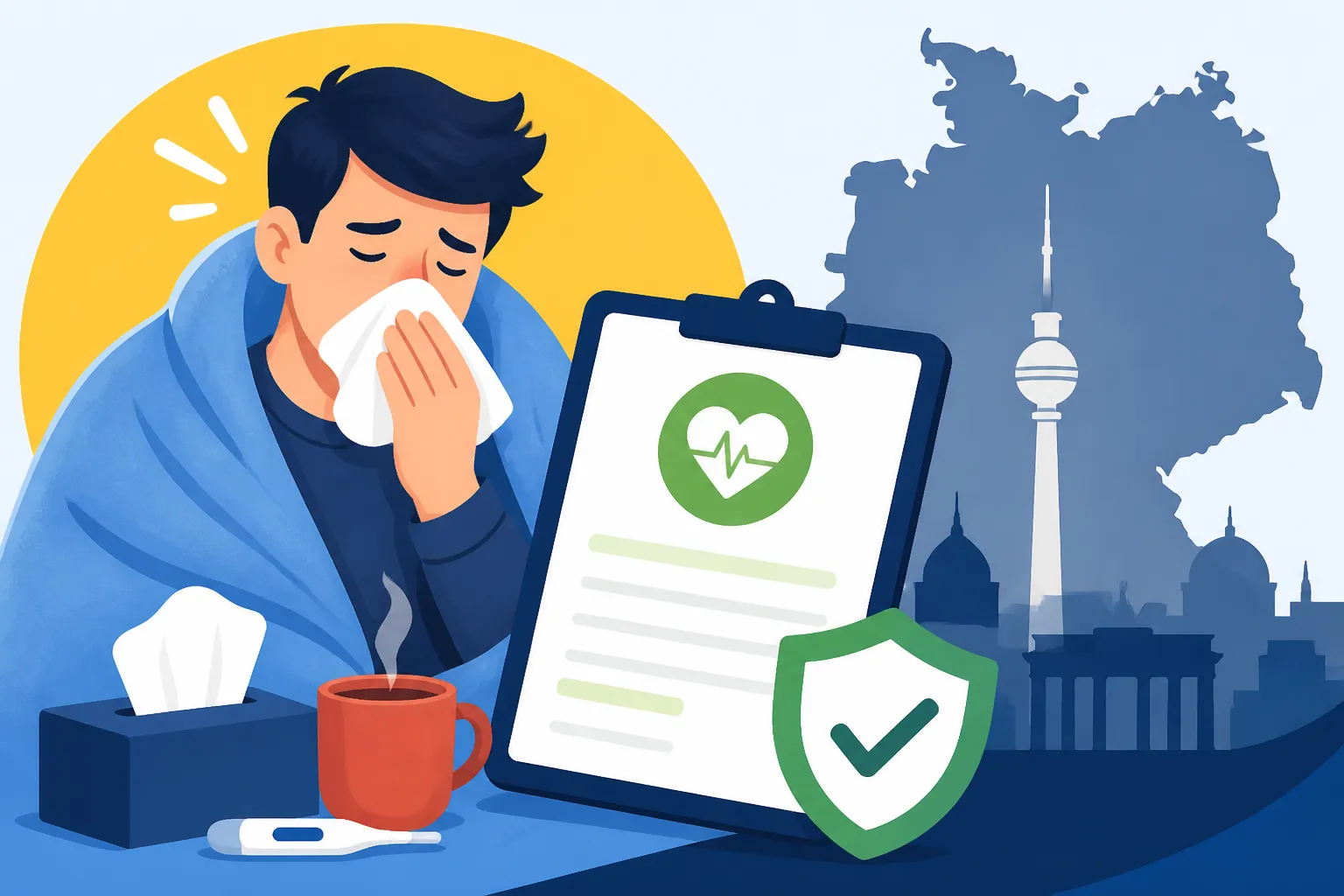
Waking up with a fever in Germany often triggers more than just physical aches; it sparks a unique brand of bureaucratic anxiety about "the yellow slip." I remember lying in my Berlin flat during my first year, clutching a thermometer and panicking because I didn't know if my boss would fire me for missing a Tuesday without a formal certificate. This guide demystifies the German sick leave system, explaining the AU-Bescheinigung, your rights to continued pay, and how to navigate the doctor's office without the stress.
Disclosure: This post may contain affiliate links. We may earn a commission at no extra cost to you if you make a purchase through these links. Read full disclosure.
Understanding the Arbeitsunfähigkeitsbescheinigung (AU)
The word "Arbeitsunfähigkeitsbescheinigung" is a mouthful even for those who speak fluent German, but in the expat community, we simply call it the AU or the Krankschreibung. Essentially, this is your legal proof that a medical professional has deemed you unfit for work. Without this document, your absence from work is technically unexcused, which can lead to warnings or even termination in extreme cases. Germany takes the documentation of health very seriously, and the system is designed to protect both the employee’s health and the employer’s liability.
What Exactly is an AU?
An AU is a formal certificate issued by a licensed physician (usually your Hausarzt) that states you are unable to perform your professional duties due to illness or injury. It does not—and this is a crucial point for privacy—disclose your specific diagnosis to your employer. The certificate simply notes the start date of your illness and the estimated duration of your recovery. In the past, this was a multi-part yellow paper form. One copy was for you, one for your health insurance, and one for your employer.
Today, while the physical yellow slip is becoming a relic, the legal weight of the "sick note" remains the same. It serves as a shield for the employee. If you have an AU, your employer cannot legally force you to work, check emails, or join "quick" Zoom calls. You are officially "off the grid" for the duration specified. If you are still feeling the transition from your home country's system, you might find it helpful to read about Healthcare Culture Shock: How Germany’s Medical System Differs from Other Countries to better understand why Germans are so meticulous about these records.
The Shift to the eAU (Electronic Sick Note)
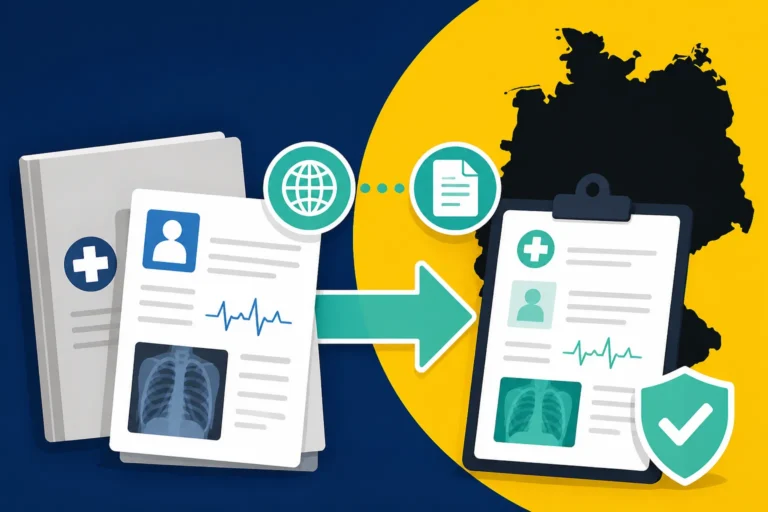
As of 2023, Germany has largely transitioned to the eAU system. This was a massive relief for those of us who used to dread hobbling to a mailbox while shivering with chills. Now, when you visit a doctor who participates in the public health insurance system, they transmit your sick leave data digitally to your health insurance provider (Krankenkasse). Your employer then retrieves this information directly from the insurance company.
However, do not assume this happens magically without your input. You are still legally obligated to inform your employer immediately (usually before your shift starts) that you are sick and how long you expect to be out. The "electronic" part only covers the transmission of the certificate itself. If you are insured through private providers like ottonova or Feather Insurance, the process might still involve digital uploads of PDF certificates via an app, which is often much faster and more user-friendly than the traditional public route. Always check with your provider to see how they handle these digital transmissions.
Different Types of Sick Notes
Not all sick notes are created equal. You might encounter the initial certificate (Erstbescheinigung) and the follow-up certificate (Folgebescheinigung). If your initial week of rest wasn't enough to kick that stubborn bronchitis, you must return to the doctor before your current note expires to get a follow-up. Gaps in your AU dates can cause significant issues with your sick pay, especially if your illness stretches into the long-term territory.
There is also a specific version for when your child is sick, known as the Ärztliche Bescheinigung für den Bezug von Krankengeld bei Erkrankung eines Kindes. This is a different process entirely, allowing parents to stay home and receive "child sick pay" from their insurance. Navigating these nuances is part of Healthy Living in Germany: Wellness, Fitness, and Mental Health Guide because reducing stress during illness is key to a faster recovery.
The Timeline: When Do You Need a Note?
One of the most confusing aspects of working in Germany is knowing exactly when you must provide the AU to your boss. Is it the first day? The third? The answer often depends on what is written in your specific employment contract, and this is where many expats get tripped up. I once worked for a startup that demanded a note on day one, while my next corporate job followed the statutory "three-day rule."
The Statutory Three-Day Rule
Under German labor law, the default requirement is that an employee must provide a medical certificate if the illness lasts longer than three calendar days. This means if you feel a cold coming on Monday, you can stay home Monday, Tuesday, and Wednesday without a doctor's note, provided you return on Thursday. If you are still sick on Thursday, the note must be submitted that day, and it must cover the period from the very first day you were absent.
It is vital to count calendar days, not just workdays. If you get sick on a Friday and are still unwell on Monday, those weekend days count toward your three-day window. If you're unsure about how your specific insurance covers these early days, reviewing Health Insurance in Germany: Understanding Public vs Private Coverage can clarify your provider's role in the process.
Employer-Specific Requirements
Here is the "gotcha" clause: German law allows employers to demand a medical certificate starting from the very first day of illness. This must be stipulated in your contract or a general works agreement. Many international companies and high-pressure startups use this "day one" rule to discourage casual absenteeism.
Before you get sick, dig out your contract and look for the section on Entgeltfortzahlung or Arbeitsunfähigkeit. If it says "ab dem ersten Tag," you must see a doctor the moment you decide you aren't going into the office. Failing to do so is a breach of contract. For those using digital-first insurance like Feather Insurance, getting that day-one note is often easier through integrated telemedicine services.
Reporting Your Absence (Anzeigepflicht)
Regardless of when the doctor's note is due, your "duty to inform" (Anzeigepflicht) begins immediately. You must notify your employer as soon as you realize you cannot work. A quick email, a Slack message, or a phone call to your supervisor or the HR department is mandatory. You should state that you are "krankgeschrieben" (on sick leave) and provide an estimated date of return.
You do not need to tell them why you are sick. In fact, most HR professionals in Germany prefer you don't. Simply saying "I am unwell and have a doctor's note until Friday" is perfectly professional and respects German privacy norms. If you are struggling with the terminology, you might find Common German Medical Terms: A Mini Dictionary for Patients incredibly useful for these interactions.
Sick Pay and Financial Security
One of the greatest perks of the German social system is the robust protection of your income while you're ill. Unlike some countries where a week of flu can mean a missing paycheck, Germany has a two-tiered system to ensure you can afford rent while you recover.
Lohnfortzahlung: Employer Continued Payment
For the first six weeks of a specific illness, your employer is legally required to pay 100% of your regular salary. This is known as Lohnfortzahlung im Krankheitsfall. To qualify, you generally must have been employed with the company for at least four weeks. This payment includes your base salary and usually any regular supplements you would have earned.
If you recover but then fall ill again with a different illness, the six-week clock resets. However, if you suffer a relapse of the same illness, the weeks are cumulative. This is why the insurance companies track the diagnosis codes (ICD-10 codes) that the doctor puts on the insurance copy of your AU. If you're curious about how this reflects on your monthly take-home, check out Understanding Your German Payslip: Gross vs Net Salary Explained.
Krankengeld: Health Insurance Sick Pay
If your illness is serious and lasts longer than six weeks, your employer stops paying you, and your health insurance takes over. This is called Krankengeld. It is not 100% of your salary; typically, it is around 70% of your gross income (but no more than 90% of your net income).
This drop in income can be a shock. This is where private supplementary insurance or "sick pay insurance" (Krankentagegeld) becomes important. Many expats choosing ottonova or Feather Insurance opt for plans that include higher sick pay benefits to bridge this gap. If you are on public insurance, you are automatically covered for Krankengeld, but it's worth reading Public Health Insurance (gesetzliche Krankenkasse): What It Covers and Costs to understand the exact limits.
Self-Employed and Freelancers
Freelancers have it much tougher. If you are self-employed, you don't have an employer to pay your salary for those first six weeks. If you don't work, you don't get paid. When setting up your insurance, you have to decide if you want to pay a higher premium to receive Krankengeld from the 15th or 43rd day of illness.
For many digital nomads using SafetyWing, the focus is often on emergency medical care rather than long-term sick pay, which is a vital distinction to understand. If you're building a life here as a solo professional, I highly recommend looking at Health Insurance for Freelancers and Self-Employed: Navigating the System to ensure you don't end up in a financial hole due to a broken leg or burnout.
| Feature | Lohnfortzahlung (Employer) | Krankengeld (Insurance) |
|---|---|---|
| Duration | First 6 weeks | From week 7 up to 78 weeks |
| Amount | 100% of regular salary | ~70% gross / 90% net |
| Eligibility | Employed > 4 weeks | Publicly insured (or private with add-on) |
| Diagnosis | Hidden from employer | Known by insurance company |
Navigating the Doctor’s Visit (Hausarzt)
Getting the actual note requires a visit to a doctor. In Germany, your primary point of contact is the Hausarzt (General Practitioner). Finding one who is accepting new patients and speaks English can be a challenge in major cities like Berlin or Munich.
Finding a Doctor and Making an Appointment
Don't wait until you have a 39-degree fever to find a doctor. I recommend registering with a Hausarzt as soon as you get your Anmeldung (Address Registration) vs Visa sorted. Look for a practice near your home that offers Sprechstunde (open office hours). Many German doctors allow you to simply show up between 8:00 AM and 10:00 AM for acute issues without an appointment, though you should be prepared to wait.
Websites like Jameda or Doctolib are the gold standard here for booking appointments and filtering for English-speaking staff. When you arrive, you’ll need your health insurance card (Gesundheitskarte). If you're visiting from outside the EU and using a provider like SafetyWing, ensure you have your policy details and be prepared to pay upfront and claim reimbursement later. For a deeper dive into the logistics, see Finding a Doctor (Hausarzt) in Germany: How to Choose and Register.
Telemedicine and Digital Options
One of the silver linings of recent years is the explosion of telemedicine in Germany. Apps like TeleClinic or Kry allow you to see a doctor via video call and receive a valid eAU for simple illnesses like the flu or a cold. This is an absolute lifesaver when you're too dizzy to stand in a pharmacy line.
Most modern insurance providers, including ottonova and Feather Insurance, have integrated telemedicine into their apps, often offering these consultations for free. Note that for certain conditions or long-term sick leave, a physical examination will still be required. If you're exploring these tech-forward options, Telemedicine in Germany: Online Doctor Appointments and e-Prescriptions covers everything you need to know.
Communication Tips for Non-German Speakers
Even with an English-speaking doctor, the medical assistants at the front desk (the Arzthelfer) may only speak German. Being able to say "Ich brauche eine Arbeitsunfähigkeitsbescheinigung" (I need a sick note) will get you through the door.
Focus on describing your symptoms clearly. Instead of saying "I feel bad," use specific terms like "Fieber" (fever), "Husten" (cough), or "Schmerzen" (pain). German doctors tend to be quite direct and may prescribe herbal remedies for minor colds—don't be offended; it's a standard part of The German Apotheke Experience: Why Pharmacies Are More Than Just Medicine. If you need something stronger, you’ll need a prescription, which you can then take to any Apotheke.
Special Circumstances: Mental Health and Sick Children
The German system recognizes that being "unfit for work" isn't just about physical injuries. Mental health and family responsibilities are also covered under the umbrella of protected sick leave.
Burnout and Mental Health Sick Leave
Germany is increasingly proactive about mental health. If you are suffering from burnout, severe stress, or depression, your Hausarzt or a psychiatrist can issue an AU. This is treated exactly like any other illness regarding your salary and job protection.
The stigma is much lower here than in many other corporate cultures. If you find yourself struggling with the gray winters or workplace pressure, don't hesitate to seek help. You can read more about Mental Health Care in Germany: Finding Therapists and Psychologists to understand how to access long-term support while being covered by your insurance.
Kinderkrankentage: Caring for a Sick Child
If your child is ill and cannot go to Kita (daycare) or school, you have the right to stay home to care for them. This is not deducted from your own sick days but is handled through Kinderkrankengeld. Each parent is entitled to a certain number of "child sick days" per year (the number was significantly increased recently).
To claim this, you must take your child to a pediatrician (Kinderarzt) on the first day they are sick to get a "child sick note." You then submit this to your insurance, and they—not your employer—pay a portion of your lost wages for that day. This process is a common topic in our guide on Children’s Healthcare: Pediatricians and Routine Check-ups (U-Untersuchungen).
Sick Leave During Vacation
This is a "pro-tip" that shocks many newcomers: If you fall ill while you are on your scheduled annual leave (Urlaub), those days do not count as vacation days if you get a doctor's note. If you are in Spain on a beach and get a nasty ear infection, go to a local doctor, get an AU, and inform your employer.
When you return, those sick days will be credited back to your vacation balance. German law views vacation as a time for recuperation; if you are sick, you aren't recuperating, so the days shouldn't be "wasted." This is one reason why having Travel Health Insurance: What Expats Need for Schengen Visa & Short Trips is so useful even when traveling within the EU.
Rights and Responsibilities
While you are on sick leave, you have certain protections, but you also have obligations to ensure your recovery. The German concept of "sick leave" is very much focused on the goal of getting you back to health as quickly as possible.
Can You Be Fired While on Sick Leave?
There is a common myth that you cannot be fired while sick in Germany. This is not entirely true. While it is very difficult to fire someone because they are sick (this is highly regulated and usually requires a "negative prognosis" over years), you can still be fired for other reasons (like redundancy or misconduct) while you happen to be on sick leave.
However, the "yellow slip" provides a strong layer of protection. If an employer tries to terminate you shortly after you submit an AU, you should immediately contact a lawyer or your union. For more on your rights in the office, check out German Workplace Rights: Overtime, Breaks, and Vacation Days Explained.
Activities Allowed While Sick
Being on an AU doesn't mean you are under house arrest. The legal rule is that you must not engage in any activity that hinders your recovery. If you have a broken arm but feel fine otherwise, you can certainly go for a walk, go grocery shopping, or sit in a café.
However, if you have the flu and are spotted out at a nightclub, your employer could theoretically use that as grounds for a warning (Abmahnung), arguing that you are "feigning" illness or sabotaging your recovery. Use common sense. If a neighbor sees you at the supermarket buying soup, that's fine. If you're seen training for a marathon while on leave for back pain, you're going to have a problem.
Returning to Work Early
If your doctor writes you a note for two weeks, but you feel amazing after five days, can you go back to work? Yes. In Germany, an AU is a "medical estimate," not a "work ban." You do not need a "healthy note" to return to work early.
Crucially, you are still covered by your employer's liability insurance if you return early. If you decide to go back before the date on your note, just inform your boss. They might ask if you're sure, but there is no legal barrier to resuming your duties. For more tips on navigating these transitions, Work Culture in Germany: Etiquette, Hierarchy, and Office Norms is a great resource.
Disclaimer
The information provided in this article is for informational purposes only and does not constitute legal or medical advice. German labor laws and insurance regulations are subject to change, and individual employment contracts may vary. Always consult with a qualified legal professional or your health insurance provider regarding your specific situation.