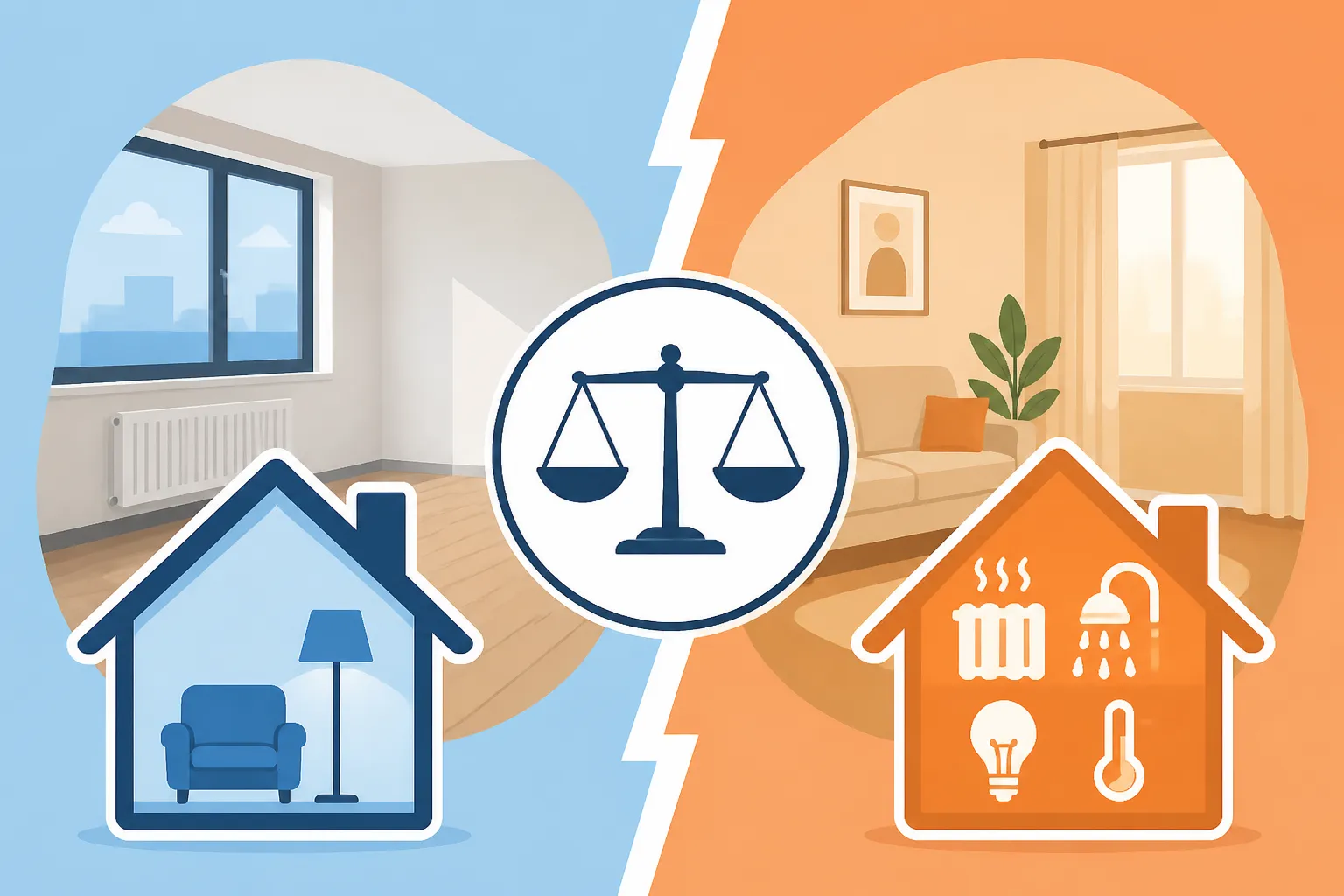
What Is the Difference Between Kaltmiete and Warmmiete?
Staring at a German apartment listing can feel like trying to decode an encrypted message, especially when you see two drastically different prices for the same studio. I still remember the sinking feeling in my stomach during my first month in Munich when I realized the "bargain" rent I had budgeted for was only the base price. This guide solves the confusion by meticulously breaking down the differences between Kaltmiete and Warmmiete so you never get caught off guard by hidden costs.
Disclosure: This post may contain affiliate links. We may earn a commission at no extra cost to you if you make a purchase through these links. Read full disclosure.
Decoding Kaltmiete: The Base Cost of Your German Home
When you first start browsing property portals, the number that usually catches your eye in large, bold font is the Kaltmiete. Translated literally as "cold rent," this figure represents the absolute baseline cost of occupying the four walls of your apartment. It is the profit the landlord makes from the property and does not include any of the costs associated with actually living in and maintaining the building.
I often tell newcomers to view the Kaltmiete as the "naked" price of the apartment. It is the amount used by the government and local authorities to determine if a rent price is legal under the Mietspiegel, or the local rent index. If you are trying to compare the value of two different apartments, you should always look at the Kaltmiete first to see which one has a higher base value per square meter.
However, the Kaltmiete is never the amount that actually leaves your bank account every month. If you only pay the Kaltmiete, you would be sitting in a dark, cold room with no running water and no trash collection. Understanding this distinction is the first step toward successful Finding an Apartment in Germany: Best Websites and Tips for Expats. You must always look deeper into the listing to find the additional costs that transform a cold rent into a warm one.
Exploring Warmmiete: The True Monthly Commitment
The Warmmiete, or "warm rent," is the total amount you will transfer to your landlord’s bank account on the first of every month. This figure is the sum of the Kaltmiete plus the Nebenkosten (ancillary costs or operating costs). It is intended to cover the expenses the landlord incurs for the upkeep of the building and the basic utilities provided to your unit.
It is a common misconception that "warm" means everything is included. In reality, a Warmmiete usually only covers things that are communal or managed by the building’s administration. For instance, while it includes your heating, it rarely includes your personal electricity or your home internet connection. When you are Understanding German Rental Costs: Kaltmiete, Warmmiete, Nebenkosten, you must realize that even the warm rent might not be your final monthly expenditure.
One way to simplify this transition, especially if you are moving from abroad and don't want to deal with setting up various utility contracts immediately, is to look for "all-in" rentals. Services like Wunderflats offer furnished apartments where the Warmmiete is truly all-inclusive, covering electricity, heating, and high-speed internet in one flat fee. This can be a lifesaver for those who want to avoid the bureaucratic headache of German utility providers during their first few months.
The Mystery of Nebenkosten: What Are You Actually Paying For?
The gap between your cold rent and your warm rent is filled by the Nebenkosten. These costs are legally regulated, and landlords are only allowed to pass on specific operating expenses to the tenant. Understanding these line items will help you spot a "padded" rental agreement that might be overcharging you for services you don't need.
Communal costs usually make up the bulk of the Nebenkosten. This includes trash collection (Müllabfuhr), street cleaning, hallway lighting, and professional garden maintenance if the building has a yard. It also covers the property tax (Grundsteuer) and the various insurances the landlord must maintain for the building structure. If the building has an elevator, the maintenance and electricity for that lift are also shared among the tenants.
Inside your apartment, the most significant portion of the Nebenkosten is your heating and water usage. In most German apartment buildings, there is a central heating system. You pay a monthly "advance" based on an estimate of your usage. If you are moving into a new place and need to stock up on household essentials to keep your new space organized, Amazon Germany is the most reliable way to get everything from shower curtains to specialized recycling bins delivered directly to your door. Being organized from day one helps you manage your household and potentially lower your variable costs.
What Is Almost Never Included in the Warmmiete
This is where many expats trip up. In many other countries, "utilities included" means everything, including the lights and the Wi-Fi. In Germany, that is rarely the case for standard unfurnished rentals. Even when you pay your Warmmiete, you are usually responsible for two major additional expenses: electricity and internet.
Electricity (Strom) is almost always a separate contract that you must sign with a provider like Vattenfall or a local Stadtwerke. When you move in, you take a reading of the electricity meter and register your name. If you don't do this, you will automatically be put on the "basic supply" (Grundversorgung) plan, which is significantly more expensive. You can find more details on this process in our guide on How to Set Up Electricity in a German Apartment.
Similarly, the internet is your responsibility. It can take several weeks for a technician to come and activate a DSL or fiber line in a German apartment. To bridge this gap, many expats use an eSIM service like Airalo to ensure they have high-speed data the moment they step off the plane. This prevents you from being digitally isolated while you wait for your permanent home internet to be installed. Furthermore, don't forget the mandatory broadcast fee, which is explained in How to Register and Pay the Rundfunkbeitrag in Germany.
| Cost Category | Included in Kaltmiete? | Included in Warmmiete? | Included in All-Inclusive? |
|---|---|---|---|
| Use of Living Space | Yes | Yes | Yes |
| Property Tax | No | Yes | Yes |
| Building Insurance | No | Yes | Yes |
| Heating & Hot Water | No | Yes | Yes |
| Trash Collection | No | Yes | Yes |
| Hallway Cleaning | No | Yes | Yes |
| Personal Electricity | No | No | Often |
| Home Internet | No | No | Often |
| Furniture | No | No | Yes |
The Yearly Reality Check: The Nebenkostenabrechnung
One of the most unique—and sometimes terrifying—aspects of the German rental system is the annual operating cost settlement, known as the Nebenkostenabrechnung. Because the "extra" part of your Warmmiete is just an estimate, the landlord is required by law to calculate your actual usage once a year and compare it to what you paid.
If you were very conservative with your heating during a mild winter, you might receive a "Guthaben," which is a refund of the overpaid amount. I remember the joy of receiving a 200 Euro check in my second year; it felt like winning the lottery. However, the opposite is also common. If the price of heating oil or gas spikes, or if you prefer to keep your apartment at a tropical 25 degrees all winter, you might face a "Nachzahlung"—a demand for an immediate back-payment of hundreds of Euro.
This annual settlement is a document you must scrutinize. It is not uncommon for mistakes to be made in these calculations. If you are unsure about the terms of your lease regarding these costs, refer to our comprehensive article on How to Understand a German Rental Contract (Mietvertrag) to ensure you aren't being billed for repairs or administrative fees that the landlord is legally required to cover themselves.
Why Some Listings Use "Inklusivmiete" or "Pauschalmiete"
As you search, you might encounter terms that don't fit the standard Kalt/Warm binary. A "Pauschalmiete" or "Inklusivmiete" is a flat-rate rent. In this scenario, the landlord charges a fixed amount that includes all operating costs, and they waive the right to do a yearly settlement. This means you won't get a refund if you use less, but you also won't be hit with a surprise bill if you use more.
This is very common in sublets or short-term furnished apartments. Platforms like Wunderflats specialize in these types of arrangements because they provide certainty for both the landlord and the international tenant. For an expat who is still learning the ropes, a Pauschalmiete provides peace of mind and simplifies monthly budgeting. You can learn more about these options in our guide on Short-Term and Furnished Rentals in Germany.
However, even with a flat-rate rent, you should check the fine print for a "fair use" clause. If you leave the windows open while the heaters are on full blast 24/7, a landlord may still have the legal grounds to adjust the rent or charge for excessive waste. It's always best to practice the German habit of "Stoßlüften" (shock ventilation)—opening the windows wide for five minutes and then closing them—to keep the air fresh without wasting heat.
Critical Differences in Monthly Cash Flow
Understanding the difference between Kaltmiete and Warmmiete is not just about vocabulary; it is about protecting your financial health. When you apply for an apartment, the landlord will want to see that your net monthly income is at least three times the Warmmiete. If you only budget based on the Kaltmiete, your application will likely be rejected because the landlord knows you cannot realistically afford the total cost of living.
Furthermore, the "Kaution" or security deposit is almost always calculated based on the Kaltmiete. Usually, this is three months of "cold" rent. This is a significant upfront cost. For example, if an apartment is 1,000 Euro Kalt and 1,250 Euro Warm, your deposit will be 3,000 Euro, not 3,750 Euro. Knowing this distinction helps you calculate exactly how much cash you need to have ready before you sign. For more on managing this, see The Rental Deposit (Kaution) in Germany: Rules and Return.
Always ask the landlord for a detailed breakdown of the Nebenkosten before signing so you know exactly which utilities you need to sign up for independently and which are covered by your monthly transfer.
Practical Strategies for Apartment Hunting and Budgeting
To avoid the pitfalls of the German rental market, I always suggest maintaining a spreadsheet during your search. List the Kaltmiete, the Nebenkosten, and then add an estimated 50-80 Euro for electricity and 30-50 Euro for internet. This "Calculated Total" is what you should use to decide if an apartment fits your lifestyle.
If you find that the Nebenkosten listed for a specific apartment seem unusually low—for example, only 100 Euro for a 100-square-meter apartment—be wary. This often means the landlord has set the monthly advance too low to make the Warmmiete look attractive, but you will almost certainly face a massive Nachzahlung at the end of the year. For advice on spotting these kinds of issues, read How to Spot Rental Scams in Germany Before Paying.
Finally, remember that your location within Germany affects these costs. Heating costs in a drafty "Altbau" (old building) in Berlin will be significantly higher than in a modern, energy-efficient "Neubau" in Frankfurt. If you are debating between different regions, check our comparison of Living in Munich vs Hamburg: A Practical Comparison to see how local energy prices and housing markets differ.
Summary Checklist for New Tenants
Before you sign any document or transfer any "Warm" rent, go through this checklist to ensure you are fully protected and informed:
- Confirm the exact Kaltmiete and ensure it aligns with the local Mietspiegel.
- Get a written list of what is included in the Nebenkosten (trash, water, heating, etc.).
- Ask specifically if electricity and internet are included or if you must find your own providers.
- Calculate the security deposit based on the Kaltmiete (it should not exceed 3 months' worth).
- Check the energy certificate (Energieausweis) of the building to estimate how high your heating bills might actually be.
- If the process feels too overwhelming, consider a managed platform like Wunderflats for your first six months to give yourself time to learn the system.
Navigating the German housing market is a rite of passage for every expat. It feels like a hurdle at first, but once you understand the logic behind the Kaltmiete and Warmmiete system, you will have much more control over your monthly expenses and avoid the "culture shock" of unexpected bills.
Disclaimer
This article is for informational purposes only and does not constitute legal or financial advice. Rental laws in Germany are complex and subject to change. Always consult with a qualified legal professional or a tenant association (Mieterverein) before signing a rental agreement.