Cash vs Card in Germany: What Visitors Should Know
Disclosure: This article contains affiliate links. If you buy through them, we may earn a commission at no extra cost to you. Read our full disclosure.
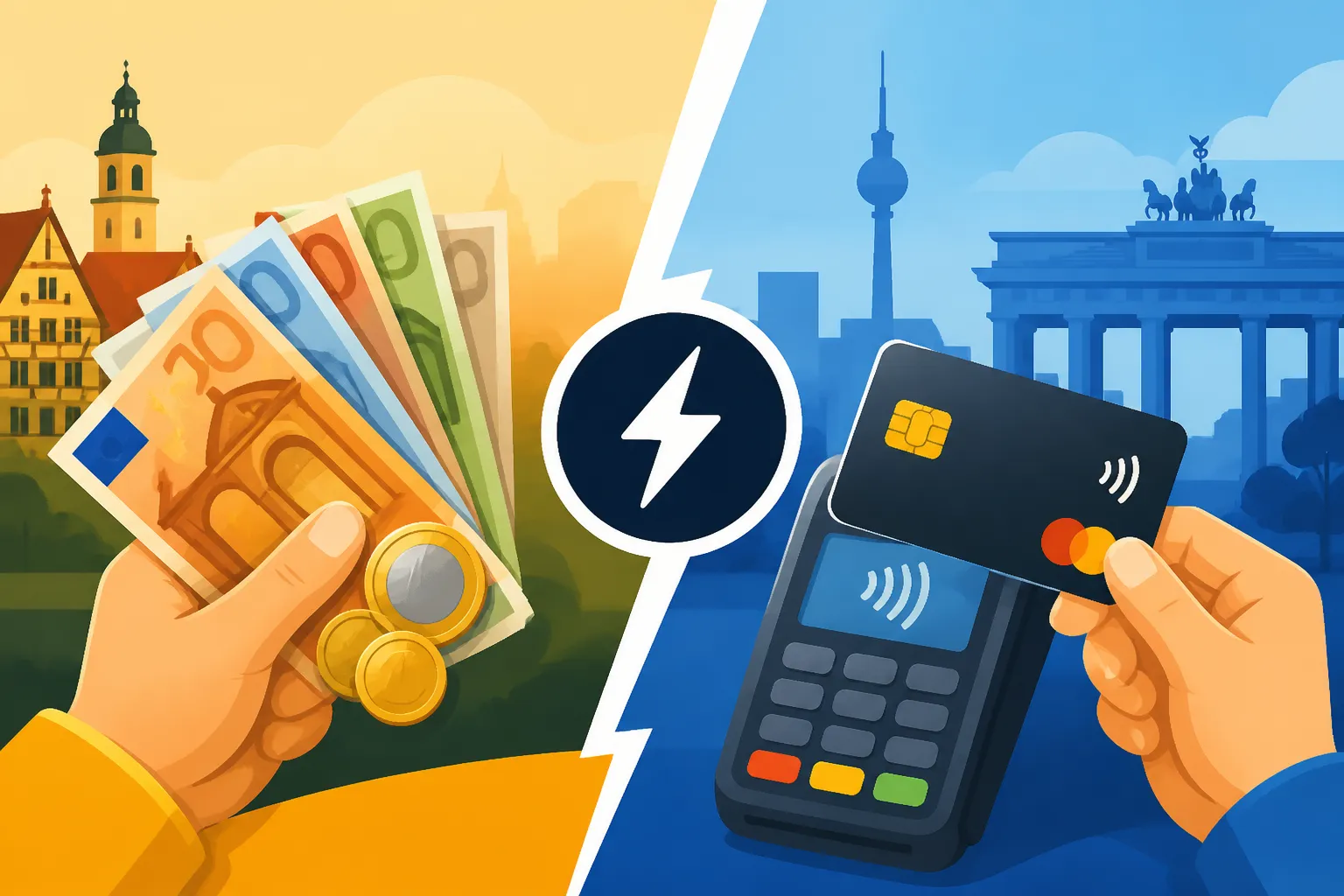
Moving to or visiting Germany often comes with a bit of a payment puzzle: you might have heard whispers about Germans' love affair with cash, but surely, in this modern age, cards are accepted everywhere, right? Well, not quite. This guide is here to untangle the nuances of paying for things in Germany, helping you navigate everything from a quick coffee to booking your dream castle tour, ensuring you're never caught off guard.
The Enduring Reign of Cash (Bargeld)
Ah, Bargeld. The humble banknote and coin hold a special place in the hearts of many Germans, a fact that often surprises newcomers expecting a fully digital economy. This isn't just about tradition; it's deeply ingrained in the culture and daily habits here.
Why Germans Love Cash
For many Germans, cash isn't merely a payment method; it's a matter of principle, convenience, and privacy. There's a strong cultural preference for anonymity in financial transactions, stemming partly from historical contexts where financial data privacy was paramount. Paying with cash means leaving no digital trace, which is a significant factor for many who value their personal data. It’s also seen as a way to maintain control over one's spending; there’s something undeniably tangible about handing over physical money that a tap-and-go card transaction just doesn’t replicate. You often hear older generations lamenting the decline of cash, seeing it as a step towards a less personal, more controlled society. This deep-seated belief means that while card acceptance is growing, the affection for cash remains strong across various segments of society.
Beyond privacy, for many smaller businesses and even larger chains, accepting cash reduces transaction fees they would otherwise incur from card payment processors. This can be a significant saving for them, especially with smaller purchases. This economic incentive, combined with the cultural preference, creates a strong inertia towards maintaining cash as a primary payment method. Don't be surprised to see even young people reaching for their wallets to pull out a few euros for their daily purchases; it's simply how things are often done here.
Where Cash is Still King
Despite the global push towards cashless societies, Germany still has plenty of bastions where Bargeld rules supreme. Think of your charming local bakery, the Bäcker you pop into for your morning Brötchen. Many small bakeries, independent cafes, and traditional ice cream parlors (Eisdielen) operate predominantly on a cash-only basis or prefer cash for smaller sums. You'll often spot a small sign, "Nur Barzahlung" (Cash payment only) or "EC-Karte ab X Euro" (EC-card from X Euros), indicating their preference or minimum spend for card use.
Likewise, local markets (Wochenmärkte) for fresh produce, flowers, or crafts are almost exclusively cash-driven. Your friendly vendor selling asparagus in spring or strawberries in summer will expect cash. Even some beloved neighborhood restaurants, particularly ethnic eateries or smaller, family-run establishments, might still be cash-only, or their card machine might mysteriously be "out of order." Taxis, especially outside major city centers, often prefer cash, although many now offer card options. If you're planning a visit to a smaller town or village, definitely stock up on cash, as card infrastructure might be less developed there. For these everyday scenarios, having a decent amount of cash on hand isn't just convenient; it's often essential.
Practical Tips for Carrying Cash
Carrying cash in Germany is generally safe, especially compared to some other parts of the world. However, common sense precautions always apply. There's no need to carry hundreds of euros unless you have a specific large purchase in mind, but having €50-€100 for daily expenses is a good starting point. This ensures you can cover meals, small purchases, and transportation without constantly searching for an ATM. For larger cities, this might be less critical, but it's always better to be prepared.
ATMs (Geldautomaten) are widely available, typically found at banks, train stations, and shopping centers. Look for ATMs from major German banks like Sparkasse, Deutsche Bank, Commerzbank, or Volksbank. While most ATMs will accept foreign debit and credit cards, be mindful of potential fees. Your home bank might charge a foreign transaction fee, and the German bank operating the ATM might also levy a direct fee for non-customers. It’s always a good idea to check with your bank before you travel to understand their fee structure. When withdrawing, choose to be charged in Euros, not your home currency, to avoid unfavorable dynamic currency conversion rates, which we'll discuss later.
The Rise (and Limitations) of Card Payments
While cash still holds significant sway, card payments have undoubtedly gained ground in Germany. However, understanding which cards are accepted is key, as not all plastic is created equal here.
EC-Karte (Girocard): The Local Champion
The EC-Karte, or more officially the Girocard, is the undisputed champion of card payments for Germans. This debit card is intrinsically linked to German bank accounts and is used for everyday transactions, from groceries to clothing. Most German businesses that accept card payments will readily accept Girocard. If you see a card reader, there’s a very high chance it will take a Girocard.
The challenge for visitors is that Girocards are typically issued only to residents with German bank accounts. Foreign debit cards, even if they have a Maestro or V-Pay logo (which are often affiliated with Girocard), might not always work reliably or be accepted universally, despite what the logos might suggest. Many smaller shops or even older card terminals might only be set up to process Girocard transactions. This can be a source of frustration for tourists wielding their international debit cards, expecting them to function just like a Girocard. Always be aware that while a store might advertise "card payments accepted," they might primarily mean Girocard. For insights on managing your finances here, you might find our guide on Opening a Bank Account in Germany: Step-by-Step for Newcomers helpful.
Credit Cards and Debit Cards: Growing Acceptance but Not Universal
For international travelers, Visa and Mastercard are your best bet for credit and debit card acceptance in Germany. Their acceptance has significantly increased over the past decade, especially in larger cities, chain stores, major supermarkets (like Rewe, Edeka, Aldi, Lidl), department stores, and international hotels. You can almost always rely on them in bigger retail outlets.
However, don't expect universal acceptance. American Express and Diners Club cards are far less commonly accepted. Many smaller shops, independent restaurants, and cafes still do not accept credit cards, sometimes due to the higher transaction fees they impose on merchants compared to Girocard. It's not uncommon to find a restaurant that accepts Girocard but not Visa or Mastercard. This can be particularly frustrating when you're used to swiping your credit card for everything back home. Always keep a backup plan, preferably in cash, or ask "Kann ich mit Karte zahlen?" (Can I pay with card?) or "Akzeptieren Sie Visa/Mastercard?" before you order or shop. When considering your overall financial setup in Germany, our article on Credit Cards in Germany: How to Get One and Which to Choose offers more detailed information.
The Digital Shift: Contactless and Mobile Payments
Contactless payment, using cards or mobile apps like Google Pay or Apple Pay, is definitely on the rise in Germany. Many modern card terminals are equipped with NFC technology, allowing for quick tap-and-pay transactions. You'll see the contactless symbol (four curved lines) on the card reader if it supports this.
While the technology is there, the adoption rate by consumers and merchants still lags behind some other European countries. Many Germans still prefer to insert their card and enter their PIN, even for small amounts. Mobile payment apps are gaining traction, especially among younger generations and expats, but again, don't assume every vendor that accepts cards will also accept mobile payments seamlessly. It's a growing trend, but not yet the norm across the board. Always have your physical card or some cash ready as a fallback, even if you typically rely on your phone for payments.
Navigating Payment Scenarios in Germany
Understanding the general payment landscape is one thing, but how does it play out in specific real-world scenarios? Let's break down where you can expect to use what.
Restaurants, Cafes, and Bars
This is where the cash-versus-card debate often becomes most evident. In larger cities and more tourist-heavy areas, many mid-to-high-range restaurants, especially those catering to an international clientele, will accept Visa and Mastercard. However, smaller, traditional German restaurants (Gasthäuser), local cafes, and many bars might still be cash-only, or they may only accept Girocard. It's always a good habit to discreetly check for payment logos (Visa, Mastercard, Maestro) at the entrance or, even better, simply ask your server when you sit down. There's nothing worse than enjoying a fantastic meal only to realize you can't pay with your preferred method!
For very small purchases, like a quick coffee or a single beer at a kiosk, cash is almost always expected. Some places might have a minimum spend for card payments, for example, €10 or €15. If you're planning a night out, having a mix of cash and card is your safest bet.
Supermarkets and Retail Stores
This is one area where card acceptance is generally very good. Major supermarket chains such as Rewe, Edeka, Aldi, Lidl, Netto, and Kaufland almost universally accept Visa and Mastercard, as well as Girocard. Many also support contactless payments and mobile wallets. So, for your weekly grocery run, you can confidently rely on your international cards.
Similarly, large retail stores, department stores (like Galeria Kaufhof), and international clothing chains in shopping malls are typically well-equipped to handle credit card payments. You'll find that shopping in these larger establishments is often a seamless experience with your Visa or Mastercard. It's the smaller, independent boutiques or specialty shops where you might encounter a cash-only policy.
Public Transport and Travel
Getting around Germany, whether by city tram or intercity train, offers a mix of payment options. For local public transport (buses, trams, U-Bahn, S-Bahn), ticket vending machines usually accept coins, banknotes, and Girocard. Many newer machines also accept Visa and Mastercard, and some even allow contactless payment. Increasingly, cities are offering mobile apps where you can buy tickets directly with your smartphone, using linked cards. For larger trips, like booking train tickets with Deutsche Bahn, you can certainly use your Visa or Mastercard online or at larger train stations.
If you're planning extensive travel within Germany or Europe, consider platforms like Omio for booking train, bus, and flight tickets seamlessly. They generally support a wide range of international payment methods, making your travel planning much smoother. For those looking to explore different ways of getting around, our guide on Getting Around Germany: Trains, Buses, Flights, and Car Hire provides an in-depth look at all your options.
Accommodation and Tourist Activities
When it comes to hotels, hostels, and larger guesthouses, you can almost always pay with Visa or Mastercard. Major chains and international hotels expect and facilitate credit card payments. For smaller, family-run Pensionen (guesthouses) or independent hostels, it's still wise to confirm their accepted payment methods upon booking or arrival, though most now cater to international visitors.
For tourist attractions like museums, galleries, and major historical sites, card acceptance is also generally high, especially at the ticket counter. Many now offer online booking options where you can pay with international credit cards in advance, which can save you time queuing. If you're looking for guided tours or unique experiences, platforms like GetYourGuide are excellent resources, and they facilitate bookings with various international payment options, making it easy to plan your adventures. Similarly, for finding and booking places to stay, Booking.com is a widely used platform that integrates various payment methods. Our resource on Accommodation in Germany: Hotels, Pensionen, and Hostels can help you choose the right place to stay.
Avoiding Pitfalls and Unexpected Costs
Navigating payments in a foreign country can come with hidden traps. Being aware of these can save you money and headaches.
Foreign Transaction Fees
One of the most common pitfalls for international visitors is foreign transaction fees. Many banks, especially in North America and some other regions, charge a percentage (often 1-3%) on every transaction made in a foreign currency. This might seem small, but it adds up quickly over the course of a trip.
Before you travel, check with your bank about their foreign transaction fee policy for both your debit and credit cards. Some credit cards specifically designed for travel offer no foreign transaction fees, which can be a significant saving. Alternatively, consider using a multi-currency account or a neo-bank that offers fee-free spending in euros, such as Wise (formerly TransferWise) or Revolut. These services allow you to load money in your home currency and convert it to euros at a favorable exchange rate, then spend it without additional transaction charges.
Dynamic Currency Conversion (DCC): The Tourist Trap
Dynamic Currency Conversion (DCC) is a common scam that often catches unsuspecting travelers off guard. When you're paying with your card, especially at ATMs or point-of-sale terminals, you might be asked if you want to be charged in EUR or your home currency. Always choose to be charged in EUR.
If you opt for your home currency, the merchant or ATM operator will perform the currency conversion using their own exchange rate, which is almost always worse than the rate your bank would offer. They essentially add an extra hidden fee through an unfavorable exchange rate. By choosing EUR, you leave the conversion to your own bank, which typically uses a much fairer, interbank exchange rate. This seemingly small choice can save you a noticeable amount of money over several transactions. It's a prime example of why being vigilant during payment is crucial.
What to Do If Your Card is Rejected
It happens. You confidently present your card, and the machine flashes "Kartenzahlung nicht möglich" (Card payment not possible) or "Zahlung abgelehnt" (Payment rejected). Don't panic! First, try a different card if you have one (e.g., a Visa instead of a Mastercard, or vice-versa). Sometimes a terminal might have issues with one network but not another.
If all your cards are rejected, it's time for Plan B: cash. This is why carrying a reasonable amount of Bargeld is so important in Germany. If you're out of cash, you'll need to find an ATM. Use a bank's ATM if possible, and remember to choose EUR for your transaction. If you're in a restaurant, politely explain the situation and ask for directions to the nearest ATM (Geldautomat). Most Germans will be understanding, as they are very familiar with cash being the preferred method. For immediate emergencies, knowing the Emergency Numbers in Germany: Calling 112, Poison Control, and More is always a good idea, though unlikely for a card rejection!
Smart Money Management for Your German Trip
A successful trip to Germany involves more than just sightseeing; it requires smart financial planning. Here's how to approach it.
The Hybrid Approach: A Balanced Strategy
The most pragmatic and stress-free approach to payments in Germany is to adopt a hybrid strategy: always carry both cash and at least one widely accepted international card (Visa or Mastercard). This flexibility ensures you're prepared for any scenario, whether you're buying a pretzel from a street vendor (cash only!) or checking into a large hotel (card friendly!). Aim to have enough cash for your daily incidentals, small purchases, and places where cards might not be accepted.
For larger expenses like significant restaurant bills, shopping in department stores, or booking tours, your credit or debit card will likely be convenient. This balanced approach minimizes the frustration of unexpected payment issues and allows you to enjoy your experience without constantly worrying about how you'll settle the bill. It's about preparedness, not paranoia.
Pre-Paid Travel Cards and Neo-Banks
For those keen to avoid foreign transaction fees and get excellent exchange rates, pre-paid travel cards and neo-banks are game-changers. Companies like Wise (formerly TransferWise) and Revolut offer multi-currency accounts that allow you to hold funds in Euros. You can top up your account from your home bank and then use their associated debit card (often a Mastercard or Visa) for payments and ATM withdrawals in Germany.
The benefits are clear: you typically get much better exchange rates than traditional banks, and you avoid those pesky foreign transaction fees. Plus, many of these cards come with easy-to-use apps that allow you to track your spending and freeze your card instantly if it's lost or stolen. These can be particularly useful for long-term stays or if you're frequently traveling across different countries. While they act like a debit card, offering some of the convenience of a credit card without debt, remember they still fall under the "card" category and may encounter the same acceptance limitations as other international cards in cash-only establishments.
Essential German Payment Vocabulary
To make your life a little easier, here are a few key German phrases related to payments. Knowing these can help bridge the communication gap, especially in smaller shops or when asking about payment options.
| English Phrase | German Phrase | Pronunciation Guide | Context |
|---|---|---|---|
| Can I pay with card? | Kann ich mit Karte zahlen? | Kahn ish mit Kar-tuh tsal-en? | Asking if cards are accepted. |
| Do you accept credit cards? | Akzeptieren Sie Kreditkarten? | Ak-tsep-TEER-en zee Kre-DEET-kar-ten? | Specifically asking for credit card acceptance. |
| Do you accept Visa/Mastercard? | Akzeptieren Sie Visa/Mastercard? | Ak-tsep-TEER-en zee Visa/Mastercard? | More specific for international cards. |
| Only cash. | Nur Barzahlung. | Noor BAR-tsal-ung. | Common sign or response in cash-only places. |
| Cash. | Bar (Geld). | Bar (Gelt). | Can be used if asked for payment method. |
| Card. | Karte. | Kar-tuh. | Can be used if asked for payment method. |
| Where is the ATM? | Wo ist der Geldautomat? | Vo ist der Gelt-ow-toh-mat? | Asking for the nearest cash machine. |
| I would like to pay. | Ich möchte zahlen, bitte. | Ish mer-shtuh TSAH-len, bit-tuh. | Asking for the bill. |
| Can I have the bill, please? | Die Rechnung, bitte. | Dee RECH-nung, bit-tuh. | Asking for the bill. |
| Please charge in Euros. | Bitte in Euro abrechnen. | Bit-tuh in Oy-ro ap-rech-nen. | Crucial for avoiding DCC at ATMs/POS. |
Using phrases like "Die Rechnung, bitte" when you’re ready to leave a restaurant or café will be greatly appreciated. Understanding these small linguistic nuances can go a long way in making your financial interactions smoother. And remember, a friendly smile and a "Danke schön!" (Thank you very much!) always help, regardless of your payment method. For general tips on communication, our guide on German Language and Everyday Communication for Visitors can be a valuable resource.
Disclaimer
Please note that while this guide provides comprehensive information based on current trends and common experiences, payment acceptance can vary by region, specific establishment, and time. Always exercise due diligence and consider local conditions. This article is for informational purposes only and does not constitute financial or legal advice.