How to Experience Kaffee und Kuchen in Germany
If you have ever walked through a German town on a rainy Tuesday afternoon and wondered why the local cafes are packed with people staring intently at towering slabs of whipped cream and sponge cake, you have stumbled upon the heart of German social life. Many newcomers feel intimidated by the unwritten rules of the cake counter or end up settling for a dry pastry at a train station. This guide solves that frustration by walking you through the ritual of Kaffee und Kuchen, ensuring you know exactly where to go, what to order, and how to behave like a true local.
Disclosure: This post may contain affiliate links. We may earn a commission at no extra cost to you if you make a purchase through these links. Read full disclosure.
The Cultural Weight of the German Afternoon Ritual
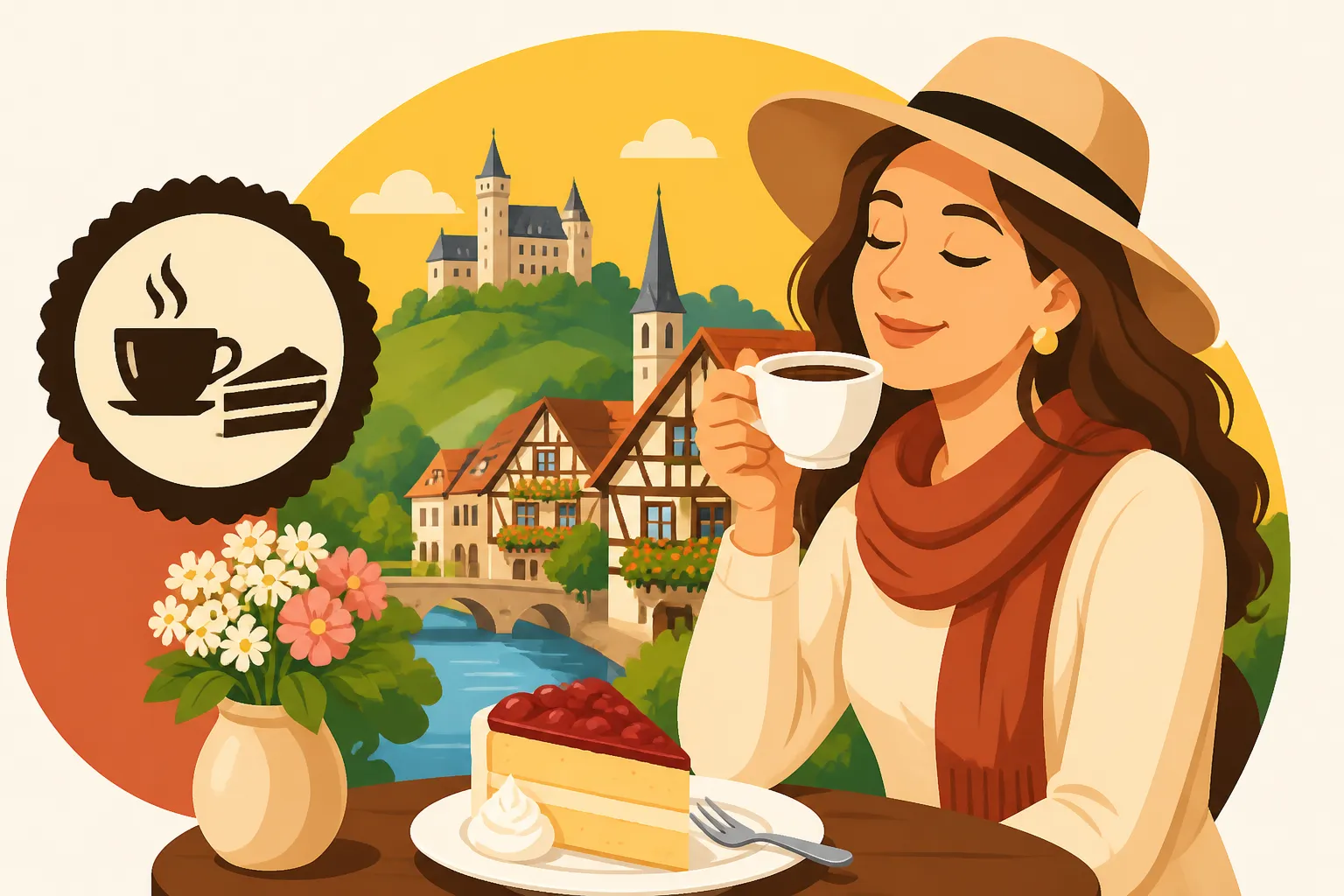
To the uninitiated, Kaffee und Kuchen (Coffee and Cake) might look like a simple afternoon snack. To a German, it is a sacred institution. It is the "third meal" that bridges the gap between lunch and dinner, typically occurring between 3:00 PM and 5:00 PM. I remember when I first moved to a small village in Bavaria; I tried to run errands at 3:30 PM only to find the streets deserted. Everyone was inside, gathered around a table with a pot of coffee and a platter of home-baked goods. It is a moment of Gemütlichkeit—that uniquely German sense of coziness and belonging—that transcends mere eating.
This tradition is particularly strong on Sundays. Because of Quiet Hours and Sundays in Germany (Ruhezeit), almost all shops are closed, leaving the afternoon wide open for socializing. If you are invited to a German home for Kaffee und Kuchen, do not show up having just eaten a heavy meal. This isn't a light biscuit; it is a serious culinary event. The host will often have spent the morning preparing a Torte (a multi-layered cream cake) or a Kuchen (a simpler baked fruit or sponge cake). The social expectation is that you will stay for at least two cups of coffee and at least one large slice of cake, though two is better.
For tourists, this is one of the most Common Cultural Surprises for First-Time Visitors to Germany because it forces you to slow down. You cannot "grab and go" a Kaffee und Kuchen experience. It is about the conversation, the porcelain plates, and the tiny forks. If you are planning a trip across the country, perhaps using Omio to book your train tickets between the historic centers of Dresden and Weimar, make sure you bake in two hours of "do-nothing" time in the afternoon specifically for this. It is the best way to observe local life without feeling like an outsider peering through a window.
Konditorei vs. Bäckerei: Where to Go for the Real Experience
One of the biggest mistakes expats make is going to a standard chain Bäckerei (bakery) for their cake fix. While a bakery is great for German Bread, Bakeries, and the German Breakfast, their cakes are often mass-produced and meant for quick consumption. If you want the authentic, high-end experience, you must look for a Konditorei. This is a specialized confectionery shop where the Konditormeister (master pastry chef) reigns supreme.
A traditional Konditorei often feels like a step back in time. Expect velvet chairs, lace doilies, and a display case that looks more like a jewelry store than a food shop. When you enter, the etiquette is specific: you don't usually sit down first. You head straight to the glass counter to "reserve" your cake. The staff will give you a small slip of paper or simply remember your choice, and then you find a table and order your drinks from the waiter. This separation of "cake ordering" and "drink ordering" trips up many foreigners, but it is the standard flow in established houses like Café Cron & Lanz in Göttingen or Café Niederegger in Lübeck.
If you are staying in a major city, you can find these gems tucked away in the Altstadt (Old Town). Using Booking.com to find a hotel within walking distance of the central square is a smart move, as the best Konditoreien are almost always near the town hall or the main church. For those who want a more curated introduction to the sweets of a specific region, you can often find dessert-focused walking tours through GetYourGuide in cities like Berlin or Munich. These tours can help you skip the tourist traps and find the places that still use Grandma’s recipes from the 19th century.
| Feature | Bäckerei (Bakery) | Konditorei (Confectionery) |
|---|---|---|
| Primary Focus | Bread, rolls, and simple pastries | Elaborate cakes, tortes, and chocolates |
| Seating | Often limited or "fast-food" style | Formal, comfortable, designed for lingering |
| Cake Quality | Simple, sturdy (e.g., plum cake) | Complex, multi-layered, cream-heavy |
| Service | Counter service mostly | Table service for drinks; counter for cake selection |
| Best Time | Early morning for fresh bread | 2:30 PM to 5:30 PM for Kaffee und Kuchen |
A Field Guide to the German Cake Counter
Walking up to a German cake counter can be overwhelming. There are dozens of options, and they all look magnificent. To navigate this, you need to understand the difference between Kuchen and Torte. A Kuchen is typically a single layer, often topped with fruit like apples (Apfelkuchen) or plums (Pflaumenkuchen), and may have a crumble topping called Streusel. A Torte, however, is the queen of the afternoon. It involves layers of sponge, heavy cream, fruit fillings, and often a healthy splash of Kirschwasser (cherry brandy) or other spirits.
The most iconic of all is the Schwarzwälder Kirschtorte (Black Forest Cake). To be legally called a Black Forest Cake in Germany, it must contain a specific amount of cherry schnapps. It is a decadent mix of chocolate sponge, whipped cream, and sour cherries. If you want something less boozy but equally rich, look for Frankfurter Kranz, a ring-shaped cake topped with brittle nuts, or a classic Käsekuchen (German cheesecake). Unlike the American version, German cheesecake is made with Quark, making it fluffier and slightly more tart. It is an essential part of German Regional Dishes Every Visitor Should Try.
When it comes to the "Kaffee" part of the equation, the choices are equally traditional. While third-wave coffee shops are popping up in Berlin and Hamburg, the classic accompaniment to cake is Filterkaffee. It is often served in a porcelain pot (Kännchen) rather than a single cup. If you want something milkier, order a Milchkaffee, which is similar to a French café au lait. Knowing German Coffee Culture: Cafés and Kaffeezeit Explained will help you avoid the disappointment of ordering a "latte" and getting a glass of lukewarm milk with a hint of coffee. Germans take their coffee-to-cake ratios very seriously; the bitterness of the coffee is designed to cut through the sweetness of the sugar and fat.
Essential Etiquette: Avoiding Faux Pas at the Table
Once you are seated with your towering slice of heaven, there are a few social hurdles to clear. First, wait for everyone at the table to have their cake and coffee before you start. It is common to say "Guten Appetit" before the first bite. You will notice that Germans use a small cake fork (Kuchengabel), which often has one wider tine with a notch for cutting through crusts. Do not ask for a knife; it is considered a slight to the baker, implying the cake is too tough to be cut with a fork.
One of the biggest hurdles for expats is the payment process. In a traditional Konditorei, the waiter will bring the bill to your table. You should be prepared for the fact that many of these older, traditional establishments are still very much "cash only." I have seen many embarrassed tourists have to leave their partner at the table while they hunt for an ATM. Always check Cash vs Card in Germany: What Visitors Should Know before you sit down. When you do pay, remember that Tipping in Germany: When, Where, and How Much is a bit different than in the US or UK. You typically round up the bill or add about 5-10%, handing the money directly to the waiter or stating the total amount you wish to pay as they "make change" from their leather pouch.
Finally, don't rush. The staff will not bring you the bill unless you ask for it. In many cultures, staying at a table for two hours after finishing your food is seen as rude; in Germany, it is the entire point of the afternoon. If you feel ready to leave, you’ll need to flag down the waiter and say, "Zahlen, bitte" (Pay, please). For more tips on the end-of-meal process, see our guide on How to Ask for the Bill in a German Restaurant. Mastering these small interactions will turn a stressful outing into a seamless cultural immersion. Whether you are traveling on a budget using Omio or staying in a luxury villa found on Booking.com, the afternoon cake break is the great equalizer of German society.
Disclaimer
The information provided in this guide is for informational purposes only. While we strive to provide the most up-to-date advice on German customs and etiquette, local practices may vary by region and individual establishment. Always check local signs regarding payment methods and opening hours, particularly on Sundays and public holidays.