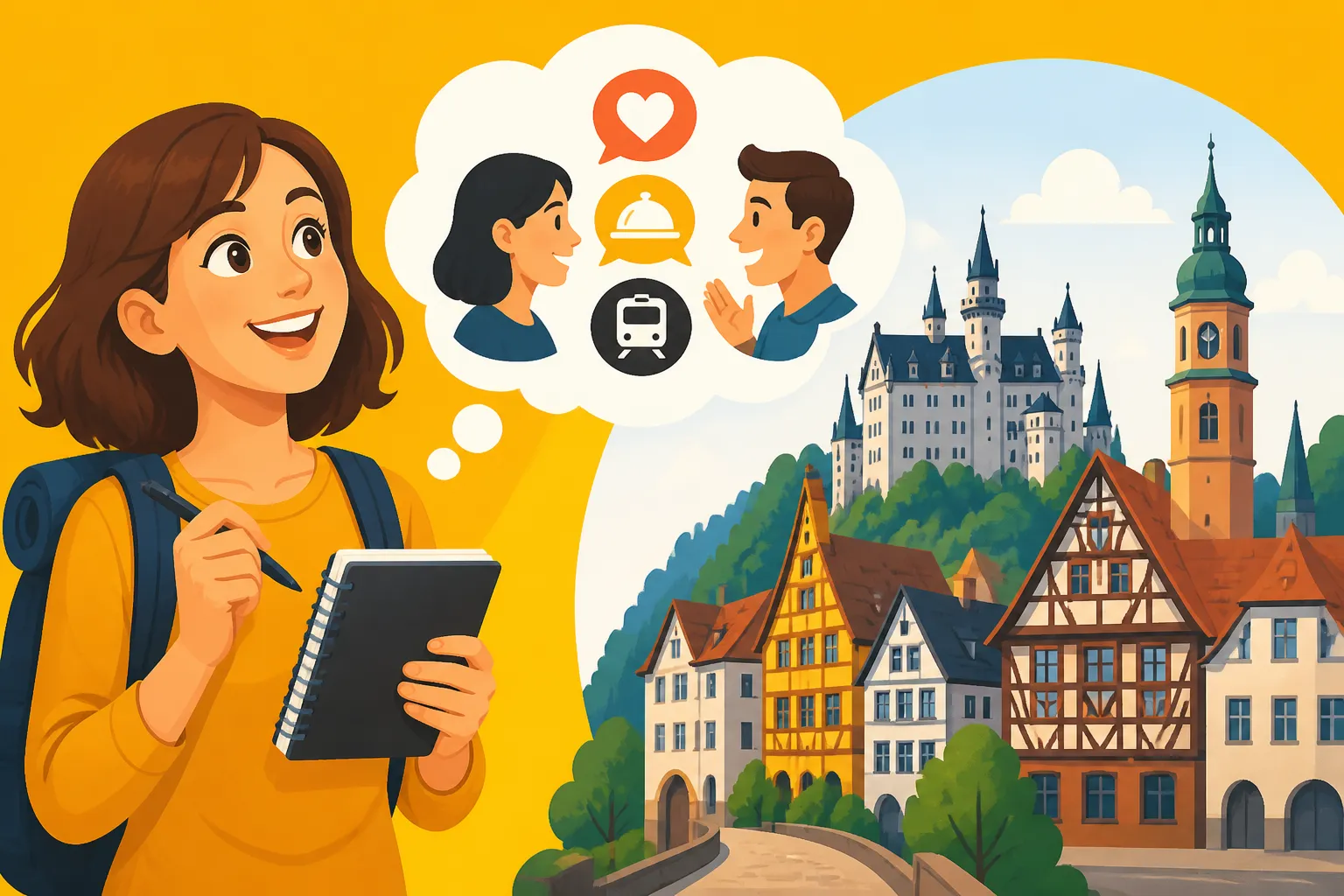
How to Learn Enough German for a Two-Week Trip
Many travelers arrive in Berlin or Munich expecting everyone to speak perfect English, only to find themselves staring blankly at a bakery counter or a train ticket machine while a line of impatient locals forms behind them. This guide cuts through the academic fluff to teach you the high-impact survival German needed to navigate a two-week trip with confidence and grace.
Disclosure: This post may contain affiliate links. We may earn a commission at no extra cost to you if you make a purchase through these links. Read full disclosure.
Understanding the German Language Mindset
Before you open a single textbook or download an app, we need to address the cultural context of language in Germany. As someone who has lived here for years, I can tell you that the frustration of the "language barrier" is often less about words and more about expectations. Germans value efficiency and clarity, and even a tiny effort to meet them halfway in their language can transform a cold interaction into a warm one.
The Myth of Universal English
One of the biggest mistakes expats and tourists make is assuming that because Germany is a global economic powerhouse, English is spoken fluently by everyone, everywhere. While it is true that many younger people and those working in the tech hubs of Berlin or the finance towers of Frankfurt speak excellent English, this is not a universal rule. If you find yourself in a smaller town in the Black Forest or a suburban bakery in Saxony, you will quickly realize that English is a luxury, not a given.
Relying solely on English can also make you feel like you are moving through a bubble, detached from the actual culture. When you try to use Survival German for Travelers: Key Phrases to Learn First, you signal to the locals that you respect their culture enough to try. This small gesture often results in the local person "finding" their English skills to help you out further. It is a psychological bridge that makes your two-week trip significantly smoother.
The Importance of First Impressions
In Germany, social interactions often follow a specific script. If you break the script by jumping straight into English without a greeting, you might be perceived as rude, which leads to the infamous "short" or "direct" German response. For example, never walk up to a service desk and say, "Where is the train to Cologne?" Instead, start with a polite "Guten Tag" (Good day).
This ritual of greeting is sacred. Whether you are entering a small boutique or stepping into a doctor's waiting room, a simple "Hallo" or "Morgen" goes a long way. Understanding German Social Etiquette for Visitors: Greetings and Punctuality is just as important as knowing the verbs. By learning the first ten seconds of any interaction in German, you set a positive tone that carries through the rest of the exchange, even if the rest of it happens in English.
The Survival Vocabulary Kit
You do not need to understand German grammar to survive a vacation. Forget about the four cases (Nominative, Accusative, Dative, Genitive) and don't lose sleep over whether a table is masculine, feminine, or neuter. For a two-week trip, you need "Lego-block" phrases—chunks of language that you can click together to get what you want.
Greetings and Social Lubricants
The most important words in your vocabulary will be the ones that facilitate polite society. "Bitte" (please) and "Danke" (thanks) are your best friends. Interestingly, "Bitte" is a powerhouse word; it can mean "please," "you're welcome," "pardon?" and "here you go" depending on the context. If someone hands you a coffee, you say "Danke." If they say "Danke" to you, you respond with "Bitte."
You should also master the art of the "Entschuldigung" (Excuse me). This is your "get out of jail free" card. Use it to get someone’s attention, to apologize for bumping into them on the S-Bahn, or to preface the fact that your German is limited. Pairing this with Polite German: Du vs Sie for Visitors will help you navigate the tricky waters of formal versus informal address. As a tourist, always stick to the formal "Sie" to be safe. It shows a level of distance and respect that is standard in German service industries.
Gastronomy and Ordering
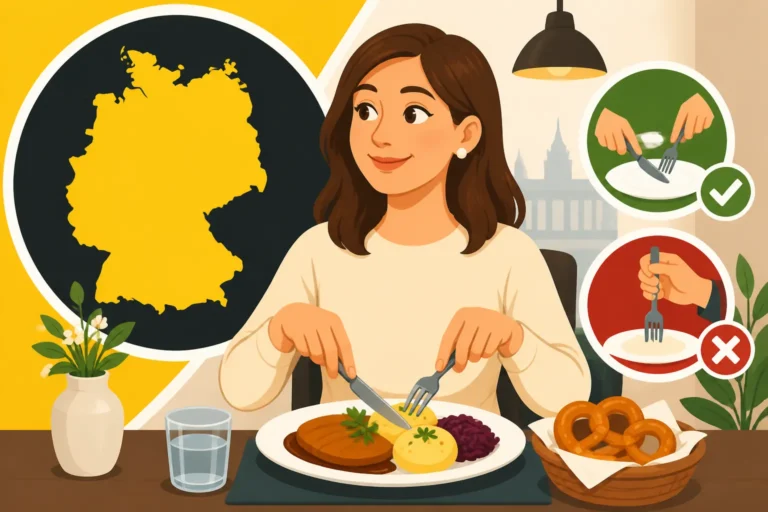
Food is where your language skills will be tested most frequently. While many restaurants in tourist-heavy areas have English menus, the most authentic experiences are often found in places where the menu is a handwritten chalkboard in German. You need to know basic nouns like "Hähnchen" (chicken), "Schwein" (pork), "Rind" (beef), and "Vegetarisch" (vegetarian).
When you are ready to order, don't worry about complex sentences. Pointing at the menu and saying "Ich hätte gerne das" (I would like that) is perfectly acceptable. When the meal is over, remember that the waiter will not bring the bill until you ask for it. Catch their eye and say, "Die Rechnung, bitte." This is also the moment to consider Tipping in Germany: When, Where, and How Much, as you will often need to tell the waiter the total amount you want to pay (including tip) rather than leaving cash on the table. For more detailed help, consult Ordering Food and Drinks in German: A Practical Phrasebook to avoid common dining blunders.
| English | German | Pronunciation Guide |
|---|---|---|
| Hello / Good day | Guten Tag | Goo-ten Tahg |
| Please / You're welcome | Bitte | Bit-tuh |
| Thank you | Danke | Dan-kuh |
| The bill, please | Die Rechnung, bitte | Dee Rech-noong, bit-tuh |
| Where is the toilet? | Wo ist die Toilette? | Vo ist dee Toy-let-tuh? |
| I don't speak German | Ich spreche kein Deutsch | Ish spreck-uh kine Doytch |
| Do you speak English? | Sprechen Sie Englisch? | Spreck-en Zee Eng-lish? |
Navigating Logistics and Travel Tools
The administrative side of travel in Germany—trains, buses, and hotels—can be intimidating because the terminology is very specific. However, Germany is a country of systems. If you understand the system and use the right tools, the language barrier becomes a minor hurdle rather than a wall.
Transportation and the Rail System
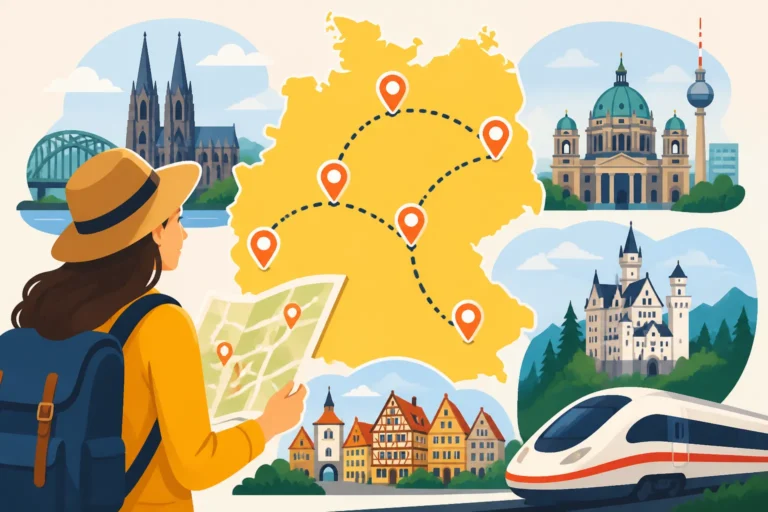
The German rail network, primarily Deutsche Bahn, is the lifeblood of the country. To save yourself from the stress of translating ticket machines, I highly recommend using Omio. It allows you to compare trains, buses, and flights in English, giving you a clear overview of your options without needing to decode German transit jargon. Whether you are looking for an ICE high-speed train or a regional connection, having the interface in your native language prevents costly mistakes like booking a ticket for the wrong day.
Once you are at the station, keep an eye on the digital displays. If you see the word "Gleiswechsel," it means your train has changed platforms—a common occurrence that can lead to missing your connection if you don't recognize the word. Learning How to Use the DB Navigator App in Germany is also vital for real-time updates. If you prefer structured travel, booking excursions through GetYourGuide is a great way to ensure you have an English-speaking guide who can handle the local logistics for you, allowing you to just soak in the culture.
Booking and Accommodations
When it comes to where you stay, Booking.com is an essential resource for Germany. Most listings specify the languages spoken by the staff, which can give you peace of mind if you are worried about a midnight check-in. In larger hotels in cities like Hamburg or Cologne, the staff will almost certainly speak English. However, if you are staying in a "Pension" (a traditional guesthouse) or a "Ferienwohnung" (holiday apartment), your "Survival German" will really shine.
Upon arrival, you will likely be asked for your "Ausweis" (ID) and to fill out a "Meldeschein" (registration form). This is a standard legal requirement in Germany. Knowing the German words for "Frühstück" (breakfast) and "Schlüssel" (key) will make the check-in process much faster. Also, be aware of What Closes on Sundays in Germany? because if you arrive on a Sunday, you might find that the local supermarket is closed, and you’ll need to find a restaurant or a "Späti" (convenience store) for your basic needs.
Practical Tips for Social Success
Mastering a few words is one thing, but navigating the actual social landscape of Germany is another. The culture is famous for its "Direktheit" (directness), which can sometimes feel abrasive to those from more "polite-first" cultures.
Handling the German Directness
If a local corrects you for walking in the bike lane or tells you that you are sorting your trash incorrectly, don't take it personally. In German culture, this is often seen as a helpful way to maintain social order. They aren't being mean; they are being efficient. Using a quick "Entschuldigung" and fixing the mistake is the best way to handle it.
You should also be prepared for the fact that many smaller shops and cafes still prefer cash over cards, although this is slowly changing. Always ask "Kann ich mit Karte zahlen?" (Can I pay with card?) before you order to avoid an awkward situation. Reading up on Cash vs Card in Germany: What Visitors Should Know will help you budget your physical Euros correctly. When you are out at night, knowing How to Order Beer in Germany Like a Local—including the correct hand gestures for numbers—will make you look like a seasoned traveler rather than a confused tourist.
Learning Resources and Apps
For a two-week trip, don't bother with heavy grammar books. Focus on audio-visual learning. Apps like Duolingo or Babbel are great for the basics, but I recommend watching YouTube videos specifically on "German for Tourists." This helps you hear the rhythm of the language. German is a phonetic language, meaning it is spoken exactly as it is written, but the "ch" and "r" sounds can be tricky for English speakers.
Practice saying "Ich hätte gerne…" (I would like…) until it becomes muscle memory. This phrase is your universal key to commerce. If you are sitting in a park or a cafe, try to overhear the "Smalltalk" around you. You'll notice that German Dining Etiquette for Visitors often involves a lot of eye contact and a firm "Prost!" when clinking glasses. Immersing yourself in these small cultural habits will do more for your trip than memorizing a thousand random nouns. Lastly, keep a digital or physical list of Common Cultural Surprises for First-Time Visitors to Germany to help you interpret the things that might otherwise seem confusing or "unfriendly."
Disclaimer
The information provided in this guide is intended for general informational purposes only and is based on personal experiences and research current at the time of writing. While we strive to provide accurate and up-to-date advice, language nuances and local customs in Germany can vary by region. We are not responsible for any misunderstandings, travel disruptions, or cultural faux pas that may occur during your trip. Always double-check official travel requirements and local regulations before your departure.