How to Plan a Multi-City Trip Across Germany
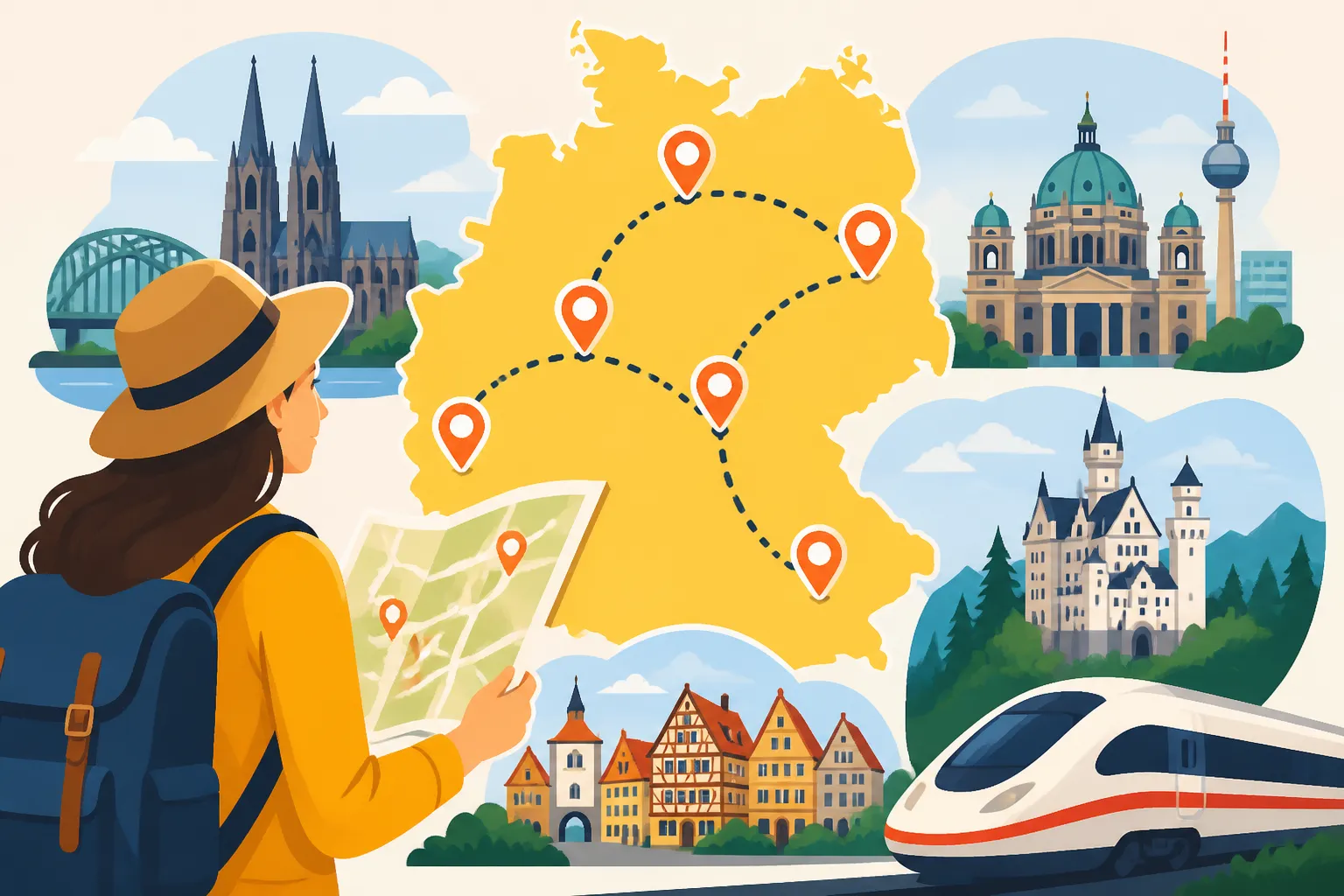
Planning a multi-city trip across Germany often feels like trying to solve a complex puzzle where the pieces are spread across high-speed train tracks and cobblestone streets. Most travelers underestimate the sheer geographic diversity and the logistical nuances of moving between federal states. This guide solves that frustration by providing a veteran’s blueprint for building a seamless, logical, and deeply rewarding multi-city itinerary.
Disclosure: This post may contain affiliate links. We may earn a commission at no extra cost to you if you make a purchase through these links. Read full disclosure.
Crafting Your Itinerary: Regional Logic and Geographic Realities
When I first moved to Germany, I made the classic mistake of thinking I could "see it all" in ten days. I tried to zip from the rugged Baltic coast down to the Bavarian Alps, only to realize I was spending more time staring at seat-back trays on the train than actually drinking Riesling in a vineyard. To plan a successful multi-city trip, you have to respect Germany’s geography and group your stops into logical clusters. Germany is much larger than it looks on a map when you factor in the time it takes to truly "feel" a city.
The North-to-South Power Axis
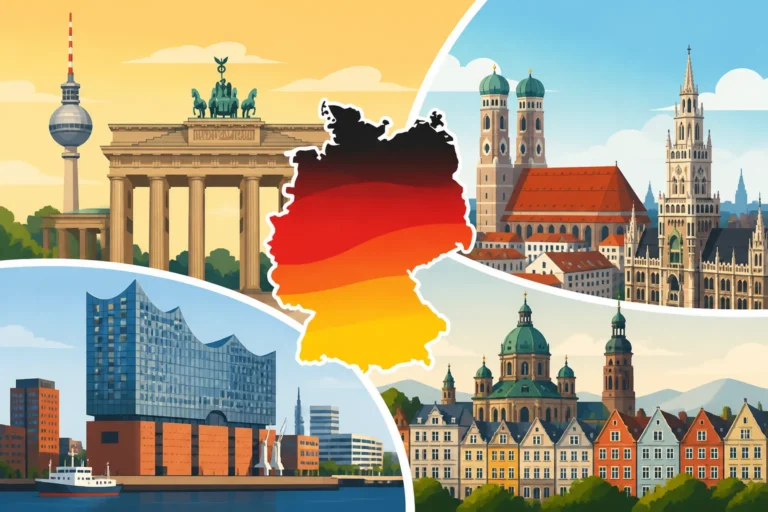
The most popular route for first-timers usually follows the Berlin-to-Munich corridor. This route offers the sharpest cultural contrast you can find in the country. You start in Berlin, a city that feels like an ever-evolving experiment in history and subculture, then move through the underrated gems of Saxony like Leipzig or Dresden. Leipzig, often called the "New Berlin," is a fantastic middle stop because it’s smaller, more manageable, and incredibly affordable. From there, you head south into the heart of Bavaria.
I always suggest a stop in Nuremberg on this route. It’s the perfect bridge between the gritty North and the traditional South. You can spend a morning at the Dokumentationszentrum to grasp the weight of 20th-century history and an afternoon eating Nürnberger Rostbratwurst in the shadow of the imperial castle. To make this transition smooth, I recommend How to Plan a Bavaria and Alps Itinerary to ensure you don’t miss the smaller mountain villages once you reach the southern terminus. This north-south axis is served perfectly by the high-speed ICE trains, making it the most time-efficient choice for those who want to maximize their sightseeing hours.
The Western Loop: Rhine, Ruhr, and Romance
If your heart is set on fairy-tale castles and half-timbered houses, you should focus your multi-city planning on the West and Southwest. A logical loop starts in Cologne, moves down the Rhine Valley, hits the financial hub of Frankfurt for a change of pace, and ends in the Black Forest. This is the region where you’ll want to look into How to See the Rhine Valley Castles in Two Days because trying to see them all without a plan is an exercise in futility.
The logistics here are slightly different. While the ICE runs through the major hubs, the real magic of the Rhine and Moselle valleys happens on the regional trains. These slower lines hug the riverbanks, offering views of vineyards that you simply cannot see from the high-speed tracks. I’ve found that using Omio to compare the travel times between these smaller towns is a lifesaver. Sometimes a bus is actually faster than a regional train that stops at every single village. When booking your stays in these smaller regions, Booking.com remains the most reliable tool because it lists the smaller "Pensionen" and family-run guest houses that aren't always on the major English-language radars.
Mastering the Logistics: Transport and Navigation
The secret to a stress-free multi-city trip in Germany isn't just knowing where you're going, but understanding the rhythm of German transportation. It is a system built on precision, yet it is currently undergoing significant modernization, which means you need to be prepared for the occasional "Verspätung" (delay) or "Gleiswechsel" (platform change).
The Deutsche Bahn vs. The Rental Car Debate
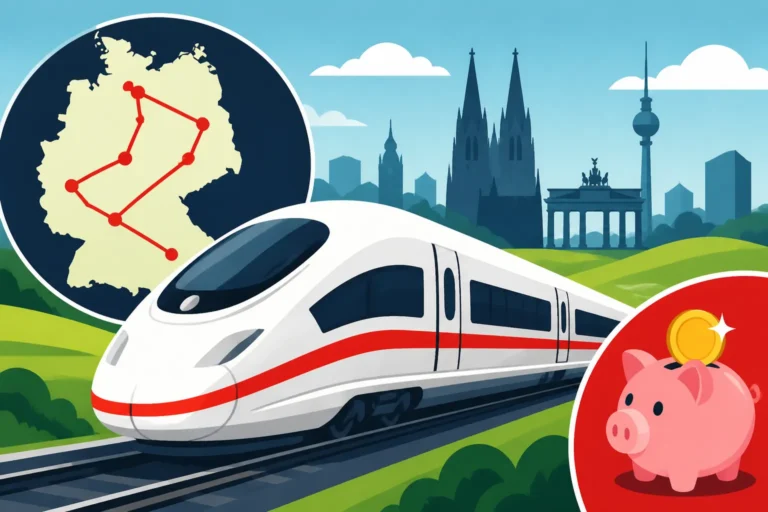
Choosing between the train and a car is the most significant decision you’ll make. For a multi-city trip that focuses on major hubs like Hamburg, Berlin, and Munich, the train is the undisputed king. Driving into a German city center is a nightmare of "Umweltzonen" (environmental zones) and expensive parking. However, if your multi-city plan involves the Bavarian Forest or the Eifel region, you will need wheels.
If you stick to the rails, you must learn the difference between "Sparpreis" and "Flexpreis" tickets. Sparpreis tickets are tied to a specific train and time; if you miss it, your ticket is a piece of scrap paper. Flexpreis gives you the freedom to hop on any train on that route for the day. For a multi-city trip where things might run late, having at least one "Flex" leg in your journey can save you a lot of stress. I highly recommend checking out How to Buy Deutsche Bahn Tickets and Save Money to understand the nuances of the DB Navigator app, which will become your best friend during the trip.
Strategic Booking Tools and Timing
To keep the budget under control while hopping between 3 or 4 cities, you need to book your "long legs" at least two to three months in advance. This is where I find Omio particularly helpful for multi-city planning; it allows you to see if a quick flight from Berlin to Munich might actually be cheaper or if a FlixBus is a viable alternative for a shorter hop like Dresden to Prague or Berlin to Hamburg.
When you arrive in a new city, don't waste your first two hours trying to find your hotel and a place to eat. I always use GetYourGuide to book a "Welcome to the City" walking tour for the afternoon I arrive. It’s a great way to get your bearings, ask a local for restaurant recommendations that aren't tourist traps, and see the main sights without having to navigate a map while jet-lagged. For accommodation, I’ve learned to always look for hotels near the "Hauptbahnhof" (main station) on Booking.com for short 1-2 night stays. While station areas can be a bit "urban," the convenience of stepping off a train and being in your room within five minutes is worth it when you’re doing a multi-city sprint.
| Feature | ICE High-Speed Train | Regional Train (RB/RE) | Rental Car (Autobahn) |
|---|---|---|---|
| Best For | Long distances (e.g., Berlin to Munich) | Scenic routes (e.g., Rhine Valley) | Rural areas & Black Forest |
| Speed | Very High (up to 300 km/h) | Moderate (frequent stops) | High (but watch for Bauarbeiten) |
| Booking | Advance booking essential for deals | Flat rate or Deutschland-Ticket | Book 1-2 months ahead |
| Flexibility | Low (if on Sparpreis) | High (hop on/off) | Maximum |
| Comfort | High (Dining car, Wi-Fi) | Moderate (can be crowded) | Dependent on vehicle |
Optimizing Your Time: The "One Major, One Minor" Rule
The biggest mistake I see tourists make is trying to do four "Alpha" cities in one week. Berlin, Hamburg, Munich, and Cologne are all massive. If you try to do them back-to-back, you’ll end up with "Cathedral Fatigue." My veteran advice is to follow the "One Major, One Minor" rule. Pair a massive metropolis with a smaller, more specialized city nearby.
Pairing Berlin and the East
If you are spending three days in Berlin, don't move immediately to another huge city. Instead, take a day trip or an overnight in Potsdam. It’s technically a different city, but it’s right on the S-Bahn line. You can explore the Prussian palaces and then head back to the grit of Berlin. This allows you to keep a "base camp" and reduces the number of times you have to pack your suitcase. For more on this, look into How to Take a Day Trip to Potsdam From Berlin.
After you’ve had your fill of the capital, move on to a city like Leipzig. It’s only an hour away by ICE but feels entirely different. It’s walkable, the coffee culture is world-class, and it provides a "breather" before you tackle the next big destination. This strategy is essential for maintaining your energy levels. You can use GetYourGuide to find niche tours in these smaller cities, like a canal tour in Leipzig, which often provide a more intimate look at German life than the big bus tours in Berlin.
The Bavarian and Swabian Strategy
In the south, people often cluster Munich with Stuttgart. While both are great, they are both busy industrial hubs. A better multi-city plan would be Munich followed by a few days in Garmisch-Partenkirchen or Regensburg. Regensburg is one of the best-preserved medieval cities in Germany and offers a much slower pace than the Munich beer halls.
When planning these transitions, keep an eye on How to Plan a Germany Itinerary by Train to ensure your connections aren't too tight. German trains are generally reliable, but a 5-minute transfer window at a massive station like Frankfurt Hauptbahnhof is a recipe for disaster if you have luggage. Give yourself at least 20 minutes between trains if you have to change platforms.
Practical Essentials for the Multi-City Traveler
There are a few "boots on the ground" realities that can make or break your multi-city experience. These are the things the glossy brochures don't tell you, but every expat knows by heart.
Dealing with Luggage and Lockers
When you're traveling between cities, you’ll often find yourself in a "limbo" period—you’ve checked out of your hotel in City A at 10:00 AM, but your train to City B doesn't leave until 2:00 PM. Or worse, you want to stop in a town like Heidelberg for four hours on your way from Frankfurt to Munich.
Every major German station has "Schließfächer" (luggage lockers). They usually cost between 4 and 6 Euros for 24 hours. Look for the icon of a key and a suitcase. This is the ultimate hack for multi-city travel. You can drop your heavy bags, explore the city unencumbered, grab a Döner, and head back to the station for your next leg. This is particularly useful if you want to follow How to Plan a Romantic Road Trip in Germany but want to do parts of it via rail.
Sunday Closures and the Rhythm of the Week
I cannot stress this enough: Germany shuts down on Sundays. If you plan your transition day for a Sunday, do not expect to do any shopping or find an open pharmacy in the city you arrive in. Most restaurants and museums stay open, but grocery stores and "Drogerien" (like DM or Rossmann) will be closed.
If your multi-city trip lands you in a new city on a Sunday afternoon, make sure you’ve used Booking.com to find a hotel that offers a decent breakfast or has an in-house restaurant. Otherwise, you’ll be foraging for food at the train station (which, to be fair, usually has the only open shops in town). For more on navigating these cultural quirks, see What Closes on Sundays in Germany? to avoid being caught without basic supplies.
Connectivity and Apps
Moving between cities means you’re constantly relying on GPS and live train updates. While "DB Navigator" is the gold standard for trains, I recommend using Omio for a bird’s eye view of your entire multi-city route. It’s much easier to see the "big picture" of your journey there. Additionally, ensure your phone is equipped for the journey. I often tell visitors to check How to Get a Local eSIM for Travel in Germany before they arrive. Relying on "Free WiFi" in German train stations is a gamble you don't want to take when you’re trying to find your platform for a train leaving in three minutes.
A Final Word on Pace
The most successful multi-city trips I’ve seen (and taken) are the ones that leave room for the unexpected. Maybe you’ll fall in love with a small bakery in Erfurt and want to stay for another coffee, or perhaps you’ll meet a group of expats in a Cologne "Brauhaus" and want to join them for a second round of Kölsch. If your itinerary is booked down to the minute, you lose the "Gemütlichkeit" (coziness/belonging) that makes Germany so special. Plan the big moves, book the core hotels, but leave your afternoons open for the magic that happens between the landmarks.
Disclaimer
The information provided in this guide is for informational purposes only. While every effort has been made to ensure accuracy, travel regulations, train schedules, and local laws in Germany can change frequently. Always verify specific travel details with official providers such as Deutsche Bahn or local authorities before your trip.