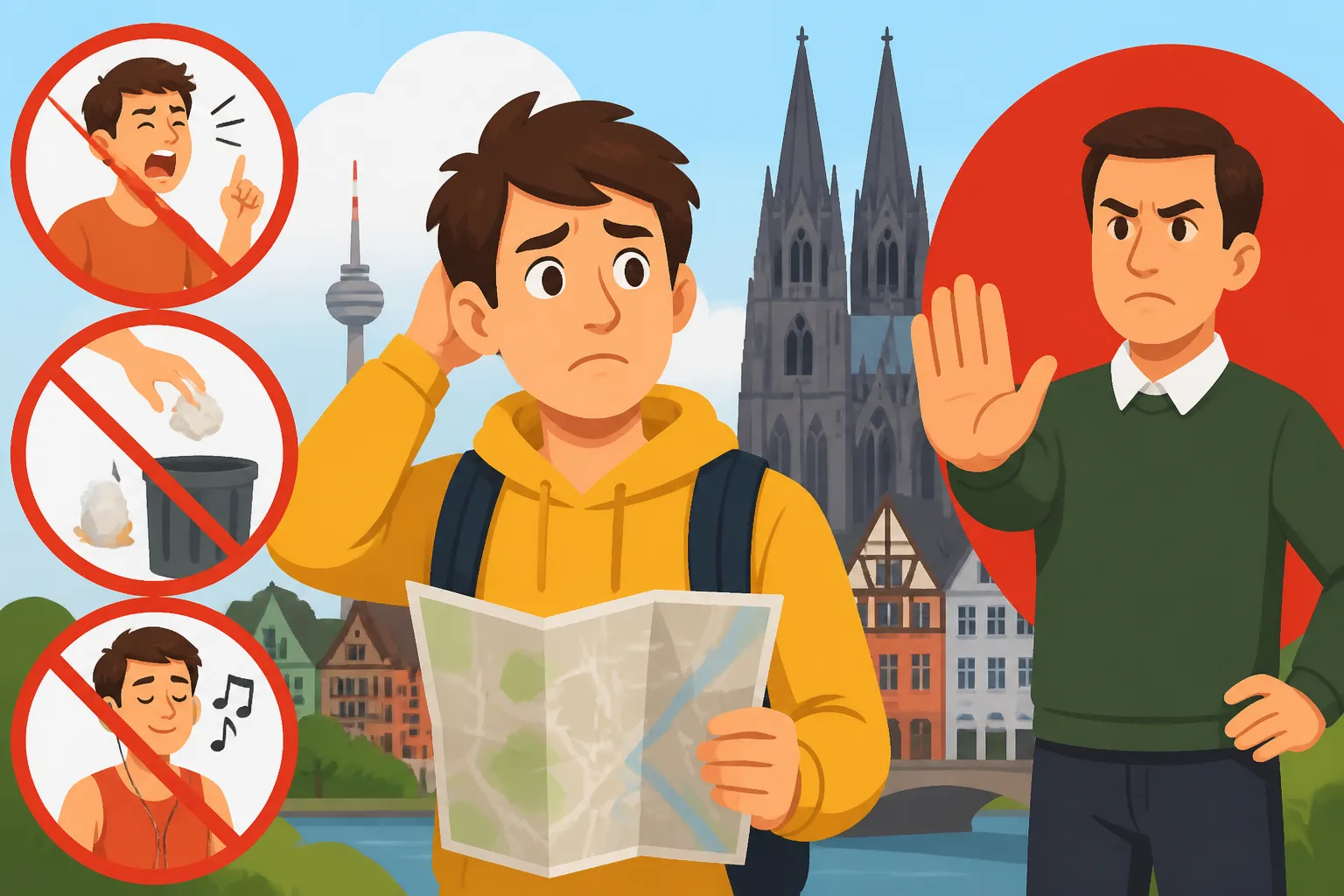
What Should You Not Do in Germany as a Visitor?
Stepping off the plane at Frankfurt or Berlin, you might feel like you have a handle on things, but Germany is a country where unwritten social contracts are taken as seriously as the law. Many visitors inadvertently offend locals or face awkward public reprimands simply because they don't understand the nuanced cultural "no-gos" that define daily life here. This guide breaks down the most common mistakes tourists make, from social etiquette and dining faux pas to legal technicalities, ensuring you blend in like a local rather than sticking out as a frustrated outsider.
Disclosure: This post may contain affiliate links. We may earn a commission at no extra cost to you if you make a purchase through these links. Read full disclosure.
Social Etiquette and the Art of Interaction
One of the first things you will notice in Germany is that public spaces are governed by a sense of order and mutual respect that can feel quite rigid to outsiders. The most common mistake visitors make is being too loud. Whether you are on the U-Bahn or sitting in a quiet café in Prenzlauer Berg, raising your voice is seen as an intrusion on everyone else’s personal space. If you find yourself being "stared at" by locals, it is often a silent signal that your volume or behavior has disrupted the communal peace.
Navigating the Formality of Language
Even if you only know a few words of German, how you use them matters immensely. Germany is a society that still values a clear distinction between your private and public life. One of the biggest social blunders is using the informal "Du" with strangers, especially those older than you or in positions of authority, like shopkeepers or police officers. Understanding Polite German: Du vs Sie for Visitors is crucial for maintaining a respectful distance.
When you check into your hotel—perhaps one you found on Booking.com to ensure you are in a neighborhood that fits your vibe—always start with the formal "Sie." Most Germans in the service industry speak excellent English, but starting with a formal "Guten Tag" (Good day) rather than a casual "Hi" sets a tone of mutual respect. It’s not about being cold; it’s about acknowledging the professional boundary. I’ve seen many expats and tourists get a chilly response simply because they were "too friendly" too fast, which can be interpreted as a lack of boundaries.
The Sacredness of Punctuality
You have probably heard the stereotypes, but I can tell you from years of living here: they are true. Being "fashionably late" does not exist in Germany. If you have a walking tour booked or a dinner reservation at a popular spot in Munich, arriving five minutes late is considered a genuine insult to the person waiting for you. You are essentially saying that your time is more valuable than theirs.
If you are meeting someone at 7:00 PM, you should aim to be there at 6:55 PM. If you are using public transport, always check for delays in advance. Apps like Omio are lifesavers here because they help you coordinate regional train schedules across different providers, ensuring you aren't left standing on a platform while your German host grows increasingly frustrated. If you absolutely cannot avoid being late, even by five minutes, send a text as soon as you know. Silence is far worse than the delay itself.
The Famous German Stare
Many visitors feel unnerved by what has been dubbed the "German Stare." In many cultures, catching a stranger's eye results in a quick look away or a polite smile. In Germany, people may look at you for an extended period without any particular expression. This isn't meant to be aggressive or rude; it is often just a matter of curiosity or a cultural lack of the "polite look away" reflex found in the US or UK.
Don't take it personally and don't feel the need to start a conversation to break the tension. If you are on a train or sitting in a park, simply go about your business. However, if the stare is accompanied by a frown, check your surroundings. Are you standing in a bike lane? Is your music leaking through your headphones? Are you talking loudly on your phone in a "Ruhebereich" (quiet zone)? Usually, the stare is a silent correction.
Practical Day-to-Day No-Gos
Beyond social interactions, there are several practical "rules of the road" that catch visitors off guard. These aren't just suggestions; they are the mechanics of how German society functions. Ignoring them won't just make you look like a tourist; it might actually land you a fine or leave you stranded without food or cash when you need it most.
The Sunday Shutdown
One of the biggest shocks for visitors is the "Sonntagsruhe" or Sunday rest. In most of the world, Sunday is a big shopping day. In Germany, almost everything—supermarkets, clothing stores, electronics shops—is closed. This is a legally protected day of rest. If you realize at 10:00 AM on Sunday that you’ve run out of milk or bread, you are likely out of luck unless you head to a major train station or a gas station.
Understanding Why Are Shops Closed on Sundays in Germany? is essential for your itinerary. Don't plan a "shopping day" for Sunday. Instead, this is the day Germans head to the woods, go for long bike rides, or enjoy "Kaffee und Kuchen" (coffee and cake) at a local bakery, which are among the few places allowed to open for limited hours. It is also a day for quiet at home. You should not vacuum, use power tools, or even throw glass bottles into recycling bins on a Sunday, as the noise is considered a disturbance to your neighbors. This is part of the broader Quiet Hours and Sundays in Germany (Ruhezeit) regulations that keep residential areas peaceful.
Traffic Lights and Jaywalking
In cities like London or New York, crossing the street when no cars are coming is standard practice. In Germany, it is a significant faux pas. You will often see a crowd of Germans standing at a red pedestrian light at 2:00 AM on a completely empty street, waiting for the "Ampelmännchen" to turn green.
There are two reasons for this. First, it’s about the law; you can actually be fined by the police for jaywalking. Second, it’s a social responsibility, particularly if children are present. Crossing on red sets a bad example for the "little ones." If you decide to ignore the light, don't be surprised if an older German citizen gives you a stern lecture right there on the sidewalk. Mastering How to Cross the Street in Germany (Jaywalking Norms) will save you from both fines and public embarrassment. Always wait for the green man.
The Cash-Only Reality
For a country that is a global leader in engineering and technology, Germany remains surprisingly attached to physical cash. While the pandemic accelerated the acceptance of cards, many "Kneipen" (local pubs), small bakeries, and independent boutiques still carry a "Nur Barzahlung" (cash only) sign.
I’ve seen countless tourists finish a delicious meal only to realize they can't pay with their Visa or Mastercard. It creates a stressful situation where you have to leave one person at the table while the other hunts for an ATM (Geldautomat). Before you sit down, ask "Kann ich mit Karte zahlen?" (Can I pay by card?). To be safe, always carry at least 50 Euros in cash. This is especially true in smaller towns or when visiting traditional beer gardens. If you want to dive deeper into why this is, check out Why Do So Many Places in Germany Prefer Cash? to understand the cultural privacy concerns behind it.
| Common Mistake | Why It’s a Problem | The Local Way |
|---|---|---|
| Jaywalking | Illegal and socially frowned upon | Wait for the green light, always. |
| Expecting shops open on Sunday | Everything is closed by law | Buy groceries by Saturday evening. |
| Being loud on public transport | Considered an intrusion on personal space | Keep voices low; use headphones. |
| Tipping like in the USA | Over-tipping can be awkward | Round up or add 5-10%. |
| Entering a bike lane | You will be yelled at (or hit) | Stay on the designated walking path. |
Dining, Drinking, and the German Table
Eating out in Germany is an experience in efficiency and tradition, but it comes with its own set of rules that differ significantly from the "customer is always right" model found in other countries. From how you order your water to how you toast your beer, knowing the protocol will make your dining experience much smoother.
Water and Table Service
If you ask for "water" in a German restaurant, the waiter will likely bring you a small, expensive bottle of sparkling water. Tap water is almost never served for free, and asking for it is sometimes met with a grimace. If you want still water, you must specifically ask for "stilles Wasser." If you want to save money, it’s better to order a "Schorle" (juice mixed with sparkling water) or a beer, which is often cheaper than bottled water.
Also, don't wait for the host to seat you at casual restaurants or beer gardens. Usually, you just find an empty spot and sit down. In busy beer gardens, "sharing" a table with strangers is not just common; it’s expected. You don't need to strike up a deep conversation, but a polite "Ist hier noch frei?" (Is this spot free?) is the standard way to join a table. If you're looking for the best spots to try this, How to Find the Best Beer Gardens in Germany offers great regional recommendations. You can even find specialized tours on GetYourGuide that explain the history of these communal spaces.
Toasting Etiquette and Tipping
When you toast in Germany, there is one non-negotiable rule: you must make eye contact with everyone as your glasses clink. Failing to do so is jokingly said to bring seven years of bad luck in the bedroom. It’s a small detail, but it shows you are present and respectful of the group.
When the bill comes, the process is also different. The waiter will usually bring the total to the table and ask if you’re paying together or separately ("Zusammen oder getrennt?"). Separate checks are very common here. For tipping, don't leave money on the table when you walk away. Instead, tell the waiter the total you want to pay as they are processing the payment. If the bill is 18.50, you might say "Zwanzig" (twenty) or "Stimmt so" (keep the change) if you're paying with a 20 Euro note. Generally, Is It Rude Not to Tip in Germany? explains that while not mandatory, 5-10% is the standard for good service.
The Pfand System and Recycling
One of the most unique aspects of German life is the "Pfand" (deposit) system. If you buy a plastic bottle of water or a glass bottle of beer, you have paid a deposit (usually 8 to 25 cents) on that container. Do not throw these in the regular trash! It’s considered incredibly wasteful.
You can take these bottles back to almost any supermarket and put them into a "Leergut" machine to get a voucher for cash back. If you are out in a city like Berlin and don't want to carry your empty bottle, place it under or next to a public trash can rather than inside it. This allows people who collect bottles for a living to pick them up easily without digging through the trash. This is part of the larger culture of How to Recycle and Sort Waste as a Visitor in Germany that keeps the country so clean.
Public Transport and Moving Around
Germany’s transport system is world-class, but it can be a bureaucratic minefield for the uninitiated. Whether you are taking the high-speed ICE between cities or a local tram, "I didn't know" is rarely accepted as an excuse by ticket inspectors.
Ticket Validation and Inspectors
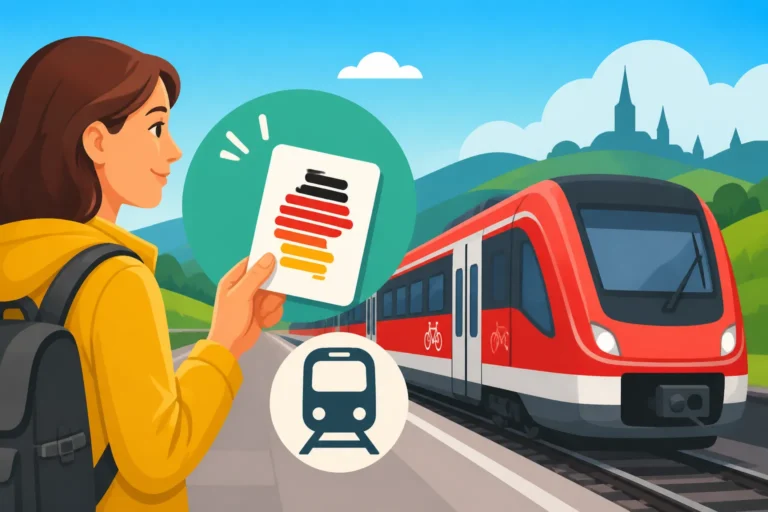
Unlike many countries where you pass through a turnstile, German train stations are often "open." This leads many tourists to think the rides are free or that they can buy a ticket later. This is a mistake that results in a 60 Euro "increased transport fee" (fine) immediately.
Furthermore, simply having a ticket in your pocket isn't enough. Many local tickets must be "validated" (stamped) in a small machine on the platform or inside the bus/tram before you start your journey. If you are caught with an unstamped ticket, you are treated as a fare dodger. To avoid this confusion, I highly recommend using apps like Omio to buy digital tickets, as these are usually pre-validated and live on your phone. If you're planning a longer trip, read up on How to Buy Deutsche Bahn Tickets and Save Money to understand the difference between regional and long-distance fares.
The Bike Lane "Death Trap"
In many German cities, the sidewalk is divided into a walking section and a cycling section, often marked by different colored bricks or a painted line. One of the quickest ways to get shouted at by a local is to wander into the bike lane. Cyclists in Germany travel fast and they expect the lane to be clear. If you hear a frantic "Ping!" of a bicycle bell, move immediately. It’s not just about being polite; it’s a safety issue. Always look both ways before crossing a red-paved strip on the sidewalk.
Quiet Zones and Mobile Phones
When traveling on long-distance trains (ICE), you will see cars marked with a "silence" symbol. These are the "Ruhezonen." In these cars, talking on the phone, having loud conversations, or even listening to music that can be heard through headphones is strictly forbidden. Germans pay extra for the peace of these cars, and they will not hesitate to remind you of the rules. If you need to make a call, move to the area between the cars or to the "Bordbistro" (dining car).
Historical Sensitivity and the Law
Finally, it is vital to discuss the weight of history in Germany. While Germany is a modern, vibrant democracy, its past is always present, and there are strict legal and social boundaries regarding how that history is treated.
Nazi Imagery and "Jokes"
This is perhaps the most serious "don't" on the list. In Germany, it is a crime to display Nazi symbols, perform the Nazi salute, or deny the Holocaust. This is not just a social taboo; it can lead to immediate arrest and prison time. What might be considered a "dark joke" in another country is a grave matter here.
When visiting memorials, such as the Memorial to the Murdered Jews of Europe in Berlin, maintain a somber and respectful attitude. Do not climb on the stones or take "fun" selfies. These are places of deep mourning. If you want to learn more about how to navigate these sites, GetYourGuide offers many historically focused tours led by experts who can provide the necessary context to help you understand the gravity of these locations.
Entering Private Property and "Verboten" Signs
Germans respect boundaries and signs. If a sign says "Betreten verboten" (No trespassing) or "Kein Durchgang" (No thoroughfare), do not ignore it thinking it’s just a suggestion. This applies to forests, private fields, and construction sites. While in some countries people might "take a shortcut," in Germany, this is seen as a sign of deep disrespect for the owner and the law. Stay on the marked paths, especially in the national parks.
Disclaimer
This guide is intended for informational purposes only. While every effort has been made to ensure the accuracy of the cultural and legal advice provided, laws and social norms can change, and individual experiences may vary across different regions of Germany. Always check local regulations and official government resources before traveling. This content does not constitute legal or professional travel advice.