How Many Days Do You Need in Munich?
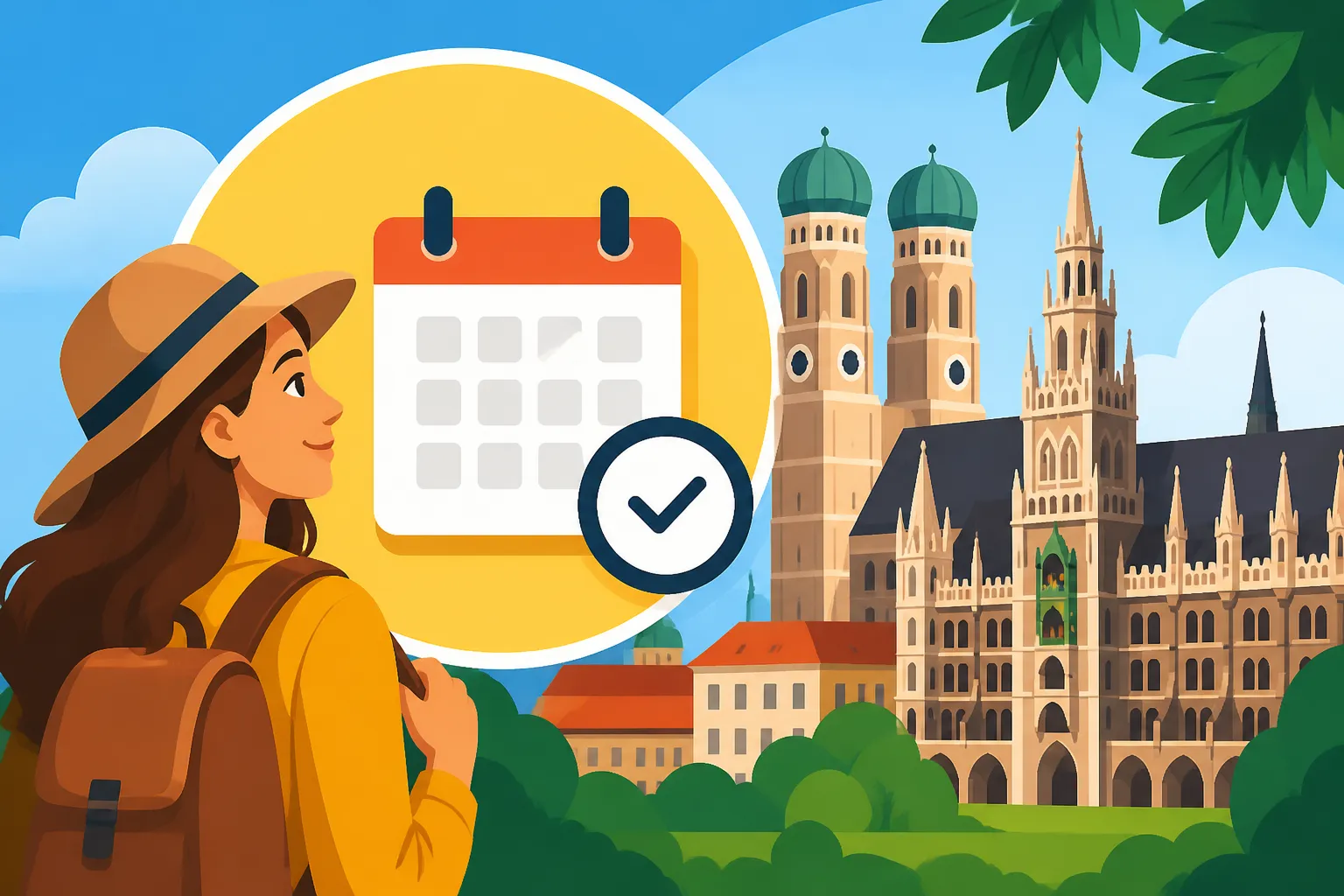
Planning a trip to the Bavarian capital often triggers a classic traveler’s dilemma: do you treat it as a quick pitstop on the way to the Alps, or settle in for a week? Most people underestimate the sheer density of history, culture, and "Gemütlichkeit" (coziness) packed into this city. This guide solves that uncertainty by breaking down the perfect duration for every type of traveler, from the weekend warrior to the deep-diving culture enthusiast.
Disclosure: This post may contain affiliate links. We may earn a commission at no extra cost to you if you make a purchase through these links. Read full disclosure.
Finding Your Rhythm: Why the Length of Your Stay Matters in Munich
When I first moved to Germany, I thought Munich was a city you could "check off" in forty-eight hours. I was wrong. Munich isn't just a collection of sights; it is a lifestyle. If you stay too short, you miss the nuance of the different neighborhoods and the soul-soothing experience of a long afternoon in a beer garden. However, stay too long without a plan, and the high cost of living might start to bite your budget. The key is matching your duration to your specific interests, whether those are high-art galleries, WWII history, or Alpine day trips.
The 48-Hour Whirlwind: Is Two Days Enough?
For many, two days is the default. If you are on a tight schedule across Europe, you can certainly see the highlights in forty-eight hours. You will spend your first day in the Altstadt (Old Town), marveling at the Glockenspiel at Marienplatz, visiting the Frauenkirche, and perhaps grabbing a liter of beer at the Hofbräuhaus. Your second day would likely be split between the sprawling Englischer Garten and a quick visit to a museum or the BMW Welt. It is a frantic pace that requires precise planning and a bit of stamina.
The frustration with a two-day trip is that you never truly "arrive." You are constantly looking at your watch to catch the next U-Bahn. You might see the Munich for First-Time Visitors: What to See highlights, but you won't have time to sit by the Isar River with the locals or explore the trendy Glockenbachviertel. If you choose this path, I highly recommend using Booking.com to find a hotel near the Hauptbahnhof (Central Station). This saves you precious transit time and puts you within walking distance of the pedestrian zones.
The Sweet Spot: Why Three to Four Days is the Expat Recommendation
If you ask any veteran expat, they will tell you that three to four days is the magic number. This duration allows you to move beyond the tourist traps and actually enjoy the city’s pace. With three days, you have one day for the historic center, one day for the world-class museums like the Pinakotheken or the Deutsches Museum, and a third day for a significant excursion. It is the difference between "seeing" Munich and "feeling" it. You have time to understand German Social Etiquette for Visitors: Greetings and Punctuality by observing how locals interact in the markets.
Having that fourth day is the ultimate luxury because it opens up the possibility of a full day trip without feeling like you are neglecting the city itself. You can head out to Dachau for a sobering history lesson or take the train to see the "fairytale" castles. When planning these movements, Omio is an absolute lifesaver for comparing train and bus prices in real-time, especially if you’re trying to decide between a regional train or a faster InterCity Express. A four-day stay also means you can enjoy more than one of the Beer Gardens and Beer Halls in Germany without waking up too exhausted to function the next morning.
The Deep Dive: Staying Five Days or More
Five days or more transforms your trip from a vacation into an immersion. This is for the traveler who wants to see the surrounding beauty of Bavaria. With five days, you can dedicate two full days to excursions outside the city limits. You could spend one day in the mountains and another visiting historic cities like Nuremberg or Salzburg. Inside the city, you can afford to spend a slow morning at the Viktualienmarkt, sampling local cheeses and learning about Bread, Bakeries, and the German Breakfast traditions.
Longer stays also allow you to explore the "outer" Munich. You can visit the Nymphenburg Palace and its massive parklands without rushing back for a dinner reservation. You can also dive deeper into the Nightlife, Music, and Entertainment in Germany scene, perhaps catching an opera or a local football match. For these extended stays, booking specialized tours through GetYourGuide can help fill your itinerary with niche experiences, like hidden third-reich walking tours or Bavarian cooking classes, which provide much more context than a standard guidebook.
Breaking Down the Munich Itinerary: A Day-by-Day Perspective
To help you visualize how much time you truly need, it helps to see what a realistic day looks like. Munich is a walkable city, but its attractions are dense. You can't just run into the Residenz (the former royal palace) and be out in thirty minutes; the place has over 130 rooms open to the public. If you are interested in Bavaria for Travelers: Munich, the Alps, and Beyond, you need to account for the travel time that consumes a large portion of your day.
Days 1 and 2: The Essential Munich Core
The first forty-eight hours should always be about the "Greatest Hits." Start at Marienplatz for the 11:00 AM or 12:00 PM Glockenspiel show. From there, it’s a short walk to the Viktualienmarkt. This is where you should have your first "Imbiss" (snack). Understanding Sausages and Street Food in Germany (Currywurst and More) starts here. Spend your afternoon in the Englischer Garten watching the surfers at the Eisbachwave—yes, people surf on a standing river wave in the middle of the city, even in winter.
On your second day, pick one major museum. If you love science, the Deutsches Museum is a must, but it is massive. If you prefer art, the Alte Pinakothek offers one of the most significant collections of Old Master paintings in the world. Finish your day by exploring the German Beer Culture: Styles, Beer Gardens, and Breweries at a more local spot like Augustiner-Keller. This is far more "authentic" than the Hofbräuhaus and will give you a better sense of how locals actually spend their evenings.
Day 3: Art, History, and Neighborhood Vibes
Day three is when you start to see the "real" Munich. This is the time to visit the Documentation Center for the History of National Socialism or take a short U-Bahn ride to the Olympiapark, the site of the 1972 Summer Olympics. The architecture there is still futuristic and offers some of the best views of the city from the Olympic Tower. This is also a great day to dive into German Food Culture: Eating and Drinking as a Visitor by dining in the Maxvorstadt district, which is full of students and affordable, diverse eateries.
In the afternoon, head to the Glockenbachviertel. This was once the center of the city’s gasworks but is now the heart of the LGBTQ+ community and home to the best boutiques and coffee shops. It’s a great place to practice Tipping in Germany: When, Where, and How Much because the service is usually a bit more personal than in the high-traffic tourist areas. This neighborhood shows you that Munich isn't just about lederhosen and tradition; it has a vibrant, modern edge.
Day 4 and Beyond: The Power of the Day Trip
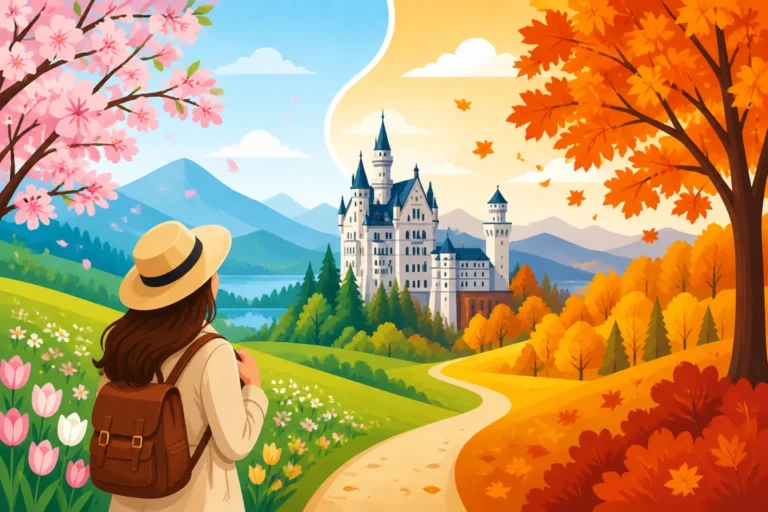
If you have a fourth or fifth day, you are here for the day trips. The most popular choice is Neuschwanstein Castle. While it is stunning, be aware that it is a long day—roughly two hours each way by train or car. You can find excellent organized transport for this through GetYourGuide, which often includes skip-the-line access, a necessity during peak season. Alternatively, a trip to Salzburg for the Day is incredibly easy from Munich’s main station using a Bayern Ticket, which you can easily book through Omio.
Another essential but heavy day trip is the Dachau Concentration Camp Memorial Site. It is only about 20 minutes outside the city, but you should allow at least four to five hours for a respectful visit. Having a fourth day in your schedule ensures that you don't return from such a somber experience and feel pressured to immediately go out and "have fun." You can return to the city, take a quiet walk by the Isar, and reflect.
| Duration | Travel Style | Recommended Activities |
|---|---|---|
| 1-2 Days | The Quick Hit | Marienplatz, Englischer Garten, Hofbräuhaus, one major museum. |
| 3 Days | The Standard | All of the above, plus Olympiapark, Nymphenburg Palace, and a deeper museum dive. |
| 4 Days | The Explorer | All of the above, plus one major day trip (Dachau or Neuschwanstein). |
| 5+ Days | The Deep Diver | Multiple day trips (Salzburg, Alps), exploring outer neighborhoods, and slow mornings at markets. |
The Seasonal Factor: How Festivals Change the Clock
The time of year you visit significantly impacts how many days you need. During major events, the city slows down. Crowds are thicker, transport is packed, and everything—from getting a table at a restaurant to entering a museum—takes longer. If you are coming for a specific event, I usually suggest adding at least one extra day to your itinerary just to account for the "logistical friction."
Navigating the Oktoberfest Rush
If you are coming for Oktoberfest in Munich: A First-Timer's Guide, you need more time. The festival itself can easily consume two full days. One day to experience the tents and the beer, and another day to recover from the hangover and perhaps enjoy the "Oide Wiesn" (the traditional, historic part of the festival). If you only stay for three days during Oktoberfest, you will likely leave without seeing any of the actual city.
During these weeks, hotel prices skyrocket. I recommend using Booking.com months in advance to secure anything remotely affordable. Be aware that the city is at its most chaotic during this time. You will spend more time waiting for trains and navigating the crowds at Marienplatz. If your goal is to see the sights and do the festival, give yourself at least five days.
Winter Magic and Christmas Markets
Visiting in December is a completely different experience. You will want time to visit multiple markets, each with its own theme. From the medieval market at Wittelsbacherplatz to the giant tree at Marienplatz, it’s a festive marathon. You should consult a guide on Germany's Best Christmas Markets: Where to Go to decide which ones are your priority. The cold weather also means you'll want to spend more time inside, perhaps lingering longer in cafes for "Kaffee und Kuchen."
Because the days are shorter and it can be quite cold, your physical pace will naturally slow down. You won't want to be outside for ten hours straight. A four-day trip in winter feels roughly equivalent to a three-day trip in summer in terms of how much ground you can cover. Plus, you’ll want to factor in the Quiet Hours and Sundays in Germany (Ruhezeit) rules, as some smaller markets might have different hours on Sundays.
Practical Expat Wisdom for Navigating Munich
To make the most of whatever number of days you choose, you need to understand how the city functions. Bureaucracy and tradition run deep here, and even as a tourist, you will run into them. One of the biggest shocks for newcomers is the Sunday closure. Almost all shops and supermarkets close on Sundays. If you are only in town for two days and one of them is Sunday, you need to plan your Shopping, Markets, and Made in Germany excursions for Saturday.
Getting Around Without the Stress
Munich’s public transport is excellent, but it can be confusing. The system is divided into zones. Most tourists only ever need "Zone M," which covers the entire city center. For any trip involving the airport, you need a different ticket. I always suggest downloading the MVV app or using Omio to map out your longer regional journeys. Knowing Getting Around German Cities: U-Bahn, S-Bahn, Buses Explained will save you from accidental fines, as plainclothes ticket controllers are very common and quite strict.
Understanding the Sunday Closure and Quiet Hours
As mentioned, Sunday is a day of rest. If you are here for a short trip, don't plan on doing any "high street" shopping on a Sunday. However, museums are usually open and often only cost 1 Euro on Sundays (specifically the state-owned Pinakotheken). This makes Sunday the perfect day for a "Museum Marathon." Just be sure to check What Closes on Sundays in Germany? before you head out, as some smaller galleries or family-run restaurants might also be closed.
Empathy for the local culture will go a long way. Germans value their quiet time. If you are staying in an Airbnb or a local pension, be mindful of "Ruhezeit" (quiet time), typically between 10:00 PM and 7:00 AM, and all day Sunday. Loudly dragging your suitcase across a cobblestone street at 6:00 AM on a Sunday will not make you any friends in the neighborhood.
Disclaimer
The information provided in this guide is for informational purposes only. While every effort has been made to ensure the accuracy of travel tips, costs, and cultural norms in Germany, details such as opening hours, transport prices, and local regulations are subject to change. Always verify specific details with official sources before your trip.