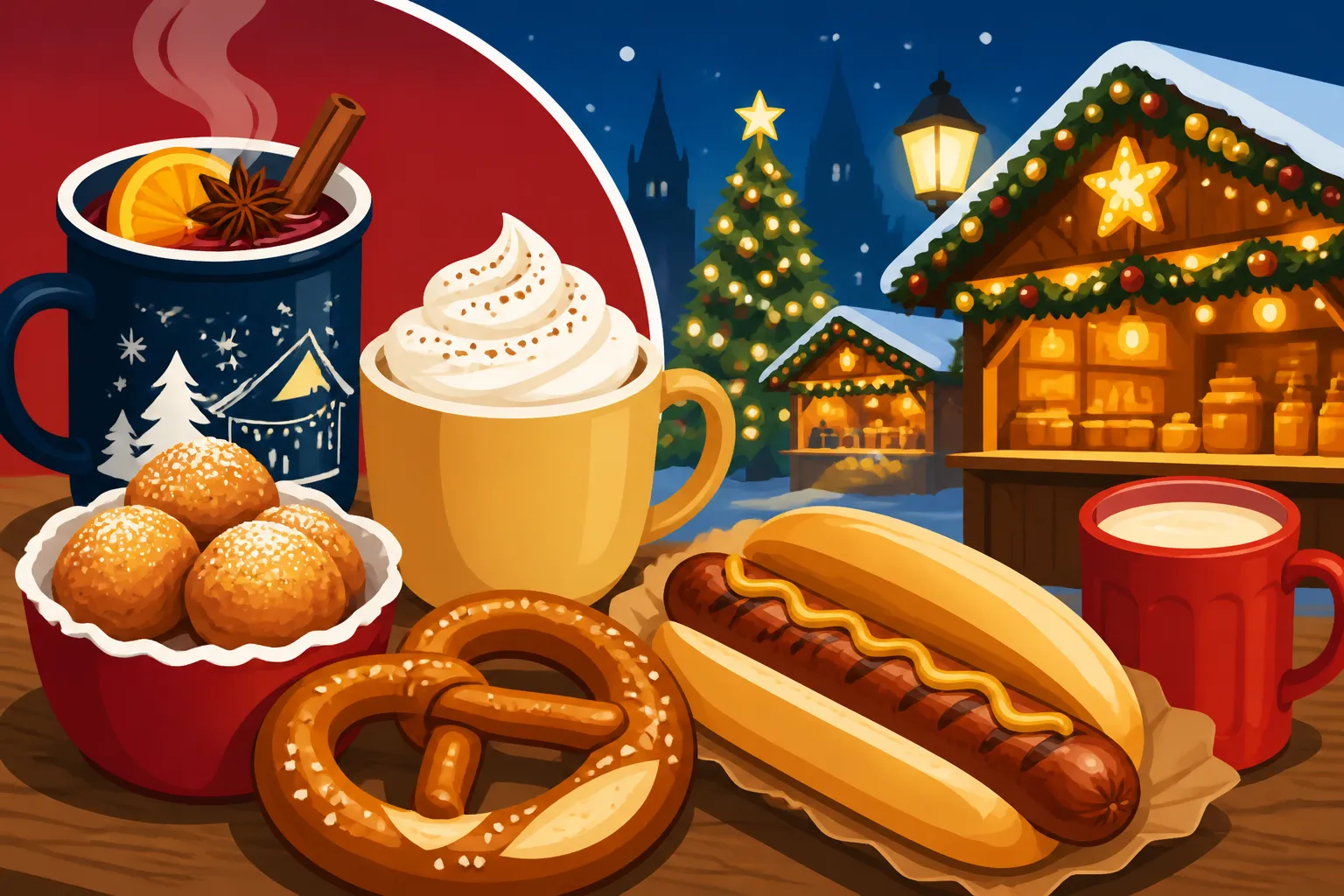
What to Eat and Drink at a German Christmas Market
Stepping into a German Christmas market for the first time is like walking into a postcard come to life. The twinkling lights, the scent of pine and cinnamon, the cheerful hubbub of voices – it’s absolutely magical. But amidst all that enchanting atmosphere, it’s easy to feel a little overwhelmed by the sheer abundance of culinary delights. Don't worry, my friend, you're not alone! Many expats, myself included, have stood there, eyes wide, wondering where to even begin with the glorious German Christmas market food and drink. This guide is here to walk you through the essential eats and sips, ensuring you make the most of every delicious moment.
Disclosure: This post may contain affiliate links. We may earn a commission at no extra cost to you if you make a purchase through these links. Read full disclosure.
The Hearty & Savory Delights: Food to Fuel Your Stroll
Let's face it, wandering through a bustling Christmas market in chilly German weather works up an appetite! Thankfully, the stalls are brimming with savory treats that are perfect for warming you up from the inside out and providing the energy needed to explore every charming corner. From sizzling sausages to cheesy delights, you'll find plenty to satisfy your cravings.
Classic Sausages and Meats
You simply cannot visit a German Christmas market without indulging in a Bratwurst. It’s practically a rite of passage, a culinary institution that embodies the very essence of German street food. This grilled sausage, served hot in a crispy Brötchen (bread roll) with a dollop of mustard, is the quintessential market snack. But don't think it's just one kind of Bratwurst! Germany is a land of regional pride, and its sausages are no exception.
Take the Nürnberger Rostbratwurst, for instance. These are small, finger-sized sausages, usually served three in a bun (Drei im Weggla). They're packed with flavor and have a distinct herby taste. Then there's the Thüringer Rostbratwurst, a longer, leaner sausage from Thuringia, grilled over charcoal, offering a smoky, robust flavor. Each region seems to have its own beloved variety, so keep an eye out for local specialties. While Currywurst is typically more associated with Berlin's everyday street food scene, you might occasionally spot a stall offering this curious concoction of chopped sausage smothered in curry ketchup, often with a side of fries. It's an unexpected but surprisingly popular treat that has made its way to some Christmas markets.
Beyond the classic sausages, you might also stumble upon other delightful meat-based offerings. In Bavaria, you'll often find Leberkäse, a type of meatloaf, served warm in a Semmel (another word for a bread roll). It's savory, comforting, and surprisingly filling. Another favorite, particularly in the eastern parts of Germany, is Handbrot. This rustic, oven-baked bread is hollowed out and filled with cheese, often ham or mushrooms, and then baked until gooey and delicious. It's a proper meal in itself and wonderfully warming on a cold evening.
Potato & Cheese Comforts
If you're looking for something that perfectly balances crispy textures with soft, savory interiors, then the potato and cheese offerings at German Christmas markets are your absolute must-try. These aren't just sides; they're stars in their own right!
The irresistible aroma of Reibekuchen or Kartoffelpuffer (fried potato pancakes) always draws a crowd. These crispy, golden-brown discs of grated potato are deep-fried to perfection. The traditional accompaniment is Apfelmus (applesauce), which might sound odd to some, but trust me, the sweet and savory combination is an absolute delight. Sometimes, you'll find them served with Kräuterquark (herb quark, a kind of herbed soft cheese) or even smoked salmon if you're feeling fancy. They are usually served hot, fresh from the fryer, often sold in portions of three or five.
For cheese lovers, Käsespätzle is a total dream come true. Often described as Germany's answer to mac and cheese, Käsespätzle consists of soft, egg-based noodles (Spätzle) tossed with heaps of gooey cheese and often topped with crispy fried onions. It’s incredibly hearty, comforting, and perfect for banishing the winter chill. Imagine a generous portion served steaming hot in a small bowl, the cheese still bubbling – it's pure culinary heaven.
Another fantastic savory option that’s gained popularity at markets across Germany is Flammkuchen. Hailing from the Alsace region, just across the French border, this dish is a wonderfully thin-crusted "pizza" often topped with crème fraîche, onions, and thinly sliced bacon (Speck). It's baked quickly in a wood-fired oven, resulting in a delightfully crispy crust and a rich, savory flavor. Many stalls now offer vegetarian versions too, with mushrooms or roasted vegetables. It’s lighter than a Bratwurst but equally satisfying.
Sweet Treats & Baked Goods: Indulge Your Sweet Tooth
After all those savory delights, it's time to let your sweet tooth guide you through the festive labyrinth of German Christmas market treats. The air is thick with the scent of sugar and spice, a truly magical blend that will transport you straight into holiday cheer.
The Iconic Sweets
No Christmas market visit is complete without a bag of Gebrannte Mandeln. The intoxicating smell of these candied almonds, roasted with sugar and spices in large copper kettles, is often the first thing that hits you as you enter a market. They’re crunchy, sweet, and perfectly addictive. You'll find them in various flavors these days, from classic cinnamon to chili-chocolate, but the traditional version remains the best. Just be careful not to burn your tongue; they're served piping hot!
Then there's Lebkuchen, German gingerbread. This isn't your average cookie; it's a soft, often honey-sweetened gingerbread, traditionally spiced with cinnamon, cloves, ginger, and cardamom. You'll see massive Lebkuchenherzen (gingerbread hearts) hanging everywhere, often decorated with icing messages like "Frohe Weihnachten" (Merry Christmas) or "Ich liebe dich" (I love you). While these are charming souvenirs, for the best eating experience, look for smaller, softer Elisenlebkuchen, especially those from Nuremberg, which are known for their high nut content and delicate texture. They're often dipped in chocolate or glazed with sugar.
Another light and fluffy treat to look out for is Schmalzkuchen. These are small, pillow-like fried pastries, similar to mini doughnuts or fritters, dusted generously with powdered sugar. They are incredibly light and airy, almost melt-in-your-mouth. Served warm, they offer a delightful contrast to the crisp, colder air. You might also hear them called Mutzenmandeln or Kräppel depending on the region.
Waffles, Crêpes, and More
For something a bit more substantial, but still undeniably sweet, you can't go wrong with fresh Waffeln. These aren't your typical thin, crispy waffles; German market waffles are usually soft and fluffy on the inside with a slightly crisp exterior. They're made fresh on the spot and can be loaded with an array of toppings: warm cherries (Kirschen), a dollop of fresh cream (Sahne), a generous spread of Nutella, or simply a dusting of powdered sugar. There’s something so comforting about watching them being pressed in the hot iron, their steam rising into the cold air.
Similarly popular are Crêpes, the French-inspired thin pancakes that have found a firm footing in German markets. Like waffles, they are made to order and can be filled with a variety of sweet ingredients. Chocolate, banana, cinnamon sugar, or Apfelmus are common choices. They offer a slightly lighter, yet equally satisfying, sweet indulgence. For those planning a longer stay to visit multiple markets, remember that these treats are often available everywhere, so you can spread out your indulgence and perhaps even visit a new city using services like Omio to discover more regional specialties.
Finally, don't miss the chance to try a classic Apfelstrudel. While often associated with Austria, a warm slice of apple strudel, with its flaky pastry and spiced apple filling, is a common and beloved sight at German Christmas markets. It's often served with a warm vanilla sauce (Vanillesoße) or a scoop of vanilla ice cream, creating a delightful dessert that truly warms the soul.
Warming Drinks: Toasting to the Festive Spirit
Now, let's talk about the beverages. The drinks at a German Christmas market aren't just thirst quenchers; they are an integral part of the experience, offering warmth, cheer, and a chance to truly immerse yourself in the festive spirit.
Glühwein: The Undisputed King
There's no drink more synonymous with German Christmas markets than Glühwein. This steaming hot mulled wine, infused with spices like cinnamon, cloves, star anise, and orange peel, is absolutely indispensable. You’ll smell it before you see it, wafting through the cold air. It's the ultimate hand-warmer and mood-lifter.
While red Glühwein is the most traditional and widely available, many markets also offer weißer Glühwein (white mulled wine), which is often lighter, fruitier, and can be a pleasant change. And if you're feeling adventurous or just need an extra kick on a particularly chilly evening, you can often ask for it mit Schuss – with a shot of something stronger, like rum, Amaretto, or brandy. It really does hit the spot!
One of the most charming traditions surrounding Glühwein is the unique mug system, known as Pfand. When you order your Glühwein, you'll pay a deposit (the Pfand) for the mug, usually €2 to €4. You can then either return the mug to any Glühwein stall (not necessarily the one you bought it from) and get your deposit back, or you can keep the mug as a souvenir! Many people collect the beautiful, often elaborately designed mugs, which are unique to each market and year. It's a wonderful way to remember your visit, and frankly, who can resist a pretty mug? For a full understanding of this tradition, make sure to check out our guide on Glühwein and Festive Drinks in Germany.
Beyond Glühwein: Other Hot Beverages
While Glühwein reigns supreme, there are plenty of other delightful hot drinks to explore at the markets.
Eierpunsch is a less common but equally warming option. This creamy, eggnog-like drink is made with egg yolks, sugar, white wine, and sometimes rum or brandy, served warm with a dollop of whipped cream and dusted with cinnamon. It's rich, sweet, and incredibly indulgent – perfect for a dessert in a mug!
For a truly theatrical experience, seek out Feuerzangenbowle. This isn't just a drink; it's a spectacle. A rum-soaked sugar loaf is set ablaze over a bowl of mulled wine, slowly caramelizing and dripping into the wine below. The flaming sugar adds a unique, smoky sweetness to the Glühwein. It's a fantastic sight and definitely worth trying if you see a stall offering it. This drink often comes with a story, adding to the allure of Christmas Markets and Festive Germany.
And of course, for those who prefer non-alcoholic options or are visiting with children, there's Kinderpunsch. This is a warm, spiced fruit punch, usually apple or berry-based, and it tastes every bit as festive and delicious as its alcoholic counterparts. It's a fantastic way for everyone to join in the toasting. Hot chocolate is also widely available, often with a choice of toppings like whipped cream, marshmallows, or even a shot of liqueur. It’s a classic for a reason, especially when you need a familiar comfort amidst the new experiences.
Navigating the Market Stalls and Making the Most of Your Culinary Journey
Exploring a German Christmas market is an adventure, and like any good adventure, a little planning (or at least awareness) goes a long way. Maximizing your culinary enjoyment means knowing how to navigate the bustling aisles and what practicalities to keep in mind.
Planning Your Culinary Route
One of the biggest mistakes first-timers make is trying to eat everything at the first few stalls they see. My advice? Pace yourself! These markets are usually sprawling, with hundreds of unique vendors. Take a full walk-through first, soak in the atmosphere, and scope out the options before committing to your first bite. Different markets might have different specialties, too. For instance, while Bratwurst is ubiquitous, some cities are famous for specific delicacies. If you're looking to visit various cities, checking travel options on platforms like Omio can help you plan your route efficiently.
Don't be afraid to try things from smaller, less crowded stalls. Sometimes the most authentic and delicious treats are found away from the main thoroughfares. Look for signs of fresh preparation – meat sizzling on a grill, Reibekuchen being fried to order, Waffeln steaming from the iron. These are usually good indicators of quality. Think about your whole meal as you go; maybe a savory sausage from one stall, a sweet treat from another, and a Glühwein from a third. This way, you get to experience a wider variety of flavors and traditions, truly appreciating German Food Culture: Eating and Drinking as a Visitor. Many markets also offer tours, which can be a great way to discover hidden gems and sample curated selections. Websites like GetYourGuide offer various guided tours, some specifically focusing on culinary aspects of the Christmas markets.
Payment and Practical Tips
Here's a crucial piece of advice for newcomers: cash is still king at German Christmas markets. While more places are starting to accept card payments, especially in larger cities, many smaller stalls operate on a cash-only basis. Always make sure you have enough Euros on hand to avoid disappointment. You don't want to miss out on that last Lebkuchen because you only have a card! For more detailed advice, refer to our article on Cash vs Card in Germany: What Visitors Should Know.
Another practical tip is to dress warmly, and I mean really warmly. You'll be spending hours outdoors, standing around, and enjoying the festive atmosphere. Layers, a good warm coat, gloves, a hat, and comfortable, waterproof shoes are essential. The Glühwein will warm your insides, but your toes will thank you for proper footwear!
Don't be shy about practicing a few basic German phrases either. While many vendors speak English, a simple "Bitte" (please), "Danke" (thank you), and "Was kostet das?" (How much does that cost?) goes a long way. For more useful phrases, check out Survival German for Travelers: Key Phrases to Learn First.
And finally, enjoy the camaraderie! Christmas markets are social hubs. Don't be surprised if you end up chatting with strangers at a standing table while sipping your Glühwein. It's all part of the magical experience that makes German Christmas markets so special.
Here’s a quick overview of some popular treats and their approximate prices:
| Food/Drink Item | Description | Typical Price Range (€) |
|---|---|---|
| Glühwein | Hot spiced mulled wine (red or white) | 3.50 – 5.00 (+ Pfand) |
| Bratwurst im Brötchen | Grilled sausage in a bread roll | 4.00 – 5.50 |
| Currywurst | Sausage with curry ketchup, often with fries | 5.00 – 7.00 |
| Reibekuchen/Kartoffelpuffer | Fried potato pancakes, often with applesauce or quark | 4.00 – 6.00 (3-5 pieces) |
| Flammkuchen | Thin-crusted savory tart (onion, bacon, cheese) | 6.00 – 9.00 |
| Gebrannte Mandeln | Candied almonds | 4.00 – 6.00 (per bag) |
| Lebkuchen | Gingerbread (hearts for souvenir, smaller ones for eating) | 3.00 – 10.00 |
| Schmalzkuchen | Small, fluffy fried pastries, powdered with sugar | 4.00 – 6.00 (per portion) |
| Waffeln/Crêpes | Freshly made waffles or thin pancakes with various toppings | 4.00 – 7.00 |
| Eierpunsch | Warm eggnog-like drink | 4.50 – 6.00 (+ Pfand) |
| Kinderpunsch | Non-alcoholic spiced fruit punch | 2.50 – 4.00 (+ Pfand) |
When you're ready to plan your full itinerary, including finding the perfect place to stay near the markets, Booking.com can be a helpful resource for accommodation. And don't forget that many of these unique items also make fantastic gifts, so consider What Souvenirs to Buy at German Christmas Markets might be best. Enjoy your culinary journey through the enchanting German Christmas markets!
Disclaimer
Please remember that while I strive to provide accurate and up-to-date information, the world of German bureaucracy and cultural practices can be complex and subject to change. This guide is for informational purposes only and should not be taken as legal, financial, or professional advice. Always consult with official sources or qualified professionals for specific guidance.