How to Travel Germany Slowly Over a Month
Let’s be honest, the typical tourist trip to Germany can feel like a marathon. You fly into Berlin, rush through the Brandenburg Gate, catch a train to Munich for Oktoberfest, maybe squeeze in a castle, and then boom, you’re on a plane home, exhausted and wondering if you truly experienced anything. This guide is for those of you who crave something more: a genuine, unhurried immersion into German life, designed for a glorious month-long adventure that moves at your pace.
Disclosure: This post may contain affiliate links. We may earn a commission at no extra cost to you if you make a purchase through these links. Read full disclosure.
Why Slow Travel in Germany is a Game Changer for Expats and Tourists
When you first arrive in Germany, whether it’s for a short visit or a permanent move, the sheer amount of things to see and do can feel overwhelming. Guidebooks often push you to cram four cities into five days, leaving you with nothing but blurry photos and an empty wallet. But what if you could take a deep breath, linger a little longer, and truly connect with a place? That’s the magic of slow travel, and Germany is an ideal playground for it. As someone who’s lived here for years, I can tell you, the real gems aren’t always on the main tourist circuit, and they definitely aren’t found when you’re rushing.
Escaping the “Tourist Checklist” Mentality
The biggest frustration with fast travel is that you end up seeing things, but not feeling them. You check off sights like items on a grocery list, often missing the nuances, the quiet moments, and the unexpected encounters that make travel so enriching. Imagine trying to understand the depth of German history by just glancing at the Reichstag Building for 20 minutes before hopping to the next photo op. It’s simply not possible.
With a month, you shed this pressure. You no longer feel compelled to hit every single museum or landmark. Instead, you have the luxury of choice. You can decide to spend a whole afternoon people-watching from a café in Berlin’s Prenzlauer Berg, just observing the rhythm of local life, or explore a neighborhood beyond the typical hotspots. You might discover a hidden park, a quirky local shop, or a street art mural that truly speaks to you. These are the moments that truly stick, far more than another quick selfie in front of a famous monument. This approach transforms your trip from a superficial survey to a genuine exploration, allowing you to appreciate the culture and history in a way that’s impossible when you’re constantly looking at your watch.
Deeper Immersion and Authentic Experiences
One of the greatest benefits of spending a month in Germany is the opportunity for genuine cultural immersion. When you’re not rushing, you start to notice the subtle differences in daily life, the unspoken rules, and the charming quirks that make Germany unique. You might find yourself striking up conversations with locals at your favorite bakery, figuring out the intricate German recycling system (a badge of honor for any expat!), or even attempting a few more complex German phrases beyond the basics.
This slower pace allows you to engage with the local community. Instead of just eating in tourist-trap restaurants, you can explore the weekly markets, buy fresh produce, and try your hand at cooking a regional German dish. You could attend a local festival that isn’t internationally famous, catch a football match, or even join a local Verein (club) for an activity like hiking or chess, even just for a few sessions. These are the moments where you start to feel less like a visitor and more like a temporary resident. Platforms like GetYourGuide can be surprisingly useful here, not just for big tours, but for finding niche local workshops, cooking classes, or guided neighborhood walks that offer a different perspective and introduce you to local experts. These aren’t just activities; they’re doorways into the authentic German experience.
The Practical Perks: Less Stress, More Savings
Beyond the intangible benefits, slow travel over a month in Germany offers very real, practical advantages. First and foremost, it drastically reduces travel stress. No more frantic packing and unpacking every two days, no more rushing to catch trains, and less risk of travel burnout. You can afford to have a lazy morning, spend an entire rainy afternoon reading in a cozy café, or simply revisit a favorite spot without guilt.
Financially, a month-long stay often translates into significant savings. You can opt for longer-term accommodation rentals, which are typically much cheaper per night than short-term hotel bookings, especially if you’re looking for an apartment on Booking.com or similar sites and filter for longer stays. You’ll also save money by cooking some of your meals, reducing reliance on expensive restaurant dining. Furthermore, embracing local public transport, especially with options like the Deutschland-Ticket Explained, for regional travel can be incredibly cost-effective compared to individual long-distance train tickets or constant short flights. This slower approach naturally leads to a more sustainable and budget-friendly trip, allowing your money to stretch further and providing better value for your time. For a deeper dive into managing your finances, check out our guide on the Cost of Living in Germany: Budgeting Guide for Expats.
Crafting Your Month-Long German Itinerary: Regions and Rhythms
So, you’ve decided to embark on a glorious month-long journey through Germany. Fantastic! The key to making this successful isn’t to try and see everything, but rather to choose a few focus areas and dive deep. Germany is a diverse country, from the bustling cosmopolitan cities to the serene Bavarian Alps, the historic Rhine Valley, and the charming northern coast. Spreading yourself too thin will defeat the purpose of slow travel.
Choosing Your Hubs: One, Two, or Three Main Bases?
For a month-long trip, the optimal strategy is to select one, two, or at most three primary ‘hubs’ where you’ll base yourself for extended periods – think one to two weeks (or longer) in each. This allows you to truly unpack, settle into a routine, and explore the surrounding areas without constantly moving your luggage.
- One Hub (Deep Dive): If you’re passionate about a specific region, such as Bavaria, or want to truly experience a single major city like Berlin, dedicating the entire month to one hub is an excellent choice. You could spend two weeks exploring Berlin itself, diving into its rich history, diverse neighborhoods, and vibrant cultural scene, and then take several day trips or short overnight excursions to places like Potsdam, Dresden, or even Leipzig. The benefit here is minimal logistical hassle and maximum immersion. You become a regular at local spots and uncover hidden gems.
- Two Hubs (Balanced Exploration): A popular and highly recommended approach for a month is to choose two distinct regions. For example, you could spend two weeks based in Berlin (exploring the north and east) and another two weeks based in Munich (to explore Bavaria and the southern Alps). This offers a wonderful contrast of cultures, landscapes, and experiences without feeling rushed. Another great pairing might be Hamburg for the north and a city in the Rhine Valley like Cologne or Heidelberg for the west.
- Three Hubs (Broader Scope, Still Slow): If you’re keen to see a bit more variety, three hubs are manageable, but you’ll want to ensure they are geographically logical to minimize travel time between them. For instance, a week and a half in Berlin, a week and a half in Frankfurt (for the central-west region including the Rhine and Moselle), and then the final week and a half in Munich. This gives you broader coverage but still maintains the ‘slow’ aspect within each area. Remember, the goal is not speed, but depth.
When choosing, consider what truly interests you. Are you a history buff? A nature lover? A food connoisseur? Pick hubs that align with your passions.
Thematic Exploration: Beyond Just Cities
Slow travel allows you to develop a theme for your journey rather than just sightseeing. Instead of just city-hopping, you could focus on:
- Castles & Fairytales: Base yourself near the Rhine Valley, perhaps in a smaller town like Rüdesheim or Cochem, and spend your days exploring medieval castles, quaint villages, and beautiful river landscapes. Take scenic boat trips, hike through vineyards, and truly soak in the romantic atmosphere.
- Wine Regions: Germany has fantastic wine, particularly along the Moselle, Rhine, and Baden regions. You could choose a hub in a wine-producing area, spend your days visiting vineyards, doing tastings, and enjoying the local cuisine. This offers a very different rhythm from city life.
- Outdoor Adventures: For nature lovers, basing yourself in the Bavarian Alps near Garmisch-Partenkirchen, or in the Black Forest around Freiburg, could mean a month of hiking, cycling, and exploring picturesque landscapes.
- Cultural Deep Dive: Immerse yourself in the art, music, and theatre scene of a major city like Berlin or Hamburg. Attend multiple performances, visit smaller galleries, and truly engage with the creative pulse of the city.
Think about what truly makes you tick. A month gives you the canvas to paint a picture of Germany that is uniquely yours, focused on experiences you cherish, not just popular attractions. Don’t forget to explore Germany’s Regions and Where to Go: A Traveler’s Overview for more inspiration.
Getting Around Germany: Savvy Transport for Slow Travelers
For a month-long stay, your choice of transportation significantly impacts both your experience and your budget. Luckily, Germany boasts an incredible public transport network, making slow travel quite feasible.
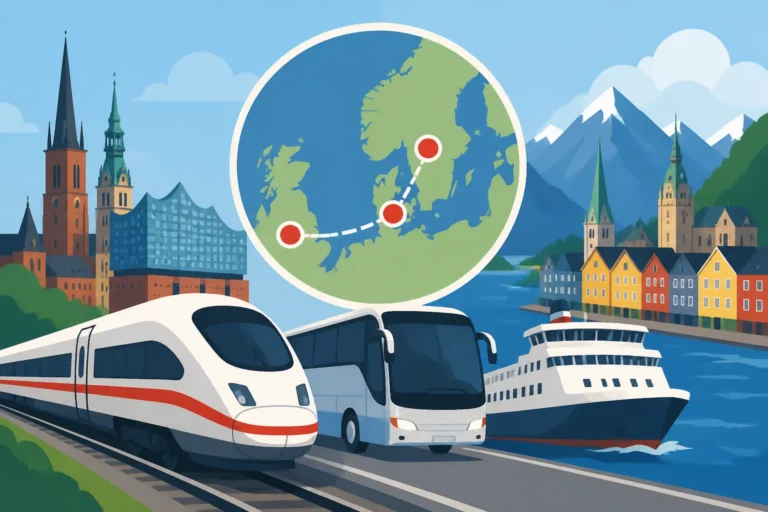
- Trains (Deutsche Bahn): Germany’s train system is efficient, extensive, and often scenic. For longer inter-city journeys between your hubs, the ICE (Intercity-Express) trains are fast and comfortable. For exploring within a region from your hub, regional trains (RE, RB) are your best friend. Booking in advance can yield significant savings, especially for ICE tickets. The Omio platform can be incredibly useful for comparing and booking train, bus, and even flight options across Germany and beyond, making multi-modal planning simple. For detailed insights into the rail system, check out our guide on Getting Around Germany: Trains, Buses, Flights, and Car Hire and how to use the Deutsche Bahn Guide: Using Trains for City and Long-Distance Travel.
- The Deutschland-Ticket: This is a game-changer for slow travelers! For a flat monthly fee (currently €49, but always check current prices), you get unlimited travel on all local and regional public transport across Germany. This includes regional trains, S-Bahns, U-Bahns, trams, and buses. If you plan to explore a region extensively from your hub or even move between hubs using only regional connections, this pass is an absolute no-brainer. It encourages spontaneous day trips and truly allows you to live like a local. Remember, it’s not valid on ICE or IC trains, but for everything else, it’s golden. You can find more details in our article on The Deutschland-Ticket Explained.
- Buses (FlixBus): For inter-city travel, especially if you’re on a tight budget or going between cities not directly linked by fast trains, long-distance buses like FlixBus offer a comfortable and affordable alternative. They cover a vast network and can sometimes be significantly cheaper than last-minute train tickets.
- Renting a Car: While public transport is excellent, a car can offer unparalleled freedom, especially if your thematic exploration involves rural areas, small villages, or specific driving routes like the Romantic Road. If you decide to rent, make sure to read up on Renting a Car and Driving on the Autobahn to understand the rules of the German road. However, for city exploration, a car can be more of a hindrance than a help due to parking and traffic.
Here’s a sample table outlining a possible 4-week slow travel itinerary, focusing on two main hubs:
| Week | Hub City | Regional Focus | Accommodation Suggestion | Example Activities (Slow Pace) | Transport Strategy |
|---|---|---|---|---|---|
| 1 | Berlin | Berlin & Brandenburg | Serviced apartment / Airbnb | Explore different neighborhoods (e.g., Kreuzberg, Prenzlauer Berg, Charlottenburg), visit local markets, spend a day at Museum Island, walk the East Side Gallery, try local street food. | Deutschland-Ticket for city; regional trains for Potsdam/Spreewald. |
| 2 | Berlin | East Germany | Serviced apartment / Airbnb | Day trip to Potsdam (palaces), 2-day trip to Dresden (history, art, Elbe River), enjoy Berlin parks and cafés, attend a local event. | Deutschland-Ticket for regional trips; potentially FlixBus for Dresden. |
| 3 | Munich | Munich & Bavaria | Serviced apartment / Airbnb | Explore Munich’s Altstadt, visit Deutsches Museum, relax in English Garden, attend a beer garden, day trip to Bavarian Alps (e.g., Garmisch-Partenkirchen for hiking). | Deutschland-Ticket for city & regional; possibly a rental car for specific mountain access. |
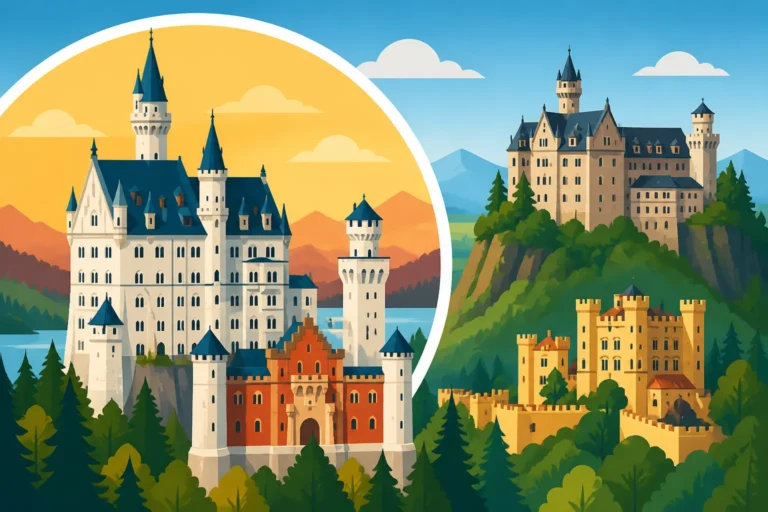
| 4 | Munich | Bavarian Castles & Lakes | Serviced apartment / Airbnb | Day trip to Neuschwanstein & Hohenschwangau Castles, explore Lake Starnberg or Chiemsee, visit smaller Bavarian towns like Regensburg, enjoy local Bavarian cuisine and beer. | Deutschland-Ticket for most trips; consider a car for ultimate flexibility to more remote castles/lakes. |
Day-to-Day Living: Settling In, Not Just Visiting
The beauty of a month-long stay in Germany is that it transitions you from being a mere observer to a temporary participant in daily life. This means adopting some local customs, finding your routines, and generally living rather than just traveling. It’s an incredibly rewarding experience, even if it comes with its fair share of “German bureaucracy” moments.
Accommodation Strategies for Extended Stays
Gone are the days of sterile hotel rooms. For a month in Germany, you want a place that feels like home. This is where options beyond traditional hotels truly shine:
- Serviced Apartments: Many German cities offer fully furnished serviced apartments designed for longer stays. These come with equipped kitchens, laundry facilities, and often housekeeping services. They provide the comfort and independence of an apartment with some hotel conveniences.
- Airbnb/VRBO (or similar local platforms): Private rentals are often your most cost-effective and authentic option for a month. You can find everything from cozy studios to spacious family apartments. Look for places with good public transport connections, a nearby supermarket, and perhaps a local bakery. Remember that in Germany, many apartments don’t come with kitchens or light fixtures, so read descriptions carefully – though for short-term rentals, these are usually included! Platforms like Booking.com also list many apartment options suitable for extended stays, often with flexible cancellation policies.
- Sublets or Temporary Rentals: Sometimes, you can find individuals subletting their apartments for a month or two. These can offer an even more local and homey experience. Check local expat groups on social media or dedicated temporary housing websites.
When booking, specify your dates for the entire month to see if there are discounts for longer durations. And always, always make sure your chosen accommodation has good Wi-Fi – because even slow travelers need to connect with the outside world!
Embracing Local Life: Food, Markets, and Daily Routines
This is where the magic truly happens! Instead of queuing for tourist traps, immerse yourself in the daily rhythms:
- Grocery Shopping: Head to local supermarkets like Edeka, Rewe, or the discount chains like Aldi and Lidl. Discover the amazing variety of bread at a Bäckerei (bakery) and the fresh pastries. Explore the Wochenmarkt (weekly market) for fresh, seasonal produce, local cheeses, and regional specialties. This isn’t just about saving money; it’s a sensory experience and a chance to interact with local vendors. Don’t be shy to ask “Was kostet das?” (How much does this cost?). You’ll soon realize how much of German culture revolves around good, hearty food. Our guide on German Food Culture: Eating and Drinking as a Visitor offers great tips on what to try.
- Cooking at Home: With a kitchen at your disposal, you can experiment with local ingredients and recreate some of the delicious German Regional Dishes Every Visitor Should Try. This is a fantastic way to understand the cuisine more deeply and save a significant amount of money.
- Café Culture: Germans love their Kaffee und Kuchen (coffee and cake). Find a local café and make it your regular spot. Order a Milchkaffee and a slice of Apfelstrudel, and just watch the world go by. It’s a perfect way to slow down and observe.
- Public Transport: Become a pro at navigating the local U-Bahn, S-Bahn, trams, and buses. With your Deutschland-Ticket, you’ll be zipping around like a local. It’s not just transport; it’s a window into everyday German life.
- German Etiquette: Observe and adapt. Germans appreciate punctuality and order. Understand the Ruhezeit (quiet hours) in residential areas, especially on Sundays. A simple Guten Tag or Moin (in the north) goes a long way. For more insights, refer to our guide on German Etiquette and Social Life for Visitors.
Language and Connection: More Than Just “Bitte” and “Danke”
While many Germans in larger cities and tourist areas speak English, making an effort to speak German will unlock deeper connections and richer experiences during your month-long stay. Even simple phrases go a long way.
- Basic Phrases: Beyond “Bitte” (please/you’re welcome) and “Danke” (thank you), learn greetings, how to order food, ask for directions, and express basic needs. Phrases like “Ich hätte gerne…” (I would like…), “Entschuldigung” (excuse me), and “Sprechen Sie Englisch?” (Do you speak English?) will be invaluable. Check out our German Language and Everyday Communication for Visitors for essential phrases.
- Language Learning Apps: Duolingo, Babbel, or similar apps can be fantastic companions for practicing a little German each day. Even 15-20 minutes can significantly boost your confidence.
- Local Interactions: Don’t shy away from engaging in simple conversations. At the bakery, try ordering your bread in German. At the market, ask about the produce. Most Germans appreciate the effort, even if your German isn’t perfect, and they’ll often switch to English if needed. This is how you really start to feel part of the community, even temporarily.
- Expat Meetups: Look for local expat groups in your chosen hubs on platforms like Meetup or Facebook. These are excellent places to meet other foreigners, share experiences, and even get insider tips on local life. Making friends, even for a short while, can transform your experience, as detailed in our guide on Making Friends in Germany: Social Tips for Expats.
Making the Most of Your Extended Stay: Practical Tips and Mindset
A month is a substantial amount of time, and it requires a different mindset than a whirlwind week-long trip. It’s about settling into a rhythm, embracing the unexpected, and allowing yourself the space to truly live in Germany, not just visit.
Budgeting for a Month: Beyond the Daily Tourist Traps
While slow travel can be more cost-effective in the long run, it’s still Germany, and it’s wise to have a solid budget.
- Accommodation: This will likely be your biggest expense. As mentioned, seek out serviced apartments, Airbnbs, or even sublets. Booking for a month often comes with a discount compared to daily rates.
- Food: Balance eating out with cooking at home. Groceries are generally reasonable in Germany. Budget for a few nice meals out each week to sample local restaurants, but rely on your kitchen for daily sustenance. Don’t forget to factor in your daily Kaffee und Kuchen!
- Transportation: The Deutschland-Ticket for regional travel is a huge saving. For inter-city travel, book train tickets in advance or use FlixBus. Factor in local city transport costs if you don’t have the Deutschland-Ticket.
- Activities & Sightseeing: Prioritize what you truly want to see and do. Many museums offer discounts on certain days or for longer passes. Embrace free activities like walking through parks, exploring neighborhoods, or attending free local events.
- Miscellaneous: Don’t forget a buffer for unexpected costs, souvenirs, and personal care items.
It’s a good idea to set up a small “weekly allowance” for discretionary spending to help you stay on track. This allows for flexibility within a controlled budget.
Managing Your Energy and Avoiding Burnout
Even with slow travel, a month can feel long if you’re not mindful of your energy levels. The temptation to “do everything” can still creep in.
- Schedule Downtime: Actively plan for days where you do absolutely nothing “touristy.” Read a book, watch a German movie with subtitles, go for a long walk in a local park, or just relax at your accommodation. Remember, you’re living there, not just visiting.
- Embrace Routine: Establishing a loose daily routine – perhaps a morning walk to the bakery, an afternoon visit to a museum or market, and an evening spent cooking or reading – can provide a comforting structure and prevent decision fatigue.
- Listen to Your Body: If you feel tired, take a rest day. Don’t push yourself to see one more church or gallery if your feet are aching. The beauty of a month is that you can always come back to it another day.
- Seek Nature: Even in major cities, Germany has fantastic green spaces. Spend time in parks, by rivers, or take a short train ride out into the countryside for a breath of fresh air. This helps recharge your batteries.
The goal is to leave feeling rejuvenated and inspired, not utterly drained.
Documenting Your Journey: Memories Beyond Photos
A month of slow travel generates a different kind of memory. Beyond the typical tourist photos, consider ways to capture the depth of your experience:
- Journaling: Keep a travel journal. Write down your observations, frustrations (yes, there will be some, usually bureaucratic!), conversations, and feelings. This is a personal record of your growth and discovery.
- Sketching or Art: If you’re artistically inclined, carry a small sketchbook. Capture the essence of a street scene, a quirky building, or a local character.
- Recipe Book: Collect recipes for dishes you loved and try to recreate them. Make notes on ingredients and cooking techniques. This is a wonderful culinary souvenir.
- Postcards & Letters: Take the time to send postcards or letters to friends and family. It’s a dying art, but imagine the joy they’ll receive, and it forces you to reflect on your experiences.
- Digital Photo Organization: Take plenty of photos, of course, but also organize them regularly. Categorize them by date, location, or theme. Maybe even create a photo album or a short video diary of your month.
These aren’t just mementos; they’re reflections of a journey that goes beyond surface-level tourism. A month in Germany, experienced slowly, will undoubtedly change your perspective and leave you with a wealth of rich, authentic memories.
Disclaimer
This article is for general informational purposes only and does not constitute professional advice. Laws, prices and regulations vary by location and change over time. Consult a qualified professional for guidance on your specific situation.