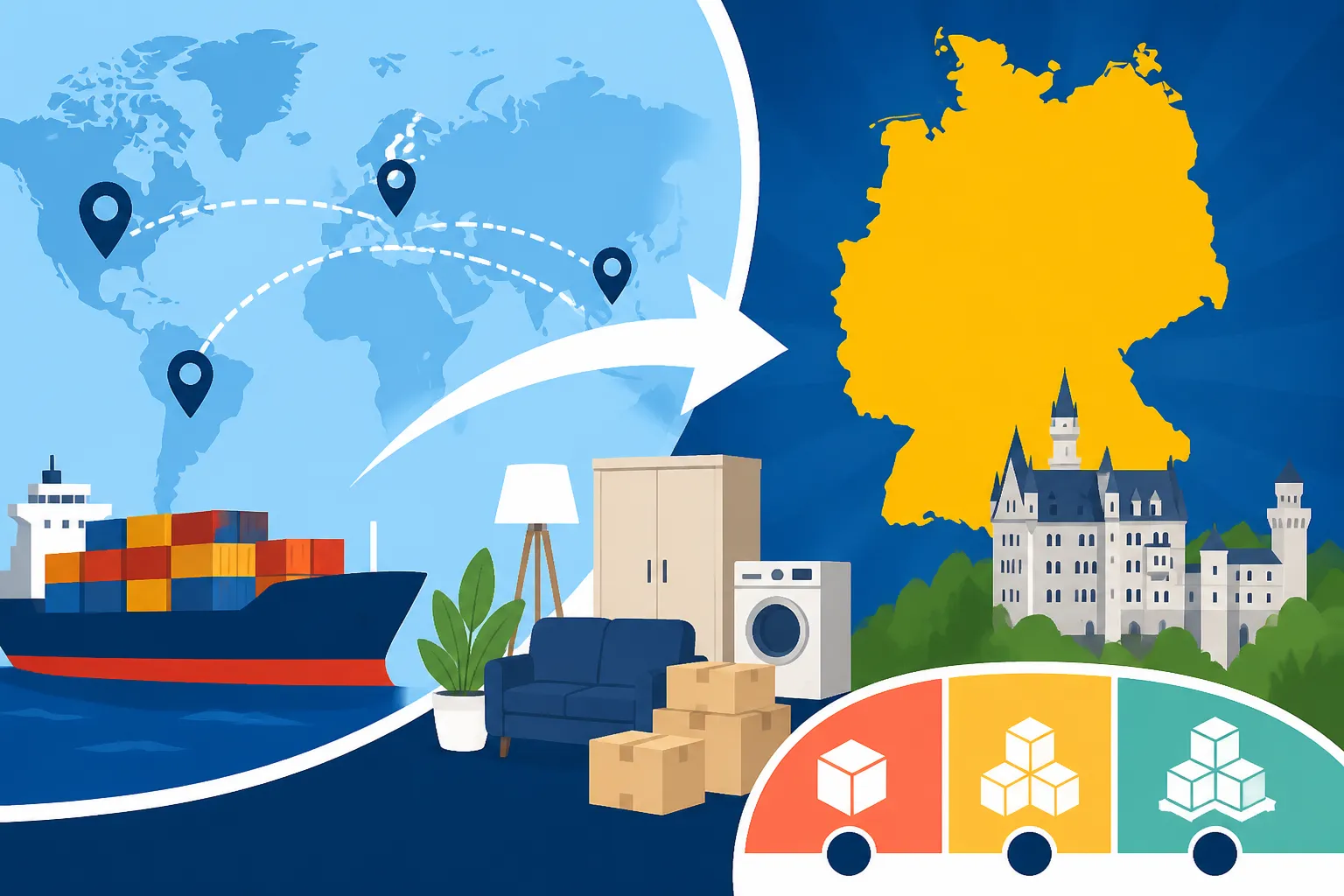
International Move to Germany: Full Shipping Price Breakdown by Volume and Origin
Moving your entire life across borders to Germany can feel like trying to solve a Rubik's Cube blindfolded – overwhelming, confusing, and full of hidden challenges. One of the biggest puzzles is figuring out the real cost of getting your cherished belongings from your old home to your new one without breaking the bank or your spirit. This comprehensive guide is here to demystify the international shipping price breakdown, by volume and origin, arming you with the knowledge and tools you need to make this significant step as smooth and financially predictable as possible.
Disclosure: This post may contain affiliate links. We may earn a commission at no extra cost to you if you make a purchase through these links. Read full disclosure.
The Financial Reality of Moving to Germany: More Than Just a Flight Ticket
Oh, the excitement of a new life in Germany! You’ve probably already dreamed about strolling through historic city centers, enjoying a perfect German beer, or getting settled into your new apartment. But before you can do any of that, there's the monumental task of moving. For many expats, the sheer financial weight of an international move hits hard, often unexpectedly. It’s not just about the flight ticket for yourself, or even the initial deposit for your apartment. No, the real beast lurks in the logistics of moving your possessions.
Why Understanding Shipping Costs is Crucial for Expats
Let’s be honest, nobody enjoys spending money they haven't budgeted for, especially when starting fresh in a new country. Understanding the intricacies of international shipping costs isn't just about saving a few euros; it's about financial stability and peace of mind. Without a clear picture, you risk major budget blowouts that can derail your entire relocation plan. Imagine arriving in Germany, ready to tackle the Anmeldung: Registering Your Address in Germany, only to find out your shipping bill is double what you expected. That kind of stress is precisely what we want to help you avoid.
The costs involved are highly variable, influenced by everything from the weight and volume of your items to the distance they need to travel and the method of transport chosen. Without a solid understanding, you might inadvertently choose a service that seems cheap upfront but then slaps you with exorbitant customs fees or unexpected surcharges. Knowing what to expect allows you to allocate funds properly, choose the most cost-effective yet reliable option, and ultimately, embark on your German adventure with confidence rather than anxiety. It’s a vital piece of the puzzle for your overall Cost of Living in Germany: Budgeting Guide for Expats.
Hidden Costs and Unexpected Fees You Didn't Budget For
Ah, the "hidden costs" – the bane of every expat's existence, not just in shipping, but across almost every aspect of German bureaucracy. While some shipping companies are transparent, others might bury certain charges in the fine print or simply not mention them until it’s too late. Think about terminal handling charges, port security fees, customs clearance charges, or even taxes and duties that weren’t factored into your initial quote. Sometimes, even basic items can face unexpected tariffs if documentation isn't absolutely perfect.
Then there are the less obvious "hidden" costs, like the expense of needing short-term furniture rentals if your shipment is delayed, or the cost of replacing items that were cheaper to leave behind than to ship. What about specialized packing for fragile items, or crating for large, awkward pieces? These add-ons can sneak up on you. It's not just about the numbers; it's about the emotional toll these surprises can take. You might be focused on learning German Culture & Etiquette: A Guide to Social Life and Customs, but these financial headaches can quickly consume your mental energy. A reputable moving platform like Sirelo helps to bring these potential extra costs to light early, so you can factor them into your overall budget and avoid those nasty shocks.
Unpacking the Variables: What Dictates Your Shipping Price to Germany?
When you first start looking into international shipping, it can feel like everyone is speaking a different language. "Cubic meters," "TEUs," "LCL," "FCL"—it's a lot to take in! But once you understand the core factors that influence pricing, it becomes much clearer why one quote might be vastly different from another. These aren't just arbitrary numbers; they're based on concrete logistical realities.
Volume of Your Belongings: The Cubic Meter King
Hands down, the single biggest factor influencing your international shipping cost is the volume of your belongings. Shipping companies primarily charge based on how much space your items take up in a container or on a plane. This is typically measured in cubic meters (CBM or m³). The more stuff you have, the more space it occupies, and the more you pay. It’s as simple, and as brutal, as that.
Think of it this way: a single standard shipping container holds a finite amount of space. If your items fill half a container, you’re paying for roughly half its capacity, even if your items are incredibly light. Conversely, very dense, heavy items might also incur additional charges if they exceed certain weight limits for their volume, but volume is usually the primary driver. This is why decluttering before you move is not just a suggestion; it's a critical money-saving strategy. Every item you decide to leave behind, sell, or donate is potentially a cubic meter, or a fraction thereof, that you won't have to pay to ship. This is especially true for bulky furniture that can be easily replaced in Germany at a reasonable price, often from stores like IKEA or through local second-hand markets.
Origin and Destination: Proximity and Logistics
Logistics play an enormous role in pricing. It’s not just about the straight-line distance, but the established shipping routes, port accessibility, and local transportation costs at both ends. Moving from, say, New York to Hamburg, will have a different logistical profile than moving from London to Berlin. Why? Because the infrastructure, demand, and existing trade routes are completely different.
For example, shipping from a major port city like Rotterdam (Netherlands) to a central German hub like Frankfurt is generally much cheaper than shipping from a remote town in Western Australia to a small German village in Bavaria. The latter involves more trucking, more trans-shipment points, and potentially higher local handling fees, making it a logistical headache that translates directly into higher costs. Furthermore, geopolitical factors, fuel prices, and even temporary disruptions (like port congestion) can significantly impact these "fixed" origin-destination costs. It's a dynamic system, which is why getting up-to-date quotes is always essential.
Chosen Shipping Method: Sea, Air, or Road Freight
The method you choose to transport your belongings is the next major decision point, directly impacting both cost and transit time. Each method has its own set of advantages and disadvantages, and often, expats end up using a combination of methods for different types of goods.
- Sea Freight: This is almost always the cheapest option for large volumes of goods, but it's also the slowest. Your belongings will travel in large cargo ships, traversing oceans. This is ideal for household goods you don't need immediately.
- Air Freight: If speed is your priority and cost is less of a concern, air freight is the way to go. Your items will be flown to Germany, arriving much faster than by sea. However, it comes with a significantly higher price tag, typically charged by weight.
- Road Freight: For moves within Europe, road freight is often the most practical and cost-effective solution. Trucks can transport your items directly from your old home to your new one, offering flexibility and relatively quick transit times, avoiding the complexities of port or airport logistics.
Choosing the right method (or combination) depends entirely on your specific needs, budget, and timeline. Many people opt for air freight for a few essential boxes they need upon arrival and then use sea or road freight for the bulk of their belongings.
Shipping Options to Germany: A Deep Dive into Sea, Air, and Road Freight
Deciding how to ship your worldly possessions to Germany is a critical step, and honestly, it can feel like you’re picking between slow-and-steady, lightning-fast-but-ouch, or "just down the road." Each option serves a different purpose, caters to different budgets, and comes with its own quirks you need to understand.
Sea Freight: The Budget-Friendly Marathon
For most expats moving a substantial amount of household goods across continents, sea freight is the default choice because it offers the best value for money when dealing with large volumes. Your items will travel inside massive containers on cargo ships. While it's significantly slower than flying, often taking weeks or even months depending on the route, it's exponentially cheaper per cubic meter. This makes it perfect for furniture, appliances, and non-essential items you can live without for a while.
Within sea freight, you generally have two main choices:
Less than Container Load (LCL) vs. Full Container Load (FCL) Explanation with Cost Implications
- Less than Container Load (LCL): This is where your belongings share space within a container with other people's shipments. Imagine your items being carefully packed into wooden crates or palettes and then loaded into a container alongside several other smaller shipments destined for Germany. This is usually the most cost-effective option if you don't have enough stuff to fill an entire 20-foot or 40-foot container yourself. The pricing is based purely on the volume your goods occupy. The downside is that transit times can be a bit longer because the container needs to be fully loaded before departure, and then unpacked and sorted at the destination port. Also, there's a slightly higher risk of damage or misplacement due to increased handling. However, for a typical 1-bedroom apartment or smaller, LCL is often the most sensible and wallet-friendly way to go.
- Full Container Load (FCL): If you're moving a larger home – say, a 3-bedroom house or more – you might find that booking an entire 20-foot or 40-foot container for yourself (FCL) is more economical than paying for LCL services. With FCL, you get exclusive use of the container. This means faster transit times (the container isn't waiting for other shipments), less handling of your specific items, and often a lower per-cubic-meter cost if you truly fill it. It also offers a higher degree of security as your goods are sealed in their own container from origin to destination. The upfront cost for FCL is higher, of course, but if your volume warrants it, it can be the smarter choice. The best way to figure this out is to get detailed quotes and compare, and that's precisely where platforms like Sirelo can be invaluable.
Air Freight: The Fast but Pricey Sprint
When you absolutely, positively need certain items in Germany yesterday (or at least within a few days to a couple of weeks), air freight is your savior. This is the fastest way to get your goods across continents, making it perfect for crucial documents, irreplaceable valuables, or a few boxes of essentials you'll need right after you land. Think of it for your favorite espresso machine, some specific tools for your job, or maybe a few cherished family photos.
However, this speed comes at a significant premium. Air freight is priced primarily by weight, and it can be many times more expensive than sea freight for the same volume. You'll often find yourself doing mental gymnastics, trying to decide if that sentimental vase is worth its weight in gold to ship by air. Most expats use air freight sparingly, for a handful of 'must-have-now' items, while the bulk of their belongings travel by sea. It's a strategic choice to balance immediate needs with long-term budgeting. If you're planning your Moving to Germany: Comprehensive Visa & Immigration Guide, remember to factor in the weight of essential items you might need upon arrival.
Road Freight: The European Workhorse
For those moving to Germany from another European country, road freight is usually the most straightforward, flexible, and often the most economical option. Trucks can offer door-to-door service, eliminating many of the complex trans-shipment issues associated with sea or air freight. This means less handling and often faster transit times than sea freight, although still slower than flying.
Road freight can be tailored to your needs, whether you have a full truckload or just a few items that can be consolidated with other shipments (similar to LCL in sea freight, but on wheels!). This method provides excellent flexibility for pickup and delivery dates, and it's particularly appealing for its relatively predictable timelines. You might even find companies that offer dedicated vans for smaller moves, giving you even more control over the schedule. When considering your overall Housing in Germany: Renting, Buying, and Finding Your Home as an Expat, knowing that your furniture and belongings can arrive via road in a relatively short timeframe can ease some stress around setting up your new home.
Decoding the Cost: International Shipping Price Breakdown by Volume and Origin
Alright, let's get down to the nitty-gritty: the numbers. This is where the rubber meets the road, and where many expats start to feel their budget constricting. It's important to remember that these are estimates and actual prices will vary based on current market conditions, specific services requested, and the moving company you choose. However, these figures should give you a solid baseline to start your financial planning.
The golden rule here is: get multiple quotes. Seriously, don't skip this step. It’s the single most effective way to ensure you're getting a fair price. This is exactly what platforms like Sirelo excel at, allowing you to easily compare options from various trusted movers.
Average Shipping Costs from Key Regions to Germany
Let's look at some illustrative average costs for shipping household goods to Germany (e.g., to a major hub like Berlin, Hamburg, or Frankfurt), keeping in mind these are for sea freight (LCL unless specified) for a typical volume (e.g., 5-10 m³). Air freight would be significantly higher.
- From the USA (East Coast – e.g., New York to Hamburg): Expect to pay roughly €2,500 – €5,000 for 5-10 cubic meters. A 20ft FCL container could range from €7,000 – €12,000, but these prices fluctuate wildly with global shipping demand.
- From the UK (e.g., London to Berlin): For road freight, 5-10 cubic meters typically fall within €800 – €2,000. Full van loads would be higher.
- From Australia/New Zealand (e.g., Sydney to Hamburg): Due to the immense distance, these are some of the higher costs. For 5-10 cubic meters, anticipate €3,500 – €7,000. A 20ft FCL container could easily exceed €15,000.
- From Asia (e.g., Singapore/Hong Kong to Hamburg): Similar to Australia, expect costs for 5-10 cubic meters to be in the range of €3,000 – €6,000.
- Within the EU (e.g., Paris to Munich): Road freight is standard here, and for 5-10 cubic meters, prices often range from €600 – €1,500, depending on distance and services.
These figures are a ballpark. The final price depends heavily on whether you opt for door-to-door, door-to-port, or port-to-port service, and whether packing/unpacking is included.
Detailed Tables for Volume-Based Pricing
To give you a clearer visual, here’s a simplified table illustrating estimated sea freight costs (LCL) from a few common origin points to Germany for various volumes. Remember, these are estimates and can vary by 15-30% (or more!) based on market conditions, specific routes, and chosen service providers.
| Origin Country | Volume (m³) | Estimated Sea Freight Cost (EUR) | Transit Time (Weeks) | Notes (LCL) |
|---|---|---|---|---|
| USA (East Coast) | 1-2 (few boxes) | €800 – €1,500 | 6-10 | Minimum charges apply |
| 5 (1-bed apt) | €2,500 – €3,500 | 6-10 | Often shared container | |
| 10 (2-bed apt) | €3,500 – €5,000 | 6-10 | Efficient for mid-size moves | |
| USA (West Coast) | 1-2 (few boxes) | €1,000 – €1,800 | 8-12 | Longer transit time |
| 5 (1-bed apt) | €3,000 – €4,500 | 8-12 | Increased distance cost | |
| 10 (2-bed apt) | €4,500 – €6,500 | 8-12 | ||
| UK (Road Freight) | 1-2 (few boxes) | €300 – €600 | 1-2 | Groupage service |
| 5 (1-bed apt) | €800 – €1,200 | 1-2 | Faster door-to-door | |
| 10 (2-bed apt) | €1,200 – €2,000 | 1-2 | Cost-effective for Europe | |
| Australia | 1-2 (few boxes) | €1,500 – €2,500 | 10-14 | High minimums |
| 5 (1-bed apt) | €3,500 – €5,500 | 10-14 | Significant distance | |
| 10 (2-bed apt) | €5,000 – €7,000 | 10-14 | Longest transit, higher risk |
Note: FCL (Full Container Load) for a 20ft container (approx. 33m³) typically costs from €7,000 – €15,000+ from overseas, and is often more cost-efficient per cubic meter for larger moves.
Sirelo: Your Go-To for Accurate and Comparable Quotes
This is where finding a reliable partner becomes non-negotiable. Trying to manually gather quotes from individual moving companies, especially across different continents, is a time-consuming nightmare. You'll spend hours filling out forms, chasing emails, and then trying to compare apples to oranges because each quote might be structured differently.
This is precisely why Sirelo exists and why it's the absolute hero for expats like us. Sirelo acts as an independent comparison platform that connects you with multiple, pre-vetted international moving companies that serve your specific route to Germany. You fill out one form, detailing your origin, destination, and the approximate volume of your belongings, and then you receive several competitive quotes tailored to your needs. This not only saves you an enormous amount of time and effort but also ensures you get transparent pricing and can compare services side-by-side. Instead of stressing over logistics, you can focus on more exciting things, like your Living in Germany: Essential Guide to Daily Life for New Expats.
Beyond the Basics: Additional Services and Their Impact on Your Budget
When you get a quote for international shipping, it might just cover the basic transport from point A to point B. However, most international moves require a few extra services that, while convenient, can definitely add to the overall cost. It's vital to understand what these are and decide which ones are non-negotiable for your situation.
Packing and Unpacking Services: Convenience vs. Cost Savings
The thought of packing up your entire home can be daunting, especially when dealing with the specific requirements for international shipping. Professional movers offer packing and, sometimes, unpacking services, which can be a huge relief. They come with trained staff, use high-quality, international-shipping-grade materials, and know how to pack items to minimize damage during transit. For fragile items, valuable electronics, or oddly shaped furniture, professional packing can be a lifesaver, and often, insurance policies even require professional packing for certain items.
However, this convenience comes at a cost. Full packing services can add a significant percentage (sometimes 10-20% or more) to your total shipping bill. You'll need to weigh this against the time, effort, and cost of buying packing materials yourself, as well as the potential risk of damage if you pack improperly. If you're on a tight budget, packing yourself is a major area where you can save money, but be prepared for the work involved. If you choose this route, make sure to read up on proper packing techniques for international moves.
Storage Solutions: Short-Term and Long-Term Needs
Life in Germany might not always align perfectly with your shipping schedule. Perhaps your new apartment isn't ready when your belongings arrive, or you need to temporarily store some items before deciding what to do with them. International moving companies often offer storage solutions at either the origin or destination, or sometimes both.
Short-term storage (a few days to a few weeks) might be needed if there’s a gap between your move-out and move-in dates, or if you opt for a port-to-port service and need time to arrange local transport and delivery. Long-term storage (months or even years) is useful for items you don't immediately need or if you're planning a multi-phase move. These services are typically charged per cubic meter per month. While incredibly convenient and sometimes unavoidable, they are an additional cost. Always ask for clear pricing on storage if you anticipate needing it.
Insurance: Protecting Your Valuables During Transit
This isn’t just an "extra" service; for an international move, it’s practically mandatory. Your belongings will travel thousands of kilometers, be handled by multiple parties, and navigate various modes of transport. Things can go wrong – accidental damage, loss, or even catastrophic events are rare but not impossible. Relying solely on the basic liability coverage offered by shipping companies is often a gamble, as it's typically minimal and based on weight, not declared value.
Most reputable international movers will offer comprehensive transit insurance. This "all-risk" coverage will protect your items for their full replacement value, provided you’ve declared them correctly. The cost of insurance is usually a percentage of the declared value of your goods (e.g., 1.5% to 3%). While it feels like an additional expense, consider it an investment in peace of mind. Losing your furniture is one thing, but losing irreplaceable heirlooms or crucial work equipment without proper coverage can be devastating. When you are doing your Money Matters in Germany: Complete Financial Guide for Expats, do not skimp on insurance for your move. It's often worth the extra cost.
Navigating Customs and German Import Regulations
Ah, customs. Just uttering the word can bring a shiver down an expat's spine. This is one area where failing to dot your i's and cross your t's can lead to significant delays, unexpected fees, or even the confiscation of your goods. Germany, like any country, has strict rules about what can enter its borders, especially when it comes to personal effects.
Personal Effects and Duty-Free Entry: What You Need to Know
The good news is that if you're moving to Germany and establishing your primary residence there, you can typically import your personal household goods and effects duty-free and tax-free. This is a massive relief for most expats, as paying duties on your entire household would be financially crippling.
However, there are crucial conditions to meet for this exemption:
- Residency Requirement: You must be genuinely moving to Germany to establish normal residence. This means you’ll need to provide proof of residency (like your Meldebescheinigung from your Anmeldung: Registering Your Address in Germany) and often your visa or residence permit.
- Ownership Period: You must have owned and used the goods for at least six months prior to their shipment to Germany. This prevents people from buying new goods specifically for import to avoid taxes.
- No Resale: The imported goods must be for your personal use and cannot be sold, rented, or loaned out for at least 12 months after import.
- Timelines: Your personal effects generally must arrive in Germany within 12 months of your arrival date. Sometimes, a later shipment might be permitted under special circumstances, but it's best to aim for within this window.
If you don't meet these criteria, or if you bring in items that are clearly not "personal effects" (like commercial goods), you will be subject to duties and import VAT. A reputable international mover will guide you through these requirements and ensure your documentation is correct.
Prohibited and Restricted Items: Avoid Costly Surprises
This is where you absolutely must pay attention. Certain items are outright prohibited from entering Germany, while others are restricted and require special permits or declarations. Ignoring these rules can lead to confiscation, fines, and significant delays.
Common Prohibited Items:
- Illegal drugs and narcotics
- Firearms, ammunition, and offensive weapons (unless with very specific, rare permits)
- Child pornography
- Counterfeit goods
- Certain types of culturally sensitive materials (e.g., Nazi propaganda)
Common Restricted Items (requiring special conditions/permits):
- Alcohol and Tobacco: While you can import small quantities for personal use, larger amounts will be subject to duties and taxes. Be very clear about quantities.
- Plants and Plant Products: Strict regulations apply to prevent the spread of pests and diseases. You might need phytosanitary certificates.
- Animal Products: Meat, dairy, and other animal products can be heavily restricted.
- Medicines: Prescription medications are generally allowed for personal use (with a doctor's note), but quantities are often limited. Over-the-counter medicines should be in reasonable personal quantities. It’s always best to check current rules for Over-the-Counter Medicine in Germany: What You Can Get Without a Prescription.
- Endangered Species Products: Items made from endangered plants or animals (e.g., ivory, certain leathers) are strictly regulated or banned under CITES conventions.
- Vehicles: Importing a car comes with its own set of complex rules, including taxes, technical inspections (TÜV), and registration requirements.
Always, always declare everything accurately and inquire with your chosen moving company or German customs directly about any questionable items. Being honest upfront is infinitely better than facing problems at the border.
Documentation Requirements: The Paperwork Mountain
Welcome to Germany, where paperwork is king! Customs clearance for your international shipment is no exception. You’ll need a stack of documents, and every single one needs to be accurate and complete.
Key Documents You'll Likely Need:
- Inventory/Packing List: A detailed, itemized list of everything in your shipment, typically in English and often requiring a German translation for customs. This needs to be as accurate as possible.
- Customs Declaration Form: Provided by your moving company, this form declares the contents and value of your shipment.
- Proof of Residence in Germany: This could be your Meldebescheinigung, rental agreement, or a letter from your employer confirming your relocation.
- Passport and Visa/Residence Permit: Copies of these documents are essential to prove your legal right to reside in Germany. For a full breakdown, check our guide on Visas and Residence Permits in Germany: Everything You Need to Know.
- Proof of Ownership/Use: Sometimes requested for larger items like electronics or expensive furniture to demonstrate you've owned them for the required six months.
- Power of Attorney: You'll likely need to grant your moving company or their customs broker power of attorney to clear your goods through German customs on your behalf.
- Tax ID (Steuer-ID): While your Getting Your Tax ID (Steuer-ID) and Tax Class (Steuerklasse) in Germany is typically for income tax, having it might be requested for certain official procedures.
The process can be intricate, and this is another area where the expertise of an experienced international mover, especially one you find through a platform like Sirelo, is invaluable. They deal with German customs every day and can preempt potential issues, ensuring your paperwork is in order.
Making Your Move Easier: Tips for Saving Money and Stress
Moving is inherently stressful, but an international move adds a whole new layer of complexity. However, with smart planning and the right resources, you can significantly reduce both the financial burden and the mental load.
Decluttering Before You Pack: Less Volume, Less Cost
This cannot be emphasized enough! Every single item you decide not to ship directly reduces your overall volume, which in turn reduces your cost, especially for sea or road freight where cubic meters rule. Before you even think about buying a packing box, go through every room with a ruthless eye.
Ask yourself:
- Do I really need this? Be honest. If it’s been in a box for years, maybe it's time to let it go.
- Is it cheaper to replace it in Germany? Furniture, particularly bulky, inexpensive items, can often be bought new or second-hand in Germany for less than the cost of shipping it across continents. Websites like eBay Kleinanzeigen (Germany’s version of Craigslist) or local Flohmärkte (flea markets) are great resources for affordable items.
- Does it have sentimental value? If yes, keep it. If no, consider selling, donating, or giving it away.
- Will it fit in my new German apartment? German apartments, especially in cities, tend to be smaller than homes in some other countries. That massive sectional sofa might not make sense in a typical Berlin rental.
Hold a garage sale, list items online, or donate to charity. Not only will you save on shipping, but you might even make a little extra cash for your moving fund! This pre-move purge will make your entire packing process lighter, both literally and figuratively.
Comparing Quotes: Why a Platform Like Sirelo is Your Best Friend
As mentioned earlier, getting multiple quotes is non-negotiable. However, this isn't as simple as it sounds. Different companies might offer varying levels of service (door-to-door vs. door-to-port), insurance options, and even different estimates for cubic meters. Trying to compare these disparate quotes manually is a recipe for frustration and potential overspending.
This is precisely where Sirelo shines. Sirelo provides a standardized platform where you submit your moving details once. They then connect you with several reputable, pre-vetted international moving companies who will provide comparable quotes. This means:
- Time Savings: No more endlessly filling out forms on different websites.
- Transparency: Quotes are often presented in a clearer, more consistent format, making true comparisons easier.
- Cost Savings: By fostering competition among movers, you're more likely to get the best possible price for the services you need.
- Peace of Mind: You're working with companies that have been reviewed by other expats, offering a layer of reliability.
Using a platform like Sirelo not only helps you choose a good Choosing a Moving Company in Germany but also frees up your mental bandwidth to prepare for other crucial aspects of your relocation, such as navigating Utilities Setup: How to Get Electricity, Gas, and Water in Your New Home.
Timing Your Move: Seasonal Fluctuations and Planning Ahead
Believe it or not, the time of year you choose to move can also impact shipping costs. Like many industries, international moving experiences peak seasons and off-peak seasons.
- Peak Season: Summer months (June-August) and late autumn/early winter (November-December) tend to be the busiest. Many families move during summer breaks, and year-end corporate relocations also increase demand. During these times, prices can be higher, and booking slots more limited.
- Off-Peak Season: Spring (March-May) and early autumn (September-October) might offer slightly lower rates and more flexibility.
If you have flexibility in your moving dates, aiming for an off-peak period could potentially save you a bit of money. Additionally, simply booking your move well in advance (3-6 months out) can often secure better rates, regardless of the season, and gives you ample time to prepare all your Documents Required for German Visa Applications: Complete Guide. Last-minute bookings are almost always more expensive and more stressful.
Your Next Step: Getting Accurate Quotes and Planning Your German Adventure
By now, you've got a much clearer picture of what goes into international shipping costs to Germany. You understand the factors, the options, and the potential pitfalls. The most critical next step is to get accurate, personalized quotes for your specific situation. This is where you leverage the power of comparison platforms.
How to Use Sirelo to Streamline Your Moving Process
Sirelo is designed to simplify what can be an incredibly complex process. Here’s a quick overview of how you can use it to your advantage:
- Submit Your Details: Head over to the Sirelo website. You'll fill out a straightforward form detailing your current location (origin), your destination in Germany, your estimated moving date, and crucially, an estimate of the volume of goods you need to ship. Don't worry if your volume estimate isn't perfect; most platforms will allow for adjustments.
- Receive Multiple Quotes: Within a short period, you'll start receiving competitive quotes from various reputable international moving companies that service your route. These companies have been vetted and have experience with moves to Germany.
- Compare and Choose: Review the quotes carefully. Look beyond just the bottom line. Compare what's included (packing, insurance, customs clearance assistance, door-to-door service), transit times, and any additional services offered. Pay attention to reviews and ratings of the moving companies on Sirelo's platform. This is your chance to really dissect the offers and choose the best fit for your budget and needs.
- Confirm Your Move: Once you’ve selected a mover, you can proceed with finalizing the arrangements directly with them, confident that you’ve explored multiple options and chosen wisely.
Using Sirelo removes a huge chunk of the legwork and anxiety from finding a reliable and affordable international mover. It's truly a game-changer for anyone facing a big move to Germany.
What Information You'll Need for a Quote
To get the most accurate quotes, having some key information ready will make the process much smoother, whether you're using Sirelo or contacting companies directly:
- Exact Origin Address: Including postal code.
- Exact Destination Address in Germany: Including postal code (if you have it). If not, at least the city and an indication if it's a major city center or a more rural area.
- Estimated Moving Date: Provide a flexible window if possible, as this can sometimes impact pricing.
- Inventory List / Estimated Volume: This is probably the most crucial piece of information. You don’t need to count every spoon, but a room-by-room breakdown (e.g., "1-bedroom apartment," "2-bedroom house," "just boxes and personal effects") or a rough estimate in cubic meters is very helpful. Many moving company websites (and Sirelo) have volume calculators or virtual surveys to help you with this.
- Required Services: Do you need professional packing? Unpacking? Storage? Disassembly/reassembly of furniture? Let them know upfront.
- Special Items: Mention any large, heavy, fragile, or unusually shaped items (pianos, artwork, motorcycles, specific sports equipment) as these often require specialized handling and may incur extra charges.
- Insurance Preferences: Indicate whether you want comprehensive "all-risk" insurance or are comfortable with basic liability.
Having this information at your fingertips will ensure that the quotes you receive are as accurate as possible, minimizing surprises down the road. Focus on gathering these details, and let Sirelo help you find the best path for your international move to Germany. It's a big step, but with the right planning and resources, it's an exciting adventure, not a terrifying ordeal.
Disclaimer
The information provided in this guide is intended for general informational purposes only and does not constitute professional advice. While we strive to provide accurate and up-to-date information, international shipping costs, regulations, and customs procedures are subject to frequent change. We strongly recommend consulting directly with international moving companies, customs officials, and relevant German authorities for personalized advice specific to your situation. Prices mentioned are estimates and can vary significantly. This article contains mentions of a core solution, Sirelo, which is a commercial service. We encourage readers to conduct their own due diligence and compare various options before making any decisions.