Sending Money From Germany to Turkey: Fees, Lira Rates, and Timing
Your mother in Izmir needs help with her rent, so you wire euros from your Sparkasse account. A week later she tells you the amount that arrived was smaller than you expected. Your bank’s statement shows a fee, but it does not show the margin hidden in the exchange rate. This guide explains where that money goes, how to compare providers, and when to send so more lira reach your family.
Disclosure: This post may contain affiliate links. We may earn a commission at no extra cost to you if you make a purchase through these links. Read full disclosure.
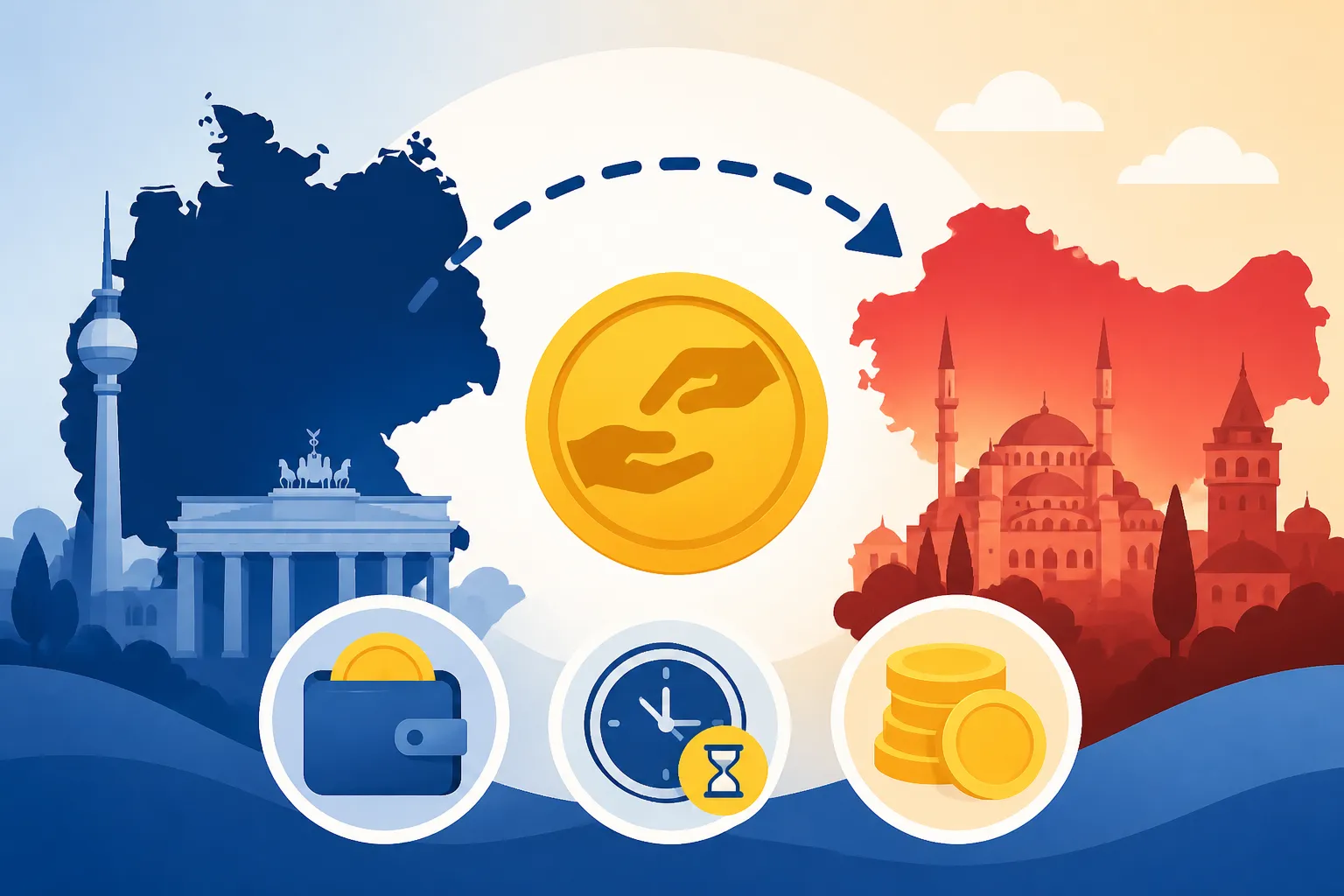
Why Sending Money From Germany to Turkey Feels So Expensive
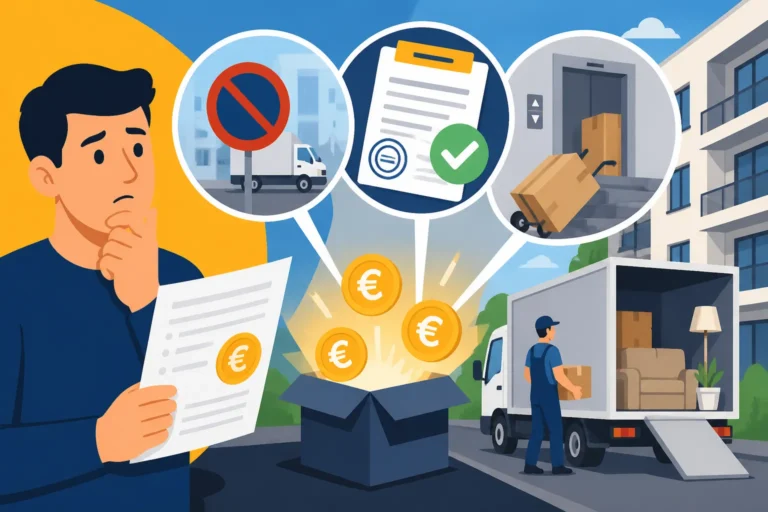
Most people who regularly send money from Germany to Turkey have had the same experience. You check the transfer on your banking app, the fee looks acceptable, and you assume the job is done. Then the recipient reads out the lira figure on their screen, and it does not match the rate you saw on Google that morning. You are not imagining it. Turning euros into Turkish lira involves two separate costs, and German banks usually only make one of them visible.
The Two-Layer Cost Most People Never See
The first layer is the transfer fee. This is the figure printed on the confirmation screen or listed in your bank’s Preis- und Leistungsverzeichnis, the dense price schedule every German bank publishes. It might be a flat charge, a percentage, or a combination with a minimum. It is annoying, but at least it is honest.
The second layer is the exchange rate margin. Every currency pair has a mid-market rate, the midpoint between what buyers pay and what sellers accept on the wholesale market. That is the rate you see on financial news sites. When a bank converts your euros, it rarely gives you that rate. It applies its own rate, a few lira lower per euro, and keeps the difference. Because this cost is built into the conversion, it never appears as a separate line on your statement.
Here is why that matters. Suppose the mid-market rate is 34.00 TRY per euro and your bank applies 33.50. Half a lira per euro sounds trivial. Across a few hundred euros, though, it adds up to a meaningful sum. Across a year of monthly support payments, it can equal a plane ticket to Istanbul. For a detailed look at how this margin hides inside ordinary bank transfers, see Wise vs Your Home Bank’s SEPA Payment: Where the Hidden Margin Sits.
Why the Lira Makes Every Euro Count
The euro-to-lira corridor is not like sending money from Germany to France. The Turkish lira has been one of the more volatile major currencies for years. That volatility affects you in two ways.
First, providers sometimes widen their margins on volatile currencies to protect themselves against sudden swings. So the gap between the rate you get and the real rate can be larger on lira transfers than on, say, pounds or dollars.
Second, the purchasing power of what arrives matters a great deal to the recipient. If your family in Turkey is managing a household budget, an extra few hundred lira is not a rounding error. It can cover a week of groceries, a utility bill, or part of a child’s school supplies. Many people in the Turkish-German community are acutely aware of this. That is why you hear endless debates at family gatherings in Duisburg, Cologne or Berlin-Kreuzberg about which method “gives the best kur”, the best exchange rate.
The Hausbank Habit
There is also a cultural factor. Many long-term residents of Germany, including second- and third-generation Turkish-Germans, have banked with the same Sparkasse or Volksbank branch for decades. There is real loyalty to the Hausbank, and real comfort in walking into a branch and speaking to someone who knows your name.
But loyalty is not a pricing strategy. Traditional banks route international transfers outside the euro zone through correspondent banking networks, often via SWIFT. That can mean several layers of charges, intermediary deductions, and a slow, opaque process. The recipient in Turkey may even see an incoming charge from their own bank. If you are reconsidering your banking setup in general, our overview Choosing a Bank in Germany: Sparkasse, N26, and Online Banks is a useful starting point.
Comparing Your Options: Banks, Remittance Apps, and Wise
You have three broad routes for getting euros into a Turkish account: a traditional German bank, a remittance app or cash-pickup service, and a transparent currency transfer service such as Wise. Each has its place. Once you run the numbers, though, the differences become hard to ignore.
German High-Street Banks
Pros:
Familiar.
You can initiate the transfer from an account you already have.
You can speak to a person in a branch if something goes wrong.
Cons:
The full cost is hidden in the rate.
SWIFT transfers can pass through intermediary banks that take their own cut.
Tracking a payment once it leaves Germany can be frustrating.
A common scenario: Mehmet, an engineer in Stuttgart, sends money to his brother in Ankara through his bank. The confirmation screen shows the fee, and he thinks no more about it. When his brother receives slightly less than expected, neither of them can work out why. The answer is the exchange rate margin, plus possibly an incoming fee on the Turkish side. Mehmet would only spot it by comparing the rate he was given against the mid-market rate at the moment of the transfer, and almost nobody does that.
Cash Pickup and Remittance Apps
Remittance apps and cash-pickup networks are popular on this corridor, especially for sending to relatives who prefer cash or live in smaller towns. Many advertise a low or even zero transfer fee.
Here is the catch. A low fee does not mean a low total cost. If the app applies a weaker exchange rate, the money you save on the fee can disappear in the conversion. The only number that truly matters is how many lira land in the recipient’s account for each euro you hand over. A more detailed breakdown of how these services differ appears in Wise vs Remitly and Western Union From Germany: Speed vs Cost.
Pros:
Convenient.
Cash pickup is useful for unbanked relatives.
Often fast.
Cons:
Exchange rate margins vary and are not always obvious.
“Fee-free” offers can be misleading.
Why Wise Wins on the Numbers
Wise built its model around one idea: convert at the mid-market rate and charge a visible fee that is shown upfront. There is no hidden margin inside the rate. The quote tells you exactly what you pay and exactly how many lira the recipient gets before you confirm.
Here is an illustrative example of a EUR 500 transfer. Rates and fees change constantly, so always check the provider’s own pricing page for live figures.
| Line item | High-street bank | Wise |
|---|---|---|
| Amount you send | EUR 500 | EUR 500 |
| Transfer fee | EUR 10 | EUR 4.50 |
| Amount converted | EUR 490 | EUR 495.50 |
| Exchange rate applied | 33.50 TRY per EUR | 34.00 TRY per EUR |
| Recipient receives | 16,415 TRY | 16,847 TRY |
In this example, the recipient gets 432 TRY more. That comes from both a lower fee and a better exchange rate. The two advantages stack rather than cancel out.
Now look at a larger transfer of EUR 1,000. This time a low-fee remittance app is included, and its fee is lower than the Wise fee in this scenario.
| Option | Transfer fee | Amount converted | Exchange rate applied | Recipient receives |
|---|---|---|---|---|
| High-street bank | EUR 15.00 | EUR 985.00 | 33.50 TRY per EUR | 32,997.50 TRY |
| Low-fee remittance app | EUR 4.90 | EUR 995.10 | 33.65 TRY per EUR | 33,485.12 TRY |
| Wise | EUR 5.50 | EUR 994.50 | 34.00 TRY per EUR | 33,813 TRY |
This second table holds the most important lesson in the whole guide. The remittance app charges the smallest fee, yet the recipient still ends up with fewer lira than with the mid-market option, because of the weaker rate. Always compare the final received amount, never the fee alone. For a wider look at the cheapest international routes, see Transferring Money Internationally: Cheapest Ways to Send Money Abroad.
How to Send Money to Turkey With Wise Step by Step
If the numbers above convinced you, here is how the process actually works from Germany. It is genuinely simpler than the bank route, though there are a few details specific to Turkish accounts worth getting right the first time.
What You Need Before You Start
Before your first transfer, gather the following:
- A valid identity document. Your passport, German Personalausweis, or residence permit card will work.
- Your registered address in Germany, ideally matching your Anmeldung.
- A way to fund the transfer. This could be a bank transfer from your German account via SEPA, or a debit or credit card. Card funding can carry a different fee, so the quote will reflect your choice.
- The recipient’s full name exactly as it appears on their Turkish bank account.
- The recipient’s Turkish IBAN.
Account verification is a normal part of any regulated money service, so do not be alarmed if you are asked to upload ID or answer a few questions. Wise sets different limits and verification requirements depending on how much you send and how often. Our guide Wise Transfer Limits for Germany: Caps, Thresholds, and Verification Tiers walks through that in detail.
The Transfer Itself
Once your account is set up, the transfer usually takes a few minutes to arrange:
- Log into the app or website and choose to send money.
- Enter the amount in euros, or enter the amount in lira you want the recipient to receive. The second option is handy if your family needs a precise sum for a bill.
- Check the quote. It shows the fee, the exchange rate, how long that rate is guaranteed, and the exact lira amount that will arrive.
- Add the recipient’s details: full name, Turkish IBAN, and any other fields the form requests.
- Choose how you will pay, either by bank transfer from your German account or by card.
- Review the summary carefully, then confirm.
- If paying by bank transfer, send the euros to the account details shown, using the exact reference provided.
- Track the transfer in the app. You and the recipient can be notified when the money arrives.
Getting the Recipient Details Right
Turkish IBANs start with TR and are 26 characters long. A single wrong digit can cause the payment to bounce back, which wastes days. Ask your family to send you a screenshot of their IBAN from their banking app rather than reading it out over a crackly phone call.
Names are the other common stumbling block. Turkish names often contain letters like ş, ğ, ı and ç. Enter the name exactly as it appears on the recipient’s bank account. If a form does not accept a special character, use the closest plain Latin letter, for example s for ş. A mismatch between the name you type and the account holder’s registered name is one of the most frequent reasons transfers get held for review.
Finally, confirm that the receiving account can accept lira. Most standard accounts at banks such as Ziraat Bankası, İş Bankası, Garanti BBVA or Yapı Kredi are TRY accounts by default. Some people also hold euro or dollar accounts in Turkey, so make sure you are sending to the TRY account if lira is what you intend.
Timing Your Transfer: Lira Rates, Holidays, and Cut-Offs
Fees and margins are only part of the story. When you send also affects how much arrives and how quickly. You cannot predict currency markets, and anyone who claims they can is selling something. You can, however, avoid the most common timing mistakes.
Watching the Rate Without Losing Sleep
Because the lira moves frequently, many senders fall into a trap. They watch the rate every morning and try to time the “perfect” moment, then send in a panic when the rate jumps around. That rarely helps, and it causes a lot of stress.
A calmer approach is to set a target. Most transfer apps, including Wise, let you set rate alerts so you are notified when the euro reaches a level you are happy with. When the alert arrives, check the quote and lock it in. The guaranteed rate window on the quote means a sudden move after you confirm does not change what your family receives.
If you are sending a fixed amount every month, accept that some months you will catch a better rate and some months a worse one. Over a year, consistency tends to smooth out the swings far better than nervous market-watching.
Bayram, Weekends, and German Holidays
Turkish and German bank holidays matter more than people realise. During Ramazan Bayramı and Kurban Bayramı, Turkish banks may operate on reduced schedules. These are exactly the periods when many families want money to arrive for gifts, travel and celebrations. Sending a few days before the holiday begins is far less stressful than sending on the eve and hoping.
On the German side, public holidays such as Easter Monday, Pentecost Monday and the Day of German Unity can delay incoming SEPA payments to the transfer service. That pushes everything back. Regional holidays vary by federal state too. Someone funding a transfer from Bavaria may hit a holiday their cousin in Hamburg does not.
Weekends are the other variable. Even when a service processes around the clock, the banking systems on either end may not, and currency markets themselves pause at the weekend. If your family needs money by Monday morning, arrange the transfer in the middle of the previous week.
Regular Transfers vs Lump Sums
Consider whether you send small amounts frequently or larger amounts occasionally. Many families default to monthly transfers out of habit. If your provider charges a flat minimum fee, several small transfers can cost proportionally more than one larger one. With a transparent percentage-style fee, the difference narrows. Either way, the quote screen shows you instantly, so it is worth comparing a monthly amount against a quarterly one.
Lump sums have their own considerations. Larger transfers may trigger additional verification questions about the source of funds. Answer these patiently and keep your documents handy. Payslips, a savings account statement, or a property sale contract all help. Very large payments abroad can also create a reporting duty to the Deutsche Bundesbank under German foreign trade rules. If you are moving a substantial sum, check the Bundesbank’s guidance or ask a tax advisor. For larger transfers in the other direction, see Moving Money to Germany: Declaring Savings and Large Transfers.
Real Scenarios From the Germany-Turkey Corridor
Abstract advice only gets you so far. Here is how these principles play out in situations that come up constantly in the community.
Supporting Parents in Izmir Every Month
Ayşe works as a nurse in Hannover and sends money to her parents in Izmir on the first of every month. For years she used her Sparkasse account and never questioned it. When she finally compared her bank’s lira rate with the mid-market rate on the same day, she realised the hidden margin was costing her parents a noticeable sum every single month.
She moved her monthly transfer to a mid-market service and set up a reminder a few days before the end of each month. That gives her a buffer for German holidays. Her parents now receive a predictable lira figure, and she can show them the exact amount on the quote before she confirms.
There is a tax angle here that many people miss. In Germany, regular support payments to dependent relatives abroad may be deductible as extraordinary expenses, provided you can document them properly. The Finanzamt typically expects proof of payment via bank transfer, not cash handed over during a summer visit, along with supporting declarations about the recipient’s circumstances. Clean digital transfer records make that much easier. For a practical system to organise recurring payments and the paperwork behind them, see Supporting Family Abroad From Germany: Monthly Transfer Setup and Records. Speak to a Steuerberater before you claim anything.
Paying a Deposit on a Flat in Antalya
Kerem, a software developer in Munich, finally decided to buy a small holiday apartment near Antalya. The seller’s agent wanted a deposit paid into a Turkish account within a tight deadline. This is where timing and transparency both matter.
Kerem’s first instinct was to go to his bank. He then realised that a SWIFT transfer, with possible intermediary charges and uncertain arrival, made it hard to guarantee the exact lira sum the agent required. Instead, he used the option to enter the amount in lira the recipient should receive. The quote told him precisely how many euros he needed to send.
He funded the transfer early in the week to avoid any weekend delay. He also kept the confirmation, the quote and the purchase agreement together, because larger transfers can prompt source-of-funds questions on either side. For property-related transfers, he also double-checked the recipient account details directly with the notary’s office rather than relying on an emailed message.
Splitting the Wedding Costs
Weddings are a classic Turkish-German logistical puzzle. Picture a couple in Frankfurt marrying in Bursa, with the venue, catering and photographer all to be paid in lira by different deadlines. The temptation is to withdraw a large amount of cash in Germany and exchange it on arrival. That means carrying a big sum, accepting whatever rate the exchange office offers, and having no paper trail.
A better approach is to schedule several smaller transfers to the relevant Turkish accounts, each timed to its payment deadline. Each one is locked at a known rate, and each leaves a record. If you also want to hold some euros and convert them gradually when the rate looks favourable, a multi-currency account helps. The logic is explained in Holding Euros, Pounds, and Dollars in One Account: What Converting Costs.
Staying Safe and Keeping Records
Money sent abroad is hard to recall. Once a transfer has been paid into a Turkish account, reversing it depends on the recipient’s cooperation or a lengthy dispute process. A little caution upfront saves a lot of heartache.
Scams Targeting Diaspora Transfers
Scammers know the Germany-Turkey corridor is busy, and they tailor their tactics accordingly. Common patterns include:
- Hijacked messaging accounts. A fraudster takes over a relative’s WhatsApp account and messages family members in Germany with an urgent request for money, often citing a hospital bill or an emergency.
- Fake bank detail changes. An email appears to come from a landlord, notary or agent saying the payment account has “changed”.
- Fake exchange rate deals. These are advertised on social media and promise far better than the market rate.
Your defence is simple and old-fashioned. Call the person on a number you already know, and confirm the request by voice. Never act on new bank details received only by email or message. Remember that no legitimate service offers a rate better than the mid-market rate. Our guide Financial Scams to Watch Out for in Germany: How to Protect Your Money covers more of the red flags.
Records for the Finanzamt and Your Bank
German bureaucracy rewards people who keep paperwork. For every transfer, keep:
- The quote or confirmation showing the amount, rate, fee and recipient.
- Any message from the recipient confirming they received the money.
If you claim support payments on your tax return, the Finanzamt may ask for exactly these records. If your bank or transfer provider asks about the source of a large payment, you will have the answer to hand.
Digital transfer services make this easy. Every transaction is stored in your account history and can usually be exported as a statement. Compare that with digging through years of paper bank statements, or trying to prove you handed cash to your uncle in Kayseri during a summer visit. For the broader picture of how international payments move through the German system, see Understanding the German Banking System: IBAN, SEPA, and More. For more ways to support relatives back home, see Sending Money Home: Best Options for Expats to Remit Funds.
If you have been sending lira through your Hausbank out of habit, try this. Before your next transfer, get a quote from Wise and compare the lira figure your family would actually receive against your bank’s offer. That one comparison usually settles the question. The habit is worth breaking, because the money you save ends up with the people you are sending it to.
Disclaimer
This article is for general informational purposes only and does not constitute professional advice. Laws, prices and regulations vary by location and change over time. Consult a qualified professional for guidance on your specific situation.