Moving Money From the US to Germany: USD to EUR Transfer Routes Compared
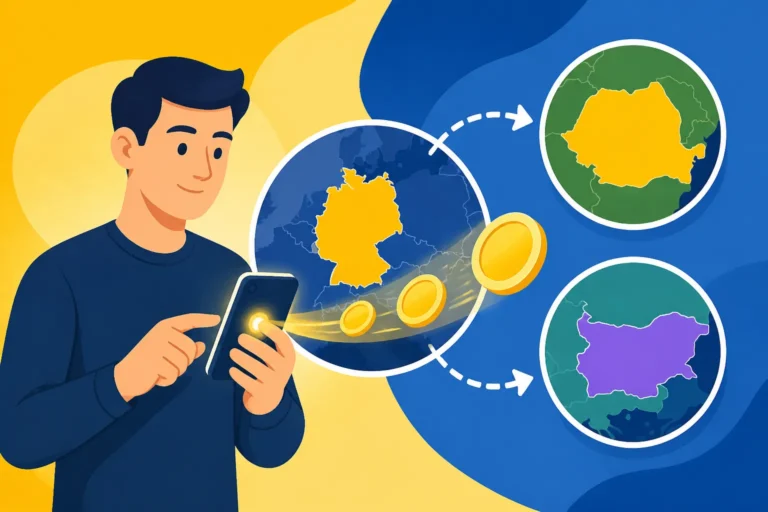
Moving from the US to Germany comes with a mountain of exciting challenges, but one of the biggest headaches that many of us expats face right off the bat is figuring out how to get our hard-earned cash from our American bank accounts into German euros efficiently and without feeling utterly ripped off. It’s a common frustration, and trust me, I’ve been there – staring at bank statements, wondering where all my money went. This guide is here to walk you through the various routes available for transferring USD to EUR, comparing their pros and cons, and highlighting the best solutions to make your financial life in Germany a whole lot smoother.
Disclosure: This post may contain affiliate links. We may earn a commission at no extra cost to you if you make a purchase through these links. Read full disclosure.
The Initial Shock: Why Traditional Bank Transfers Often Fall Short
When you first land in Germany, you’re probably still holding onto your US bank accounts, and naturally, your first thought for sending money over is often "just wire it." You’ve used your bank for years, they know you, you trust them – what could go wrong, right? Oh, my sweet summer child, if only it were that simple! The reality of international money transfers through traditional banks can be a rude awakening, especially for those of us who are already grappling with the sheer volume of German bureaucracy. It’s not just about the numbers; it’s about the emotional toll of feeling like you’re constantly battling a system designed to confuse and extract maximum fees.
Hidden Fees and Unfavorable Exchange Rates
This is where traditional banks truly shine in their ability to frustrate. You see a "low transfer fee" advertised, perhaps $25 or $30, and you think, "Okay, that's manageable." But that's usually just the tip of the iceberg. What they don't explicitly tell you is how they make a significant chunk of their profit: through the exchange rate. Banks often offer you an exchange rate that is noticeably worse than the mid-market rate (the one you see on Google or Reuters). This difference, often a few cents per euro, adds up incredibly quickly, especially when you're transferring larger sums.
Imagine you're trying to send $10,000 from your US account to open a German bank account. Your US bank might show you an exchange rate of, say, 1 USD = 0.90 EUR, when the actual mid-market rate is 1 USD = 0.92 EUR. That seemingly small difference means that for every dollar, you're losing 0.02 EUR. On $10,000, that's a cool €200 just disappearing into the bank's pockets, on top of any explicit transfer fees. And often, these fees and unfavorable rates aren't made clear until after the transfer is initiated or, worse, after the money has already landed (or rather, not landed) in your German account. It feels like a sneaky betrayal, doesn't it? Like you're being punished for simply needing to access your own money in a new country.
The Sheer Slowness and Lack of Transparency
Beyond the fees, there's the agonizing wait. You initiate a transfer, and the bank tells you it might take 3-5 business days. In reality, it can stretch much longer, sometimes a week or even more, due to intermediary banks and various processing delays. When you're new in Germany, every day counts. You need those funds to pay your rent deposit (the dreaded Kaution!), set up your internet, or just cover your initial living expenses. Waiting for your money to trickle across the Atlantic feels like watching paint dry, but with your financial stability hanging in the balance.
And the transparency? Forget about it. You send the money, and then it just… vanishes into the ether for a few days. You can't track it in real-time. If there's a problem, good luck getting a clear answer from a customer service representative who might not even understand the complexities of international wires. You’re left in the dark, constantly checking your German bank account, feeling anxious and powerless. This lack of visibility is not just inconvenient; it's genuinely stressful for anyone trying to get settled in a new country. It’s the kind of administrative frustration that makes you want to pull your hair out, on top of all the other "new country" stresses.
The Frustration of International Banking Jargon
Let's face it, banking jargon is already a nightmare in your native language. Now try to navigate terms like SWIFT, IBAN, BIC, intermediary banks, correspondent fees, and exchange rate margins, possibly with a customer service agent who's speaking a language you're not entirely comfortable with. It's utterly infuriating. You're asked for codes and numbers you've never heard of, and even once you provide them, the process feels like throwing a message in a bottle into the ocean.
Understanding how to properly structure a wire transfer, especially for larger amounts, can be daunting. What if you make a mistake? Will the money be lost? The fear of a costly error, combined with the opaque nature of the process, pushes many expats into a cycle of anxiety. This is precisely why having a clear, user-friendly service becomes not just a convenience, but a necessity for maintaining some semblance of sanity during your relocation journey.
Navigating the Landscape: Your Options for USD to EUR Transfers
Alright, we’ve established that relying solely on your old US bank to transfer money to Germany can be a real pain in the Arsch (if you’ll pardon my German). But don't despair! The world of international money transfers has evolved, and there are now several avenues you can explore. It's crucial to understand these options, weigh their pros and cons, and figure out which one aligns best with your needs, budget, and desired level of stress. We're looking for solutions that help you move your money without losing your mind or half your savings.
Traditional Banks: The Familiar but Costly Route
We've touched on this already, but it's worth reiterating for a comparison. Most major US banks like Bank of America, Chase, Wells Fargo, or Citibank offer international wire transfers.
Pros:
- Familiarity: You already have an account, and you know the interface (mostly).
- Security (Perceived): There’s a sense of established trust with a big bank.
- In-person support: If you absolutely need to, you can walk into a branch (though good luck finding someone deeply knowledgeable about international wires beyond the basic steps).
Cons:
- High Costs: As discussed, explicit fees for outgoing international wires can range from $25 to $50, and incoming wires to your German bank can also incur fees (sometimes €10-€20).
- Poor Exchange Rates: The hidden cost through marked-up exchange rates is often the biggest money drain.
- Slow Transfer Times: Expect anywhere from 2-7 business days, often with no clear tracking.
- Lack of Transparency: You won't know the exact amount in EUR until it lands, and tracking is minimal.
- Bureaucratic Hurdles: The process can involve a lot of forms and details that aren't immediately intuitive.
For example, imagine transferring $5,000. Your US bank might charge a $35 fee and give you an exchange rate that's 2% below the mid-market. That's $35 + $100 (2% of $5,000) = $135 effectively lost. That's nearly a week's worth of groceries in a city like Berlin! While they are a default option, they are rarely the most cost-effective or efficient, especially for expats who need to move money regularly.
Online Money Transfer Services: A Modern Solution
This category is where the real innovation has happened, primarily driven by the frustrations experienced by people like us. These services are specifically designed to make international money transfers cheaper, faster, and more transparent than traditional banks. They leverage technology to cut out intermediary banks and offer more competitive exchange rates.
When you're trying to figure out how to best move money from the US to Germany, these platforms should be your go-to consideration. They understand the expat dilemma because they were built to solve it. One particular service that has become a true lifesaver for so many of us is Wise (formerly TransferWise).
Why Wise (and similar services) stand out:
- Lower Fees: Significantly lower explicit fees compared to banks, often a small percentage of the transfer amount, plus a fixed fee.
- Real Exchange Rates: They typically use the mid-market exchange rate, making their pricing incredibly transparent. What you see is what you get.
- Faster Transfers: Many transfers complete within minutes to a few hours, or at most 1-2 business days.
- Transparency and Tracking: You can often track your money in real-time, receiving updates at every stage.
- User-Friendly Platforms: Designed with a clean, intuitive interface, making the process much simpler, even if you're not a tech wizard.
This is where the real magic happens for expats. You might need to transfer funds for your rent in Munich, send money to your new German landlord for the security deposit (which, by the way, is usually 2-3 months' rent and can be quite substantial), or simply top up your local German checking account. Services like Wise make these essential financial tasks manageable.
Other Methods: PayPal, Wire Transfers, and Cryptocurrency
While the focus should really be on dedicated online money transfer services, it's worth briefly mentioning a few other options you might stumble upon, just so you understand their limitations.
PayPal:
- Pros: Extremely convenient for sending small amounts to friends and family if they also have PayPal accounts. Widely recognized.
- Cons: For USD to EUR transfers, PayPal's exchange rates are notoriously unfavorable, often even worse than traditional banks. Their fees for international transfers can also be quite high when converting currencies. It’s definitely not ideal for large sums or regular transfers where cost-efficiency is key. Using PayPal for a significant financial transaction like paying your first month's rent in Hamburg would be a very costly mistake.
Bank-to-Bank Wire Transfers (direct):
- This is essentially what we've covered under "Traditional Banks." While there are direct wire services not tied to your everyday checking account, they largely suffer from the same issues of high fees, poor exchange rates, and slow speeds. Unless you have a specific, niche requirement, they usually don't offer a better deal.
Cryptocurrency:
- Pros: Potentially very fast and low transaction fees if you're dealing with stablecoins and peer-to-peer transfers. Excellent for tech-savvy individuals already invested in crypto.
- Cons: Highly volatile asset class, steep learning curve, tax implications in both the US and Germany can be complex, and finding recipients willing to accept crypto can be difficult. Not suitable for most people looking to simply move their savings for daily living expenses. Imagine trying to explain to your German landlord that you’re paying rent in Bitcoin – you'll likely get a very confused Kopfschütteln (head shake)!
When you're looking for simple, efficient, and cost-effective ways to manage your money in Germany, sticking to established, transparent online money transfer services is generally the safest and smartest bet. You'll thank yourself later when you see how much you've saved on fees and how much faster your funds arrive. And for other important financial considerations once your money is in Germany, don't forget to explore topics like Opening a Bank Account in Germany: Step-by-Step for Newcomers and Understanding German Bank Statements: Fees and Transactions Explained to truly get your financial bearings.
The Hero of the Hour: Why Wise Stands Out for Expats
As an expat who’s battled the bureaucratic beast more times than I care to admit, I can tell you that finding reliable, transparent services is like striking gold. When it comes to moving your money from the US to Germany, one name consistently comes up as the reigning champion: Wise. Seriously, it's not just a recommendation; it's practically a rite of passage for many of us. This service has fundamentally changed how expats manage their international finances, taking away so much of the stress and hidden costs that used to plague us.
Transparent Pricing and Real Exchange Rates
This is where Wise truly shines and differentiates itself from nearly every traditional bank out there. You see, most banks will show you an exchange rate, but it's usually not the real one. They bake in their profit by giving you a rate that's slightly worse than the mid-market rate – the rate that banks themselves use when trading with each other. It’s like buying bread at a store that inflates the price and then tells you it’s a “low fee” for carrying it to the counter.
Wise, on the other hand, is built on a principle of radical transparency. They use the actual mid-market exchange rate. This is the rate you see on Google, Reuters, or Yahoo Finance. Their fees are separate, upfront, and clearly displayed before you even commit to a transfer. You’ll see exactly how much USD you’re sending, what the current exchange rate is, the small fee Wise charges, and precisely how much EUR your recipient will receive. No surprises, no last-minute deductions, no vague promises. This level of clarity is incredibly empowering, especially when you’re dealing with the often-opaque financial systems of two different countries. For anyone looking to understand Cost of Living in Germany: Budgeting Guide for Expats, knowing exactly how much money lands in your German account is absolutely essential for effective planning.
Let’s put it this way: if you’re transferring $1,000, you’ll know down to the cent what you’re paying and what your recipient gets. This isn't just good business; it's a huge relief for expats who are already dealing with so many unknowns. Wise cuts through the confusion and gives you back control over your finances.
Speed and Reliability You Can Count On
Remember the agonizing wait with traditional bank wires? That feeling of your money being stuck in purgatory? With Wise, that’s largely a thing of the past. Many USD to EUR transfers through Wise are completed within hours, sometimes even minutes, especially if you're funding the transfer via a debit card or another fast method. Even bank account (ACH) transfers, which usually take a bit longer, are typically processed within 1-2 business days.
This speed is a game-changer for expats. Imagine you've just found your dream apartment in Cologne and the landlord needs the first month's rent and the security deposit ASAP to secure it. You can't afford to wait a week for a traditional wire to go through. With Wise, you can initiate the transfer and often have the funds in your German account (or your landlord's) almost immediately, allowing you to seal the deal quickly. This reliability isn't just about getting your money faster; it's about reducing stress and enabling you to move forward with your life in Germany without unnecessary financial delays. Their robust system means fewer errors and fewer lost transfers, giving you precious peace of mind.
User-Friendly Experience: A Breath of Fresh Air
Navigating German bureaucracy is challenging enough without wrestling with complex banking interfaces. Wise offers an incredibly intuitive and straightforward platform, both on their website and through their mobile app. From setting up your account to initiating your first transfer, the process is designed to be simple and guided. You don't need a finance degree to use it.
You just enter the amount you want to send, choose the recipient’s currency (EUR), and Wise immediately shows you the exchange rate, fees, and the exact amount that will arrive. Adding a recipient is easy – just their name, IBAN, and BIC (which you can often find on your German bank statements). They also send you clear email notifications at every stage of the transfer, so you’re never left wondering where your money is. This dedication to user experience is what makes Wise a standout choice for anyone new to international money transfers or simply fed up with convoluted banking processes. It's truly a breath of fresh air amidst all the paperwork you'll encounter in Germany. It means you can spend less time figuring out how to transfer money and more time exploring your new city or understanding German Culture & Etiquette: A Guide to Social Life and Customs.
Additional Features for Expats
Wise isn't just about one-off transfers. They offer a range of features that are incredibly useful for expats living in Germany:
- Multi-currency Account (Borderless Account): This allows you to hold balances in over 50 currencies, including USD and EUR, and get local bank details for several countries (like a US routing number and account number, and a German IBAN). This means you can get paid in USD and easily convert it to EUR within the same Wise account, or vice-versa, without opening multiple traditional bank accounts.
- Debit Card: You can get a Wise debit Mastercard that allows you to spend directly from any of the currencies you hold in your account, automatically converting at the mid-market rate with low fees if you don’t have the local currency. This is fantastic for travel or for spending money while waiting for your permanent German bank card.
- Recurring Transfers: If you need to send money regularly (e.g., monthly transfers from a US income source), Wise allows you to set up recurring payments, automating the process and saving you hassle.
- Batch Payments: For those with more complex needs, you can even make multiple payments in one go.
These features, combined with their core offering, make Wise an indispensable tool for managing your financial life as an expat in Germany. It's designed for people who live globally, providing flexibility and control that traditional banks simply don't. When you are getting settled, every tool that simplifies your financial life, like Wise, is a valuable asset in your arsenal.
Here's a quick comparison of popular transfer methods:
| Feature | Traditional Bank Wire | Wise | PayPal (International) |
|---|---|---|---|
| Fees (Typical) | $25 – $50 (plus hidden fees) | Low, transparent (e.g., 0.5% + fixed) | Variable, often high (2.5% – 4.5% + fixed) |
| Exchange Rate Used | Marked-up (poor) | Mid-market (real rate) | Marked-up (very poor) |
| Speed | 2-7 business days | Minutes to 1-2 business days | Instant (if funds available), 1-3 days to withdraw |
| Transparency | Low (hidden exchange rate costs) | High (all fees & rates shown upfront) | Moderate (exchange rate often hidden) |
| Ease of Use | Complex, jargon-heavy | Very user-friendly, intuitive | Simple for small P2P, complex for conversions |
| Tracking | Limited | Real-time notifications | Basic |
| Best For | Very large, infrequent transfers | Regular, transparent, cost-effective transfers | Small, casual payments to friends |
A Step-by-Step Guide: Transferring Money with Wise
Okay, now that you're convinced that Wise is likely your best bet for moving money from the US to Germany, let's walk through the actual process. It's really quite straightforward, but having a clear roadmap can save you a lot of guesswork and ensure your funds land exactly where they need to be, quickly and safely. Think of this as your personal cheat sheet to sidestepping the usual international transfer headaches.
Setting Up Your Wise Account
First things first, you'll need a Wise account. Don't worry, it's a far cry from the German Anmeldung process, which sometimes feels like it requires your entire family history.
- Visit the Wise Website or Download the App: Head over to wise.com or search for "Wise" in your app store. The mobile app is fantastic for managing on the go.
- Sign Up: You'll be prompted to sign up using your email address, Google account, or Apple ID. Choose whether you're creating a personal or business account. For most expats moving their personal savings, a personal account is appropriate.
- Verify Your Identity: This is a crucial step for any regulated financial service, and Wise takes it seriously (which is a good thing for security!). You'll typically need to provide:
- Photo ID: A scan or photo of your passport, driver's license, or national ID card.
- Proof of Address: A utility bill, bank statement, or government-issued letter showing your name and current US address (or German address if you've already completed your Anmeldung: Registering Your Address in Germany).
- Sometimes, for larger first transfers, they might ask for additional documentation to comply with anti-money laundering regulations. Don't be alarmed; this is standard procedure.
The verification process usually takes a few minutes to a few hours, but sometimes up to 2 business days. They'll notify you once it's complete.
Once verified, you're all set to start moving money. It’s significantly less painful than trying to get your foreign driving license converted, I promise!
Initiating Your First USD to EUR Transfer
This is the moment of truth, but it’s remarkably simple. Let’s assume you want to send money from your US bank account to your newly opened German bank account. For advice on which German banks might suit you, check out Best Banks in Germany for Expats: Low Fees and English Support.
- Click "Send Money" or "Send": This is usually a prominent button on the Wise dashboard or app.
- Enter Amounts and Currencies:
- You'll choose to send from USD and receive in EUR.
- Enter the amount you wish to send in USD, or the amount you want the recipient to receive in EUR. Wise will automatically calculate the other value based on the current mid-market exchange rate.
- Immediately, you'll see the exact fees and the guaranteed exchange rate. No guesswork here!
- Choose Transfer Type: Wise might offer different transfer speeds and funding options. For example:
- Fast Transfer (Debit Card/Credit Card): Often the quickest but might have slightly higher fees.
- Low Cost Transfer (ACH Bank Debit): Typically the cheapest but takes a bit longer as funds need to clear from your US bank.
- Wire Transfer: You initiate a wire from your US bank to Wise's US account.
- Add Recipient Details:
- You'll need the recipient's full name as it appears on their bank account.
- Their IBAN (International Bank Account Number) – this is crucial for German bank accounts.
- Their BIC/SWIFT code (Bank Identifier Code) – also essential.
- If you're sending to your own German account, you'll enter your own details here.
- If you're unsure where to find these for your German account, check your online banking portal or a recent bank statement. For a deeper dive into these terms, see Understanding the German Banking System: IBAN, SEPA, and More.
- Review and Confirm: Double-check all the details – especially the recipient's bank information! A small error here can cause significant delays.
- Fund Your Transfer: Based on your chosen transfer type, you’ll either:
- Enter your debit/credit card details.
- Connect your US bank account via an instant verification service (like Plaid).
- Get instructions to manually initiate an ACH transfer or wire transfer from your US bank to Wise’s local account.
Once the funds are sent, Wise will keep you updated via email and through their app on the status of your transfer. You'll know when it's processing, when it's on its way, and when it has landed. It’s far more comforting than the "send and pray" method of old.
Receiving Your Funds in Germany
When you transfer money from the US to Germany with Wise, the process on the receiving end is just as simple:
- Notification: Wise will notify you (and your recipient, if it's someone else) once the money has been successfully delivered to the German bank account.
- Funds Availability: The EUR funds will appear in the designated German bank account, typically within the timeframe Wise quoted. Since Wise sends money locally within Germany from their German account, it's treated as a domestic transfer once it reaches the German side, making it faster and avoiding additional incoming international wire fees from your German bank.
- Confirming Receipt: Always double-check your German bank statement to confirm the funds have arrived.
And that’s it! You've successfully navigated the international money transfer landscape, avoided exorbitant bank fees and poor exchange rates, and brought your hard-earned dollars into euros efficiently. Now you can focus on more pressing matters, like how to properly sort your trash with the complicated German recycling system, or how to avoid making eye contact with strangers on the U-Bahn. For a broader overview of how your finances fit into your new life, check out Money Matters in Germany: Complete Financial Guide for Expats.
Beyond the Transfer: Maximizing Your Money in Germany
Getting your money from the US to Germany is just the first step in your financial journey as an expat. Once your euros are safely in your German account, the real work begins: learning to navigate the local financial landscape, budgeting effectively, and making your money work for you in your new home. It’s a whole different ballgame compared to what you might be used to, and it requires a bit of homework – but don't worry, you've got a seasoned expat in your corner!
Understanding German Banking and Finance
Germany's banking system operates differently from the US, and it's essential to get a grasp of these nuances to avoid unpleasant surprises.
- IBAN and BIC: While you've already encountered these for your Wise transfer, they are your daily bread and butter in Germany. Everything from paying rent to receiving your salary relies on these numbers. Unlike the US, where account numbers are short and routing numbers vary, IBANs are long (22 characters in Germany!) and are used for all domestic and international transfers within the SEPA zone. Your BIC is also crucial for identifying your bank.
- Direct Debits (Lastschrift): Many recurring payments, like utilities, internet, and even health insurance, are handled via direct debit. You authorize a company to pull money directly from your account. This is incredibly common and efficient, but it means you need to ensure sufficient funds are always available to avoid bounced payments and fees. Learn more about your options by exploring Choosing a Bank in Germany: Sparkasse, N26, and Online Banks.
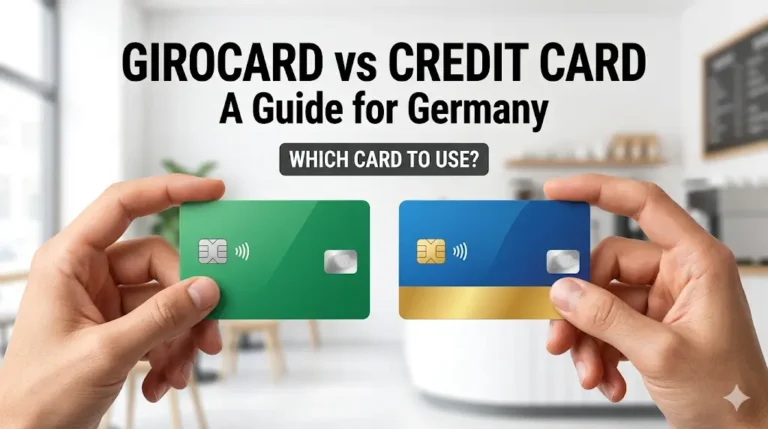
- Cash vs. Card: Germany is still very much a cash-oriented society, especially outside of major metropolitan areas. While card payments (EC-Karte/Girocard) are becoming more common, always have some cash on hand for small purchases, local bakeries, or smaller restaurants that might not accept cards. Your credit card often won't be accepted in many places where an EC-Karte is.
- SCHUFA: This is Germany's primary credit scoring agency. Unlike the US system, your SCHUFA score isn't just for loans; it's essential for renting an apartment, getting a phone contract, and even some utilities. Building a good SCHUFA score takes time, often requiring several months of responsible financial behavior after you've registered your address. For more details, check out The SCHUFA Credit Score in Germany: How It Works.
- Understanding Your Payslip (Gehaltsabrechnung): If you're working in Germany, your payslip will look very different from a US one. It details not just your income tax but also mandatory social security contributions for health insurance, pension, unemployment, and long-term care. These deductions are significant, so understanding your net vs. gross salary is key. Our guide on Understanding Your German Payslip: Gross vs Net Salary Explained can help decode it.
Adapting to these differences will save you a lot of grief and help you manage your finances like a local.
Smart Budgeting and Cost of Living
Once your funds are in EUR, the next challenge is making them last. Germany generally has a lower cost of living than many major US cities, but it still requires careful budgeting.
- Housing is Key: Your largest expense will likely be rent. In cities like Munich, Berlin, or Hamburg, rent can be substantial. Factor in not just the Kaltmiete (cold rent) but also the Nebenkosten (additional costs like water, heating, garbage, etc.), which are part of your Warmmiete (warm rent). These utility costs can sometimes be a shock. Understanding your rental contract and managing your rent deposit (Kaution) are critical, and topics covered in Housing in Germany: Renting, Buying, and Finding Your Home as an Expat.
- Transportation: Public transport in German cities is excellent and relatively affordable, especially with options like the Deutschland-Ticket. A car isn't always necessary, which can be a huge saving.
- Groceries: Supermarkets like Aldi, Lidl, Rewe, and Edeka offer good value. Learning to cook at home and understanding the Pfand (deposit) system for bottles will save you money.
- Mandatory Insurances: Beyond health insurance (which is mandatory, see Health Insurance in Germany: Understanding Public vs Private Coverage), certain other insurances are highly recommended, like Haftpflichtversicherung (private liability insurance) to protect you from claims if you accidentally damage someone else's property.
- The Rundfunkbeitrag: This is the mandatory public broadcasting fee (currently around €18.36 per month, per household). Yes, you have to pay it, even if you don't own a TV or radio. It’s not negotiable!
- Taxes: As an expat, you'll need to understand the German tax system, which can be complex. Getting Your Tax ID (Steuer-ID) and Tax Class (Steuerklasse) in Germany sorted early is important. You might eventually need to Filing a Tax Return in Germany: A Guide for Employees and Expats.
For a deeper dive into managing your expenses, explore Budgeting for Life in Germany: Tips to Save Money as an Expat. By leveraging efficient services like Wise for your initial transfers and then diligently learning the ropes of German finance, you'll be well on your way to a stable and successful financial life in your new home. Keep an eye out for how much you're spending and actively seek out cheaper options, because every euro saved is a euro you can spend on exploring this beautiful country!
Disclaimer
Please remember that I am an expat lifestyle blogger, not a financial advisor or legal professional. The information provided in this article is based on my personal experiences and general knowledge of the German financial system as an expat. While I strive to provide accurate and up-to-date information, financial regulations and service offerings can change. Always consult with a qualified financial advisor or legal expert for personalized advice tailored to your specific situation. I recommend doing your own research and due diligence before making any financial decisions.