Emergency Contraception and Reproductive Health: Access in Germany
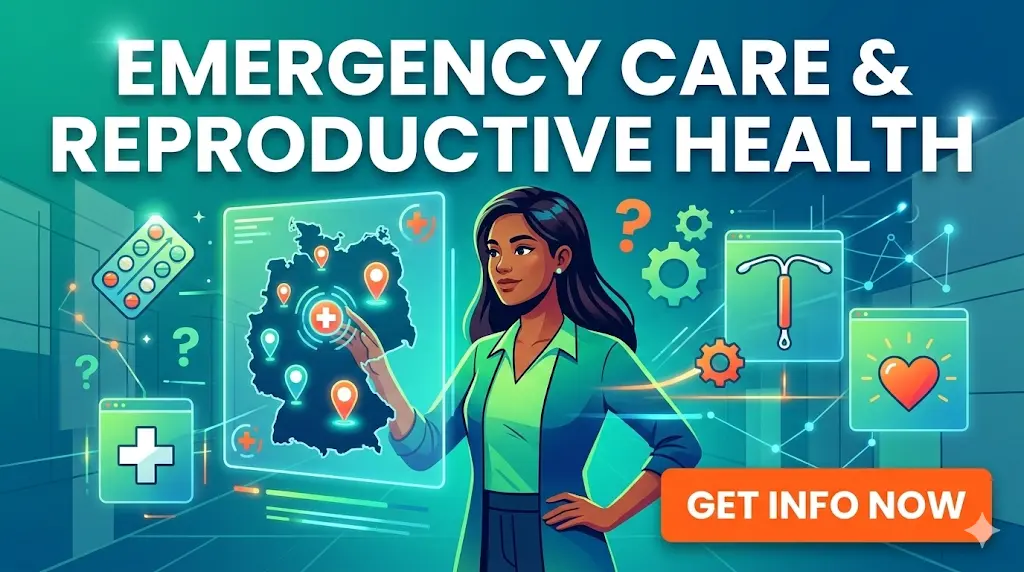
It’s Saturday night, the condom split or you missed a pill, and you’re in a city where you can’t read the pharmacy signs or explain your situation in German. This guide covers how to get the morning-after pill in Germany, what it costs, when insurance pays, what to say at the counter, and where to find wider reproductive health support.
Disclosure: This post may contain affiliate links. We may earn a commission at no extra cost to you if you make a purchase through these links. Read full disclosure.
How to Get the Morning-After Pill in Germany
The best news first: in Germany, the morning-after pill, called “die Pille danach,” is sold without a prescription in pharmacies. You don’t need a doctor’s appointment, a German health insurance card or an Anmeldung. You walk into an Apotheke, ask for it and pay. Many expats freeze at this moment because they assume Germany’s love of paperwork applies here too. It doesn’t.
Step by Step at the Pharmacy Counter
- Find an open pharmacy. Look for the red gothic “A” sign. Every pharmacy posts the nearest emergency pharmacy on its door or window. The guide How to Find a Night Pharmacy (Notdienst Apotheke) in Germany explains how to locate one late at night or on a public holiday.
- Ask at the counter. In German you can say: “Ich brauche die Pille danach, bitte.” Many pharmacists in larger cities speak English, so you can also just ask in English.
- Answer a few short questions. The pharmacist will usually ask when the unprotected sex happened, whether you take other medication, whether you’re breastfeeding, and sometimes about your last period. This is standard and not a judgement. It helps them choose the right product.
- Choose between the two active ingredients. The pharmacist will explain the options, levonorgestrel or ulipristal acetate, and recommend one based on how much time has passed and your situation.
- Pay and take it as directed. Pharmacies often hand you a glass of water so you can take it on the spot.
- Ask your follow-up questions before you leave. For example, how to continue your regular contraception, or what to do if you vomit soon after taking it.
Many pharmacies have a quieter corner or a separate consultation area. If the counter is crowded, you can ask quietly: “Können wir kurz woanders sprechen?” (“Can we speak somewhere else for a moment?”). Pharmacists in Germany handle this request all the time.
Timing Matters More Than Anything Else
Both types of morning-after pill work best the sooner you take them after unprotected sex. They mainly delay ovulation, so every hour counts. Levonorgestrel products have a shorter effective window than ulipristal acetate products. If you’re already some way past the incident, tell the pharmacist exactly how long ago it was so they can steer you to the better option.
Don’t wait until Monday to see a doctor. The non-prescription route exists so that you never have to.
A Few Things the Pill Is Not
The morning-after pill isn’t an abortion pill and won’t end an existing pregnancy. It doesn’t protect you against sexually transmitted infections. It also doesn’t protect you for the rest of your cycle, so you’ll need condoms or another method afterwards. If the incident also raises STI concerns, see STD Testing and Sexual Health Clinics: Where to Go in Germany for testing options.
Costs and Who Pays
This is where the system gets more complicated. Most people pay out of pocket, but some can get the pill covered if they follow the right steps in the right order.
What You Pay Without a Prescription
Pharmacy prices for the morning-after pill aren’t fixed. They vary by product and by pharmacy. As a guide, levonorgestrel products start from around EUR 17, and ulipristal acetate products start from around EUR 30. Prices can be higher depending on the brand. If cost is a worry, ask the pharmacist which products they have and what each costs.
The price is usually only part of the decision, though. If the pharmacist says ulipristal acetate suits your timing better, the higher price usually buys you a more reliable result.
When Statutory Insurance Covers It
If you’re a member of a statutory health insurer (gesetzliche Krankenkasse, such as TK, AOK or Barmer), these are the rules:
- The insurer pays for the morning-after pill until your 22nd birthday, or at any age where there are indications of sexual abuse or rape.
- This only applies if a doctor prescribes it before you buy it. If you buy it over the counter first and bring a prescription later, the insurer won’t refund the cost.
- From your 18th birthday, a statutory co-payment (Zuzahlung) is due even with a prescription. Only those under 18 are spared it.
For many young people, the practical choice is between buying immediately and paying full price, or spending time getting a prescription first. Because timing affects how well the pill works, waiting for a doctor’s appointment to save money is often a poor trade. You can find out more about how co-payments work in Co-Payments and Costs in Germany’s Health System (Zuzahlung).
To get a prescription quickly outside office hours, the medical on-call service can help. See The 116117 Medical On-Call Service in Germany Explained for how to use it.
Coverage at a Glance
| Your situation | Prescription needed for coverage? | Who pays at the pharmacy |
|---|---|---|
| Under 18, statutory insurance, prescription obtained before purchase | Yes | Insurer pays; no co-payment |
| Aged 18 to under 22, statutory insurance, prescription obtained before purchase | Yes | Insurer pays; you pay the statutory co-payment |
| Under 22, statutory insurance, bought without prescription | Not applicable | You pay the full price; no refund afterwards |
| Any age, statutory insurance, indications of sexual abuse or rape, prescription obtained before purchase | Yes | Insurer covers it; ask about co-payment rules |
| 22 or older, no indication of abuse | Not applicable | You pay the full price |
| Private insurance | Depends on tariff | Depends on your contract |
| Travel or nomad medical insurance | Depends on policy | Usually check the policy wording first |
Private Insurance, Travel Cover and Expat Policies
Private health insurance (PKV) works differently. Whether contraception is reimbursed depends entirely on your tariff. Some expats with digital-first private insurers such as ottonova can check their benefit list in the app before deciding whether to buy on the spot or get a prescription. For background on how PKV contracts are structured, see Private Health Insurance in Germany (PKV): Who It Suits.
If you’re a newcomer who hasn’t joined a German insurer yet, or you’re on a short-term or nomad policy, don’t assume contraception is included. Travel medical policies like SafetyWing are designed around unexpected illness and injury, and routine or preventive reproductive care is often treated differently. Read the exclusions in your own policy wording, and contact the provider for clarification if needed.
Expats still setting up their insurance through brokers such as Feather Insurance can ask directly how contraception and gynecological care are handled under the plan they’re considering. That question is worth asking before you need the answer. Visiting friends and family face the same issue, as explained in Insurance for Visitors and Family Coming to Germany: Short-Term Options.
Comparing Your Emergency Options
Most people only know about “the pill,” but there are actually three emergency contraception options in Germany, and they aren’t equivalent.
The Three Options Side by Side
| Option | Where to get it | Prescription needed? | Key points |
|---|---|---|---|
| Levonorgestrel pill | Any pharmacy | No | Lowest price, from around EUR 17; shorter effective window; take as soon as possible |
| Ulipristal acetate pill | Any pharmacy | No | Starts from around EUR 30; longer effective window; ask about how to restart hormonal contraception afterwards |
| Copper IUD fitted as emergency contraception | Gynecologist | Doctor’s appointment required | Can also serve as ongoing contraception; requires a fast appointment, which can be difficult |
When the Copper IUD Makes Sense
A copper IUD (Kupferspirale) fitted by a gynecologist can also be used as emergency contraception and then remain in place as long-term protection. It’s an attractive option for people who want reliable contraception afterwards anyway. The practical barrier in Germany is getting a gynecologist appointment fast enough, which is a familiar frustration for many expats.
If you’re interested, call practices immediately, explain that it’s an emergency contraception request (“Notfallverhütung”), and ask whether they can see you the same day. Meanwhile, don’t put off the pill while hoping for an appointment. Ask the pharmacist or doctor how the two options interact in your case.
Situations Where You Should Speak Up
Tell the pharmacist if any of the following apply. They can affect which product is recommended or how well it works:
- You’re taking other medication regularly, including certain epilepsy drugs, HIV medication or herbal products such as St. John’s Wort.
- You’re breastfeeding.
- You’ve already taken a morning-after pill during the same cycle.
- You’re unsure about your body weight or have previously been told it could affect effectiveness.
- You want to know when you can resume your regular pill, patch or ring.
If you vomit shortly after taking the tablet, go back to the pharmacy or call one. You may need another dose. Also do a pregnancy test if your next period is noticeably late or unusually light.
Reproductive Health Support Beyond the Pharmacy
The morning-after pill solves the immediate problem. But many expats realise afterwards that they don’t have a reliable contraception plan or a gynecologist in Germany, or anyone to ask questions in their own language.
Finding a Gynecologist for Ongoing Contraception
Contraceptive pills, IUDs, implants and the vaginal ring are usually prescribed or fitted by a gynecologist (Frauenarzt or Frauenärztin) in Germany. New-patient waiting lists are a real problem in cities like Berlin, Munich and Hamburg. Start looking before your current supply runs out. Search tips and how to phrase your request are in How to Find a Gynecologist in Germany, and an overview of what female healthcare covers is in Women’s Health in Germany: Gynecologists, Maternity Care, and More.
If you’re nervous about discussing intimate topics in a second language, prepare in advance. Write down your questions, list the medications you take and the brand name from your home country, and bring a translation app. More strategies are in Seeing a Doctor Who Doesn’t Speak English: Tips for Overcoming Language Barriers.
Counselling Centres and Confidential Advice
Pro familia runs counselling centres across Germany on contraception, sexuality, pregnancy and pregnancy conflicts. Many locations offer appointments with counsellors who speak English or other languages, and advice is confidential.
Local health offices (Gesundheitsamt) in many cities also offer sexual health consultations, often anonymously. These are good options if you want to talk to someone without visiting a doctor.
If You Experienced Sexual Assault
If the emergency contraception follows a sexual assault, you aren’t alone, and you don’t have to make every decision at once. Go to a hospital emergency department or a gynecologist as soon as you can. You can get emergency contraception, STI care and medical documentation there. Some cities, including Berlin, have dedicated violence protection outpatient clinics (Gewaltschutzambulanz) where injuries can be documented confidentially, even if you aren’t ready to go to the police.
Remember the coverage rule: with statutory insurance, indications of sexual abuse or rape mean the insurer pays at any age, as long as a doctor prescribes it before purchase. Seeing a doctor first therefore helps you both medically and financially.
The nationwide helpline for women affected by violence, the “Hilfetelefon Gewalt gegen Frauen,” is free, available around the clock and offers support in many languages on 116 016. You don’t have to be German or speak German to call.
Keeping a Small Plan in Place
The best way to avoid a stressful Saturday night next time is a little preparation. Learn where your nearest pharmacy and emergency pharmacy are. Understanding Apotheke Signs: Green Crosses and Night Service Indicators explains what to look for on the street. Keep a written note of your regular medications. And for routine questions on contraception and dosage, your local pharmacist is a resource worth getting to know, as explained in Pharmacies in Germany (Apotheke): How to Get Medication and Advice.
Germany actually makes emergency contraception fairly easy to access once you know the rules. Not needing a prescription is a real advantage. The tricky parts are the cost rules for young people, the gaps in insurance for newcomers and travellers, and the language barrier. Now that you know how each of them works, you can act quickly and calmly when it counts.
Disclaimer
This article is for general informational purposes only and does not constitute professional advice. Laws, prices and regulations vary by location and change over time. Consult a qualified professional for guidance on your specific situation.