Flat Hunting in German: Rehearsing the Besichtigung Conversation
Oh, the infamous German flat hunt! If you've spent any time in Germany, you know that securing an apartment can feel less like a casual viewing and more like a high-stakes job interview, often entirely in German. The pressure is immense, the competition fierce, and the language barrier can make you feel utterly lost. This guide is here to walk you through how to mentally prepare and, crucially, how to rehearse those all-important flat viewing conversations in German, boosting your confidence and improving your chances.
Disclosure: This post may contain affiliate links. We may earn a commission at no extra cost to you if you make a purchase through these links. Read full disclosure.
The High-Stakes Game of German Flat Viewings
Finding a flat in Germany is notoriously competitive. You’re not just looking for a place to live; you’re often entering a multi-person contest where landlords and property managers (often known as Hausverwaltungen) are scrutinizing potential tenants like never before. They're looking for stability, reliability, and, crucially for many, the ability to communicate clearly in German. I've been there, fumbling through sentences, feeling my face flush, and knowing that my limited German was probably costing me opportunities. It’s a frustrating reality for many expats.
Why Language is Your Secret Weapon (and Biggest Hurdle)
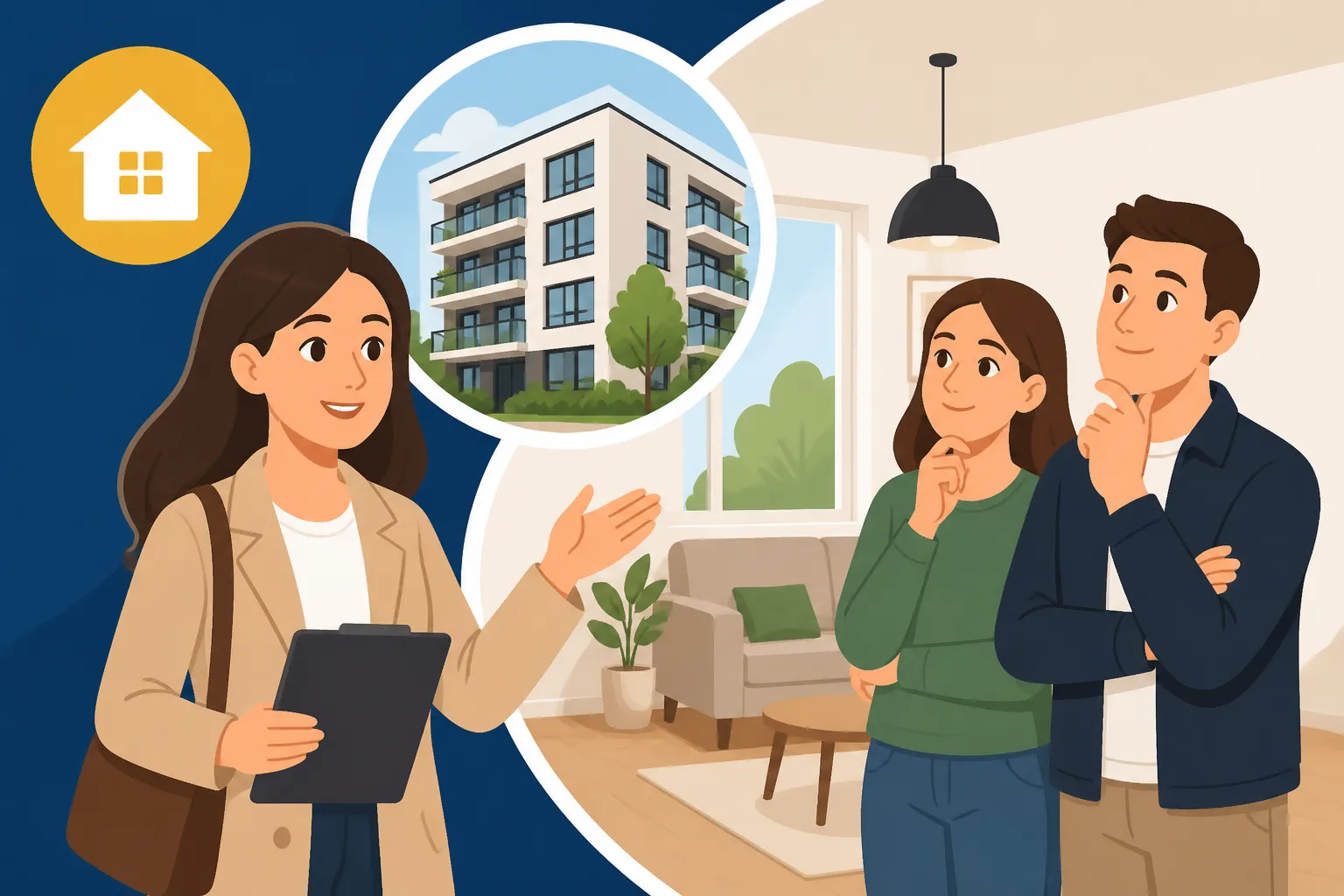
Imagine walking into a Besichtigung (viewing) for a charming apartment in Berlin or a cozy place in Munich. You see other hopefuls, all vying for the same spot. When the landlord starts asking questions, those who can articulate themselves clearly, ask intelligent questions, and convey their reliability in fluid German will always have an edge. It’s not just about understanding; it’s about making a strong, confident impression.
The hurdle? For many of us, our German skills are still a work in progress, especially when put under pressure. Small talk, formal address (Sie versus Du), and technical terms about rental contracts or building maintenance can be incredibly daunting. A well-placed, confident German phrase can make a world of difference, signaling to the landlord that you’re serious, adaptable, and capable of integrating. Conversely, stumbling and relying heavily on English, while understandable, might unfortunately send signals that you're less equipped for the local bureaucracy, even if it's unfair. This is where dedicated practice comes in.
Common Scenarios and Expected Questions
Landlords and property managers typically have a mental checklist they go through. They're not just showing you around; they're subtly interviewing you. Anticipating these questions and scenarios is half the battle. You’ll want to be ready to introduce yourself, explain your living situation, and convey why you'd be an ideal tenant.
Here’s a sneak peek at what you might encounter:
- Self-introduction: "Erzählen Sie uns etwas über sich." (Tell us a bit about yourself.) This is your chance to shine.
- Employment & Income: "Was machen Sie beruflich?" (What do you do for a living?) and "Wie hoch ist Ihr monatliches Nettoeinkommen?" (What is your monthly net income?). They'll want proof, so mentioning you have your Einkommensnachweise (proof of income) ready is a plus.
- Reasons for Moving: "Warum ziehen Sie um?" (Why are you moving?) Be brief and positive.
- Living Habits: "Rauchen Sie? Haben Sie Haustiere?" (Do you smoke? Do you have pets?) Be honest!
- Long-term Plans: "Wie lange möchten Sie hier wohnen?" (How long do you plan to live here?) Stability is key for landlords.
- Questions about the apartment/building: They’ll expect you to have some, showing genuine interest.
You might also be asked about your SCHUFA and Documents Landlords Want in Germany, so it's wise to have your credit report and other paperwork neatly organized and ready to present. Preparing a folder of documents, often called an "applicant Mappe," is a common German practice that will impress.
Mastering the German Rental Vocabulary
Before you can confidently rehearse, you need the right tools. This means getting a firm grasp on specific vocabulary and phrases unique to the German rental market. It’s a completely different ballgame than ordering a Bier or asking for directions to the Bahnhof.
Essential Words and Phrases to Know
Let's break down some core vocabulary. Remember, German nouns all have genders, and that affects articles, so pay attention!
Apartment Basics:
- Die Wohnung (the apartment)
- Das Zimmer (the room) – plural: die Zimmer
- Die Kaltmiete (cold rent – base rent without utilities)
- Die Warmmiete (warm rent – rent with utilities like heating, water)
- Die Nebenkosten (additional costs/utilities, often included in Warmmiete)
- Die Kaution (the security deposit) – usually 2-3 months Kaltmiete
- Der Mietvertrag (the rental contract) – definitely read up on Understanding German Rental Contracts: Key Terms and Conditions
- Die Wohnfläche (living area in square meters)
- Die Einbauküche (EBK) (fitted kitchen) – many apartments come without one, read more in Furnishing a German Apartment and the Empty-Kitchen Problem
- Der Keller (the cellar/storage unit)
- Der Dachboden (the attic)
- Der Balkon (the balcony)
- Die Terrasse (the terrace)
- Das Badezimmer (the bathroom) – often abbreviated to Bad
- Die Heizung (the heating)
- Die Fenster (the windows)
Verbs & Phrases for Conversation:
- Besichtigen (to view) – die Besichtigung (the viewing)
- Mieten (to rent) – der Mieter (the tenant), der Vermieter (the landlord)
- Einziehen (to move in) – der Einzug (the move-in)
- Auszuziehen (to move out) – der Auszug (the move-out)
- Ich interessiere mich für die Wohnung. (I am interested in the apartment.)
- Ist die Wohnung noch frei? (Is the apartment still available?)
- Wann wäre ein Einzug möglich? (When would a move-in be possible?)
- Wie hoch ist die Kaution? (How much is the deposit?)
- Sind Haustiere erlaubt? (Are pets allowed?)
- Ich habe eine feste Anstellung. (I have a permanent job.)
- Ich bin berufstätig. (I am employed/working.)
- Ich bin Nichtraucher/in. (I am a non-smoker.)
- Wir sind ein ruhiges Paar/eine Familie. (We are a quiet couple/family.)
- Ich pflege die Wohnung sorgfältig. (I take good care of the apartment.)
Formulating Your Own Questions
Asking questions shows genuine interest and helps you assess if the apartment is right for you. It also demonstrates your proactive nature and language skills. Don’t just wait to be interrogated!
Here are some questions you can prepare:
- Wann wurde das Gebäude zuletzt renoviert? (When was the building last renovated?)
- Gibt es einen Keller oder Abstellraum? (Is there a cellar or storage room?)
- Wie hoch sind die Heizkosten ungefähr? (Approximately how much are the heating costs?) – Crucial for Understanding German Rental Costs: Kaltmiete, Warmmiete, Nebenkosten.
- Ist Internet bereits vorhanden oder muss ich mich selbst darum kümmern? (Is internet already available or do I have to take care of it myself?)
- Gibt es eine Hausordnung? (Is there a house rules document?) – This is important; German buildings often have strict rules about noise, laundry, etc.
- Gibt es Fahrradstellplätze? (Are there bicycle parking spaces?)
- Wie ist die Nachbarschaft? (How is the neighborhood?)
- Gibt es Parkmöglichkeiten in der Nähe? (Are there parking possibilities nearby?)
- Wie ist die Anbindung an öffentliche Verkehrsmittel? (How is the connection to public transport?)
Having a few of these in your back pocket will not only help you gather important information but also make you seem engaged and prepared. You want to avoid that awkward silence where you feel like you should ask something but can't quite form the German sentence.
Practical Rehearsal Strategies (and why iTalki shines)
Knowing the words is one thing; being able to use them confidently under pressure is another. That’s where active rehearsal comes in, and this is precisely where iTalki becomes your best friend. Forget trying to awkwardly practice with your non-German-speaking partner or talking to yourself in the mirror (though that helps too!). You need real-time, personalized feedback.
iTalki connects you with native German speakers who are professional teachers or community tutors. This platform is an absolute game-changer for targeting specific conversational needs like a Besichtigung. Instead of generic lessons, you can tell your tutor, "Hey, I have a flat viewing next week, and I need to practice the conversation." They can role-play with you, correct your pronunciation, refine your grammar, and help you sound much more natural and confident.
Role-Playing with Native Speakers
This is the most effective way to prepare. With iTalki, you can schedule a lesson specifically dedicated to flat viewing role-play.
Here’s how you can make the most of it:
- Provide the Scenario: Tell your iTalki tutor about the flat you’re interested in (e.g., "It's a two-room apartment, unfurnished, in Prenzlauer Berg"). Provide a few details you might see in a real listing.
- Assign Roles: Ask your tutor to play the Vermieter (landlord) or Makler (real estate agent), and you play the prospective tenant.
- Practice Common Questions: Go through the questions you anticipate being asked, and practice your answers. The iTalki tutor can then challenge you with follow-up questions, just like a real landlord might.
- Practice Asking Questions: Don’t forget to practice asking your questions about the apartment. This shows initiative and helps you gather vital information.
- Get Feedback: After the role-play, ask your iTalki tutor for specific feedback on your vocabulary, grammar, pronunciation, and overall confidence. What could you have said better? Were there any cultural nuances you missed?
The beauty of iTalki is the immediate, personalized feedback from a native speaker who understands the nuances of German communication. It’s a safe space to make mistakes, learn, and build that crucial muscle memory for speaking German confidently.
Crafting Your "Why You?" Narrative
Every landlord wants to know why you are the best tenant for their apartment. This isn't just about language; it's about crafting a compelling story in German. Your iTalki tutor can help you develop this narrative.
Consider these points:
- Reliability: Emphasize your stable employment, good income, and punctuality.
- Example: "Ich arbeite seit X Jahren bei [Company Name] in [Industry] und habe ein sicheres Einkommen." (I've worked for X years at [Company Name] in [Industry] and have a secure income.)
- Quiet & Cleanliness: German landlords value quiet and order.
- Example: "Ich bin eine ruhige Person/wir sind eine ruhige Familie und legen Wert auf Sauberkeit und gute Nachbarschaft." (I am a quiet person/we are a quiet family and value cleanliness and good neighborly relations.)
- Long-Term Intent: Show you’re not just passing through.
- Example: "Ich plane, langfristig in [City Name] zu leben und suche daher eine passende Wohnung für die nächsten Jahre." (I plan to live long-term in [City Name] and am therefore looking for a suitable apartment for the coming years.)
- Cultural Fit: If you’ve learned about German Etiquette: Do’s and Don’ts in Social and Professional Settings, subtly weave in how you respect things like Ruhezeit (quiet hours) or proper waste separation (Mülltrennung).
Having this "tenant pitch" rehearsed and polished with a native speaker through iTalki can significantly increase your chances. It makes you memorable and demonstrates your commitment to integrating, not just renting.
Post-Viewing Follow-Up in German
The Besichtigung isn't always the final step. Sometimes, a polite follow-up can make a difference, especially if you truly loved the apartment. This too can be rehearsed.
- Thank you email: A brief email thanking the landlord/agent for their time and reiterating your interest.
- Example phrase: "Vielen Dank für die nette Besichtigung der Wohnung in [Address]. Ich/Wir war/en sehr angetan und würde/n uns freuen, wenn Sie uns als Mieter in Betracht ziehen würden." (Thank you for the pleasant viewing of the apartment at [Address]. I/We were very impressed and would be pleased if you would consider us as tenants.)
- Providing missing documents: If you promised to send something, do it promptly and professionally.
Practicing these scenarios with an iTalki tutor will ensure your communication is clear, respectful, and culturally appropriate, making you stand out even after the viewing is over. Remember that even a small gesture of courtesy in fluent German can leave a lasting positive impression.
Beyond the Besichtigung: Long-Term Language Investment
While preparing for a flat viewing is an immediate goal, think of it as a stepping stone. Your journey in Germany will be filled with countless interactions where confident German will serve you well, from sorting out your Utilities Setup: How to Get Electricity, Gas, and Water in Your New Home to dealing with your The Finanzamt: Dealing With German Tax Authorities.
How Continued Practice Builds Confidence
Once you nail that flat viewing, the confidence boost is incredible. But don’t stop there. Regular practice with platforms like iTalki isn't just for emergencies; it's for continuous improvement. The more you speak, the more natural it becomes. Think of all the everyday interactions where you want to feel comfortable:
- Talking to your neighbors (especially important in multi-unit buildings where Neighborhood Noise Rules: Understanding Ruhezeit (Quiet Hours) in Germany are key).
- Dealing with administrative tasks at the Bürgeramt or Ausländerbehörde (check out Bureaucracy Basics: Understanding Bescheinigung, Anträge, and Other Paperwork).
- Grocery shopping and understanding local products.
- Making new friends and integrating into local communities.
Consistent, targeted practice with a native speaker, which iTalki facilitates, provides the regular exposure and correction you need to move beyond survival German to truly comfortable conversation. This not only eases your daily life but also enriches your entire expat experience.
Integrating German into Your Daily Expat Life
Learning German isn’t just about conjugating verbs; it’s about opening doors to your new home. After the initial hurdle of flat hunting, you’ll want to continue building your language skills to fully embrace life in Germany. Beyond dedicated lessons with iTalki, there are many ways to keep German present in your daily life.
Consider joining local clubs, reading German newspapers (even online), listening to German radio or podcasts, and watching German TV shows. Engage with locals, even if it's just for a quick chat at the bakery. Every interaction is a mini-lesson. Platforms like iTalki can complement these efforts by providing a structured environment where you can consolidate what you’ve learned and practice applying it. For example, if you encountered a new phrase while grocery shopping, you could ask your iTalki tutor to clarify its usage or role-play a similar scenario.
The goal isn't just to pass the flat viewing but to truly thrive in Germany. Investing in your German language skills is one of the most significant investments you can make in your expat life. It reduces stress, fosters independence, and unlocks a deeper understanding of the culture around you. So, get that apartment, but don't stop learning!
| Preparation Step | Key Action | Why It Helps | iTalki Role |
|---|---|---|---|
| Understand the Stakes | Research common questions & landlord expectations | Reduces anxiety, shows preparedness | N/A |
| Master Vocabulary | Learn specific rental terms & phrases | Ensures clear communication, prevents misunderstandings | Tutors provide lists, pronunciation, context |
| Formulate Your Questions | Prepare 3-5 questions to ask | Demonstrates interest, gathers vital info | Tutors help phrase questions naturally |
| Craft Your Narrative | Develop a "tenant pitch" (who you are, why you) | Highlights your strengths as a tenant, makes you memorable | Tutors refine wording, give cultural feedback |
| Role-Play the Conversation | Practice live scenarios with a native speaker | Builds confidence, improves fluency, gets real-time corrections | Tutors act as landlord/agent, offer targeted coaching |
| Prepare Follow-Up | Draft a polite thank-you message/email | Leaves a positive lasting impression | Tutors review and perfect written communication |
| Gather Documents | Organize Miete Selbstauskunft, Schufa etc. | Shows professionalism and readiness | N/A (but tutors can explain document names) |
Disclaimer
This article is for general informational purposes only and does not constitute professional advice. Laws, prices and regulations vary by location and change over time. Consult a qualified professional for guidance on your specific situation.