How to Plan a Self-Guided Day Trip in Germany
Picture this: it is Saturday morning, you are standing in Frankfurt Hauptbahnhof staring at the departure board, and you still have not decided between Heidelberg and the Rhine. The train you wanted left eight minutes ago, the castle you hoped to see is closed today, and you have no cash for the bakery. This guide shows you how to plan a self-guided day trip in Germany so none of that happens.
Disclosure: This post may contain affiliate links. We may earn a commission at no extra cost to you if you make a purchase through these links. Read full disclosure.
Choosing Your Destination and Timing
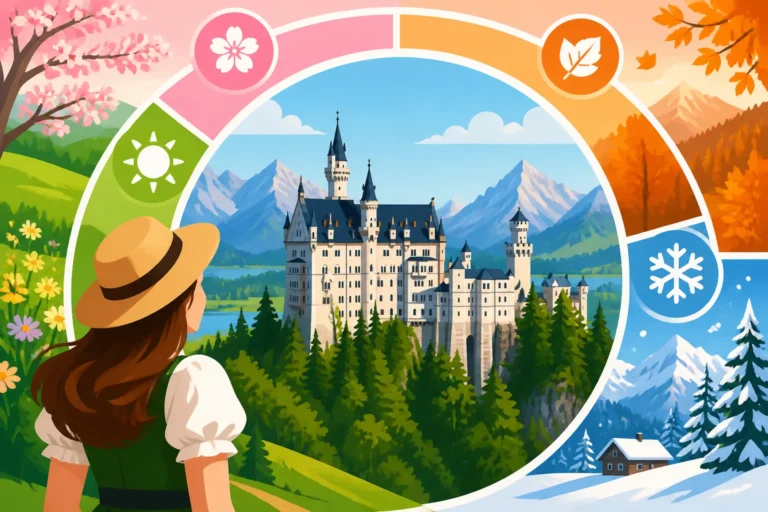
The best self-guided day trips in Germany are not the most famous ones. They are the ones that fit the hours you have, the transport you can use, and the day of the week you are travelling. I learned this the hard way. On my first attempt at a “quick” Neuschwanstein trip from Munich, I didn’t book castle tickets, lost two hours in transit connections, and spent most of the day looking at the castle from the outside.
Matching the Destination to Your Base City
A simple rule works well: aim for a destination within about 90 minutes of your base by train. Anything longer and you spend more of the day in transit than exploring. From Berlin, Potsdam is the classic choice because the S-Bahn gets you there easily and Sanssouci Park can fill a whole day. From Frankfurt, Heidelberg and the Rhine Valley towns like Bacharach or Rüdesheim are realistic. From Hamburg, Lübeck’s medieval old town is close. From Nuremberg, Bamberg is a short regional hop.
If you are based in the capital or in Bavaria, check out Best Day Trips From Berlin and Best Day Trips From Munich for destination ideas sorted by travel time. Then ask yourself one honest question: do I want a full day of sightseeing, or a slow wander with a long lunch? A packed museum city like Dresden suits the first. A wine village on the Moselle suits the second.
Think about your energy levels too. Families with small children often do better with one compact destination, such as a walkable old town with a playground and a café. Travellers who love hiking can pair a train ride with a trail. For low-effort routes that start right at a station, see How to Find Easy Day Hikes Near German Cities.
Watching the Calendar: Sundays, Holidays and Seasons
This is where many newcomers get caught. Shops across Germany close on Sundays, and small towns can feel almost deserted. Museums, castles and restaurants usually stay open, though. That makes Sunday a perfectly good day for sightseeing, but a bad day if you planned to shop for souvenirs. For the full picture, read What Closes on Sundays in Germany?.
Public holidays are trickier because they vary by federal state. A holiday in Bavaria might be a normal working day in Hamburg. That matters if you cross a state line: the shops in your base city may be open while your destination is shut. Use How to Plan Travel Around German Public Holidays before you commit to a date.
Also keep these points in mind:
- Many museums close on Mondays, so check the opening days of your main attraction.
- Popular castles and palaces often have reduced winter hours or seasonal closures.
- Rhine and Moselle river boats run on seasonal timetables, with fewer sailings outside the warmer months.
- Christmas market weekends and summer Saturdays bring heavy crowds on regional trains.
Getting There and Back Without a Tour Bus
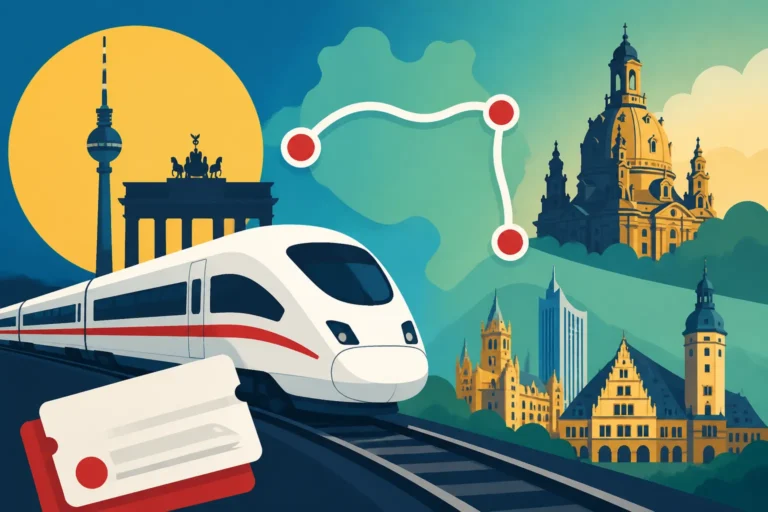
Germany’s rail network is the backbone of self-guided travel. You don’t need a car for most day trips, and you can often travel without fixing a departure time.
Regional Trains and the Deutschland-Ticket
Regional trains, marked RE, RB or S on the departure board, are the workhorses of day trips. You don’t need a seat reservation. You can usually take any regional train on your route. If you miss one, you simply wait for the next.
The Deutschland-Ticket is a monthly subscription that covers regional trains, S-Bahn, U-Bahn, trams and buses nationwide. It does not cover long-distance ICE, IC or EC trains. If you plan several day trips in a month, it can save a lot of money. If you are in the country for a weekend only, a regional day ticket or a single return may make more sense. Prices and conditions change, so check the current terms on Deutsche Bahn’s own site. For a deeper breakdown, read What Is the Deutschland-Ticket and Is It Worth It?.
One honest warning: regional trains on sunny weekends can be packed, especially on lines heading to lakes, the Alps or the coast. Board early at the origin station if you can. Stand near the doors with a bike-free carriage in mind.
Long-Distance Trains, Buses and Booking Tools
For longer trips, an ICE cuts travel time dramatically. Saver fares are usually tied to a specific train, while flexible fares let you change. Book saver fares only if you are confident about your return time. Long-distance buses are another option on some routes. They are often slower, but they can be cheaper.
The DB Navigator app is the tool most locals use for live times, platform changes and mobile tickets. If you have not used it before, read How to Use the DB Navigator App in Germany. If you want to compare trains and buses side by side, Omio shows multiple operators in one search. That is handy when you are weighing a slower bus against a faster train.
| Option | Best For | Booking Flexibility | Main Drawback |
|---|---|---|---|
| Regional train | Trips within about 90 minutes | Take any train on the route | Crowded on weekends |
| Deutschland-Ticket | Several trips in a month | Monthly subscription, no reservations | Not valid on ICE, IC or EC |
| ICE saver fare | Longer distances on a fixed plan | Tied to a specific train | Missing it can mean buying a new ticket |
| ICE flexible fare | Longer distances with uncertain timing | Any train on the day | Costs more than saver fares |
| Long-distance bus | Budget travel on direct routes | Fixed departure | Slower and affected by traffic |
Building a Realistic Day Itinerary
A good self-guided itinerary has structure but leaves room to breathe. The mistake I see most often is trying to squeeze three towns into one day. You end up seeing train platforms instead of streets.
A Sample Timeline That Actually Works
Here is the rhythm I use for most day trips, using Heidelberg from Frankfurt as an example:
- Leave your base between 8 and 9 in the morning, before the busiest crowds.
- Head first to the attraction that sells out or gets crowded, such as Heidelberg Castle.
- Walk down into the old town by late morning and explore the main streets.
- Eat lunch early, around noon, before restaurants fill up.
- Spend the afternoon on something slower: the Philosophers’ Walk, a river stroll or a museum.
- Stop for Kaffee und Kuchen in the mid-afternoon, a German ritual worth keeping.
- Check your return connection in the app about an hour before you plan to leave.
- Catch a train back before the evening rush, keeping a later option in reserve.
Write down at least two return trains. If you miss the first, you will know immediately whether to rush or relax.
Tickets, Entry Slots and Guided Add-Ons
Self-guided does not mean improvised. Some places in Germany require timed entry tickets, and these can sell out on busy days. Neuschwanstein is the best-known example. Palaces in Potsdam can also have limited slots for interior tours. Book these before you book your train, then build the transport around the entry time.
If you want a short guided element without committing to a full coach tour, GetYourGuide lists walking tours, wine tastings and skip-the-line entries that you can slot into an otherwise independent day. A 90-minute old town walk in the morning gives you context, and then you explore alone for the rest of the day.
Language worries come up often. In tourist areas, many people speak English. In a village bakery or on a rural bus, you may need a few German phrases. Download an offline translation pack before you leave. How to Use a Translation App Offline in Germany walks you through it.
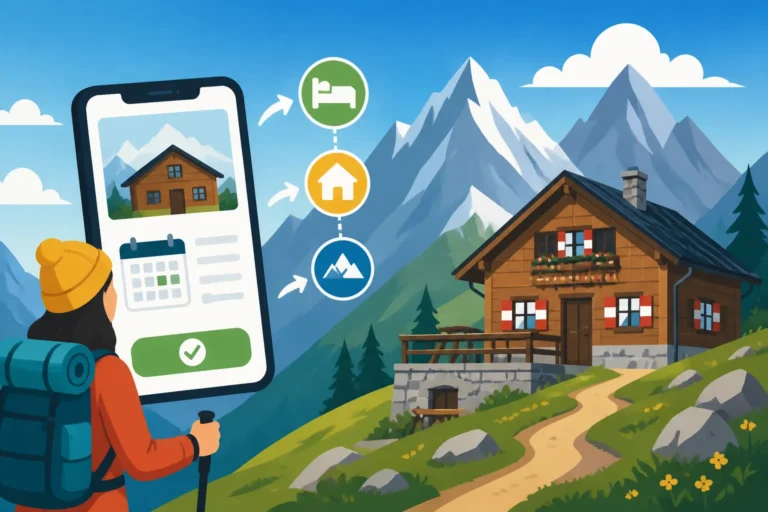
Sometimes a day trip turns into “I wish I had more time here.” If that happens in a town like Bamberg or Rothenburg ob der Tauber, consider booking a night. Booking.com lets you filter for last-minute availability and free cancellation, but check the property’s own terms before you pay.
On-the-Day Essentials
The small practical details decide whether your day feels smooth or stressful. Here is what I pack and check every time.
Money, Cash and Payments
Germany still runs on cash more than most visitors expect. According to the Bundesbank payment study published in June 2026, cash is still the most-used payment method today, at 45% of all payments. A cashless payment was possible at 86% of recorded in-person purchases, which means about 1 in 7 purchases could still only be paid in cash.
On a day trip, those cash-only places are exactly the ones you are likely to visit: small cafés, village bakeries, guest houses, market stalls and some public toilets. My advice is simple: carry about EUR 50 in small notes and coins. Coins are especially useful for lockers and toilets. Read Cash vs Card in Germany: What Visitors Should Know for more detail, and How to Use Public Toilets When Traveling in Germany so you are never caught out at a station.
Connectivity, Delays and Plan B
Mobile signal on German trains can drop, particularly in hilly and rural areas. Download your tickets to your phone, save a screenshot of them, and keep offline maps of your destination. Charge your phone fully and bring a power bank, since you will use the app for live connection updates.
Delays happen. Strikes happen too. Before any trip, check for announced disruptions, and know what you are entitled to if things go wrong. DB Strikes and Delays: Your Rights, Compensation, and Rebooking explains how rebooking and compensation work. Have a backup destination in mind as well. If the line to the Rhine is closed, a closer town on a working line can still save your day.
Weather is your other wild card. Pack a light rain jacket all year round. In summer, carry water. In winter, remember that daylight fades early, so plan outdoor sightseeing for the morning and save museums for the afternoon.
Your Self-Guided Day Trip Checklist
Run through this list the evening before:
- Confirm the opening days and hours of your main attraction.
- Check that the day is not a public holiday in your destination’s state.
- Book any timed entry tickets.
- Buy or download your train ticket, or confirm your Deutschland-Ticket is active.
- Note at least two return connections.
- Download offline maps and a translation pack.
- Pack about EUR 50 in small notes and coins.
- Charge your phone and power bank.
- Pack a rain jacket, water and comfortable shoes.
- Check the app in the morning for delays or strikes.
Plan the fixed parts and leave the rest open. That is how a day trip in Germany stays easy.
Disclaimer
This article is for general informational purposes only and does not constitute professional advice. Laws, prices and regulations vary by location and change over time. Consult a qualified professional for guidance on your specific situation.