Understanding Apartment Listings: Decoding Abbreviations (2-Zi, EBK, etc.)
Staring at a German apartment listing for the first time feels like trying to crack an Enigma code while your entire future hangs in the balance. I remember my first night in a cramped hostel, scrolling through endless strings of consonants like "3-Zi, EBK, m. Balk., KM 800€" and feeling a wave of genuine panic. This guide will decode those cryptic abbreviations so you can actually find a home without a headache.
Disclosure: This post may contain affiliate links. We may earn a commission at no extra cost to you if you make a purchase through these links. Read full disclosure.
The Foundational Logic of Room Counting
The biggest shock for most expats is realized the moment they step into what they thought was a three-bedroom apartment, only to find a living room and two small bedrooms. In Germany, the room count refers to all living spaces except the kitchen and the bathroom. If a listing says "2-Zi" (Zimmer), it usually means one bedroom and one living room. This is a fundamental shift from the "bedroom-only" counting method used in the US, UK, or Australia.
Why a 2-Zi is Not a Two Bedroom Apartment
When you see "2-Zi" in a listing, you are looking at a total of two main rooms. For a single person or a couple, this is the standard setup. One room will serve as your Schlafzimmer (bedroom) and the other as your Wohnzimmer (living room). If you need a dedicated home office and a bedroom plus a living room, you must search for at least a "3-Zi" apartment.
I learned this the hard way after visiting five different "2-room" apartments, expecting a guest room, only to realize I was essentially looking for something that didn't exist under that label. Understanding this early will save you hours of wasted travel time across the city. If you are just starting your search, you might want to look at Finding an Apartment in Germany: Best Websites and Tips for Expats to see where these listings usually pop up.
The Bathroom and Hallway Paradox
It is important to remember that the bathroom (Bad or WC), the hallway (Flur), and the kitchen (Küche) are never included in the room count. However, they are included in the total square meters (m² or Wfl. for Wohnfläche). You might find a "1-Zi" apartment that is 45 square meters, which sounds large, but remember that all your living and sleeping will happen in one single room, plus a separate kitchen and bath.
Sometimes you will see "2.5-Zi" or "3.5-Zi." That ".5" usually refers to a very small room, often under 10 square meters, which might be suitable for a walk-in closet or a very tight nursery, but rarely a full-sized bedroom. If you are struggling with the local market and need something ready to move into, platforms like Wunderflats can be a lifesaver, as they often provide clearer descriptions in English for furnished apartments.
Kitchens and Appliances: The EBK Mystery
The second major hurdle for foreigners is the concept of the "empty" apartment. In many countries, a rental comes with a stove, a fridge, and cabinets. In Germany, if the listing does not explicitly mention "EBK" (Einbauküche), you are likely moving into a room with nothing but wires coming out of the wall and a water pipe.
Defining the Einbauküche (EBK)
EBK stands for Einbauküche, or a fitted kitchen. This means the apartment comes with cabinets, a sink, and usually a stove and oven. Whether a fridge or dishwasher is included depends on the specific landlord, but "EBK" is the keyword you want to see if you don't want to spend your first week at a hardware store. Moving into a place with an EBK makes your life significantly easier, especially when you are busy Registering Your Address (Anmeldung): Step-by-Step Guide and dealing with other bureaucracy.
If you find a place without an EBK, you have two choices: buy a kitchen from the previous tenant (often called an "Abstand") or install one yourself. This is a massive financial and logistical undertaking. You will find yourself ordering tools and basic kitchen supplies from Amazon Germany just to survive the first few days while you wait for a kitchen delivery that might take weeks.
Moving into an Empty Shell
If the listing says "Küche: keine" or simply omits EBK, prepare for the "naked" German apartment experience. Not only will the kitchen be missing, but there will also be no light fixtures—just bare wires hanging from the ceiling. Many expats find this culture shock overwhelming.
I remember sitting on my suitcase in a dark living room because I didn't realize I had to buy my own lamps and a kitchen counter. This is why many newcomers opt for the Furnished vs Unfurnished Apartments in Germany: Pros and Cons debate before signing a long-term lease. If you do go for an unfurnished shell, make sure you have a solid bank account ready; you can find the Best Banks in Germany for Expats: Low Fees and English Support to help manage those initial setup costs.
Decoding the Financial Short-Hand
German rental prices are split into two main categories: Kaltmiete and Warmmiete. If you only look at the first number you see, you will be in for a nasty surprise when your bank account is debited at the end of the month.
Kaltmiete vs Warmmiete (KM vs WM)
KM stands for Kaltmiete (Cold Rent). This is the base price for the space itself. WM stands for Warmmiete (Warm Rent), which is the Cold Rent plus "Nebenkosten" (NK). Nebenkosten covers things like water, trash collection, building cleaning, and sometimes heating. However, it almost never includes electricity (Strom) or internet.
When you apply for an apartment, the landlord will want to see that your net income is at least three times the Kaltmiete. If you aren't sure how these costs break down, check out this guide on Household Bills in Germany: Understanding Nebenkosten and Monthly Costs to avoid any budgeting disasters.
The Security Deposit (Kaution)
In almost every listing, you will see "3 KM Kaution." This means you must pay three months of "Cold Rent" as a security deposit before you move in. This is a legal maximum, and you are entitled to pay it in three installments, though many landlords prefer it upfront.
This is a significant amount of money to have tied up. I’ve seen expats lose their deposits over minor wall scuffs, so it is vital to understand Security Deposits (Kaution) in Germany: Getting It Back and Protecting Yourself before you hand over thousands of Euros. You will also want to make sure you have a clear understanding of the Understanding German Rental Contracts: Key Terms and Conditions before signing, as the Kaution terms are strictly regulated.
Common Abbreviations for Apartment Features
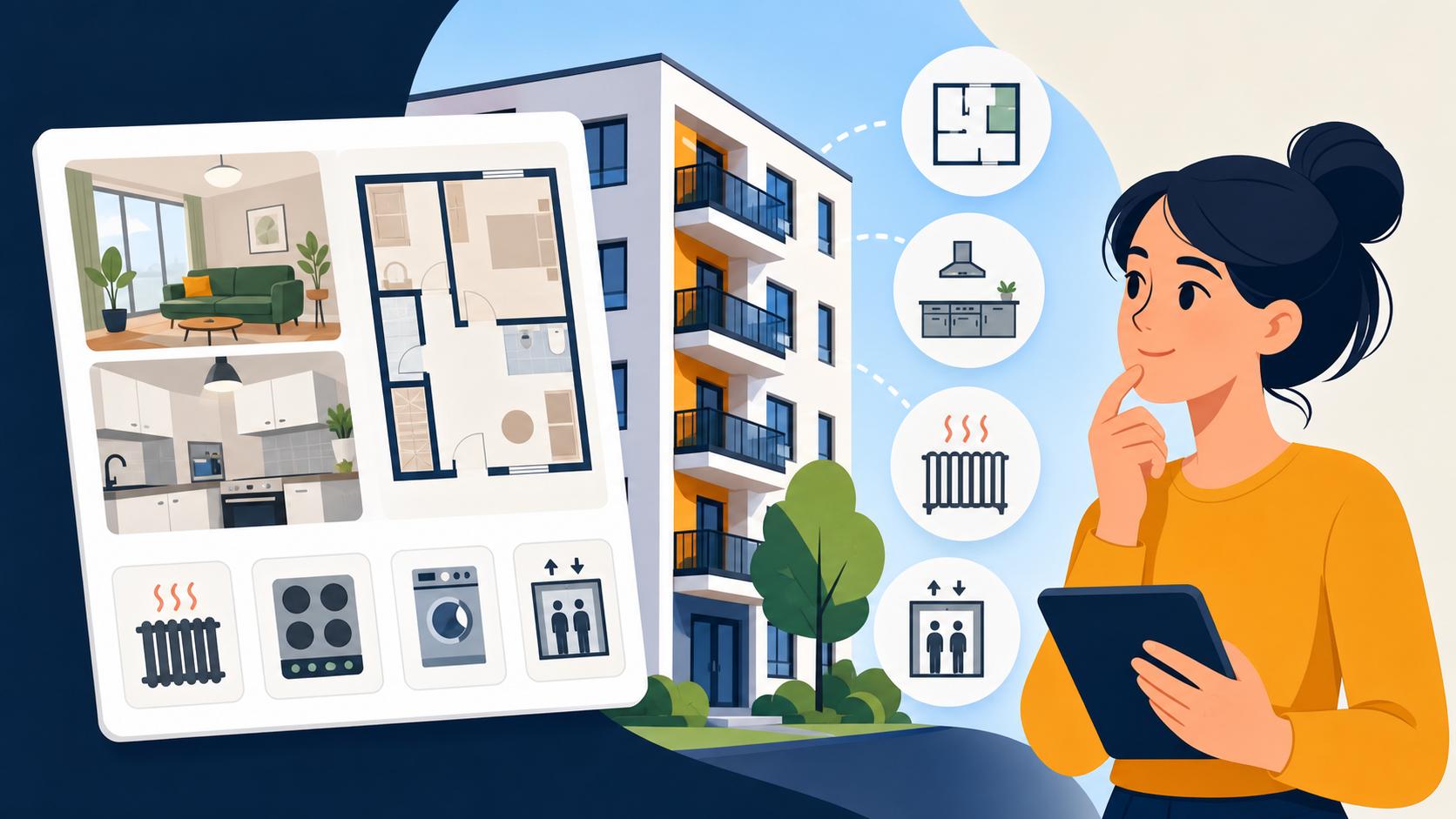
To help you navigate the sea of text in an apartment ad, here is a breakdown of the most common abbreviations you will encounter.
| Abbreviation | Full German Term | English Meaning |
|---|---|---|
| 2-Zi | 2-Zimmer | 2 Rooms (1 Bedroom + 1 Living Room) |
| EBK | Einbauküche | Fitted Kitchen (Cabinets/Stove) |
| KM / WM | Kaltmiete / Warmmiete | Cold Rent / Warm Rent |
| NK / BK | Nebenkosten / Betriebskosten | Service charges / Utilities |
| m² / Wfl. | Quadratmeter / Wohnfläche | Square meters / Living space |
| Balk. | Balkon | Balcony |
| EG / OG | Erdgeschoss / Obergeschoss | Ground floor / Upper floor |
| DG | Dachgeschoss | Attic/Top floor (often slanted walls) |
| Gartenant. | Gartenanteil | Access to a shared or private garden |
| Keller | Keller | Basement storage unit |
| TG | Tiefgarage | Underground parking garage |
| Haust. n. V. | Haustiere nach Vereinbarung | Pets allowed by arrangement |
Building Features and Location Specifics
Beyond the rooms and the rent, the listing will tell you a lot about the lifestyle you can expect through small, two-letter codes. These often relate to the age of the building and its physical layout.
Floor Levels and the OG/EG Logic
In Germany, the "First Floor" is not the ground level. The ground level is the "EG" (Erdgeschoss). The floor above that is the "1. OG" (1. Obergeschoss). If you see "HP" (Hochparterre), it means a raised ground floor where people can’t easily look into your windows from the street, but you still don't have many stairs to climb.
Living in a "DG" (Dachgeschoss) can be incredibly romantic with its slanted wooden beams, but be warned: these attic apartments get incredibly hot in the summer. Since air conditioning is rare in German residential buildings, you might find yourself ordering heavy-duty fans from Amazon Germany by mid-July.
Amenities: Balkon, Keller, and TG
"Balk." (Balkon) is highly coveted. Germans love their balconies, often decorating them with flowers and sitting out even in chilly weather. If a listing says "m. Balk.," it means "with balcony." Another essential is the "Keller." Most German apartments come with a designated locked stall in the basement. This is where you store your winter tires, suitcases, and the boxes for all the appliances you bought.
If you have a car, look for "TG" (Tiefgarage) or "Stellplatz." Street parking in cities like Berlin, Munich, or Hamburg is a nightmare. Finding a listing with a dedicated parking spot is like finding gold. If you are moving between cities, you might want to check out Living in Berlin: Expat Guide to Neighborhoods and Lifestyle or Living in Munich: Expat Guide to the Bavarian Capital to see how parking and amenities vary by region.
The "Hidden" Details in the Fine Print
Finally, look for "Abf." (Abstellraum), which is a small storage closet inside the apartment—a rare luxury. You should also check for "Wannenbad" (bathroom with a tub) versus "Duschbad" (shower only). If the listing mentions "G-WC" (Gäste-WC), you have a second, smaller toilet for guests, which is a major plus in shared living situations.
If you see "Bezug ab," that is the move-in date. Note that German rentals usually start on the 1st or the 15th of the month. If you are moving mid-month, you will likely still be expected to pay for the full month or half-month. For those arriving from abroad, using a service like Wunderflats to find a "Zwischenmiete" (temporary rental) can give you the time needed to decode these listings in person and visit apartments without the pressure of being homeless.
Understanding these abbreviations is just the first step. The German rental market is competitive, and being able to read a listing as fast as a local gives you a slight edge. When you send that first email to a landlord, use the terms you’ve learned—mention that you are looking for a "3-Zi with EBK"—to show them you understand how the system works. It makes a better impression than a generic inquiry.
Disclaimer
The information provided in this guide is for educational purposes only and makes no claim to legal completeness. Rental laws and common practices in Germany can change, and specific listing abbreviations may vary by region or platform. Always consult with a legal professional or a tenant association (Mieterverein) before signing a rental contract.