Nightlife, Music, and Entertainment in Germany
Germans head out late, many bars only take cash, and plenty of first-time visitors get waved away at a Berlin club door after queuing for hours. That leaves a lot of travelers either overdressed in a tourist trap or standing on an empty street at what they thought was a reasonable hour. This guide covers how German nightlife, live music and entertainment really work. It explains when to go, how to get in, how to buy tickets, and how to get home safely.
Disclosure: This post may contain affiliate links. We may earn a commission at no extra cost to you if you make a purchase through these links. Read full disclosure.
How German Nightlife Actually Works
I still remember my first Friday in Berlin. I put on my best going-out shirt, arrived at a club at what I considered a fashionably late hour, and found the dance floor empty except for the bartender and one man in a hoodie. I had arrived too early. Before you plan anything, it helps to understand the hidden rules that shape a night out here. Most of them have nothing to do with which venue you pick.
The Late Clock and Why Timing Matters
The biggest adjustment for visitors is the schedule. In much of Germany, an evening starts with a long, slow dinner or a few drinks at a local pub. People move toward bars later and only drift into clubs well after midnight. In Berlin especially, the busiest stretch can be the early morning, and some parties run from Saturday night straight through Sunday. If you arrive when the doors first open, you may be dancing alone. Some people enjoy that, but most visitors find it demoralising.
Timing varies by city and by venue type. A beer hall in Munich is lively from the early evening, and a jazz bar in Hamburg may have its best set before midnight. A techno club in Leipzig or Frankfurt follows a later rhythm. Always check the listing for the actual performance or DJ times rather than the door time. For a deeper look at how this differs between cities and scenes, see What Time Does Nightlife Start in Germany?
Consider a typical scenario. You are in Cologne for a weekend and want a full night out. Eat dinner in a traditional Brauhaus, then walk to a bar in the Belgisches Viertel for a couple of drinks. Head to a club only when the bar starts emptying. If you try to compress all of that into three early hours, you will be fighting the city’s natural pace instead of enjoying it.
Kneipe, Bar, Club: Knowing the Difference
A Kneipe is the classic German neighbourhood pub. It might have wood panelling, a few regulars at the counter, beer on tap and a television showing football. Kneipen are cheap, unpretentious and often the most authentic place to watch locals unwind. Some still allow smoking in certain states or in designated rooms. If that bothers you, check before settling in, because the rules vary across the federal states.
Bars are more varied. Cocktail bars in Berlin’s Mitte or Hamburg’s Schanzenviertel can be dark, quiet and serious about their drinks. Wine bars in the Rhineland and the Palatinate lean into regional wines. Then there is the Späti, a Berlin institution: a late-opening corner shop where people buy a bottle and drink it on the pavement outside. Drinking in public is broadly tolerated in many German cities, and the Späti culture shows how relaxed the social scene can be.
Clubs are where the rules get stricter. Many are run by people who take music and atmosphere seriously, and they protect that atmosphere at the door. Some focus on one genre, mostly techno and house, and expect guests to come for the music rather than the bottle service. If you come from a city where clubs are mostly about VIP tables, the German approach can feel almost reverse. Being low-key works in your favour.
Cash, Coat Check and House Rules
Bring cash. Many Kneipen, smaller bars, club entrances and coat checks still prefer it or accept nothing else. Visitors often get caught out when they try to pay entry by card at a club door at dawn. Card acceptance has grown, but you should not rely on it at night. For the full picture on how and where to pay, read Cash vs Card in Germany: What Visitors Should Know
The Garderobe, or coat check, matters more here than in many countries. In winter, you will not want to carry a heavy jacket around a packed dance floor, and many venues expect you to check it. Keep the ticket somewhere safe. Losing it at the end of a long night means waiting until the crowd clears and then describing your jacket to a tired attendant.
House rules can also surprise you. Many Berlin clubs put stickers over your phone’s camera at the entrance, and taking photos inside is a serious breach of etiquette that can get you removed. Some venues have awareness teams who look out for harassment or guests who are struggling. Respecting these rules is part of what keeps the scene welcoming.
Berlin’s Club Scene and How to Experience It
Berlin is the reason many people travel to Germany for nightlife. Its reputation is deserved, but it is also surrounded by myths. Here is what it is really like for a first-timer.
The Door and the Queue
The door is famous and feared. Bouncers at Berghain, the club inside a former power plant in Friedrichshain, have become almost mythical. Other well-known clubs also screen guests carefully. They are not looking for expensive clothes or celebrity status. They are trying to build a crowd that fits the night: people who will respect the space, enjoy the music and not treat the club as a sightseeing stop.
What helps? Arrive in a small group or alone, not a loud gang of six. Dress in an understated way, which usually means darker clothing and nothing flashy. Be sober, calm and quiet in the queue. Know who is playing that night, since some door staff may ask. Avoid speaking loudly in English about how famous the club is. It is not about nationality, but it signals that you are there for the story rather than the night.
If you get turned away, do not argue, plead or try again five minutes later in a different jacket. Accept it and go somewhere else. Berlin has dozens of excellent clubs, and some of my best nights started after a rejection. For a detailed breakdown of door strategy, see How to Get Into Berghain and Berlin Clubs
Inside the Weekend Marathon
Once inside, you will notice the weekend works differently. Many Berlin parties run for a very long time, sometimes from Saturday night until Monday morning. People come and go, leave for breakfast and return later, or arrive fresh on Sunday afternoon when the atmosphere shifts. Some regulars think the Sunday daytime hours are the best part, when the crowd thins and the music loosens up.
Pace yourself. Drink water, take breaks in outdoor areas where they exist, and do not feel you must stay for the whole marathon. Some clubs have garden spaces open in the warmer months, which makes a long session much easier. Sisyphos, out in a former factory complex in the east of the city, is known for its sprawling outdoor setup and is one example of how different Berlin venues can feel.
There is also a culture of freedom and tolerance inside. Some venues, such as KitKatClub, are known for fetish themes and specific dress codes, and you should research what a night involves before going. Respect for consent is non-negotiable everywhere. If someone says no, that is the end of the conversation. For a wider guide to the scene beyond the headline names, read Nightlife in Germany: Berlin and the Club Scene
Beyond Techno in Berlin
Berlin is not only techno. There are jazz cellars, indie gig venues, drag shows, rooftop bars, karaoke nights in Mauerpark during summer Sundays, and a vibrant queer scene concentrated in areas like Schöneberg. Neukölln and Kreuzberg have bars where you can spend an entire evening without going near a dance floor.
Berlin’s LGBTQ+ nightlife has a long history going back to the Weimar era, and it remains one of Europe’s most important queer cultural centres. Many venues are inclusive, while others are specific spaces for certain communities. It is worth knowing which is which before you go. For more on this, see How to Find LGBTQ+ Friendly Nightlife in Germany
If clubbing is not your thing, Berlin still has plenty to offer at night. You can see cabaret, catch a late film at an open-air cinema in summer, or join a guided evening walk through the city’s history. Platforms like GetYourGuide list evening walking tours and bar crawls if you prefer a structured introduction before exploring on your own.
Nightlife City by City
Germany is a federal country, and its nightlife reflects that. Each region has its own drinks, its own habits and its own atmosphere. Here is a quick comparison to help you decide where to spend your evenings.
| City | Nightlife Character | Signature Drink or Ritual | Best Known Areas |
|---|---|---|---|
| Berlin | Late, long, music-focused, techno capital | Späti beer on the pavement | Friedrichshain, Kreuzberg, Neukölln, Mitte |
| Hamburg | Raucous, rock and pop history, harbour atmosphere | Astra beer, late harbour walks | St. Pauli, Reeperbahn, Schanzenviertel |
| Cologne | Friendly, chatty, Brauhaus culture | Kölsch served in small glasses | Altstadt, Belgisches Viertel, Zülpicher Straße |
| Düsseldorf | Old Town bar crawl, polished | Altbier in traditional brewhouses | Altstadt, often called the longest bar in the world |
| Munich | Early start, beer halls, smaller club scene | Litre of beer in a beer hall or garden | Altstadt, Glockenbachviertel, Schwabing |
| Leipzig | Creative, affordable, strong techno and indie | Student bars and club nights | Südvorstadt, Plagwitz, Connewitz |
| Frankfurt | Mixed, finance crowd plus underground clubs | Apfelwein in Sachsenhausen taverns | Sachsenhausen, Bahnhofsviertel, nearby Offenbach |
Hamburg: St. Pauli and Beyond
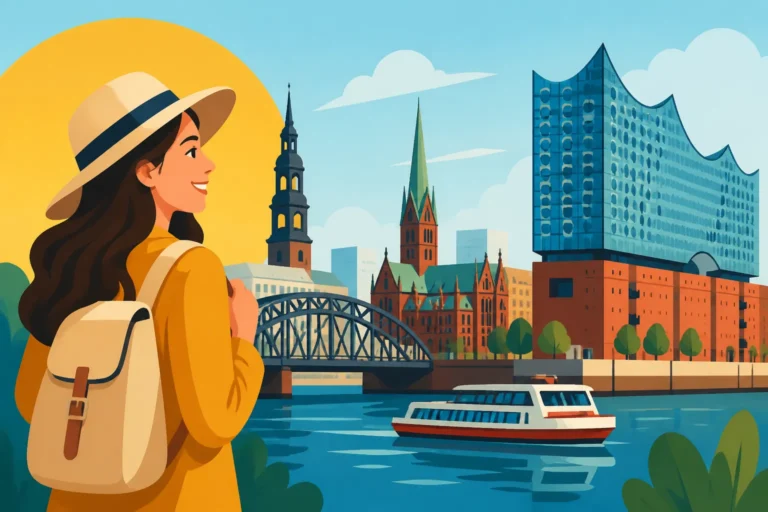
Hamburg’s nightlife centres on St. Pauli and the Reeperbahn, a long street of bars, clubs, theatres and neon lights. It has a raw, harbour-city energy that is very different from Berlin’s music-first seriousness. This is where the Beatles played in their early years, at venues like the Indra and the Kaiserkeller, and the area still trades on that rock history.
The Reeperbahn can be overwhelming and touristy on weekend nights, especially around stag and hen parties. Locals often prefer the side streets or the nearby Schanzenviertel, which has a more alternative, student atmosphere. Venues like Molotow are beloved for indie and punk gigs. Uebel & Gefährlich, inside a massive wartime bunker, hosts concerts and club nights.
A classic Hamburg ritual is the Fischmarkt on Sunday morning, where night owls and early risers meet over fish sandwiches and live music in the old auction hall by the water. It is the perfect end to a long Saturday night. Just remember that it starts early and finishes before late morning, so you will need to go straight from the bar.
Cologne and Düsseldorf: The Rhineland Way
Cologne is perhaps the most sociable city in Germany for a night out. In a traditional Brauhaus, servers known as Köbes bring endless small glasses of Kölsch and replace them as soon as they are empty until you put a coaster on top. People share long tables, chat with strangers and treat the evening as a social event. If you are travelling alone, it is one of the easiest cities to make friends in a bar.
Cologne also has a large student and LGBTQ+ scene, with clubs along the Ring and bars in the Belgisches Viertel and Ehrenfeld. During Karneval, the entire city turns into a party, and normal nightlife rules disappear for days. If you visit then, expect costumes, crowds and singing strangers everywhere.
Düsseldorf, a short train ride away, has its own beer, Altbier, which is darker and served in traditional brewhouses in the Altstadt. The Old Town is packed with bars close together, and a pub crawl here is easy to do on foot. Locals will gently tease you about the rivalry with Cologne. The best response is to order the local beer in each city and avoid taking sides.
Munich, Leipzig and Frankfurt
Munich runs on a different clock. The beer hall and beer garden culture means evenings start earlier and are often centred around long tables, brass bands and hearty food. The Hofbräuhaus is famous but very touristy. Locals often prefer smaller halls or neighbourhood beer gardens in summer. For a guide to choosing well, see Beer Gardens and Beer Halls in Germany. Munich’s club scene is smaller but has respected venues, and the Glockenbachviertel is the heart of its gay nightlife.
Leipzig has become a favourite among people who find Berlin too big or too intense. It has a strong techno and alternative scene, with long-running venues like Distillery and Conne Island, plus student bars in the Südvorstadt. The atmosphere is more relaxed, the queues are shorter, and the city’s creative energy is easy to feel.
Frankfurt surprises people. Beyond the banking towers, Sachsenhausen has traditional apple wine taverns where you drink Apfelwein from a ribbed glass and eat hearty local food. The club scene includes underground spots, and Robert Johnson in neighbouring Offenbach is legendary among electronic music fans. Frankfurt is compact, so you can easily combine a tavern dinner with a late club night.
Live Music and Concerts
Germany has an enormous live music scene. Large arenas host global tours, and small cellar bars host local bands with tiny audiences. The challenge for visitors is usually finding the right event and navigating ticketing.
Finding Gigs and Events
Start with city listings. Many German cities have local event magazines and websites listing concerts, club nights and performances by date. Venues also post their programmes online, and following a few venues in your destination city is the most reliable way to see what is on. Record shops, bars and student noticeboards still carry flyers for smaller shows.
Think about genre too. Hamburg has strong indie and rock venues, Berlin and Leipzig are known for electronic music, and Cologne has a rich mix of pop, rock and jazz. Smaller cities like Freiburg, Münster or Heidelberg have lively student scenes with affordable gigs. Even small towns may have a youth centre or cultural hall with regular concerts.
For a comprehensive approach to tracking down events, including smaller venues locals use, read Live Music and Concerts in Germany: How to Find Events
Understanding Ticket Terms
German ticketing uses a few terms that can confuse first-timers. Knowing them saves stress at the door and helps you choose the right ticket.
| German Term | Meaning | What It Means for You |
|---|---|---|
| Vorverkauf | Advance sale | Buy before the event, often online or at a ticket outlet |
| Abendkasse | Box office on the night | Buy at the door, but popular shows may sell out |
| Ausverkauft | Sold out | No tickets left through official channels |
| Stehplatz | Standing place | Usually cheaper, common at concerts and football |
| Sitzplatz | Seated place | Assigned seat, common at classical and theatre events |
| Ermäßigt | Reduced price | Discount for students, seniors or others with proof |
| Einlass | Entry time | When doors open, not when the show starts |
| Beginn | Start time | When the performance actually begins |
A common mistake is confusing Einlass and Beginn. Doors may open an hour or more before the show starts. If you only want the main act, check the start time. If you want a good standing spot, arrive at the entry time. Also be careful with resale platforms for sold-out shows. Fake tickets exist, and some events use personalised tickets that cannot be transferred.
Small Venues and the Local Scene
Some of my best nights in Germany were in tiny venues I found by accident: a jazz session in a Leipzig cellar, a punk show in a Hamburg backroom, or a singer-songwriter night in a Kreuzberg bar. Many small venues ask for a modest entrance fee or pass a hat around for the band. Bring cash and contribute if you enjoyed the music.
Jam sessions are another great option. Many cities have weekly open jams for jazz, blues or folk, where local musicians drop in and visitors can listen or even join. These are friendly, social and a good way to meet people. Ask at the bar about regular nights.
Small venues have their own etiquette. In a quiet acoustic show, talking loudly at the bar is frowned upon. Germans can be very direct about this, so do not be surprised if someone shushes you. It is not personal. It is about respecting the performer.
Classical Music, Opera, Theater and Cinema
Germany’s cultural life is extraordinary. It has an exceptionally dense network of orchestras, opera houses and theatres, many with public funding. That often makes high culture surprisingly accessible.
Opera Houses and Orchestras
The big names are world-famous: the Berlin Philharmonic, the Leipzig Gewandhaus Orchestra, the Bavarian State Opera in Munich and the Semperoper in Dresden. Hamburg’s Elbphilharmonie, with its striking wave-shaped roof above the harbour, has become a destination in its own right. Leipzig also has deep Bach connections through the St. Thomas Church and its famous boys’ choir, the Thomanerchor.
Do not be intimidated. Many venues offer student discounts, last-minute tickets, standing places or open rehearsals. Dress codes are usually more relaxed than people expect. Smart casual is fine at most performances, though premieres and festival nights can be dressier. Some Germans dress up because they enjoy it, but you will rarely be judged for a neat sweater.
Wagner fans dream of the Bayreuth Festival in Franconia, though tickets are notoriously difficult to obtain. Smaller cities also have excellent municipal theatres with opera, ballet and drama. A night at a regional opera house in a city like Wiesbaden or Karlsruhe can be just as moving as one in a capital. For more detail, read Classical Music and Opera in Germany
Kabarett, Theater and Variety Shows
German Kabarett is political and satirical comedy, often performed on small stages. It is different from the glitzy cabaret image from films about Berlin’s past. Kabarett relies heavily on language and wordplay, so it is best if your German is good. Still, it is a fascinating window into German humour and public debate.
Berlin’s theatre scene includes the Volksbühne, the Deutsches Theater and the Berliner Ensemble, which is connected to Bertolt Brecht’s legacy. Some performances include English surtitles. Many theatres mark these on their programmes, so check before booking. Variety and revue shows, like those at Berlin’s Friedrichstadt-Palast, need less language and are spectacular.
Hamburg is Germany’s musical theatre capital, with long-running productions in large purpose-built theatres. Many shows are performed in German, even when they are international hits, so check the language beforehand. For more on stage performances and cultural events, see Theaters, Cinemas, and Cultural Events in Germany
Cinemas and Original Language Films
Germany has a strong dubbing tradition, so most mainstream films in regular cinemas are shown in German. If you want the original version, look for these abbreviations in listings. OV means original version without subtitles. OmU means original with German subtitles. OmeU means original with English subtitles. Bigger cities have cinemas that specialise in original versions.
In summer, open-air cinemas, called Freiluftkino, are one of Germany’s best evening pleasures. Berlin has several in its parks, and other cities run seasonal screenings in courtyards and on riverbanks. Bring a blanket, since it gets cool once the sun sets.
The Berlinale, Berlin’s international film festival, transforms the city every February with premieres, screenings and public ticket sales. Tickets for popular screenings go quickly, but there are often extra screenings for the public. Smaller film festivals happen across the country all year round.
Music Festivals and Big Events
German summers are festival season. Whether you love metal, indie, electronic or classical music, there is probably a festival for you somewhere in the country.
The Summer Festival Circuit
Some festivals are legendary. Wacken Open Air, in a small village in Schleswig-Holstein, is one of the world’s best-known heavy metal festivals and draws fans from across the globe. Rock am Ring at the Nürburgring and its twin Rock im Park in Nuremberg are huge rock events. Hurricane and Southside are sister festivals in the north and south. Fusion, in Mecklenburg, is a sprawling alternative and electronic gathering with a distinct non-commercial ethos.
Classical lovers have their own circuit, from Bayreuth’s Wagner festival to summer concert series in castles and churches. Many cities also hold free open-air events, city festivals and summer music weeks that do not require advance planning. Ask locals about regional festivals. Some of the best are small and well-loved locally but rarely advertised internationally.
Tickets for big festivals often sell out early, and some festivals use personalised tickets. Buy only through official sales channels or authorised resale schemes. For practical first-time advice, read How to Attend a German Music Festival as a Visitor
Getting There and Staying Over
Festival logistics are a big part of the experience. Many sites are in rural areas with special shuttle buses from the nearest train station on festival days. Trains toward festival areas can be packed, so leave extra time. Comparison platforms like Omio let you see train and bus options side by side, which helps when you are trying to reach a small station near a festival site.
If you are not camping, book accommodation early. Hotels in small towns near major festivals fill fast and may set minimum stays. Booking.com is useful for finding guesthouses and apartments within reach of a site. Check the cancellation terms carefully, since festival plans can change.
Here is a simple process to plan a festival trip without last-minute panic:
- Buy your festival ticket through the official channel as soon as sales open.
- Check whether the festival runs shuttle buses and from which station.
- Book long-distance trains or buses to that station once your dates are confirmed.
- Decide between camping on site or booking a room in a nearby town.
- Read the festival’s list of permitted and prohibited items before packing.
- Withdraw enough cash in case card payment is limited on site.
- Save the festival map, timetable and emergency information to your phone offline.
Festival Etiquette, Camping and Pfand
German festivals often use Pfand, a deposit system for cups and bottles. You pay extra when you buy a drink and get it back when you return the cup. Some festival-goers collect discarded cups to return. Do not be surprised if someone politely asks for your empty cup, as this is part of the culture and helps keep the site clean.
Camping at German festivals is typically well organised but basic. Bring a decent tent, rain gear and warm layers, since summer nights can be surprisingly cold and rain is common. Some festivals offer quieter camping areas, family zones or upgraded options for an additional fee.
Respect your neighbours and the land. Many festivals take sustainability seriously and have rules about leaving your campsite clean. Leaving behind tents and rubbish is increasingly frowned upon, and some festivals have introduced deposits or penalties to discourage it.
Football, Sports and Other Night Entertainment
Not all German entertainment involves music. Football is a huge part of life here, and stadium nights can be as electric as any club.
Going to a Bundesliga Match
German football culture is famous for its atmosphere, its standing terraces and its passionate fan culture. Borussia Dortmund’s Südtribüne, often called the Yellow Wall, is one of the biggest standing terraces in European football. Clubs like Union Berlin and St. Pauli are known for their fan traditions and strong community identity.
Tickets for top clubs can be hard to get, since season ticket holders take most seats. Second-division matches and smaller clubs are often easier, cheaper and just as fun. Matchday tickets often include free local public transport within the regional network on the day of the match. Check your ticket for details.
Stadium culture has its own etiquette. Do not wear the colours of the rival team in the home end, learn a few chants if you can, and expect beer to be served with a deposit cup. For a full guide, read Football in Germany: Watching the Bundesliga as a Visitor
Watching Games and Events in Bars
If you cannot get stadium tickets, watching a match in a Kneipe is an excellent alternative. Many local pubs show games on TV, and some become unofficial fan bars for local clubs. During major international tournaments, public viewing events in squares and beer gardens attract huge crowds.
Some bars attract supporters of particular clubs, and this can feel tribal. Ask before wearing a jersey for a rival club. Most fans are welcoming, but a little sensitivity goes a long way. In bars near stadiums, matchdays can be crowded and loud. Arrive early if you want a seat with a view of the screen.
Beyond football, Germany has quiz nights, board game cafés, comedy nights in English in bigger cities, karaoke bars and bowling alleys. Many cities also have English-language comedy and open-mic nights aimed at international residents, which are great for visitors who want something social without a language barrier.
Seasonal Night Entertainment
The German calendar shapes nightlife. In winter, Christmas markets become evening meeting places, with mulled wine, food stalls and music. Locals meet friends there after work, and markets can be busiest on weekday evenings. Wrap up warmly, because standing around in the cold for hours is part of the ritual.
New Year’s Eve, called Silvester, is loud. There are fireworks everywhere, street parties and club nights that run until the morning. In some cities, the fireworks in residential streets can feel chaotic. Stay alert and keep a safe distance from people setting off rockets.
Summer brings beer gardens, open-air concerts, wine festivals in the Rhine and Moselle valleys, and long evenings by rivers and lakes. Spontaneous gatherings in parks and by water are common, especially in Berlin, Hamburg and Leipzig. Bring your own drinks, take your rubbish home and keep the volume reasonable.
Getting Home and Staying Safe at Night
A great night out ends well when you get home safely. Germany is generally safe at night, but some practical knowledge makes a real difference.
Night Transport and Taxis
Public transport in large German cities runs late, and many have dedicated night lines. Look for Nachtbus or night line signs, often marked with an N in front of the route number. In Berlin and Hamburg, some underground and suburban rail lines run through the night on weekends. Check your city’s transport app before heading out so you know your route home.
Buy your ticket before boarding where required and validate it if your city uses validation machines. Ticket inspectors work at night too, and fines for riding without a valid ticket apply around the clock. On longer trips between cities, check the last connection back. Missing the final regional train after a gig in a smaller town is a classic visitor mistake.
Taxis are widely available in cities, and ride-hailing apps operate in some places, though coverage varies. Taxis in Germany are regulated and generally safe. Have your address written down, especially if your German is limited, since pronouncing a street name at the end of a long night is harder than you think.
Personal Safety and Awareness
Pickpocketing is the most common risk in crowded nightlife areas, festival sites and Christmas markets. Keep your phone and wallet in front pockets or a closed bag, and watch your belongings in busy bars. Areas like the Reeperbahn and some central train station districts can get rowdy late at night. They are not dangerous for most visitors, but they need normal city awareness. For more tips, read Staying Safe in Germany: Common-Sense Tips for Travelers
Many German bars and clubs participate in campaigns to support guests who feel unsafe. One widely used initiative encourages people to ask the bar staff, “Ist Luisa hier?” This means “Is Luisa here?” and signals discreetly that you need help. Awareness teams at many clubs and festivals also offer support. If you feel unwell or threatened, go to staff immediately.
In an emergency, call 112 for an ambulance or the fire service and 110 for the police. Watch your drink and never leave it unattended. Be aware that drug laws and enforcement can vary. Cannabis rules have changed in recent years, but the details are complex, and other drugs remain illegal. Do not assume that anything visible in a club is permitted.
Respecting Neighbours and Quiet Hours
Germans value quiet in residential areas. Many buildings and neighbourhoods have quiet hours, known as Ruhezeit, especially at night and on Sundays and public holidays. Shouting, singing and loud conversations on the walk home can annoy residents and occasionally bring a visit from the police or the local public order office, the Ordnungsamt.
This applies to holiday apartments too. If you are staying in a rental flat in a residential building, keep the volume down when you come home late. Do not invite people back for an after-party. Neighbours may complain to the host, and hosts often have strict rules about noise.
The simplest approach is to save the noise for the venue and keep the walk home calm. It is a small courtesy that makes life easier for everyone, and locals will appreciate it. Germany’s nightlife thrives partly because there is a balance between vibrant venues and peaceful neighbourhoods.
Disclaimer
This article is for general informational purposes only and does not constitute professional advice. Laws, prices and regulations vary by location and change over time. Consult a qualified professional for guidance on your specific situation.