Oktoberfest in Munich: A First-Timer’s Guide
Alright, so you've heard the siren call of Oktoberfest, haven't you? It's easy to feel overwhelmed, trying to figure out how to navigate the world's biggest beer festival, especially if it's your first time in Munich. Believe me, I've been there, staring wide-eyed at the crowds and mountains of beer steins. But don't you worry, because this guide is going to walk you through everything you need to know to make your inaugural Oktoberfest an unforgettable, and decidedly less stressful, experience.
Disclosure: This post may contain affiliate links. We may earn a commission at no extra cost to you if you make a purchase through these links. Read full disclosure.
Getting There: Navigating Your Journey to the Wiesn
Getting to Oktoberfest, affectionately known as the "Wiesn" by locals, is half the adventure. Munich itself is a bustling city, and during the festival, it truly comes alive, or perhaps, overflows with visitors. Planning your travel and accommodation well in advance is not just a suggestion; it’s an absolute necessity.
Flights and Long-Distance Travel to Munich
Munich's Franz Josef Strauss Airport (MUC) is a major international hub, well-connected to cities across the globe. You'll find numerous airlines flying directly or with easy connections to Munich. However, because Oktoberfest draws millions, flight prices tend to skyrocket the closer you get to the festival dates. It's truly a case of "the early bird gets the flight that doesn't break the bank." Start looking for flights as soon as you know your travel dates, often six to twelve months in advance for the best rates. Consider flying into other German airports like Frankfurt or Stuttgart and then taking a train, which can sometimes be more economical and offers a scenic journey through the German countryside.
Once you land, the S-Bahn (lines S1 and S8) connects the airport directly to Munich city center, including major hubs like Hauptbahnhof (Main Station) and Marienplatz, making it incredibly convenient. For those traveling from other parts of Germany or neighboring countries, Deutsche Bahn offers extensive train services. The main station, München Hauptbahnhof, is a central hub, and from there, you can easily connect to the U-Bahn or S-Bahn to reach your accommodation or the festival grounds. Booking your train tickets in advance through platforms like Omio can also save you a significant amount compared to buying them on the day, especially for popular routes during peak Oktoberfest season. It's smart to explore various options to get the best deals on your journey. For more detailed tips on train travel, check out our guide on How to Buy Deutsche Bahn Tickets and Save Money.
Public Transport in Munich: Getting to the Oktoberfest Grounds
Once you're in Munich, public transport is your best friend. Seriously, don't even think about driving to the Wiesn. Parking is non-existent, and the last thing you want is the stress of navigating Munich's busy streets while everyone else is in a celebratory mood. The festival grounds, known as Theresienwiese, are incredibly well-served by Munich's efficient U-Bahn (subway) and S-Bahn (commuter train) network.
The closest U-Bahn stations are Theresienwiese (U4/U5 lines), which literally drops you right at the main entrance, and Goetheplatz or Poccistraße (U3/U6 lines), which are just a short walk away. During Oktoberfest, these stations are packed, and for good reason: they're efficient. You'll see signs everywhere guiding you, and crowds of people in traditional Bavarian attire will lead the way. For a more comprehensive understanding of local transit, read our guide on Getting Around German Cities: U-Bahn, S-Bahn, Trams, and Buses. Daily tickets or multiple-day passes are highly recommended as they offer unlimited travel across the network, saving you the hassle of buying individual tickets for each journey. Remember to validate your ticket before you board!
Booking Accommodation: Where to Stay (and When to Book!)
Let's be blunt: accommodation during Oktoberfest is expensive, and it books up fast. Like, really fast. If you're hoping for affordable options, you should ideally book your stay a year in advance. Many hotels and guesthouses around Munich release their Oktoberfest bookings almost immediately after the previous year's festival ends. If you're planning last minute, expect to pay a premium or consider staying a bit further out from the city center and commuting in.
Munich offers a wide range of options, from luxury hotels to budget hostels and Airbnbs. Areas like Hauptbahnhof (Main Station) are convenient for transport but can be noisy. Neighborhoods like Glockenbachviertel or Schwabing offer a more local feel but might require a slightly longer commute. For those seeking a quieter experience, exploring options in the outer districts or even nearby towns accessible by S-Bahn could be a viable strategy. Websites like Booking.com are invaluable resources, but remember to filter by proximity to public transport. Don't underestimate the power of a good night's sleep away from the hustle and bustle, especially after a long day at the Wiesn. Our guide on Short-Term Accommodation in Germany: Options for Your First Weeks might offer some useful alternative ideas.
The Basics of Oktoberfest: What You Need to Know Before You Go
Stepping onto the Theresienwiese for the first time is an experience in itself. The sheer scale, the sounds, the smells – it’s a sensory overload in the best possible way. But knowing a few key things beforehand will help you navigate the magic with confidence.
Understanding the Festival Grounds and Beer Tents
The Oktoberfest grounds are massive, essentially a temporary city built for two weeks. At its heart are the fourteen large beer tents, each operated by one of Munich's traditional breweries: Augustiner, Hacker-Pschorr, Hofbräu, Löwenbräu, Paulaner, and Spaten-Franziskaner. Each tent has its own unique atmosphere, decor, and even a specific crowd it tends to attract. Some are more traditional, with brass bands playing classic Bavarian tunes, while others might be livelier, leaning into popular music. You don't need to pick a favorite, but it's good to know what to expect.
Beyond the big tents, you'll find smaller, specialized tents offering wine, sparkling wine, or specific food items like roast chicken (Hendlbraterei) or fish (Fischer Vroni). Don't forget the extensive fairground with thrilling rides and games, and countless food stalls. The grounds also host various services, including information points, first aid, and lost and found offices. Taking a moment to grab a map of the grounds as you enter can save you a lot of aimless wandering, especially when trying to meet up with friends or find a specific tent. There’s a lot more to Oktoberfest than just beer, so take your time exploring.
The Right Attire: Dirndl and Lederhosen Explained
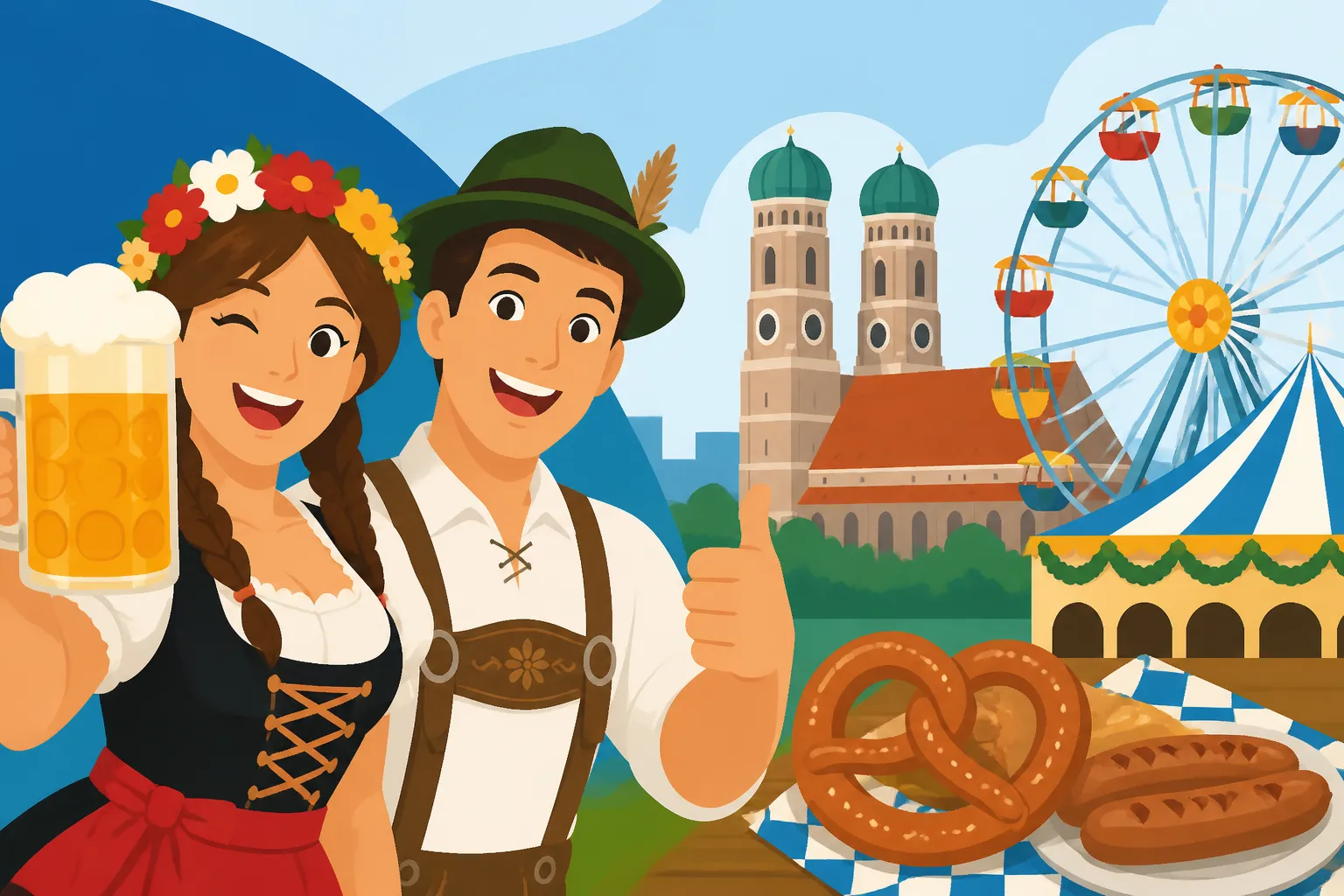
If you really want to embrace the spirit of Oktoberfest, getting into traditional Bavarian attire – a Dirndl for women and Lederhosen for men – is a must. Seriously, about 70-80% of attendees, both local and international, dress up, and it really adds to the festive atmosphere. You’ll feel like an outsider if you don't. While not mandatory, it makes the experience so much more fun!
A Dirndl consists of a bodice, blouse, skirt, and apron. The way you tie the apron bow actually signals your relationship status:
- Bow on the left: Single and ready to mingle!
- Bow on the right: Taken, sorry fellas (or ladies).
- Bow in the middle (front): Virgin (rarely used seriously these days) or undecided.
- Bow in the middle (back): A waitress, or often, a child.
Lederhosen are leather breeches, typically worn with a white or checkered shirt, knee-high socks, and Haferl shoes. You can find authentic Dirndl and Lederhosen in specialized Trachten shops across Bavaria, but many pop-up stores appear in Munich closer to Oktoberfest, offering a range of qualities and prices. While it's tempting to buy cheap options online, quality makes a huge difference in comfort and longevity. A good Dirndl or Lederhosen can be an investment, but it's one you can reuse for future festivals or even just for a fun night out. For a detailed guide on what to pick, have a look at our article, What to Wear to Oktoberfest (Dirndl and Lederhosen).
Essential German Phrases for the Oktoberfest
While many people working at Oktoberfest will speak English, knowing a few key German phrases will go a long way in enhancing your experience and showing respect for the local culture. Germans appreciate the effort, even if your pronunciation isn't perfect.
Here are some absolute must-knows:
| Phrase | Pronunciation | Meaning |
|---|---|---|
| Servus! | ZAIR-voos | Hello/Goodbye (informal, Bavarian) |
| Grüß Gott! | Groos GOT | Hello (formal, religious, Bavarian) |
| Ein Maß, bitte. | Eine Mahss, BIT-teh | One liter of beer, please. |
| Danke schön! | DANK-uh shurn | Thank you very much! |
| Prost! | Prohst | Cheers! |
| Zum Wohl! | Tsoom Vohl | To your health! (Another way to cheer) |
| Entschuldigung. | Ent-SHOOL-dee-gung | Excuse me/Sorry. |
| Wo ist die Toilette? | Voh ist dee Toi-LET-teh? | Where is the toilet? |
| Nochmal, bitte. | NOCK-mahl, BIT-teh | Again, please (for another beer!) |
Practicing these will make your interactions smoother and more enjoyable. Remember to make eye contact when you say "Prost!" and clink glasses. It's a small gesture that goes a long way in making connections. Learning even a handful of these phrases can significantly improve your experience. You can find more useful phrases in our guide, What Are the Most Useful German Phrases for Tourists?.
Inside the Beer Tents: Maximizing Your Experience
The beer tents are the beating heart of Oktoberfest, vibrant with music, laughter, and the clinking of glasses. Getting a spot, ordering your beer, and soaking in the atmosphere is all part of the unique experience.
Securing a Spot: Reservations, Queues, and Strategy
This is perhaps the most crucial piece of advice for any first-timer: getting a seat in a beer tent is not always easy. On weekends, public holidays, and after 3 PM on weekdays, the tents often fill up to capacity, and once they're full, no one else is allowed in. You can’t get served beer without a seat at a table, so this is non-negotiable.
Reservations: The easiest way to guarantee a seat, especially for groups, is to make a reservation directly with the tents. However, these reservations are typically made a year in advance and often require a minimum spend on food and drink vouchers. They are also notoriously difficult for individuals or small groups to secure. If you're planning a trip for next year, start looking into reservations right after this year's festival concludes.
Queues and Strategy: If you don't have a reservation (which is most people), you need a strategy.
- Go Early: This is the golden rule. On a weekend, aim to be at the gates when they open (around 9 AM for tents to start serving at 10 AM). On weekdays, arrive by late morning (10-11 AM) for a better chance.
- Weekday Visits: Weekdays, especially Tuesday and Wednesday, are generally less crowded.
- Explore Different Tents: If one tent is full, try another. Don't waste too much time queuing for a single tent when others might have space. The smaller tents can sometimes be easier to get into.
- Look for "No Reservation" Sections: Some tents have sections reserved for walk-ins. Look for these areas or ask a server.
- Be Patient and Polite: It's a crowded environment, and everyone wants a seat. A friendly smile and a polite request in German (even a simple "Ist hier frei?" – "Is this free?") can sometimes work wonders.
Remember, once you have a seat, you're usually good to stay for a while, as long as you're ordering. Our article, Do You Need Tickets or Reservations for Oktoberfest?, goes into much more detail on this topic.
Ordering Your First Mass: Beer, Food, and Tipping Etiquette
So you've found a seat, congratulations! Now it's time for the main event. Getting the attention of a server (known as a Wiesn-Bedienung) can be a sport in itself, especially in a busy tent. They are incredibly efficient and strong, carrying multiple Mass (one-liter steins) at once.
When you're ready, try to make eye contact and raise a hand politely. Once they approach, order your beer: "Ein Maß, bitte!" (One liter, please!). They will often ask if you want food right away too. If you're hungry, this is your chance. Common dishes include Hendl (roast chicken), Schweinshaxe (roasted pork knuckle), Weisswurst (white sausage, traditionally eaten before noon), and Pretzels. Don't forget, you pay per order directly to your server.
Tipping: Tipping in Germany isn't as high-percentage as in some other countries, but at Oktoberfest, it's customary to round up generously. For example, if your Mass costs €15.50, you might say "Sechzehn Euro, bitte" (€16, please), effectively giving a 50-cent tip. For a larger order, you might round up to the next whole Euro or two. The servers work incredibly hard under immense pressure, so a good tip is always appreciated and encourages good service. For a deeper dive into tipping culture, see our guide on Tipping in Germany: When, Where, and How Much.
Family-Friendly Fun: Beyond the Beer Tents
While Oktoberfest is famous for its beer, it's actually a massive family-friendly fairground during the day. Locals often bring their children to enjoy the rides, games, and non-alcoholic drinks. So don't feel like it's solely for adults.
In addition to the main beer tents, there are numerous smaller, charming tents and food stalls. You can find places offering traditional Bavarian sweets like roasted almonds (gebrannte Mandeln), gingerbread hearts (Lebkuchenherzen), and cotton candy. The rides range from gentle carousels for little ones to exhilarating roller coasters and dizzying swings for teenagers and adults. There's also a traditional "Old Oktoberfest" section called the Oide Wiesn, which often features historical rides, traditional music, and slightly lower beer prices (though it requires a small entrance fee). This area is generally calmer and a fantastic place to experience a more nostalgic version of the festival. Families often visit in the mornings and early afternoons, leaving before the evening crowds become too boisterous.
Beyond the Beer: Other Attractions and Activities
Oktoberfest is so much more than just beer tents. The entire Theresienwiese transforms into a vibrant carnival with a plethora of things to see, do, and eat. Don't limit your experience to just one aspect!
Thrilling Rides and Carnival Games
Take a break from the beer and explore the extensive fairground. You'll find everything from classic Ferris wheels (offering incredible views of Munich and the Alps on a clear day) and merry-go-rounds to high-tech roller coasters and towering drop rides. There are also countless carnival games where you can test your skill to win plush toys or other prizes. It’s the perfect way to spend an hour or two, especially if you’re pacing yourself with the beer or if you’re visiting with family and friends who aren’t big beer drinkers.
Many of these rides have a long history at Oktoberfest, with some being truly iconic. For instance, the "Teufelsrad" (Devil's Wheel) is a Bavarian classic where participants try to stay on a spinning disc as long as possible. The rides operate throughout the day and into the evening, with the flashing lights and music creating an electric atmosphere as night falls. It’s a great way to let loose and experience another side of the Wiesn. Sites like GetYourGuide might offer curated tours or even fast-pass options for some of the more popular attractions, although typically you pay for rides directly at the entrance.
Traditional Bavarian Food and Delicacies (Beyond the Tent)
While the beer tents serve up hearty Bavarian fare, the food stalls dotting the festival grounds offer an even wider array of culinary delights. This is your chance to sample some authentic German street food and sweets.
Beyond the classic Hendl and Schweinshaxe, you absolutely must try a Steckerlfisch, which is fish (usually mackerel) grilled on a stick, incredibly juicy and flavorful. Another popular snack is Obatzda, a creamy Bavarian cheese spread, often served with pretzels. For something sweet, Dampfnudeln (steamed dumplings with vanilla sauce) or Kaiserschmarrn (shredded pancake with apple sauce) are heavenly. Don’t forget the ubiquitous Lebkuchenherzen – gingerbread hearts with cheesy German sayings, perfect for a souvenir or a sweet treat. Exploring these stalls offers a different culinary journey and a chance to experience German Food Culture: Eating and Drinking as a Visitor beyond the main tents. Make sure to try a little bit of everything!
Parades and Special Events: Mark Your Calendar
Oktoberfest isn't just a daily affair; it kicks off with some truly spectacular events and features unique parades throughout its run. If you're a first-timer, witnessing at least one of these is highly recommended.
The grand opening ceremony begins with the Einzug der Wiesnwirte (Parade of the Brewers and Landlords) on the first Saturday of Oktoberfest. This magnificent procession features horse-drawn brewery wagons, musical bands, and the tent landlords themselves, all in traditional attire, making their way to the Theresienwiese. It culminates in the "O’zapft is!" (It's tapped!) ceremony, where the Mayor of Munich taps the first barrel of beer in the Schottenhamel tent, officially declaring Oktoberfest open.
The following day, the Trachten- und Schützenzug (Traditional Costume and Riflemen's Parade) is even more elaborate. Thousands of participants in historical costumes from Bavaria and other European regions march through Munich's city center to the Wiesn. It's a breathtaking display of culture, history, and craftsmanship, with decorated floats, marching bands, and rifle clubs. If your visit coincides with these opening weekend parades, be sure to find a good spot along the route early in the morning – they draw massive crowds. These events are fantastic for photography and offer a deeper appreciation for Bavarian heritage.
Budgeting for the Wiesn: Costs and Smart Spending
Oktoberfest can be an expensive endeavor, but with some smart planning, you can absolutely enjoy it without completely emptying your wallet. It's all about making informed choices.
How Much Does a Mass Cost? Breaking Down Beer and Food Prices
The most significant cost for many will be the beer and food inside the tents. The price of a Mass (one-liter stein) of beer has steadily increased over the years. In 2026, you could expect to pay €14.80 to €15.90 for a liter of beer, depending on the tent. Keep in mind that this is usually just the base price; once you factor in tipping, you’re looking at roughly €16-€17 per Mass. It adds up quickly!
Food prices are also on the higher side within the tents. A half-chicken (halbes Hendl) can cost €13-€15, while a Schweinshaxe might be €20-€25. Pretzels are around €6-€8. If you plan to spend several hours in a tent, budgeting for a few Mass and at least one main meal is essential.
Table: Estimated Oktoberfest Costs (per person, per day)
| Item | Estimated Cost Range (EUR) | Notes |
|---|---|---|
| 1 Liter Beer (Mass) | €14.80 – €15.90 | Plus tip (round up to €16-€17 per Mass) |
| Half Roast Chicken | €13.00 – €15.00 | Hearty and traditional. |
| Large Pretzel | €6.00 – €8.00 | Perfect for snacking. |
| Soft Drink (0.5L) | €5.00 – €7.00 | Non-alcoholic option. |
| Water (0.5L) | €5.00 – €7.00 | Stay hydrated! |
| Ride Ticket | €3.00 – €10.00 | Varies by ride complexity. |
| Souvenir (small) | €5.00 – €20.00 | Beer steins, gingerbread hearts, etc. |
| Public Transport | €8.00 – €10.00 | Day ticket for Munich local transport. |
| Total (modest day) | €50 – €80+ | Assumes 2-3 beers, 1 meal, transport, maybe a small ride. |
| Total (full day) | €100 – €200+ | Assumes more drinks, more food, a few rides, souvenirs. |
Keep in mind these are just estimates, and prices can fluctuate. For more details on managing your overall expenses in Germany, check out Cost of Living in Germany: Budgeting Guide for Expats.
Saving on Accommodation and Travel
As mentioned before, booking early is the number one way to save money on both flights and accommodation. If early booking isn't possible, consider these strategies:
- Stay outside Munich: Explore towns within a 30-60 minute train ride on the S-Bahn. While this adds commute time, it can significantly reduce accommodation costs. Towns like Augsburg, Freising, or Dachau often have more affordable hotels and guesthouses.
- Hostels or Guesthouses: If you're on a budget, hostels offer dorm-style accommodation. Many hostels in Munich are clean and well-maintained.
- Consider Group Travel: Sharing an Airbnb or larger hotel room with friends can split costs effectively.
- Travel during weekdays: Prices for both accommodation and travel tend to be lower during the week compared to the packed weekends.
Avoiding Scams and Tourist Traps
Sadly, where there are large crowds and tourists, there can be opportunistic scammers.
- Ticket Scams: Be wary of anyone trying to sell you beer tent "tickets" or "reservations" outside the official channels. Entry to the festival grounds is free, and beer tent reservations are almost always tied to specific tables and purchased directly from the tents or authorized agencies.
- Overpriced Merchandise: While a souvenir is nice, many stalls outside the main tents will sell generic "Oktoberfest" items at inflated prices. Look for genuine Bavarian craftsmanship if you want something truly special.
- Taxi Rip-offs: Taxis can be expensive, especially late at night. Always ensure the meter is running or agree on a price before starting the journey. Public transport is generally safer and more cost-effective.
- Pickpocketing: Like any large festival, pickpockets operate in crowded areas. Keep your valuables secure, preferably in an inside pocket or a cross-body bag. Don't carry more cash than you need, and consider leaving your passport in your hotel safe.
Safety and Etiquette: Enjoying Oktoberfest Responsibly
Oktoberfest is an incredibly joyful and spirited event, but it's also a massive gathering. A little common sense and awareness of local customs will ensure you have a fantastic, safe, and respectful experience.
Staying Safe in the Crowds
The sheer volume of people at Oktoberfest can be overwhelming, especially in the evenings.
- Designate a meeting point: If you’re with a group, choose a specific landmark or a specific tent entrance as a meeting point in case you get separated, and set a time to meet. Mobile phone reception can be patchy due to network overload.
- Stay hydrated: Beer is dehydrating. Make sure to drink water regularly throughout the day. Water is available in the tents, though it can also be pricey.
- Know your limits: A liter of strong Oktoberfest beer (Wiesn Märzen) is not the same as your average lager. It's potent. Pace yourself. You're there to enjoy the experience, not to get incapacitated.
- Use public transport: As mentioned, don't drive. Public transport is the safest way to get to and from the Wiesn.
- Emergency services: In case of an emergency, remember Germany's universal emergency number is 112 for police and ambulance services. You'll also find first-aid stations staffed by the Bavarian Red Cross directly on the festival grounds. Our guide on Emergency Numbers in Germany: Calling 112, Poison Control, and More has more details.
Navigating Cultural Norms and Respectful Behavior
While Oktoberfest is a party, it's also steeped in Bavarian tradition. Being mindful of local customs will help you integrate and show respect.
- Toast properly: When someone says "Prost!", lift your glass, make eye contact, and clink glasses. It’s bad luck not to!
- Don't stand on tables (unless invited): While standing on benches is common and encouraged during lively songs, standing on tables is generally reserved for the band or very enthusiastic (and often very drunk) individuals. Wait for the crowd to invite you up on a bench.
- Keep toilets clean: German public toilets are generally very clean, and it's expected that you help keep them that way. There might be attendants who expect a small tip (€0.50-€1.00) for their service, especially in the beer tents.
- Respect the Tracht: If you're wearing Dirndl or Lederhosen, wear them with pride and respect for the tradition. Don't treat them as a costume to be defiled.
- Be friendly but not overly boisterous: Germans appreciate good humor and conviviality, but excessive public drunkenness or disrespectful behavior is generally frowned upon. Maintain a good balance.
Emergency Services and Lost & Found
Oktoberfest is a well-organized event, and safety is a high priority.
- First Aid Stations: The Bavarian Red Cross operates a large first aid center directly on the Theresienwiese, clearly marked with a red cross. Don't hesitate to seek help there if you feel unwell or have an injury.
- Police Station: There is also a temporary police station (Polizeiwache) on the grounds for any incidents or emergencies requiring police intervention.
- Lost & Found (Fundbüro): If you lose something valuable, head to the official lost and found office (usually located near the main entrance or an information booth). They collect a vast number of items each year, and you might be surprised at what gets returned. The earlier you report something, the better your chances.
- Children's Lost & Found: There's also a dedicated lost children's station, often located near the main first aid area, where lost children can be cared for until reunited with their parents.
By keeping these points in mind, you're not just ensuring your own safety and enjoyment, but also contributing to the positive atmosphere that makes Oktoberfest such a beloved event. Viel Spaß! (Have lots of fun!)
Disclaimer
Please note that while this guide provides comprehensive information, details such as prices, operating hours, and specific regulations for Oktoberfest can change. It is always recommended to check the official Oktoberfest website or local Munich tourism resources for the most up-to-date information before and during your visit. This article is for informational purposes only and does not constitute official advice.