How to Take a Day Trip to Potsdam From Berlin
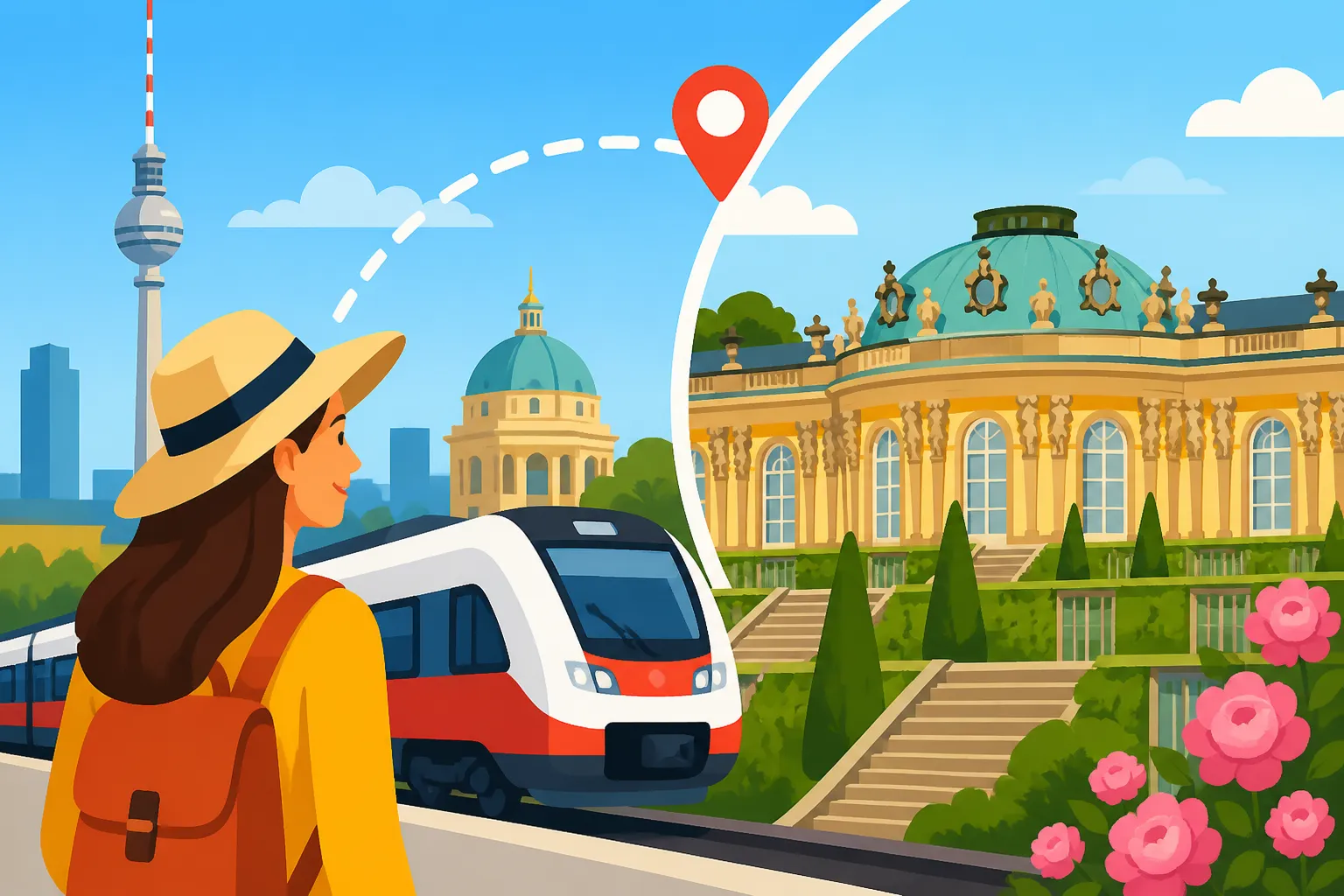
Most people planning a Potsdam day trip from Berlin get stuck on the same three questions. Which train do I take? Does my Berlin ticket even work out there? Will I arrive at Sanssouci only to find the palace tickets sold out? This guide covers each step, from the platform at Berlin Hauptbahnhof to the last tram home, so your day goes smoothly.
Disclosure: This post may contain affiliate links. We may earn a commission at no extra cost to you if you make a purchase through these links. Read full disclosure.
Getting From Berlin to Potsdam Without the Ticket Panic
I made my first trip to Potsdam on a grey Saturday a few weeks after moving to Berlin. I stood at a ticket machine at Friedrichstraße for far too long, trying to work out whether “zone C” was a city, a tariff, or a test. If that sounds familiar, you are in good company. The good news is that Potsdam is one of the easiest escapes from the capital. Once you understand the zone system, the journey takes very little thought.
Understanding the Berlin ABC Zones
Berlin’s public transport network splits into three tariff zones. Zone A covers the inner city inside the S-Bahn ring. Zone B reaches the city limits. Zone C takes in the surrounding area, including Potsdam. Most visitors buy AB tickets for sightseeing in Berlin, and that is the trap. An AB ticket does not cover Potsdam. If a ticket inspector boards your S-Bahn near Griebnitzsee and you only hold AB, you will be fined. “I didn’t know” will not get you off.
You have three sensible options:
- Buy an ABC single ticket each way if you are only making the return trip.
- Buy an ABC day ticket if you plan to use buses and trams around Potsdam as well. This is what most day-trippers should do.
- Use a Deutschland-Ticket if you already have one. It covers the S-Bahn, regional trains, buses and trams in both cities.
If you are not sure whether the Deutschland-Ticket makes sense for your whole stay, I compared the numbers in What Is the Deutschland-Ticket and Is It Worth It?. One small detail catches people out. Paper tickets from the yellow or red BVG and S-Bahn machines often need validating in the small stamping box before you board. Tickets bought in an app are usually valid straight away.
S-Bahn S7 Versus the Regional Express
There are two main rail routes, and both are covered by the same ABC ticket.
The S7 S-Bahn runs from the eastern side of Berlin, through Alexanderplatz, Friedrichstraße, Hauptbahnhof and Zoologischer Garten. It then heads out through Charlottenburg and Wannsee and ends at Potsdam Hauptbahnhof. It stops everywhere, so it is slower. It is also frequent and simple, and you can board it from almost any central station.
The regional trains, usually the RE1, leave from the long-distance platforms at Berlin Hauptbahnhof, Friedrichstraße and Zoologischer Garten. They make very few stops before Potsdam, so they cut the journey time a lot. Despite the “Express” in the name, these are ordinary regional trains. You do not need a reservation or a separate ticket. If you are new to the S-Bahn, read How to Use the Berlin U-Bahn and S-Bahn as a Visitor before you go. It explains the platform signs, which can be confusing at first.
| Option | Where to Board in Berlin | Speed | Best For | Ticket Needed |
|---|---|---|---|---|
| S-Bahn S7 | Alexanderplatz, Friedrichstraße, Hauptbahnhof, Zoo, Wannsee | Slower, many stops | Travellers staying near an S7 station, relaxed pace | ABC zone or Deutschland-Ticket |
| Regional Express RE1 | Hauptbahnhof, Friedrichstraße, Zoologischer Garten | Fastest by rail | Saving time, especially early morning | ABC zone or Deutschland-Ticket |
| Bicycle via Wannsee | Anywhere, often starting by S-Bahn to Wannsee | Slow but scenic | Fit travellers on a dry day | Bike ticket if you take a bike on the train |
| Guided coach or bike tour | Fixed meeting points in central Berlin | Depends on tour | First-timers who want history explained | Included in tour booking |
Checking Connections and Apps
For live departures, I use the DB Navigator app or the BVG app. Both show platform changes and delays as they happen. Platform changes do happen on the regional lines, especially at weekends during engineering works. For help reading the app, see How to Use the DB Navigator App in Germany.
Some visitors like to see every option side by side in one search before they commit, particularly if they are comparing rail with buses. Omio can help with that kind of overview. For a simple hop to Potsdam on local trains, though, you rarely need anything more than a zone ticket from a machine or the official transport app.
Planning Your Day Around Sanssouci and the Old Town
Potsdam is compact compared with Berlin, but it is more spread out than first-timers expect. The palaces of Sanssouci Park sit to the west of the centre. The Dutch Quarter and the old market square sit in the middle. Cecilienhof and the New Garden lie to the north. If you try to walk all of it in one day, your feet will complain by mid-afternoon.
Sanssouci Park and Its Palaces
Sanssouci was the summer retreat of Frederick the Great. The name means “without worries”, which is ironic, given how much worrying visitors do about getting palace tickets. The palace itself is small and admits visitors by timed entry. On sunny weekends, the slots can go well before lunchtime. If seeing the interior matters to you, book a time slot in advance through the official Prussian palaces foundation. Do not count on finding a free slot at the door.
The park itself is a different story. You can wander the grounds without a palace ticket. Walk up the famous vineyard terraces, where the vines are still trained along the steps. Then continue along the long main avenue past the Chinese House. At the far western end you reach the Neues Palais. Frederick had this enormous palace built after the Seven Years’ War, partly to show Prussia’s rivals that the state still had money and power after years of fighting. It is far grander than Sanssouci itself, and it is often far less crowded.
Sanssouci is part of a much larger UNESCO-listed area of palaces and parks around Potsdam and Berlin. I cover how it compares with other listed sites in Germany’s UNESCO World Heritage Sites: A Visitor’s Guide. For a room-by-room approach to the palace, see How to Visit Sanssouci Palace in Potsdam.
The Dutch Quarter, Alter Markt, and Brandenburger Strasse
From Sanssouci, it is a pleasant walk east along Brandenburger Straße, Potsdam’s main pedestrian shopping street. You pass under Potsdam’s own Brandenburg Gate on the way. It is smaller and older than Berlin’s version, and it surprises many visitors who did not know the city had one.
At the end of the street is the Holländisches Viertel, or Dutch Quarter. It is a cluster of red-brick gabled houses originally built to attract Dutch craftsmen. Today the ground floors hold cafés, small galleries and gift shops. It is my favourite spot for a coffee and a slice of cake around two in the afternoon. By then the morning palace crowd has thinned out.
A short walk south brings you to the Alter Markt. The square is framed by the domed Nikolaikirche, the reconstructed city palace that now houses the state parliament, and the Museum Barberini, which is known for its rotating art exhibitions. If the weather turns on you, the Barberini is an excellent rainy-day refuge. Check its opening days before you plan around it.
Cecilienhof, the Glienicke Bridge, and Cold War History
History lovers should head north to the New Garden and Schloss Cecilienhof. This Tudor-style country house hosted the Potsdam Conference at the end of the Second World War, when the leaders of the victorious Allies met to decide the future of Germany. The conference rooms are preserved, and they are moving in a quiet way.
A tram ride from the centre takes you to the Glienicke Bridge. It crosses the water between Potsdam and Berlin. During the Cold War it was the border between East and West, and it became famous for spy exchanges. It is a powerful place to stand when you remember that the Berlin you came from was once on the other side of a heavily guarded line. To build on that context back in the city, see Berlin’s 20th-Century History: Wall, Memorials, and Museums and How to Visit Cold War Sites in Berlin.
Getting Around Potsdam and Building a Realistic Itinerary
This is the part where many day-trippers go wrong. They arrive at Potsdam Hauptbahnhof, look at a map, decide everything is walkable, and set off. Two hours later, they reach Sanssouci tired and grumpy, with a palace time slot already missed. You don’t have to repeat that mistake.
Buses, Trams, and Bikes Inside Potsdam
Potsdam Hauptbahnhof is the transport hub. From the station forecourt, buses run directly towards Sanssouci and the Neues Palais. Bus 695 is the classic route that most visitors use. Trams run from the station into the centre and towards Luisenplatz near the Brandenburg Gate. They also run north towards the Glienicke Bridge, which is the end of the line for tram 93. Your ABC day ticket or Deutschland-Ticket covers all of this.
Cycling is another option, and an excellent one. Potsdam is flat around the centre, and the paths through the parks are lovely. Some routes inside Sanssouci Park are restricted for bikes, so watch the signs. For rental schemes and riding rules, see Cycling in German Cities: Bikes and Bike-Sharing. If you prefer someone else to handle the route and explain the history as you ride, guided bike and walking tours of Potsdam are listed on GetYourGuide. Many of them start in Berlin and include the train journey.
A Sample One-Day Itinerary
Here is a pace that has worked well for me and for every friend I have sent to Potsdam:
- Leave Berlin early on the RE1 from Hauptbahnhof or Friedrichstraße, or take the S7 if it is closer to where you are staying.
- At Potsdam Hauptbahnhof, buy or check your ABC day ticket and take the bus towards Sanssouci.
- Arrive for a morning palace time slot at Sanssouci, then walk the terraces and the main avenue towards the Neues Palais.
- Take the bus or tram back towards Luisenplatz. Walk through the Brandenburg Gate and along Brandenburger Straße for lunch.
- Spend the early afternoon in the Dutch Quarter with coffee and cake.
- Choose one afternoon focus. Pick either the Alter Markt and Museum Barberini, or the tram north to Cecilienhof and the Glienicke Bridge. Trying to do both usually means rushing.
- Return to Potsdam Hauptbahnhof and take the RE1 or S7 back to Berlin in the early evening.
| Time of Day | Stop | Getting There | Tip |
|---|---|---|---|
| Early morning | Berlin to Potsdam Hbf | RE1 or S7 | Validate paper tickets before boarding |
| Morning | Sanssouci Palace and terraces | Bus from Hbf | Book a timed palace slot ahead |
| Late morning | Neues Palais | Walk through the park | Quieter than Sanssouci itself |
| Lunch | Brandenburger Straße | Bus or tram to Luisenplatz | Side streets are calmer than the main drag |
| Afternoon | Dutch Quarter | Short walk | Best for cafés and photos |
| Late afternoon | Alter Markt or Cecilienhof and Glienicke Bridge | Walk or tram | Choose one, not both |
| Evening | Return to Berlin | RE1 or S7 | Check the app for weekend engineering works |
Seasons, Sundays, and Opening Days
Potsdam changes a lot with the seasons. In late spring and summer, the parks are at their best, but the palace slots fill fastest and the paths get busy. In autumn, the trees in Sanssouci Park turn gold, and the crowds thin noticeably. That makes it my favourite season for this trip. In winter, some palaces reduce their hours or close entirely for the season. Always check the official opening calendar before you go.
Sundays deserve a special mention. The palaces, museums and many cafés are open. Supermarkets and most shops on Brandenburger Straße, however, are closed by law. For more on what you can and cannot get on a Sunday, see What Closes on Sundays in Germany?. Also remember that many German palaces and museums close on one weekday, often Monday. Check before you build your day around a single building.
Should You Stay Overnight or Pair Potsdam With Other Trips?
Most people treat Potsdam as a day trip, and it works perfectly well that way. But I have met plenty of visitors who wished they had given it more time, especially photographers and garden lovers. Others try to squeeze Potsdam into a half-day between Berlin museums, and that rarely works.
When an Overnight Stay Makes Sense
If you want to see Sanssouci in the soft early morning light before the tour groups arrive, sleeping in Potsdam is a real advantage. The same goes for anyone who wants to add Park Babelsberg or the film studios in Babelsberg to the trip. Spending a night in the Dutch Quarter, or near the old town, also lets you enjoy the city after the day-trippers have caught their trains home. Potsdam feels very different then, almost like a small town.
Booking.com lists a good spread of guesthouses and small hotels in central Potsdam. As always, compare cancellation terms and read the location details carefully. A hotel described as “Potsdam” can sometimes be well outside the centre. If you would rather keep your base in the capital and just take an early train, see What’s the Best Area to Stay in Berlin?. It suggests neighbourhoods with quick access to the S7 and RE1.
Pairing Potsdam With Other Berlin Escapes
Potsdam is only one of several excellent escapes from Berlin. The S7 also stops at Wannsee, where you can visit the lakes or make a sobering visit to the House of the Wannsee Conference memorial. It would be very hard to fit Wannsee into the same day as a full Potsdam itinerary, though. I would treat it as a separate outing. For other options within easy reach of the capital, see Best Day Trips From Berlin.
My honest advice after many trips is simple. Buy the right zone ticket, book your Sanssouci slot early, take the regional train out, and pick one afternoon theme rather than trying to see everything. Potsdam rewards a slower pace. You will probably want to go back anyway, perhaps when the leaves turn in autumn.
Disclaimer
This article is for general informational purposes only and does not constitute professional advice. Laws, prices and regulations vary by location and change over time. Consult a qualified professional for guidance on your specific situation.