Germany to France: Paris and Strasbourg by TGV and ICE
Oh, the allure of Paris! The charm of Strasbourg! As expats living in Germany, we often dream of hopping over to France for a weekend, but the thought of navigating different train systems, language barriers, and booking platforms can be enough to make anyone just stay home and watch Netflix. Believe me, I’ve been there, staring at various websites, wondering if I'm getting the best deal or even understanding the right station. This guide is here to untangle all that, showing you exactly how to make those dream trips to Paris and Strasbourg a reality, effortlessly, using high-speed TGV and ICE trains, with one simple tool.
Disclosure: This post may contain affiliate links. We may earn a commission at no extra cost to you if you make a purchase through these links. Read full disclosure.
Why Take the Train from Germany to France?
When you’re eyeing a trip from Germany to its charming neighbor, France, the first question is always: how do I get there? While flying might seem like the quickest option at first glance, and driving offers flexibility, I've found that for cities like Paris and Strasbourg, the train truly wins hands down. As expats, we're all about maximizing our time and minimizing hassle, aren't we?
The Joys of High-Speed Rail Travel
Let's be real, airports are a necessary evil, but "joyful" isn't often the word we'd use to describe them. Think about it: arriving hours early, navigating security lines that feel longer than a German tax form, waiting for luggage, and then facing another commute from the airport to the city center. It's exhausting, time-consuming, and frankly, a mood killer before your holiday even begins.
High-speed trains like Germany's ICE (InterCity Express) and France's TGV (Train à Grande Vitesse) completely bypass all that aggravation. You stroll into a city-center station, find your platform, hop on, and within minutes, you're whizzing through picturesque landscapes. No taking off your shoes, no tiny liquids bag, no worrying if your carry-on is just an inch too big. You can actually relax, read a book, catch up on work with reliable Wi-Fi, or simply gaze out the window as the German countryside seamlessly blends into the French. It’s a completely different travel experience – one where the journey itself becomes part of the adventure, not just a means to an end. It truly allows you to enjoy the process of Getting Around Germany: Trains, Buses, Flights, and Car Hire and beyond.
Sustainability and Convenience for Expats
Beyond the sheer comfort, there's a growing awareness of our environmental footprint. Opting for the train dramatically reduces your carbon emissions compared to flying, which feels good and aligns with a lot of the green initiatives we see here in Germany. For those of us living abroad, it's not just about the planet; it's about practical convenience.
Imagine: you’ve packed a slightly larger suitcase because you want options for that Parisian café look or some Alsatian souvenirs. No problem! Trains rarely have the draconian baggage limits of airlines. Got kids? They have space to move around, you can bring your own snacks and drinks, and the whole experience is just less stressful. From Frankfurt Hauptbahnhof, you can be in the heart of Paris, Gare de l'Est, in less than four hours, ready to explore. The convenience is unbeatable. And when it comes to finding and comparing all these train, bus, and even flight options in one straightforward place, platforms like Omio really shine, cutting through all the confusion and language barriers we so often face.
Understanding the German (ICE) and French (TGV) High-Speed Networks
Navigating Europe by rail is a fantastic experience, and the German ICE and French TGV trains are at the forefront of this network. For expats in Germany, understanding how these high-speed titans work together can unlock a world of seamless travel opportunities to France.
ICE and TGV: Your Chariots Across Borders
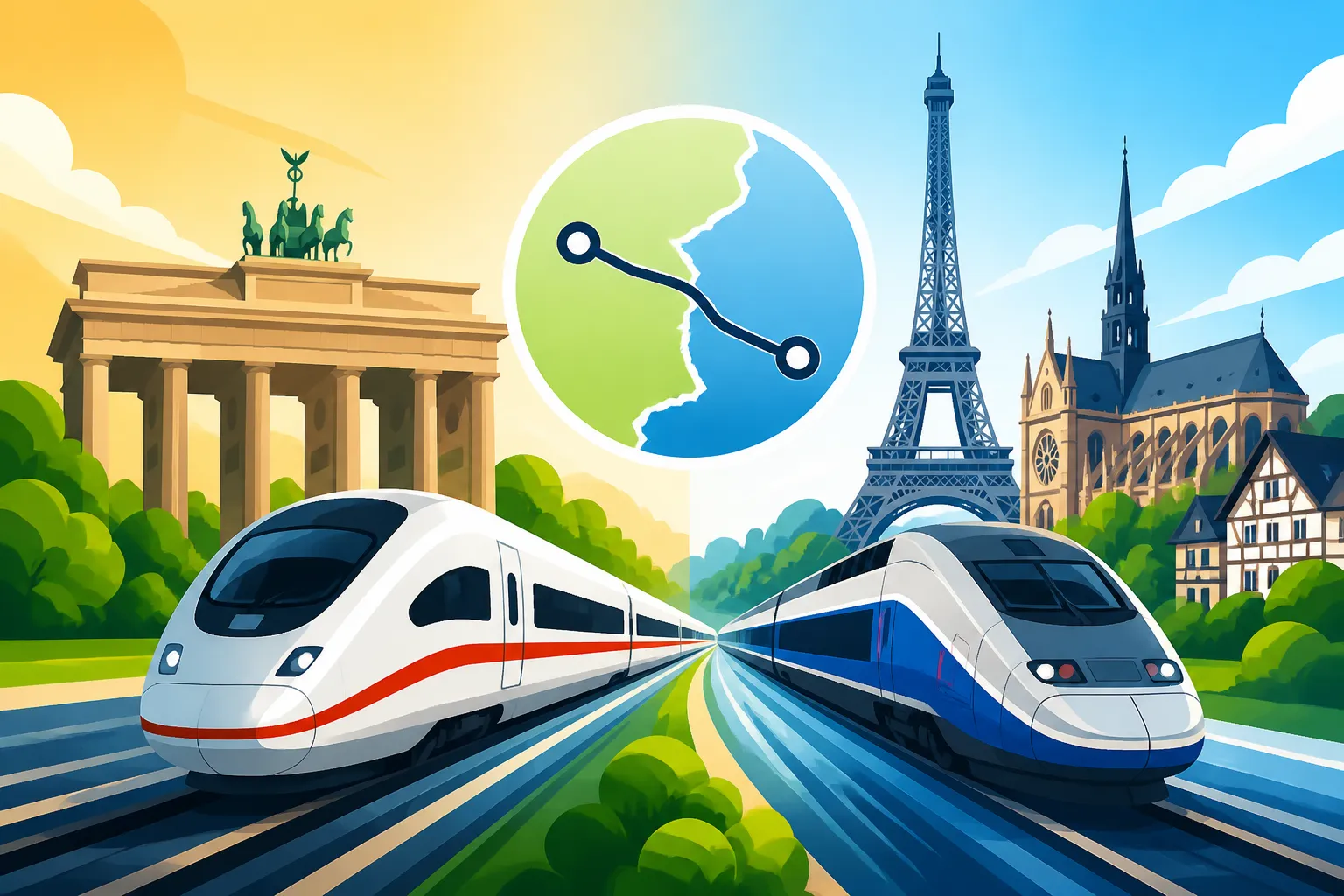
The ICE (InterCity Express) is Germany's pride and joy, a sleek, white high-speed train known for its comfort, speed, and efficiency. It connects major German cities and extends its reach into neighboring countries. The TGV (Train à Grande Vitesse), on the other hand, is France's legendary high-speed network, famous for breaking speed records and connecting French cities with incredible swiftness.
What’s truly wonderful for cross-border travel between Germany and France is their collaborative spirit. Many routes are operated by a joint venture, often referred to as the "Deutsch-Französischer TGV" or simply as TGV/ICE. This means you might board a train in Frankfurt with an ICE logo, but it's technically a TGV model, or vice-versa. Don't worry about the branding too much; what matters is the consistent high-quality experience. These trains boast speeds of up to 320 km/h (around 200 mph), offering amenities like onboard Wi-Fi (though signal can be spotty in tunnels, as we know!), power sockets at every seat, and a dining car or bistro (the Bordrestaurant or Bordbistro in Germany, or the TGV Bar in France) where you can grab a coffee, a snack, or even a full meal.
You'll typically find two classes: 2nd class (standard, very comfortable) and 1st class (more spacious seating, often quieter, and sometimes includes a newspaper or a small snack/drink depending on the route and provider). If your journey is long, or you simply want to treat yourself, 1st class can be a lovely upgrade.
Key Routes and Hubs for France Travel
For those of us in Germany looking to explore France, certain cities act as fantastic departure hubs, offering direct or easily connected high-speed routes.
Major German departure cities for France:
- Frankfurt am Main: Often seen as the main gateway from Germany to France, offering frequent direct connections to Paris and easy connections to Strasbourg.
- Stuttgart: Another excellent hub, especially for direct routes to Paris and Strasbourg.
- Karlsruhe: A smaller city but a crucial interchange, often serving as a stop on routes from Frankfurt/Stuttgart to Paris.
- Munich: While further east, Munich offers connections to Paris, often requiring a change in Stuttgart or Karlsruhe, or a direct overnight service.
- Saarbrücken: Located right on the French border, it has good regional connections that link up with the TGV network.
Major French arrival cities:
- Paris (Gare de l'Est): The primary arrival station for trains from Germany, conveniently located in the city center with excellent Metro connections.
- Strasbourg (Gare de Strasbourg): A beautiful city right on the German border, it's a key destination and a hub for onward travel within Alsace.
The key to unlocking the best routes and prices is to book in advance. Seriously, this isn't like popping down to the local U-Bahn station for a quick ride. High-speed international tickets, especially for popular routes, operate on a dynamic pricing system. The earlier you book, the cheaper it typically is. This is precisely where Omio becomes your best friend, allowing you to compare all these various routes and prices from different operators in one go, making sure you don't miss out on those early bird specials.
Your Journey to Paris by High-Speed Train
Ah, Paris! The city of lights, love, and endless croissants. Getting there from Germany by high-speed train is not just efficient; it’s part of the romantic journey itself. Forget the hassle of airport transfers; you'll arrive right in the heart of the city, ready to embrace all things French.
Direct Connections from Germany to Paris
For many expats, a direct train to Paris is the holy grail of weekend getaways. Thankfully, several major German cities offer seamless, direct routes that make this dream an easy reality.
- Frankfurt to Paris: This is perhaps the most popular and frequent route. You can typically find direct ICE or TGV trains from Frankfurt Hauptbahnhof to Paris Gare de l'Est. The journey time hovers around 3 hours and 40 minutes, which is roughly the same amount of time you’d spend getting to the airport, through security, flying, and then traveling into Paris from Charles de Gaulle. Except on the train, you’re sitting comfortably the entire time, without having to take off your shoes.
- Stuttgart to Paris: Another fantastic option for those in the southwest. Direct TGV trains run from Stuttgart Hauptbahnhof to Paris Gare de l'Est, taking approximately 3 hours and 10 minutes. It's incredibly fast and convenient.
- Munich to Paris: While Munich is further east, there are still excellent connections. Many services will involve a quick and easy change in either Stuttgart or Karlsruhe, adding a little time but still keeping the total journey very manageable, often around 6 hours. Sometimes, there are even direct overnight options, allowing you to wake up in Paris!
Upon arrival at Paris Gare de l'Est, you'll find yourself in a bustling, historic station that's perfectly integrated into the city's transport network. You can easily connect to the Paris Metro (lines 4, 5, 7) or various bus routes to reach your accommodation or jump straight into sightseeing. The beauty is that you step off the train and boom, you're in Paris, no further major travel needed. Finding and comparing these direct options, along with potential connections, can be a headache, but Omio simplifies this by showing you all available routes, speeds, and prices from different operators side-by-side.
Booking Your Paris Train Tickets: Making it Easy with Omio
Now, let's talk about the practical side of actually getting those tickets. This is where Omio truly becomes your indispensable travel companion. Instead of hopping between Deutsche Bahn (DB) and SNCF (French national railway) websites, possibly wrestling with different languages and payment methods, Omio pulls everything together in one place.
Here’s how Omio simplifies the booking process:
- Search: Head to Omio and input your departure city in Germany (e.g., Frankfurt) and your destination (Paris).
- Compare: Omio doesn't just show you train options; it also compares bus routes and even flights on the same screen. This multi-modal approach is fantastic for making an informed decision, even if you’re set on the train. For a journey like Frankfurt to Paris, you'll immediately see the various ICE and TGV timings and prices.
- Select: Choose the train journey that best fits your schedule and budget. You can filter by price, duration, number of changes, and even the train operator.
- Book: Once you’ve made your choice, you can book directly through Omio. The platform supports various languages and currencies, which is a massive relief for us expats who are tired of mental currency conversions!
Tips for booking with Omio:
- Book Early: As mentioned, dynamic pricing means booking several weeks or even months in advance can significantly reduce your ticket cost.
- Flexibility: If your dates are flexible, use Omio's flexible date search to see if shifting your travel by a day or two yields cheaper fares.
- E-Tickets: Most tickets booked through Omio are e-tickets, which you can keep on your phone or print at home. No need to fumble with ticket machines or worry about losing a physical ticket.
Using Omio transforms a potentially complicated international booking process into a smooth, intuitive experience. It’s like having a local travel agent who speaks your language and knows all the tricks to find the best deals. This really helps with Travel Logistics in Germany: Money, Safety, and Connectivity, ensuring your trip starts on the right foot.
Discovering Strasbourg by High-Speed Rail
If Paris is the grand dame, Strasbourg is its charming, slightly whimsical cousin, full of history and a unique Franco-Germanic blend. It’s an ideal short trip from Germany, and high-speed rail makes it incredibly accessible.
Seamless Travel to the Heart of Alsace
Strasbourg, the capital of the Alsace region, is literally just across the Rhine. It's renowned for its stunning Gothic cathedral, the picturesque La Petite France quarter, and its role as a European capital (housing the European Parliament and Council of Europe). For German expats, it's a fantastic day trip or a relaxing weekend getaway, offering a taste of French culture with a familiar German influence.
The high-speed train connections to Strasbourg are just as efficient as those to Paris, if not more so, given its proximity.
- Stuttgart to Strasbourg: This is one of the quickest and easiest routes. Direct TGV trains can get you from Stuttgart Hauptbahnhof to Strasbourg Gare in a mere 1 hour and 20 minutes. It's almost faster than some commutes within a German city!
- Karlsruhe to Strasbourg: Even quicker, from Karlsruhe Hauptbahnhof, you can be in Strasbourg in less than 40 minutes on a direct TGV. This makes Karlsruhe an excellent jumping-off point.
- Frankfurt to Strasbourg: While often requiring a change in Karlsruhe or Stuttgart, the total journey time is still very reasonable, typically around 2 hours. The connections are usually smooth and well-timed.
The Gare de Strasbourg is a striking station, encased in a modern glass shell that juxtaposes its historic architecture. It's situated very close to the city center, meaning you can step off the train and be exploring the cathedral or strolling through Petite France within minutes. It’s these kinds of direct, city-center connections that make train travel so appealing and eliminate the wasted time and stress of airports. Strasbourg is truly a gem, offering incredible food, beautiful architecture, and a wonderful atmosphere for a Day Trips and Weekend Getaways Across Germany experience, just a little further afield.
Planning Your Strasbourg Adventure with Omio
Just like with Paris, Omio is your go-to for planning your Strasbourg adventure. The beauty of the platform is its consistency and clarity, no matter which French city you're aiming for.
When you plug in your German departure city and Strasbourg as your destination, Omio will quickly present you with all the viable train options from various operators. You'll see the direct TGV routes, as well as routes with easy connections, allowing you to choose based on speed, price, and your preference for direct travel or a quick change.
Key considerations for Strasbourg via Omio:
- Flexibility vs. Fixed Tickets: For a day trip to Strasbourg, you might consider booking a slightly more flexible ticket if you're unsure of your return time, although these often come at a higher price. If your plans are set, lock in a fixed, cheaper fare. Omio shows you the differences clearly.
- Regional Exploration: Once in Strasbourg, you might be tempted to explore more of the Alsace region, known for its charming villages and wine routes. Omio can help you find regional train or bus connections from Strasbourg to places like Colmar or Riquewihr with the same ease.
- Price Alerts: If you’re planning far in advance and want to snag the absolute best deal, keep an eye on prices. Omio doesn’t have a specific "price alert" feature for individual routes yet, but regularly checking a few weeks out through the platform will help you track trends and grab a good deal as soon as it appears.
Whether it’s a spontaneous day trip or a planned long weekend, Omio removes the complexity, allowing you to focus on the exciting part: experiencing the unique culture and beauty of Strasbourg.
Tips for a Smooth Cross-Border Train Journey
Taking the train from Germany to France is generally a breeze, but a few insider tips can make your journey even smoother. As an expat who's traversed these routes many times, I've picked up a few things that help avoid those little moments of travel frustration.
Essential Planning and Packing Advice
Preparation is key, but don't overthink it. The beauty of train travel is its simplicity.
- Book Early, Really Early: I cannot stress this enough, especially for popular routes like Frankfurt to Paris. Train tickets, particularly the high-speed international ones, are often cheaper the further in advance you book. If you know your travel dates, aim to book at least 1-2 months out on Omio to snap up the best fares. Waiting until the last minute will almost always mean paying a premium, sometimes double or triple the early bird price. Think of it like getting cheaper flights – same principle applies.
- Consider 1st Class: For longer journeys, or if you're celebrating, upgrading to 1st class can be worth it. You get more legroom, generally quieter carriages, and sometimes a complimentary newspaper or a light snack/drink (though this varies greatly by operator and specific route). Omio will show you the price difference clearly, so you can weigh the pros and cons.
- Passport/ID: While both Germany and France are part of the Schengen Area, meaning no routine passport checks at the border, it is absolutely essential to carry a valid passport or national ID card. Train staff (and certainly police at random checks) have the right to ask for identification, and you don't want to be caught without it. Keep it easily accessible, not buried at the bottom of your bag.
- Pack Smart for the Train: Unlike planes, there are generous luggage allowances on trains. However, you'll still need to manage your bags yourself. Pack a smaller day bag with essentials for easy access (snacks, water, entertainment, medications). Make sure your larger luggage can be comfortably lifted into overhead racks or stored in designated areas at the end of the carriage. A good book, noise-canceling headphones, and a fully charged power bank are always wise additions. Using Omio helps you focus on these practicalities by streamlining the ticket process. Don't forget to consider Travel Insurance for Trips to and Within Germany for complete peace of mind, just in case.
Navigating Stations and Onboard Etiquette
German and French train stations are generally well-organized, but knowing a few things in advance can save you frantic searching.
- Arrive Early (But Not Too Early): While you don't need to arrive hours in advance like for a flight, aim to be at the station at least 20-30 minutes before departure, especially at large hubs like Frankfurt Hauptbahnhof or Paris Gare de l'Est. This gives you time to check the departure boards (look for "Abfahrt" in Germany, "Départs" in France), find your platform (Gleis in German, Voie in French), grab a coffee, and locate your carriage (which can be long trains!).
- Finding Your Seat: Your ticket will typically specify your carriage number (Wagen in German, Voiture in French) and seat number. Look for signs on the platform and on the train doors indicating carriage numbers.
- Onboard Service: Both ICE and TGV trains have a dining car or bistro. In the German ICE, it's the Bordrestaurant or Bordbistro, offering hot meals, snacks, and drinks. French TGVs have a Bar car. Feel free to bring your own food and drinks onboard as well – a common practice.
- Train Etiquette: Generally, Germans value quiet. If you're in a quiet zone (marked Ruhebereich or with a "no phone" symbol), keep conversations to a minimum and use headphones for media. In other areas, conversations are fine, but keep your voice down. Be mindful of storing your luggage efficiently so it doesn't block aisles or other passengers' space.
- Dealing with Delays: While high-speed trains are generally punctual, delays can happen, especially in winter or due to technical issues. Stay calm, check the onboard announcements (often in multiple languages), and use the Omio app for real-time updates if connected. Most large stations have information desks where staff can assist with re-bookings if a connection is missed due to a delay. This applies to both the High-Speed Trains in Germany ICE Deutsche Bahn Routes and Savings and the French TGV network. For short urban journeys, remember your tips on Getting Around German Cities U-Bahn, S-Bahn, Trams, and Buses might be useful, but for international, high-speed travel, trains are a different beast entirely.
Optimizing Your Booking Experience with Omio
Now, let's circle back to why Omio is truly the hero of your cross-border train adventures. It's more than just a website; it's a strategic partner for hassle-free European travel, designed with the expat's unique needs in mind.
Beyond Just Booking: Omio's Added Value
The real brilliance of Omio isn't just that it shows you tickets; it's how it makes the entire travel planning process understandable and manageable, especially when dealing with multiple countries and operators.
- Comprehensive Comparison: Think about it: Germany has Deutsche Bahn, France has SNCF. Bus companies like FlixBus also offer international routes. Omio brings all these options from different providers onto one clear screen. You don't need to jump between websites, trying to compare apples and oranges in different languages and currencies. Omio does the heavy lifting, giving you an unbiased view of train, bus, and even flight options, allowing you to choose what's genuinely best for your trip – whether that's the fastest, the cheapest, or the most comfortable. This comparison feature is invaluable for us foreigners who aren't fluent in every local transport system.
- Real-time Updates and Notifications: Once you've booked your ticket through Omio, the journey doesn't end there. The Omio app (which I highly recommend downloading) provides real-time updates on your journey. This means if there's a delay, a platform change, or any other disruption, you'll be notified directly on your phone. This is a huge stress-reducer, especially when you're in an unfamiliar station.
- Seamless Booking Management: Need to access your e-ticket? Change a booking (if your ticket conditions allow)? Or simply review your itinerary? Omio's app makes all of this incredibly straightforward. It consolidates all your bookings, regardless of the operator, into one easy-to-manage interface.
- Multilingual Support and Currency Options: This is a big one for expats. Omio offers its platform and customer support in multiple languages, and you can pay in your preferred currency. This eliminates those common frustrations of language barriers during the booking process or unexpected conversion fees.
In essence, Omio is built to take the complexity out of European travel, making it the absolute go-to for planning journeys from Germany, simplifying the often-daunting task of navigating foreign transport systems. It’s definitely easier than wrestling with different SIM cards; instead, consider using Mobile Data and eSIMs for Travel in Germany for better connectivity.
Future-Proofing Your European Adventures
The convenience of Omio isn't limited to just Germany and France. Once you've experienced how easy it is to book your trips to Paris and Strasbourg, you'll find yourself reaching for it again and again for future European adventures. Whether you're planning a trip to the scenic The Rhine Valley Castles, Wine, and River Towns, heading south to Italy, or exploring Eastern Europe, Omio continues to be a reliable companion, offering the same comprehensive comparison and seamless booking experience.
It truly future-proofs your European travel planning, giving you one trusted platform for all your transport needs. So, instead of getting bogged down in the intricacies of different national railway websites or bus line portals, you can simply open Omio, type in your destination, and let it do the hard work. This allows you to focus on the exciting parts of travel – like planning your itinerary, trying new foods, and soaking in the culture – rather than the logistics. It's all about making your travel more enjoyable and less about the stress, ensuring you're ready to embrace Travel Tips for Travelers Staying Healthy During Trips Around Europe without the added booking headaches.
Ready to explore the enchanting cities of France? Don't let the travel logistics hold you back. Head over to Omio, input your destination, and let the adventure begin!
Popular German to French Train Routes: A Quick Overview
To give you a clearer picture, here’s a table outlining some popular high-speed train routes from Germany to France. Keep in mind that prices are estimates and vary wildly based on how far in advance you book, time of day, and demand. Omio will always show you the most up-to-date and specific pricing.
| Route | Approx. Duration | Direct/Connection | Est. Price Range (One-Way, 2nd Class, booked in advance) | Main German Departure Station | Main French Arrival Station |
|---|---|---|---|---|---|
| Frankfurt to Paris | 3h 40m | Direct | €39 – €100+ | Frankfurt Hauptbahnhof | Paris Gare de l'Est |
| Stuttgart to Paris | 3h 10m | Direct | €39 – €100+ | Stuttgart Hauptbahnhof | Paris Gare de l'Est |
| Munich to Paris | 5h 50m – 6h 30m | 1-2 Connections | €59 – €120+ | München Hauptbahnhof | Paris Gare de l'Est |
| Frankfurt to Strasbourg | 2h 00m | 1 Connection | €29 – €60+ | Frankfurt Hauptbahnhof | Strasbourg Gare |
| Stuttgart to Strasbourg | 1h 20m | Direct | €19 – €50+ | Stuttgart Hauptbahnhof | Strasbourg Gare |
| Karlsruhe to Strasbourg | 0h 40m | Direct | €19 – €40+ | Karlsruhe Hauptbahnhof | Strasbourg Gare |
Note: Prices can fluctuate significantly. Always check Omio for the best and most current fares for your specific travel dates.
Disclaimer
The information provided in this guide is for general informational purposes only and does not constitute professional advice. While we strive to keep the information up-to-date and correct, travel regulations, prices, and service availability can change rapidly. Always verify details with the official sources or your chosen booking platform, like Omio, before making travel arrangements.