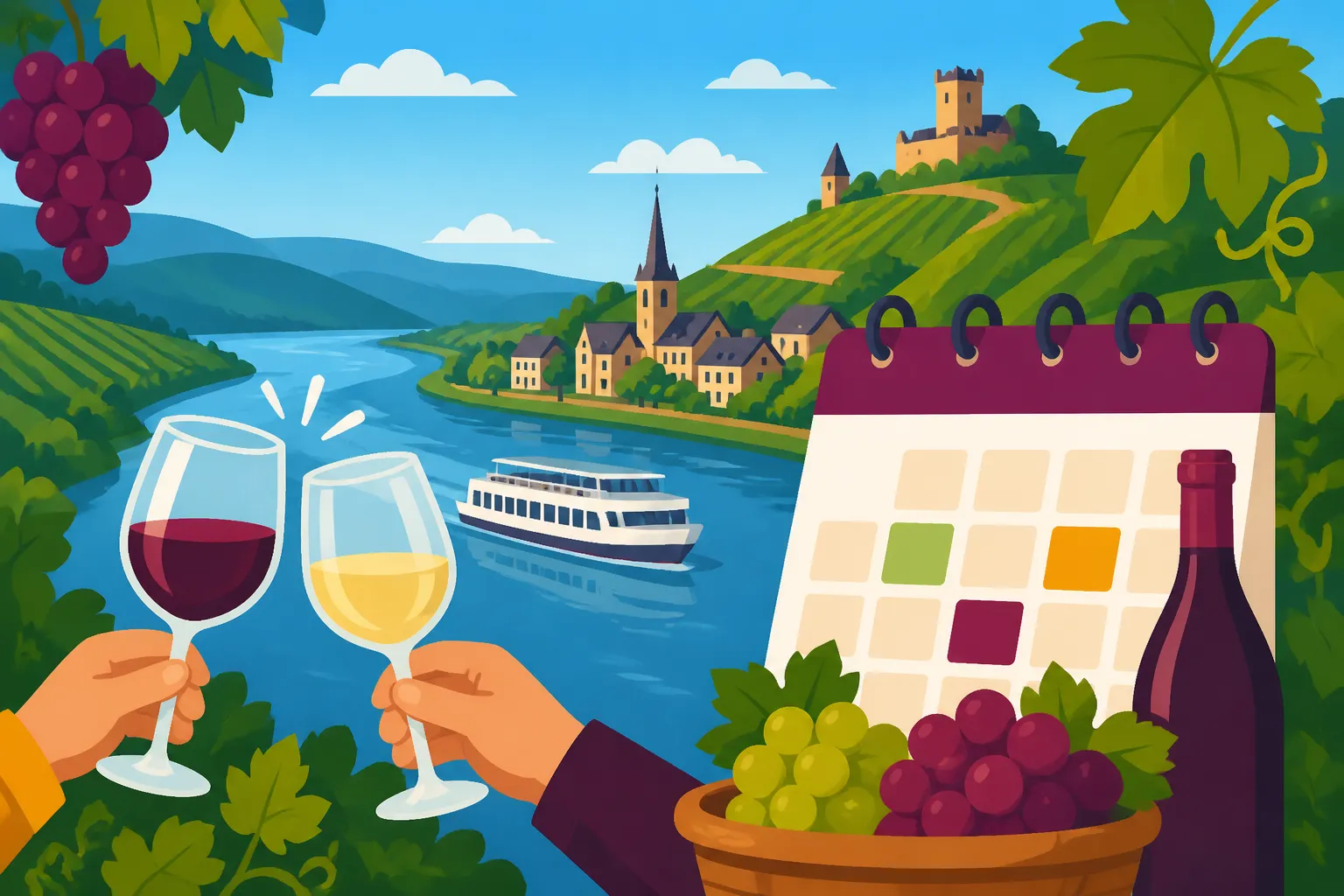
Wine Festival Season on the Rhine and Moselle: Booking Around the Calendar
Ah, the German wine festival season! If you’re anything like me, you’ve probably seen those idyllic photos – fairy lights strung between ancient trees, riverboats gently drifting by, and people clinking glasses of crisp Riesling or fruity Spätburgunder. It looks like a dream, right? And it absolutely is, but trying to snag a decent place to lay your head during these peak times, especially along the iconic Rhine and Moselle rivers, can quickly turn that dream into a logistical nightmare. Forget last-minute bookings; this guide is here to help you navigate the magic and mayhem, ensuring you lock down the perfect stay, with a special nod to how Booking.com can be your secret weapon.
Disclosure: This post may contain affiliate links. We may earn a commission at no extra cost to you if you make a purchase through these links. Read full disclosure.
The Magic and Mayhem of German Wine Festival Season
Germany, for all its beer-loving fame, is a serious wine-producing nation, especially in its western and southwestern regions. When autumn rolls around, or even late spring for some early blossoms, towns and villages along the rivers burst into life with wine festivals (Winzerfeste). These aren't just quaint local gatherings; they are vibrant celebrations deeply rooted in centuries of tradition, drawing crowds from all over Germany and beyond.
Why German Wine Festivals Are a Must-Experience
Let me tell you, there's nothing quite like it. You're standing in a cobbled marketplace, maybe by the river's edge, surrounded by timber-framed houses, the air thick with the scent of fermenting grapes and sizzling regional delicacies. Small, family-run wine stands offer tastings of their latest vintages, often poured directly by the winemaker themselves. You get to try wines that rarely make it beyond the local region, chatting with the producers, and soaking in an atmosphere of pure Gemütlichkeit (coziness and camaraderie).
It's a chance to truly immerse yourself in local culture, far removed from the tourist traps of bigger cities. You'll hear brass bands playing traditional tunes, see locals in their finest attire, and taste everything from Federweißer (the young, partially fermented wine) to robust Spätburgunder (Pinot Noir) and the famous, versatile Riesling. The food is equally delightful – hearty regional fare like Zwiebelkuchen (onion tart), Flammkuchen (a thin, crispy tart with various toppings), and grilled sausages. It’s an authentic slice of German life that many expats and tourists miss out on. However, because these events are so cherished, they attract enormous crowds, which means accommodation disappears faster than a glass of good Riesling on a warm evening!
The Seasonal Calendar: When to Catch the Festivities
The German wine festival season generally kicks off in late spring, picking up pace in the summer, and hitting its absolute peak in late August, September, and early October. This is when the harvest is in full swing, and many towns celebrate the bounty with their biggest Winzerfeste. Earlier in the year, you might find smaller festivals celebrating specific wines or even the blooming of the vines. Later, into October, many places host Federweißerfeste, dedicated to the cloudy, sweet, and still-fermenting young wine that pairs perfectly with hearty onion tart.
For example, the famous Rüdesheimer Weinfest in the Rheingau usually takes place in late August, drawing thousands. The Moselle region has its own calendar of events, with towns like Bernkastel-Kues hosting their large Wine Festival of the Middle Moselle in early September. These dates are pretty consistent year-to-year, but always double-check the local tourism office websites well in advance. Trust me, if you try to book a room a month out for one of these major festivals, you’ll be out of luck, or paying an exorbitant amount for a broom closet. This is where planning ahead and knowing your booking tools becomes absolutely critical.
Navigating the Rhine and Moselle Wine Regions
When we talk about German wine festivals, the Rhine and Moselle valleys are truly at the heart of it all. These two regions, while geographically close, offer distinct landscapes, wine styles, and festival atmospheres.
Rhine Valley: Castles, Riesling, and River Romance
The Rhine Valley, especially the Middle Rhine and the Rheingau, is iconic. Think dramatic cliffs crowned with ancient castles, picturesque villages nestled alongside the river, and endless rows of steep vineyards. This region is world-renowned for its Riesling, which thrives on the slate and quartz soils, producing elegant, mineral-driven wines.
Towns like Rüdesheim am Rhein in the Rheingau are famous for their lively Drosselgasse, a narrow lane packed with wine taverns and live music, which becomes the epicenter of its grand wine festival. Further north, you'll find charming spots like Bacharach, Boppard, or Assmannshausen, each with its own local wine celebrations. Imagine sipping a glass of local Riesling while gazing at a medieval castle across the river – that’s the Rhine experience.
The challenge here is that these towns are popular all year round, but during festival season, they become absolutely jam-packed. Hotels, guesthouses (Pensionen), and even private rooms (Ferienwohnungen) are booked solid, sometimes a year in advance. This is precisely why a powerful booking platform is not just a convenience, but a necessity. You need options, and you need to see them early.
Moselle Valley: Loops, Roman History, and Steep Slopes
Just a stone's throw away, but a world apart in feel, is the Moselle Valley. The Moselle river snakes and loops its way through an almost fairytale-like landscape, carving out dramatic bends and flowing past impossibly steep vineyards. It’s Germany’s oldest wine region, with roots going back to Roman times. The wines here are also predominantly Riesling, but often with a slightly different character – perhaps a touch lighter, fruitier, and always incredibly aromatic, thanks to the unique microclimate.
Key towns include Cochem, dominated by its stunning Reichsburg Castle, and Bernkastel-Kues, known for its beautiful market square and medieval architecture. Traben-Trarbach offers stunning Art Nouveau buildings and underground cellars. Each of these towns hosts fantastic wine festivals throughout the season, transforming their historical centers into bustling hubs of celebration.
Finding accommodation in the Moselle region can be equally tricky, especially for major events. Many of the hotels are smaller, family-run establishments, and while charming, they have limited capacity. This is where you might need to broaden your search to smaller, lesser-known villages a short drive or train ride away, which can still offer that authentic experience without the intense crowds and fully booked signs. Remember, being strategic about your search is key. Consider nearby towns and ensure you have a reliable way to get to the festival grounds. For those planning to explore more broadly, understanding Public Transport Tickets and Passes: Navigating German Transit Systems can be incredibly helpful.
Your Essential Guide to Booking Accommodation
Okay, let's get down to brass tacks: how do you actually secure a place to stay amidst this glorious chaos? This is where your strategy needs to be sharp, and your tools need to be reliable.
Why Booking.com is Your Best Friend for Wine Festival Stays
When you're trying to book a room during peak festival season in Germany, especially in these incredibly popular wine regions, a platform like Booking.com becomes an absolute lifesaver. Why? Because it offers the widest array of options you’ll find in one place. We're talking everything from larger hotels to charming family-run guesthouses (Pensionen) and self-catering apartments (Ferienwohnungen) that might not even have their own independent English-language websites.
Imagine this: You’re trying to find a room for the Rüdesheim wine festival. You could spend hours clicking through dozens of individual hotel sites, many of which are only in German and might not even show real-time availability. Or, you could go to Booking.com, type in "Rüdesheim" and your dates, and instantly see what’s available, sorted by price, rating, or distance from the festival. The filters are invaluable – "free cancellation" is a must-use, as is "distance to center" or "budget." Plus, the sheer volume of user reviews means you can get a real feel for a place before committing, which is particularly helpful when navigating smaller, more traditional accommodations. Booking.com compiles all that information, allowing you to compare easily and make an informed decision, even if you don't speak fluent German.
Step-by-Step: Maximizing Your Booking.com Search
To make the most of Booking.com for your wine festival trip, follow these steps:
- Book Early, Earlier, Earliest: I cannot stress this enough. As soon as festival dates are announced (often up to a year in advance!), jump on Booking.com. For popular weekends, prime spots will be gone within weeks, if not days. Even if your plans aren't 100% firm, look for options with free cancellation. This is your insurance policy.
- Utilize the Map View: This is a game-changer. Once you’ve searched for your desired town (e.g., "Bernkastel-Kues"), switch to the map view. You can instantly see where each available property is located relative to the river, the town center, or the specific festival grounds. This also helps you identify accommodation in neighboring villages that might be a short walk, bus, or train ride away, often at a much better price.
- Filter Aggressively: Don’t be shy with those filters!
- Price: Set your budget. Remember, prices will be higher during festivals.
- "Free Cancellation": Always choose this if possible, especially when booking far in advance. It gives you flexibility.
- Guest Review Score: Stick to places with at least an 8.0 or higher. The collective wisdom of other travelers is golden.
- Property Type: Don't limit yourself to just "hotels." Expand to "guesthouses," "apartments," and even "B&Bs" to see all options, particularly in smaller towns.
- Amenities: Need parking? Free Wi-Fi? A balcony with a river view? Filter for it.
- Read Recent Reviews: Pay close attention to recent reviews, especially those mentioning previous festival periods. They often offer invaluable insights into noise levels, proximity to the action, or how easy it is to get around.
- Consider Staying Slightly Outside: If the main festival town is fully booked or too expensive, don't despair! Look at towns within a 15-30 minute public transport ride. Often, these smaller places will have more availability and you can use the efficient Deutsche Bahn Guide: Using Trains for City and Long-Distance Travel to get to and from the festivities. Always check train or bus schedules for late-night returns, especially on weekends.
Here's a quick table to summarize the pros and cons of different accommodation types you might find on Booking.com during festival season:
| Accommodation Type | Pros | Cons | Best For |
|---|---|---|---|
| Hotels | Professional service, amenities, sometimes central. | Can be expensive, book out fastest, less 'local' feel. | Those prioritizing convenience and standard comforts. |
| Guesthouses (Pensionen) | Often family-run, charming, good value, local breakfast. | Limited amenities, fewer rooms, might require cash payment. | Authentic experience, good value, cozy atmosphere. |
| Apartments (Ferienwohnungen) | Space, kitchen facilities, good for groups, longer stays. | Self-catering, usually less service, can be outside center. | Groups, families, those wanting a home-away-from-home. |
| B&Bs | Personalized service, local host insights, cozy. | Very limited rooms, may have strict house rules. | Travelers seeking personal touch and local advice. |
Beyond the Bed: What Else to Consider
Booking the room is step one, but a truly smooth wine festival experience requires a little more foresight:
- Proximity to Action vs. Peace and Quiet: Decide if you want to be right in the thick of the festival (which means noise and crowds outside your window) or prefer a quieter retreat a short distance away. If you're staying central, be prepared for festivities well into the night.
- Public Transport Access: This is paramount, especially if you plan on enjoying the wine responsibly. Ensure your chosen accommodation is within walking distance of a train station or bus stop. Germany’s public transport network is generally excellent, but schedules can be reduced late at night. Plan your routes in advance, especially when traveling between towns for Day Trips and Weekend Getaways Across Germany.
- Parking: If you’re driving, check if your accommodation offers parking, and if it's free or paid. Many old town centers in these wine regions have limited and expensive parking, or are pedestrian-only during festivals. Don't assume you can just pull up and park.
- Local Amenities: Consider if you want easy access to supermarkets, pharmacies, or other shops. Some smaller villages might be charming but lack immediate amenities, meaning you'll need to venture further for supplies.
Insider Tips for a Smooth Wine Festival Experience
So you’ve got your Booking.com reservation sorted, you’re ready for the wine – now what? A few extra insider tips can make all the difference between a good trip and a truly fantastic one.
Getting Around Without a Car
While having a car gives you flexibility, it's often more of a hindrance than a help during German wine festivals. Parking is a nightmare, and if you plan to partake in the wine (which, let's be honest, is the whole point!), driving is out of the question.
Germany's train system, run by Deutsche Bahn, is your best friend. Many wine towns are directly accessible by regional trains. The scenic routes along the Rhine and Moselle are a treat in themselves. I highly recommend checking out How to Buy Deutsche Bahn Tickets and Save Money to plan your journey. For those traveling extensively, the Deutschland-Ticket might even be a worthwhile investment, offering unlimited regional travel. Buses also serve many smaller villages. Always double-check schedules on the DB Navigator app, especially for those late-night departures, as service can be less frequent on weekends or after festival hours. Taxis are an option, but in high demand and expensive. Consider pooling with fellow festival-goers if you're heading in the same direction.
Packing and Preparation
A little preparation goes a long way.
- Comfortable Shoes: You'll be doing a lot of standing, strolling, and maybe even a bit of dancing. Leave the heels at home!
- Layers: German weather, especially in autumn, can be fickle. Mornings can be chilly, afternoons sunny, and evenings cool. Pack layers you can easily add or remove.
- Cash: While card payments are becoming more common, many small wine stands, food vendors, and even some Pensionen are still cash-only or prefer cash. Make sure you have enough euros on hand.
- Small Backpack/Bag: For carrying water, snacks, perhaps a jacket, and any little souvenirs you pick up.
- Basic German Phrases: While many younger Germans in tourist areas speak English, in smaller, more traditional wine villages, knowing a few phrases will be greatly appreciated. A simple "Ein Glas Riesling, bitte!" (A glass of Riesling, please!) or "Danke schön!" (Thank you very much!) goes a long way. This is where a bit of Survival German for Travelers: Key Phrases to Learn First can boost your confidence and connection with locals.
- Respect Quiet Hours: Remember, in Germany, there are strict Quiet Hours and Sundays in Germany (Ruhezeit). While festivals are exceptions, especially within the event grounds, your accommodation and its neighbors will still expect peace and quiet during designated hours, usually from 10 PM or 11 PM until 6 AM, and most of Sunday.
Embracing the Local Vibe
Finally, the best tip I can give you is to simply let go and embrace the experience. Don't just stick to the main street; wander into the side alleys, discover smaller wine stands, and engage with the locals. Ask them about their wines, their town, their recommendations for food. Germans, while sometimes perceived as reserved, are often incredibly friendly and proud of their local traditions, especially when you show genuine interest.
Try the local specialties, listen to the music, and just soak it all in. These festivals are a beautiful snapshot of German culture, history, and community. With your accommodation secured thanks to a bit of foresight and Booking.com, you're free to relax and enjoy every single drop of that exquisite German wine.
Disclaimer
This article is for general informational purposes only and does not constitute professional advice. Laws, prices and regulations vary by location and change over time. Consult a qualified professional for guidance on your specific situation.