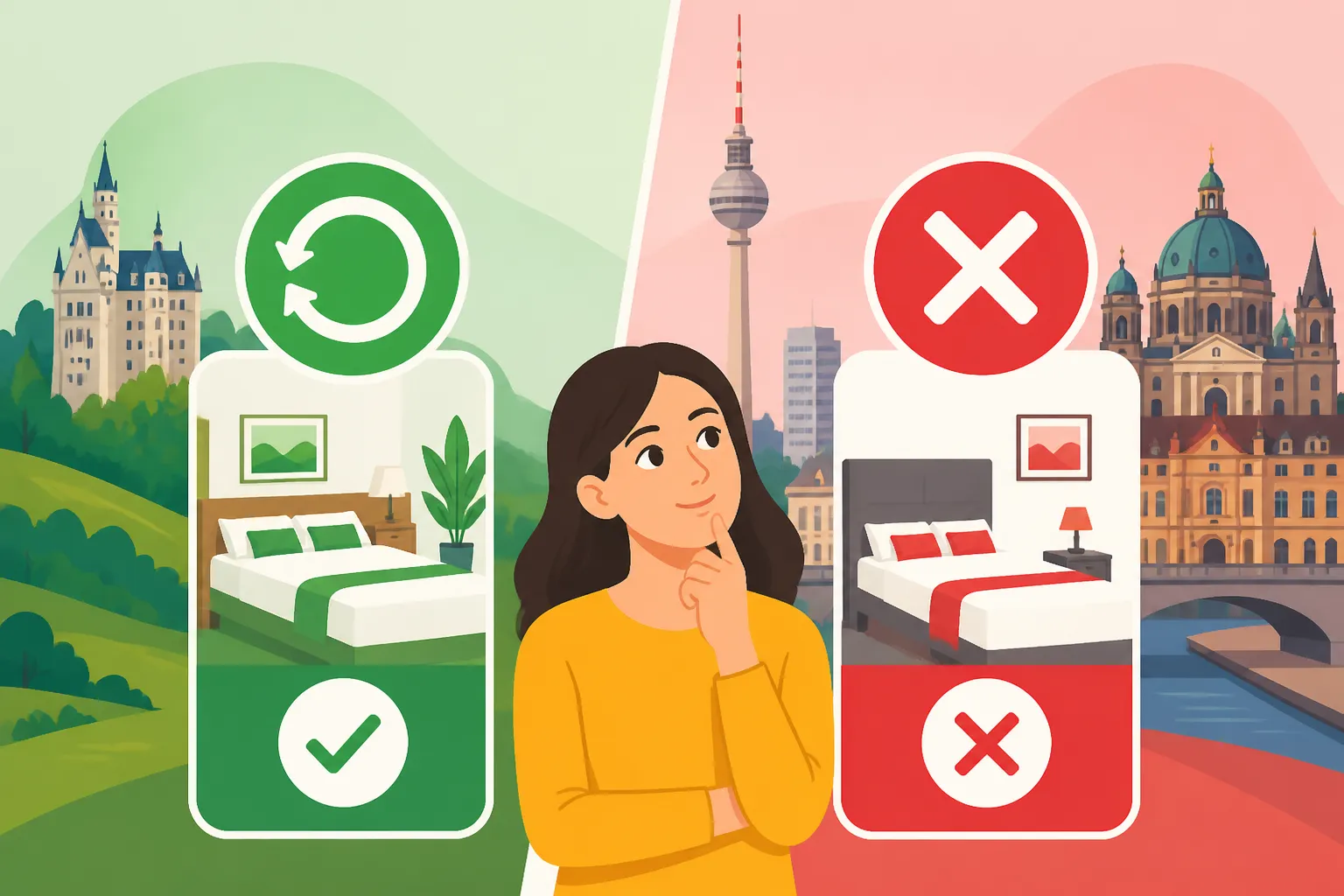
Refundable vs Non-Refundable Rates in Germany: When the Discount Is Worth It
Oh, the eternal dance of planning a trip to Germany! You're staring at two enticing options: one that promises a delightful discount if you commit, and another that offers the sweet relief of flexibility at a slightly higher price. It's a classic traveler's dilemma, and let's be honest, in a country known for its precise rules and procedures, that decision can feel even more weighty. You want to save money, of course, but what if life throws a wrench in your perfectly laid plans? This guide is here to help you navigate the tricky waters of refundable versus non-refundable rates in Germany, ensuring you make the choice that’s truly best for your peace of mind and your wallet.
Disclosure: This post may contain affiliate links. We may earn a commission at no extra cost to you if you make a purchase through these links. Read full disclosure.
The Core Distinction: Refundable vs. Non-Refundable Explained
Before we dive into the nitty-gritty, let's get a firm grasp on what these terms actually mean in the context of booking accommodation in Germany. It’s not just jargon; it defines the very foundation of your financial commitment and your ability to adapt.
Understanding Refundable Rates (Flexible Booking)
A "refundable rate," often labeled as "free cancellation" or "pay at the property," is exactly what it sounds like: it offers you the liberty to cancel your booking without financial penalty, provided you do so within a specified timeframe. This window typically closes 24 to 48 hours before your scheduled check-in, but it's crucial to always double-check the specific terms for each booking, especially when using platforms like Booking.com, where policies can vary by individual property.
Choosing a refundable rate means you might pay a little more upfront, or simply defer payment until your arrival, but what you're really investing in is peace of mind. Imagine you’ve planned a trip to a vibrant city like Berlin but your visa application is taking longer than expected, or a sudden work commitment forces you to reschedule. With a refundable rate, a few clicks on a platform like Booking.com are all it takes to adjust or cancel, saving you from losing your hard-earned money. It's the ultimate safety net for those whose plans are still a little fluid, whether due to business travel uncertainties, unexpected health issues, or simply the ever-shifting nature of life as an expat or tourist. This flexibility can be a huge relief when dealing with the various intricacies of Travel Logistics in Germany: Money, Safety, and Connectivity.
Decoding Non-Refundable Rates (The Advance Purchase)
On the flip side, non-refundable rates are the commitment-phobe's nightmare but the budget traveler's dream. These rates are almost always cheaper – sometimes significantly so – but they come with a strict caveat: once booked, you're generally on the hook for the full amount, regardless of whether your plans change. Payment is usually required immediately upon booking, locking in that lower price.
Hotels offer these rates because they guarantee revenue, allowing them to fill rooms with certainty. For you, it's a gamble that pays off handsomely if your plans hold firm. If you're absolutely certain about your travel dates – perhaps you've booked a specific tour of The Rhine Valley: Castles, Wine, and River Towns or you have a non-negotiable event like a wedding or a conference – a non-refundable rate can save you a substantial amount. However, if anything unexpected crops up, from a personal emergency to a sudden shift in work schedule, you risk losing the entire booking cost. It's a high-stakes game, and in Germany, rules tend to be quite rigid, so don't expect much wiggle room once you've committed to a non-refundable booking. This is particularly relevant when you're exploring Accommodation in Germany: Hotels, Pensionen, and Hostels and weighing your options.
The Temptation of Non-Refundable: When Discounts Dazzle
Let's face it, we all love a good deal. Those tempting non-refundable rates flash like neon signs, promising savings that can free up your budget for more schnitzel or an extra museum visit.
The Cost Savings Allure
The primary draw of non-refundable rates is, undeniably, the price. Hotels often offer a discount of 10-30% (sometimes even more for very early bookings) compared to their flexible counterparts. For a week-long stay in a major city, that can easily translate into hundreds of Euros. These deals are designed to entice you to book early and commit, providing the hotel with guaranteed occupancy. When you browse platforms like Booking.com, you'll often see these discounted rates prominently displayed, making it hard to resist the immediate financial gain.
Think about a meticulously planned trip to experience Christmas Markets and Festive Germany. You know exactly which dates you’ll be there, your flights are locked in, and your itinerary is set. In this scenario, opting for a non-refundable rate for your cozy hotel near the Nuremberg Christkindlesmarkt can feel like a savvy move. The money saved could cover a few extra mugs of Glühwein or a unique handcrafted souvenir. It's a direct reward for your certainty and forward planning.
High-Risk, High-Reward Scenarios
While the savings are compelling, it’s crucial to understand the high-risk, high-reward nature of these bookings. A non-refundable rate is a smart choice when your travel plans are genuinely iron-clad. This could be for a critical business meeting that's been on the calendar for months, a family reunion with fixed dates, or a pre-paid event like a festival or a concert where your presence is non-negotiable. If you're confident in your health, your visa status, and your work schedule, and you have few external factors that could derail your trip, then that discount is truly yours to enjoy.
However, the risk factor looms large if there's any shred of uncertainty. Are you waiting on a visa decision? Is there a chance your work project might extend unexpectedly? Do you have family members whose health might require your immediate attention? These are the moments when a non-refundable booking can turn into a costly mistake. German regulations, while thorough, don't typically bend for individual circumstances once a contract (your booking confirmation) is made. So, while the financial reward is attractive, always perform an honest self-assessment of your personal certainty before clicking that "book now, non-refundable" button. It's not worth the stress if you're prone to last-minute changes or unexpected challenges that can arise when navigating life in a foreign country. If you're heading to one of Germany's Great Cities: Berlin, Munich, Hamburg, and Beyond, a fixed plan can be a blessing, but only if it stays fixed!
The Value of Flexibility: Why Refundable Rates Can Be Worth Every Euro
While the immediate savings of a non-refundable rate are appealing, the long-term value and sheer psychological comfort of a refundable booking can often outweigh the slightly higher cost, especially when navigating a new country.
Unexpected Changes and the German Bureaucracy
Life as an expat or even just a long-term tourist in Germany often involves navigating a complex web of bureaucracy and unexpected delays. Imagine you've planned a weekend getaway to the Black Forest: Villages, Trails, and Cuckoo Clocks, but suddenly you need to attend an urgent appointment at the Ausländerbehörde (Foreigners' Office) or your Hausarzt (family doctor) gives you a date for a specialist that conflicts directly with your trip. Booking a non-refundable room in such a scenario would mean losing your money if you can't rearrange.
With a refundable rate, however, these bureaucratic hiccups or last-minute health concerns become mere inconveniences rather than financial disasters. You can easily adjust your travel dates or cancel your trip altogether through platforms like Booking.com, often with just a few clicks, avoiding any lost funds. This flexibility is invaluable when you're still getting accustomed to Germany's systems or if you have dependents whose needs might change suddenly. Even something as simple as Booking Doctor Appointments in Germany and Cutting Wait Times can be a challenge, so having control over your travel bookings provides a crucial layer of calm amidst potential chaos.
Trip Planning Evolution: From Vague Idea to Solid Itinerary
Another powerful argument for refundable rates is their ability to accommodate evolving travel plans. Often, when you first start dreaming up a trip to Germany, you might have a general idea of dates and destinations but haven't ironed out every single detail. You might book a placeholder hotel in, say, Hamburg, knowing you can easily change it if you later decide to spend more time exploring the Northern Germany and the Coast: Hamburg, the Baltic, and North Sea region or if a better deal pops up.
This approach allows you to secure an initial booking to meet visa requirements or simply ensure you have something locked in, without the pressure of having a perfect itinerary from day one. As your plans solidify – perhaps you find a cheaper flight, decide to join a friend in a different city, or confirm specific activity dates – you can then either re-book a cheaper non-refundable rate at the same property, or switch to an entirely different hotel that better suits your refined needs. Many platforms, including Booking.com, make it incredibly easy to compare various room types and rates, and their filters for "free cancellation" are your best friend in this scenario. This strategic use of refundable bookings means you're not locked into a sub-optimal choice simply because you committed too early. Consider also the implications of how your trip might change seasonally, whether you're Visiting Germany in Summer: Festivals and Long Days or exploring winter markets.
Deciphering the Fine Print: Safeguarding Your German Trip
Regardless of whether you choose a refundable or non-refundable rate, the devil is always in the details. German precision extends to its contracts, and booking accommodation is no exception. Understanding the specific terms can save you from costly surprises.
Understanding Cancellation Policies and Deadlines
Every booking, whether refundable or not, comes with a cancellation policy. For refundable rates, this policy will specify a deadline – for example, "free cancellation until 23:59 (local time) two days before arrival." It is absolutely critical to pay attention to the local time of the hotel, not your current time zone. Missing a cancellation deadline by even a few minutes can result in being charged for the first night, or even the entire stay, especially if the hotel has a stricter policy. Platforms like Booking.com usually display these deadlines very clearly, often in your booking confirmation email and within the booking management section of their site or app. Make a note of it! Set a reminder on your phone if you're even slightly unsure about your plans.
For non-refundable rates, the policy will typically state "no refunds for cancellation or changes." While this sounds absolute, some hotels might offer a partial refund in very rare, specific circumstances, or allow date changes with a fee, but this is the exception, not the rule. Never assume; always read every line of the booking conditions before finalizing. It's a bit like wading through the details of Understanding Your German Rental Contract (Mietvertrag) – sometimes dry, but always essential.
The Role of Travel Insurance and Force Majeure
This is where travel insurance steps in as a vital companion, especially if you're leaning towards non-refundable bookings. While a non-refundable rate means the hotel won't refund you, a good travel insurance policy might. Travel insurance often covers unforeseen circumstances like sudden illness (yours or a close family member's), job loss, or severe weather events that prevent you from traveling. However, it's crucial to understand what your specific policy covers and what it excludes. Pre-existing conditions, for example, are often excluded unless you purchase specific waivers. Always compare different policies carefully to find one that suits your needs. For more comprehensive information, be sure to look into Travel Insurance for Trips to and Within Germany.
The concept of Force Majeure (Höhere Gewalt in German) refers to unforeseeable circumstances that prevent someone from fulfilling a contract – things like natural disasters, war, or global pandemics. In such rare, widespread events, hotels might offer refunds or vouchers for non-refundable bookings, even if their standard policy doesn't. However, this is not a guarantee and is usually reserved for events impacting travel on a large scale, not individual personal issues. Don't rely on Force Majeure for a simple change of heart or a minor cold. Your best bet for personal flexibility remains a refundable rate or robust travel insurance.
Making Your Choice: Factors for Booking Success in Germany
Now that we've broken down the intricacies, how do you actually make the best decision for your trip to Germany? It comes down to a careful weighing of your personal circumstances, your comfort with risk, and leveraging the tools at your disposal.
Assessing Your Personal Risk Tolerance and Budget
This is a deeply personal question. How much are you willing to lose if your plans go awry? For some, saving 50 Euros is worth the slight risk of losing it all. For others, the thought of losing even a small amount of money causes significant stress, making the slightly higher cost of a refundable rate a small price to pay for peace of mind. Consider your financial buffer: if losing the cost of a hotel room would genuinely cause financial hardship, then prioritizing flexibility is a no-brainer. If you have plenty of disposable income and are comfortable with the gamble, a non-refundable discount might be worth it.
Also, think about the total cost of your trip. For a short, inexpensive stay, the difference between refundable and non-refundable might be negligible. For a week in a high-end hotel, the savings on a non-refundable rate could be substantial, but so could the potential loss. Take an honest look at your Money for Travel in Germany: Cash, Cards, and ATMs situation and make a choice that aligns with your comfort level.
The Nature of Your Trip: Business vs. Leisure, Short vs. Long
The type of trip you're taking heavily influences this decision.
- Business Travel: This almost always warrants a refundable rate. Business schedules are notorious for last-minute changes, canceled meetings, or unexpected extensions. Unless your company policy dictates otherwise, the flexibility to adapt without financial penalty is paramount.
- Leisure Travel (Short Stays): For a quick weekend getaway where you’re just visiting Munich for First-Time Visitors: What to See and have a simple itinerary, a non-refundable rate might be low-risk if your travel dates are firm. The impact of a lost booking is often minimal.
- Leisure Travel (Longer or Complex Stays): If you're planning an extended journey, perhaps a multi-city tour of Germany, or a special occasion that requires significant planning, refundable rates can be a safer bet. More moving parts mean more opportunities for something to go wrong. Consider booking your initial stays as refundable, then converting to non-refundable once your itinerary is completely locked in.
Leveraging Booking Platforms: Your Best Friend for German Stays
In today's digital age, online travel agencies are your most powerful allies in navigating these choices. Platforms like Booking.com are designed to show you all the available options, making it incredibly easy to compare rates and policies side-by-side.
Here’s how to use Booking.com effectively:
- Filters are Your Friend: When searching for accommodation, always look for filters like "Free cancellation" or "Pay at the property." These instantly narrow down your results to flexible options.
- Compare Side-by-Side: Most listings on Booking.com will show both refundable and non-refundable rates for the same room type (if available). This allows you to see the exact price difference and decide if the premium for flexibility is worth it.
- Read the Fine Print (Always): Before clicking "confirm," make sure you've read the specific cancellation policy for that particular booking. Booking.com makes this information prominent, but it's your responsibility to review it.
- Manage Your Bookings: Once booked, your Booking.com account allows you to easily view, modify, or cancel your reservations within the specified deadlines. This centralized management is a huge advantage, especially if you have multiple bookings for a longer trip.
- Leverage Loyalty Programs: If you're a frequent traveler, loyalty programs (often tiered on platforms like Booking.com) can sometimes offer improved cancellation terms or other perks that enhance your flexibility, even on rates that might typically be less forgiving.
Choosing between refundable and non-refundable rates isn't just about the money; it's about managing risk and securing your peace of mind while exploring the wonderful complexities of Germany. By understanding the distinctions, assessing your personal situation, and wisely using tools like Booking.com, you can ensure your trip is as smooth and stress-free as possible.
| Feature | Refundable Rate | Non-Refundable Rate |
|---|---|---|
| Cost | Generally higher | Generally lower, often the cheapest |
| Flexibility | High; usually free cancellation up to a deadline | Very low to none; full payment typically lost |
| Payment | Often 'pay at property' or pre-authorized | Immediate full payment required |
| Ideal For | Uncertain plans, business travel, visa needs | Fixed itineraries, budget-conscious, confident plans |
| Risk | Low financial risk | High financial risk if plans change |
| Cancellation | Easy, typically online via platforms like Booking.com | Difficult, only in very specific (rare) circumstances |
Ultimately, there's no single right answer for everyone. It's a personal decision that requires a bit of foresight and self-awareness. But with the right information and the smart use of platforms like Booking.com, you can confidently make the choice that allows you to enjoy every moment of your German adventure, knowing you've made a booking that truly fits your needs. Happy travels!
Disclaimer
This article is for general informational purposes only and does not constitute professional advice. Laws, prices and regulations vary by location and change over time. Consult a qualified professional for guidance on your specific situation.