How to Explore Medieval Old Towns (Altstadt) in Germany
Oh, the sheer magic and utter frustration of navigating Germany's medieval old towns, or Altstädte as they're lovingly called here! You see those picture-perfect postcards, the charming half-timbered houses, the cobbled streets, and you think, "Yes, that's the Germany I came for!" And you'd be absolutely right. But getting there, finding your way through the maze, and truly soaking it all in can sometimes feel like a quest straight out of a Grimm's fairy tale – complete with a few bureaucratic dragons and confusing signs. This guide is here to help you unlock the charm without the stress, showing you how to really explore these historical treasures.
Disclosure: This post may contain affiliate links. We may earn a commission at no extra cost to you if you make a purchase through these links. Read full disclosure.
The Enduring Charm and Practicalities of German Altstädte
Germany's Altstädte are truly special. They offer a tangible connection to centuries of history, a stark contrast to the modern hustle and bustle. Walking through one feels like stepping back in time, with narrow alleys, imposing city walls, ancient churches, and squares that have hosted markets and festivals for hundreds of years. This allure is undeniable, drawing millions of visitors each year to experience a slice of "old Germany."
However, the very charm of these ancient settlements also presents a unique set of practical challenges. Those delightful cobblestone streets? They're murder on soft shoes and can make pushing a stroller or navigating with a wheelchair a real workout. The narrow lanes, while picturesque, often mean limited vehicle access, scarce parking, and sometimes crowds that can feel overwhelming, especially during peak tourist season or during popular events like Christmas markets. You might find yourself wanting to slow down and savor the atmosphere, only to be swept along by a tour group. Don't worry, we've all been there, elbowing our way to get a good photo! It's part of the authentic Altstadt experience, even if it's not always Instagram-perfect.
Planning Your Journey Through Time: Logistics for Altstadt Exploration
Successfully exploring Germany's medieval old towns requires a bit of foresight, but it's totally worth it. Thinking through your transport, accommodation, and the timing of your visit can make all the difference between a rushed trip and a truly immersive experience.
Getting There: Trains, Cars, and Your Own Two Feet
Germany boasts an excellent public transport network, making many Altstädte accessible even without a car. The Deutsche Bahn (DB) train system is often the most comfortable and scenic way to travel between cities and towns. You can check schedules and book tickets online, and sometimes snag great deals if you book in advance. For longer distances or if you prefer a budget-friendly option, long-distance buses like FlixBus also connect many German towns. If you're planning an extensive trip through several old towns, especially those off the main train lines, renting a car might give you more flexibility. Just be prepared for the parking situation in the Altstädte themselves – it's often expensive or non-existent within the old city walls. Many towns have designated parking outside the historical center, requiring a short walk, which is often a blessing as it allows you to truly appreciate the approach. Remember, a lot of the magic is in wandering, so wearing comfortable shoes is non-negotiable! For more detailed advice on getting around, check out our guide on Getting Around Germany: Trains, Buses, Flights, and Car Hire. When booking tickets, sites like Omio can sometimes offer a convenient way to compare different modes of transport in one place.
Where to Stay: Immersing Yourself or Staying Close By
Your accommodation choice can significantly enhance your Altstadt experience. Staying right within the old town allows you to soak in the evening atmosphere after the day-trippers have left, enjoying quiet cobbled streets and illuminated buildings. You'll find charming boutique hotels, guesthouses (Pensionen), and even some vacation rentals within these historic centers. However, these options can sometimes be pricier, and access with luggage might be a bit tricky due to pedestrian zones. A great alternative is to find accommodation just outside the Altstadt walls. This often offers better parking, potentially lower prices, and easier access to modern amenities, all while keeping the enchanting old town just a short stroll away. Websites like Booking.com are excellent resources for finding a place that suits your needs and budget. For a broader overview of lodging, take a look at our article on Accommodation in Germany: Hotels, Pensionen, and Hostels.
Timing Your Visit: Avoiding the Crowds
Timing is everything when it comes to Altstädte. Weekends, public holidays, and the summer months (June to August) generally see the highest visitor numbers. If you prefer a more tranquil experience, aim for weekdays or consider visiting during the shoulder seasons (April-May or September-October). During these times, the weather is usually still pleasant, the crowds are thinner, and you might even catch some beautiful spring blossoms or autumn foliage. December is magical for the famous German Christmas markets, but be prepared for intense crowds, especially in popular towns like Nuremberg or Rothenburg ob der Tauber. If you're dead set on a Christmas market visit, try to go early in the morning or on a weekday evening for a slightly less frenetic experience.
Iconic and Lesser-Known Medieval Gems to Discover
Germany is dotted with incredible medieval old towns, each with its own unique story and charm. While some are famous for their fairy-tale beauty, others offer a quieter, more authentic glimpse into the past.
Rothenburg ob der Tauber: The Fairy-Tale Dream
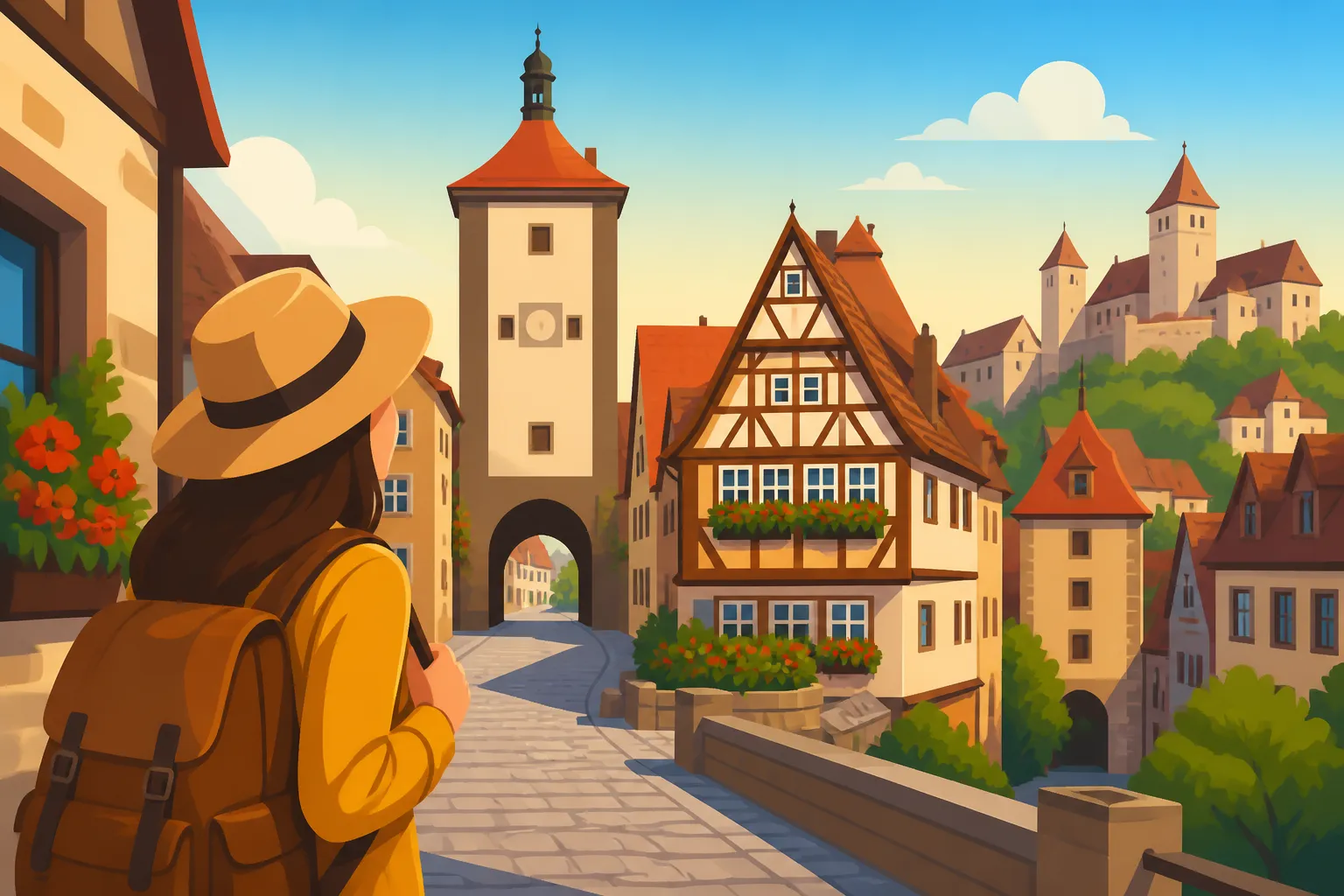
No discussion of German Altstädte is complete without mentioning Rothenburg ob der Tauber. It is, without a doubt, the quintessential German fairy-tale town. With its intact medieval city walls you can walk along, towers, and half-timbered houses, it looks exactly like something out of a storybook. Highlights include the Plönlein, a picturesque fork in the road with a charming fountain, and the Rothenburg Town Hall with its impressive clock tower. It's incredibly popular, so expect crowds, but its magic, especially in the evening, is undeniable. If you're wondering how to fit it into a larger itinerary, our guide on How to Plan a Romantic Road Trip in Germany often features stops like this.
Heidelberg: Castle, Culture, and a Vibrant Student Life
Heidelberg offers a different flavor of Altstadt. While equally historic, it's also a vibrant university city, giving it a youthful energy alongside its ancient stones. Dominated by its majestic ruined castle perched above, the Altstadt stretches along the Neckar River. Explore the Hauptstrasse, one of Europe's longest pedestrian zones, the historic university, and the charming side streets. The blend of historic beauty and lively atmosphere makes it a compelling visit. You can take a funicular up to the castle for incredible views over the city and river.
Cochem and the Moselle Valley: Wine and Castles
Nestled on the banks of the winding Moselle River, Cochem is a stunning Altstadt dominated by the magnificent Reichsburg Cochem castle. This region is famous for its steep vineyards and delicious Riesling wines. The town itself is a delightful maze of narrow streets, traditional houses, and riverside promenades. A visit here is often paired with a boat trip on the Moselle, offering spectacular views of the castles and vineyards that line the river. For more on this picturesque region, dive into The Moselle and German Wine Country.
Regensburg: A UNESCO World Heritage Treasure
Regensburg boasts one of Germany's largest and best-preserved medieval city centers, earning it UNESCO World Heritage status. Its iconic Stone Bridge (Steinerne Brücke), dating back to the 12th century, is a marvel of medieval engineering. The imposing Regensburg Cathedral, with its twin spires, dominates the skyline. Wandering through Regensburg's Altstadt feels incredibly authentic, less overtly "pretty" than Rothenburg, but rich in historical gravitas. Its winding alleys, patrician houses, and hidden courtyards invite endless exploration. Delve deeper into Germany's historically significant sites with our article on Germany's UNESCO World Heritage Sites: A Visitor's Guide.
Quedlinburg: Half-Timbered Houses Galore
In the Harz Mountains, Quedlinburg is another UNESCO site, renowned for its extraordinary collection of over 2,000 half-timbered houses spanning eight centuries. It's a living museum of architectural styles, from Romanesque to Art Nouveau. The Collegiate Church of St. Servatius, on the castle hill, houses incredible treasures. Quedlinburg offers a slightly less touristy experience than some other famous Altstädte, allowing for a more relaxed exploration of its charming streets. It's truly one of those places that feel like it's been frozen in time. If you love a good fairy tale, you might find other delightful villages in our guide to Fairy-Tale Germany: Villages Along the Romantic Road.
Görlitz: Architectural Diversity in the East
Often overlooked by Western tourists, Görlitz is a hidden gem on the German-Polish border, famous for its impeccably preserved architecture spanning over 500 years. The city miraculously escaped significant damage during WWII, leaving its Altstadt a testament to Gothic, Renaissance, Baroque, and Art Nouveau styles. It's a favorite filming location for Hollywood productions because of its diverse backdrops. Walking through Görlitz is a fascinating journey through architectural history, with stunning squares and impressive buildings at every turn. You'll often find fewer crowds here than in the more famous Altstädte, allowing for a more intimate exploration.
Here's a quick comparison of some Altstädte to help you decide your next adventure:
| Altstadt Feature | Rothenburg ob der Tauber | Heidelberg | Cochem | Regensburg | Quedlinburg | Görlitz |
|---|---|---|---|---|---|---|
| Main Draw | Fairy-tale perfection | Romantic castle & student life | River views & impressive castle | UNESCO history & Stone Bridge | Half-timbered marvel | Architectural diversity, film location |
| Crowd Level (Peak) | Very High | High | Medium-High | Medium | Medium | Low-Medium |
| Best For | First-time visitors, romantics | Culture, history, young vibe | Wine lovers, scenic cruises | History buffs, UNESCO fans | Architecture enthusiasts, quiet charm | Photographers, history buffs, off-the-beaten-path |
| Accessibility (Train) | Good, but often connecting | Excellent | Good | Excellent | Good, requires connection | Good |
| Walkability | High | High | High | High | High | High |
| Known For | Plönlein, city walls | Heidelberg Castle, Old Bridge | Reichsburg Cochem | Steinerne Brücke, Dom | Half-timbered houses, Stiftskirche | Renaissance facades, Lower Market Square |
Immersing Yourself in the Medieval Experience: Beyond the Postcards
Exploring a German Altstadt is about more than just snapping photos of pretty buildings. It's about letting the atmosphere wash over you, engaging with local life, and discovering the hidden nooks and crannies that truly bring these places to life.
Guided Tours and Self-Guided Wonders
While wandering aimlessly can be a joy, a guided tour can unlock layers of history and local lore you might otherwise miss. Many Altstädte offer walking tours, often led by costumed guides who share fascinating (and sometimes gruesome!) tales from medieval times. Look for "Night Watchman" tours, which are particularly atmospheric after dark. Websites like GetYourGuide are excellent for finding and booking these experiences in advance. If you prefer to go at your own pace, many towns also have self-guided walking routes available, often with plaques providing historical context. Just grab a map from the local tourist information office and start exploring!
Savoring the Local Flavors: Culinary Delights
You can't truly experience an Altstadt without tasting its regional specialties. Seek out traditional Gasthäuser (inns or taverns) tucked away in side streets rather than the main squares, which often cater more to tourists. Here, you'll find hearty German fare like Schnitzel, Sauerbraten, or regional sausages. In places like Cochem, you must sample the local Riesling wine. In Regensburg, try a Regensburger Wurst at the historic Wurstkuchl next to the Stone Bridge. Don't forget to stop at a local bakery for some fresh bread or a sweet treat. Exploring the culinary landscape is a delightful part of any visit, and our guide on German Regional Dishes Every Visitor Should Try can give you plenty of ideas.
Shopping for Souvenirs (and Avoiding the Kitsch)
Most Altstädte are brimming with souvenir shops, and while it's tempting to grab the first cute trinket you see, try to look for unique, locally made crafts. You might find traditional wooden carvings, hand-painted pottery, regional wines, or specialty foods. Christmas markets, if you're visiting in December, are fantastic for artisanal goods. Remember that "Made in Germany" label often signifies quality. If you want a deeper dive into what makes German shopping unique, consider reading about Christmas Market Shopping: Crafts and Gifts.
Embracing the Pace and Respecting the Space
Perhaps the most important tip for enjoying an Altstadt is to embrace its slower pace. These places were not built for speed or efficiency. Take your time, look up at the intricate details on buildings, peek into courtyards, and allow yourself to get a little lost. While it might be tempting to compare them to other cities, each Altstadt has its own character. And remember, people live in these historic centers! Be mindful of noise, especially during designated quiet hours (Ruhezeit), which are strictly observed in Germany. Our article on Quiet Hours and Sundays in Germany (Ruhezeit) has more details on this important cultural norm. A little German goes a long way in showing respect, even just a "Hallo" or "Danke schön." For some basic phrases, check out German Language and Everyday Communication for Visitors.
Exploring Germany's medieval old towns is an incredibly rewarding experience, offering a glimpse into a rich past that continues to shape the present. With a little planning and an open heart, you'll find yourself falling under their ancient spell, creating memories that will last a lifetime.
Disclaimer
Please note that while I strive to provide accurate and up-to-date information based on my knowledge and available resources, regulations, opening hours, and situations can change. It is always recommended to verify specific details, especially regarding travel restrictions, visa requirements, and local guidelines, with official sources before making any plans. This guide is for informational purposes only and does not constitute professional advice.