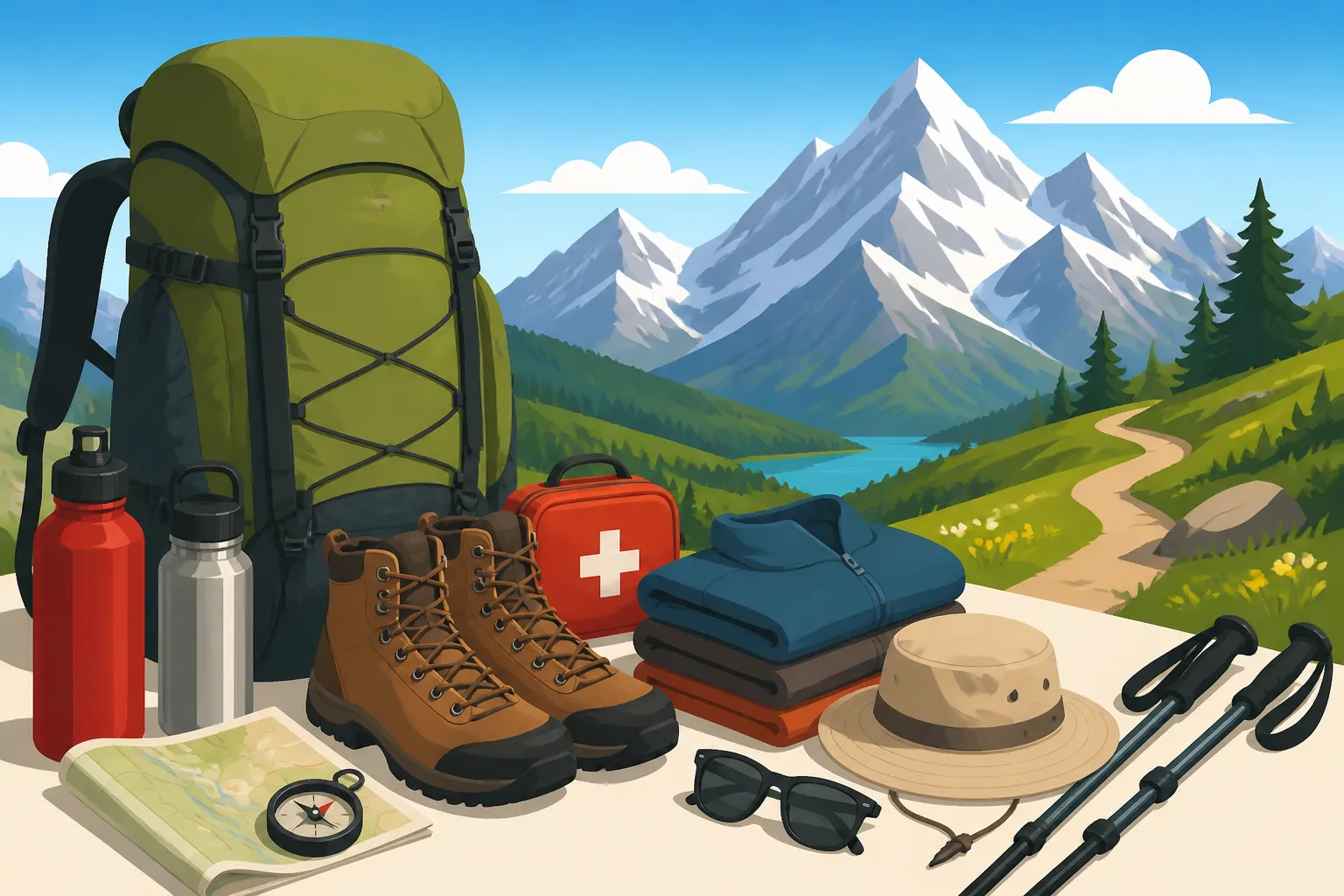
What to Pack for Hiking in the German Alps
Standing at the base of the mountains in Garmisch-Partenkirchen on a sunny morning, it is easy to assume a light jacket and a pair of sturdy sneakers will suffice. However, many hikers quickly realize that the Bavarian Alps are as unforgiving as they are beautiful, often facing sudden temperature drops or treacherous terrain without the right gear. This guide provides a veteran’s comprehensive packing list to ensure you stay safe, dry, and comfortable while exploring Germany's highest peaks.
Disclosure: This post may contain affiliate links. We may earn a commission at no extra cost to you if you make a purchase through these links. Read full disclosure.
Understanding the Bavarian Alpine Environment and Weather
Before you even open your suitcase, you need to respect the unique microclimates of Southern Germany. The weather here is famously "wechselhaft"—changeable. I have personally started hikes in 25-degree sunshine only to be met with a horizontal sleet storm at the summit two hours later. This isn't just a minor inconvenience; in the high-altitude regions near the Zugspitze, it can lead to hypothermia if you aren't prepared. When planning your route, you can use platforms like Omio to compare train and bus connections to mountain hubs, but once you arrive, the real preparation begins with your gear.
The terrain in the German Alps varies significantly from the rolling green meadows of the Allgäu to the jagged limestone faces of the Wetterstein range. If you are coming from Munich, you might consider Best Day Trips From Munich to get a feel for the lower elevations before attempting the high peaks. Understanding the German Alpine Club (DAV) trail markings is also vital. Blue trails are easy, red are intermediate, and black are for experienced mountaineers. Your packing list must reflect the difficulty of the trail you choose, as a "black" trail may require specialized equipment like via ferrata sets that a casual meadow stroll would not.
The Reality of Rapid Temperature Swings
In the Alps, for every 1,000 meters of elevation gain, the temperature typically drops by about 6 to 7 degrees Celsius. However, the wind chill factor on an exposed ridge can make it feel much colder. I once met a group of tourists near the Alpspitze who were shivering in cotton hoodies because they hadn't accounted for the wind. Cotton is your enemy in the mountains; once it gets wet from sweat or rain, it stops insulating and begins to sap your body heat.
Always check a specialized mountain weather forecast like Alpenverein-Wetter before heading out. Standard weather apps often fail to capture the nuances of valley winds and summit clouds. If you find yourself caught in a sudden storm, knowing the Emergency Numbers in Germany: Calling 112, Poison Control, and More is essential, but having the right protective layers in your pack is your first line of defense.
Trail Conditions and Technicality
Many newcomers underestimate the "scree"—the loose, small rocks that cover many Alpine paths. Sliding on scree is a leading cause of ankle injuries in the region. If you aren't used to this type of terrain, you might want to look into Hiking in Germany: The Black Forest, Alps, and Beyond to compare different trail types. The German Alps are generally well-maintained, but "well-maintained" in Germany still means you will be stepping over massive tree roots and navigating narrow ledges.
When booking your accommodation through Booking.com, try to find a "Wanderhotel" or a guesthouse that caters specifically to hikers. These hosts often have the most up-to-date information on which trails are currently blocked by snow or fallen trees. They can also give you advice on whether your planned route is suitable for your current gear.
The Essential Clothing Layering System
The golden rule of hiking in the German Alps is the "Zwiebelprinzip" or the onion principle. This means wearing multiple thin layers that you can easily add or remove as your exertion levels and the weather change. I’ve seen many hikers make the mistake of wearing one heavy winter coat. They end up sweating profusely during the ascent, which leads to chills the moment they stop for a break.
Your base layer should always be a moisture-wicking material like merino wool or a high-quality synthetic. Merino is particularly popular among expats and locals alike because it doesn't retain odors—a major plus if you are staying in a shared mountain hut. After a long day of How to Hike the Zugspitze or Reach Its Summit, you will be glad you chose a fabric that stays fresh.
Footwear: Why Your City Sneakers Won't Cut It
I cannot stress this enough: leave the fashion sneakers at home. The limestone of the Bavarian Alps becomes incredibly slippery when wet. You need boots with a Vibram sole or a similar high-friction rubber compound. For most red-rated trails, a mid-cut boot (Kategorie B or B/C in the German system) is the standard. These provide the necessary ankle support for uneven terrain while protecting you from sharp rocks.
Breaking in your boots before you arrive is non-negotiable. I spent my first week in Bavaria with massive blisters because I bought "perfect" Alpine boots the day before a hike. If you do end up with injuries, remember that Medical Emergencies: What to Do and Where to Go in Germany are handled efficiently here, but a bit of moleskin or blister plaster in your pack can save your entire holiday.
Protection Against the Elements
Your outer layer, or shell, must be both waterproof and windproof. In Germany, "Regenschauer" (rain showers) can appear out of nowhere, even on a day that started with a clear blue sky. Look for a jacket with a high Gore-Tex rating and pit-zips for ventilation. Additionally, pack a pair of lightweight rain trousers. Getting your legs soaked in a cold wind is a fast track to misery.
Don't forget the accessories: a lightweight pair of gloves and a beanie. Even in July, the summits can be chilly. On the flip side, the Alpine sun is incredibly intense due to the thinner atmosphere and reflection off the rocks. High-SPF sunscreen and polarized sunglasses are mandatory. I have seen hikers return with "snow blindness" symptoms because they underestimated the glare on a glacier or snow patch.
| Layer Type | Recommended Material | Purpose |
|---|---|---|
| Base Layer | Merino Wool / Synthetic | Moisture management and skin comfort |
| Mid-Layer | Fleece / Lightweight Down | Insulation and warmth retention |
| Outer Shell | Gore-Tex / Hardshell | Protection from wind and heavy rain |
| Socks | Wool Blend (High Cushion) | Blister prevention and impact absorption |
| Headwear | Buff / Beanie | Temperature regulation and sun protection |
Technical Gear and Safety Essentials
Your backpack is your mobile home for the day. For a standard day hike in the Alps, a 20 to 30-liter pack with a good waist belt is ideal. The weight should sit on your hips, not your shoulders. I see many people carrying "lifestyle" backpacks that offer no support, leading to back pain long before they reach the summit. If you are planning a more complex itinerary, you might find guided options on GetYourGuide that include gear rentals or professional advice on what to carry.
Navigation is another area where many foreigners struggle. While trails are generally well-marked with yellow signs, fog can roll in and obscure markings in seconds. Never rely solely on your smartphone. Cold temperatures can drain a phone battery from 40% to zero in minutes. Always carry a physical Kompass map (usually 1:25,000 scale) of the area and a power bank.
The Alpine First Aid Kit and Emergency Tools
A basic first aid kit is a legal and moral requirement for mountain safety. Beyond the usual bandages, your kit should include an "Alurettungsdecke" (emergency foil blanket). If someone in your party is injured and cannot move, this thin piece of foil is what will keep them alive until mountain rescue (Bergwacht) arrives. It is also wise to understand how Health Insurance in Germany: Understanding Public vs Private Coverage works, as mountain rescue is not always fully covered by basic tourist policies.
In the Alps, the "Alpine Emergency Signal" is still used. If you need help and have no phone signal, give a signal (visual or acoustic) six times a minute, then pause for a minute, and repeat. Those responding will signal three times a minute. Carrying a simple whistle can make this much easier than shouting for hours. If you need non-emergency advice, The 116117 Medical On-Call Service in Germany Explained can be a helpful resource for minor ailments that don't require a rescue helicopter.
Hydration and Nutrition Strategy
Hydration in the mountains is tricky. You lose a lot of water through respiration in the dry mountain air, even if you aren't sweating visibly. I recommend carrying at least 2 liters of water. While some mountain streams are safe, many are contaminated by grazing cattle (Almvieh). Unless you have a filter, stick to the water from the "Hütten" (mountain huts).
For food, think high-calorie and low-weight. Nuts, dried fruit, and specialized energy bars are staples. However, part of the joy of German hiking is the "Brotzeit" at a mountain hut. Most huts only take cash, so make sure you read up on Money for Travel in Germany: Cash, Cards, and ATMs before you head up. A warm bowl of Kaspressknödelsuppe (cheese dumpling soup) is the ultimate reward for a hard climb, but you need those Euros to pay for it.
Personal Comfort and Hut Stay Essentials
If you are planning an overnight stay in a mountain hut, your packing list expands slightly. Staying in a DAV hut is a quintessential German experience, but it comes with strict etiquette. For instance, you are usually required to wear "Hüttenschuhe" (indoor slippers) inside to keep the sleeping areas clean. Carrying a pair of lightweight flip-flops or slippers is a small addition that makes a big difference in comfort.
Furthermore, most huts provide blankets but do not wash them daily. For hygiene reasons, a "Hüttenschlafsack" (a very thin silk or cotton sleeping bag liner) is mandatory. If you show up without one, you will likely have to buy a disposable one from the hut warden. These liners weigh almost nothing and are a staple for anyone exploring The German Alps: Garmisch, Zugspitze, and Berchtesgaden.
Hygiene and Small Comforts
Mountain huts often have limited water, and showers (if they exist) usually require a token and last only a few minutes. Pack a small "travel towel" and biodegradable wet wipes. A small headlamp is also essential for navigating the dormitory at night without waking up twenty other hikers. I’ve been that person trying to find my boots in the dark using a phone light, and it never goes well.
Don't forget a small bag for your trash. In the German Alps, the rule is "was du hochbringst, bringst du auch wieder runter" (what you bring up, you must bring back down). There are no trash cans on the trails or even in many of the higher huts. Keeping the mountains pristine is a point of pride for locals, and following this rule will earn you respect from your fellow hikers.
Social Etiquette and Tipping
When you are relaxing at a hut after a long day, it is common to share tables with strangers. A friendly "Grüß Gott" or "Servus" goes a long way. When paying for your food and drinks, tipping is appreciated but not mandatory in the same way as in the US. You can learn more about the nuances in Tipping in Germany: When, Where, and How Much. Usually, rounding up to the nearest Euro or adding a small amount for good service is perfectly fine.
Lastly, carry a small notebook and pen. Many summits and huts have a "Gipfelbuch" (summit book) or a stamp station. It’s a lovely tradition to record your thoughts or collect stamps as a memento of your journey. These little details are what turn a standard hike into a lifelong memory of your time in the German mountains.
Disclaimer
The information provided in this guide is for informational purposes only and does not constitute professional mountaineering or safety advice. Hiking in the Alps involves inherent risks, including unpredictable weather and challenging terrain. Always check local conditions, carry appropriate gear, and consult with local experts or guides before embarking on any Alpine excursion. The author and publisher are not responsible for any accidents or injuries that may occur while following this advice.