Moving Money From the UK to Germany: GBP to EUR Without the Markup
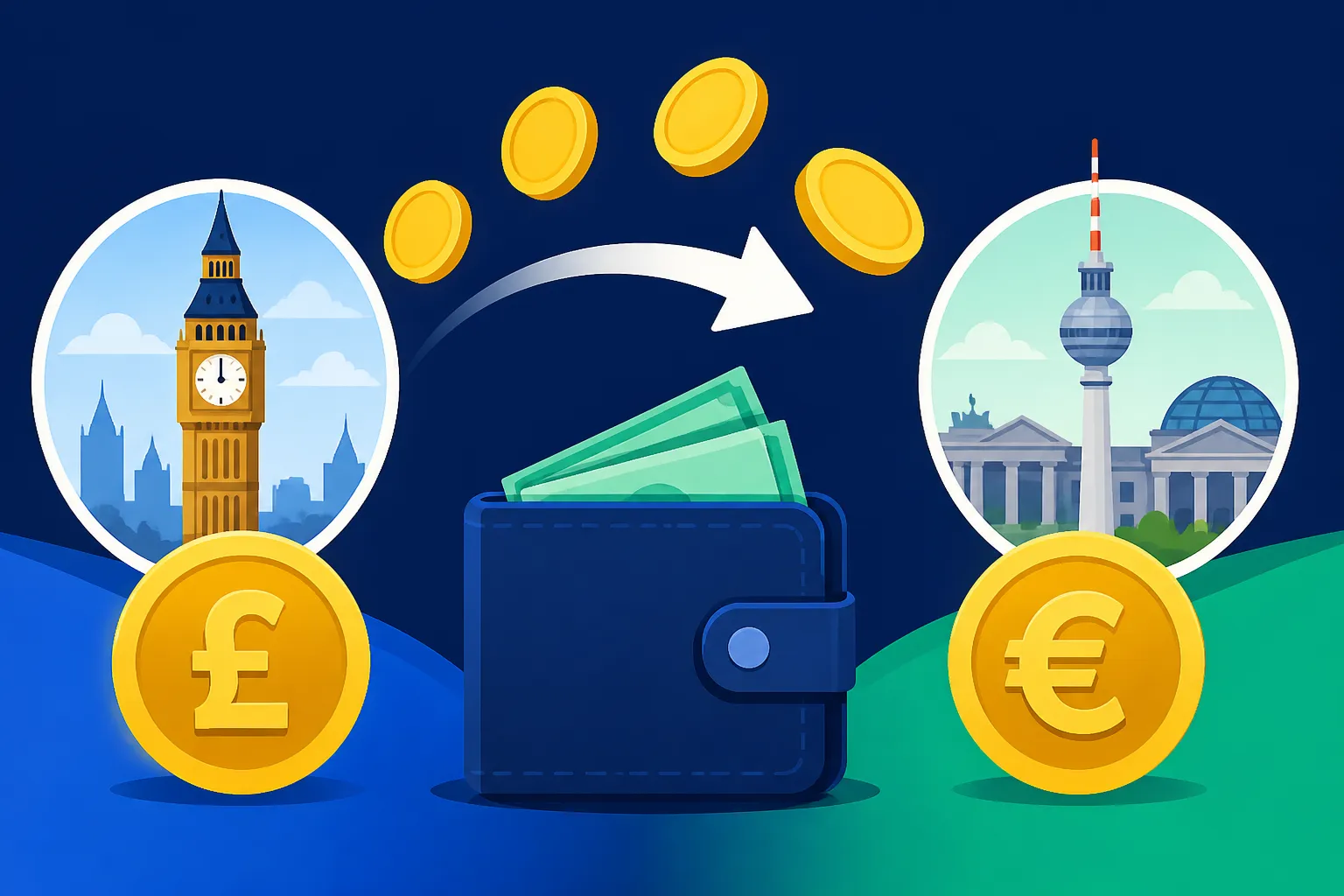
Oh, the joy of moving to Germany from the UK! You’ve survived the packing, the visa applications, the Anmeldung appointments – and then you hit the wall of international money transfers. Sending your hard-earned pounds from your old British bank account to your shiny new German one often feels like throwing money into a black hole, with opaque fees, dreadful exchange rates, and transfers that seem to take an eternity. This guide is here to shed light on that murky process, reveal why traditional methods are often a rip-off, and show you the smartest, most cost-effective way to get your money from the UK to Germany, making your financial life as an expat a whole lot smoother with Wise.
Disclosure: This post may contain affiliate links. We may earn a commission at no extra cost to you if you make a purchase through these links. Read full disclosure.
The Frustrating Reality of International Money Transfers (GBP to EUR)
Let's be real, the moment you decide to move your finances from your old life in the UK to your new one in Germany, you're immediately confronted with a daunting task. It's not just about currency conversion; it's about navigating a system that often feels designed to confuse and extract as much money from you as possible. I remember my first few transfers, just crossing my fingers and hoping the amount that left my UK account would vaguely resemble what landed in my German one. More often than not, there was a noticeable "disappearance" along the way. This isn't magic; it's the banking system at play, and it's a frustration many expats can deeply relate to.
The Hidden Costs of Traditional Banks
When you walk into your local high-street bank in the UK (or use their online portal, which is often just as opaque) and ask to send money to Germany, they’ll usually tell you about a small, seemingly reasonable transfer fee. Maybe £10, £20, sometimes even "free" if you're lucky. Sounds fine, right? Wrong. That headline fee is often just the tip of a very expensive iceberg. The real cost is meticulously hidden within the exchange rate they offer you. Banks rarely give you the true mid-market exchange rate – the one you see on Google or Reuters. Instead, they apply a significant markup, essentially baking in a profit margin that can be several percentage points.
Let's illustrate with a hypothetical scenario. Say you need to transfer £5,000 from your UK account to cover your first few months of rent and living expenses in Munich. A traditional bank might offer you an exchange rate that's 2-3% worse than the actual rate. On £5,000, that could easily mean you receive €100-€150 less in your German account than you should, on top of any explicit transfer fees. This "spread" is how banks quietly make a fortune from international transfers, leaving you, the expat trying to set up a new life, feeling short-changed. This is especially painful when you're trying to Budgeting for Life in Germany: Tips to Save Money as an Expat. You're already counting every euro, and these hidden fees just erode your initial capital.
Slow Transfers and Lack of Transparency
Beyond the financial hit, there's the agonizing wait. Traditional bank transfers, particularly international ones, are notorious for their snail-like pace. You might be told it'll take "3-5 business days," which often translates to a full week, sometimes more, thanks to differing banking holidays, time zone differences, and the convoluted SWIFT network. This can be incredibly stressful when you're relying on that money to land by a certain date – perhaps for your first rent payment or to cover initial setup costs. Imagine trying to secure your dream apartment in Berlin, only to have the landlord waiting impatiently for your deposit, while your funds are in limbo somewhere between London and Frankfurt.
The lack of transparency exacerbates this frustration. Once you hit "send" with a traditional bank, your money often enters a black box. You get little to no real-time updates on its status. Is it stuck with an intermediary bank? Is it being held for additional checks? You're left guessing, making frantic phone calls, and feeling completely powerless. This isn't just an inconvenience; it can actively delay your ability to settle in, secure housing, or even just start your daily life without financial anxiety. Dealing with German bureaucracy is already a marathon; you don't need your banking adding another hurdle to the race.
Why Expats Need a Smart Solution for GBP to EUR Transfers
As an expat in Germany, your financial needs are unique. You're living in one country, likely earning in euros, but you might still have ties to the UK – perhaps a pension, investments, or just savings from your previous life there. Efficiently moving money between these two financial worlds isn't a luxury; it's an absolute necessity. Generic advice about currency exchange often misses the specific pain points and requirements that people like us face on a daily basis. We need solutions that understand our cross-border lives.
Managing Finances Across Borders
Think about all the instances where you'll need to transfer money from the UK to Germany. It's not just a one-off thing when you first arrive. It could be for:
- Initial relocation funds: Moving your savings over to Opening a Bank Account in Germany: Step-by-Step for Newcomers.
- Regular income/transfers: If you still receive income in GBP, perhaps from rental property or a side gig back home, you’ll need to convert it regularly into EUR for your daily expenses.
- Paying large expenses: Maybe you're buying a car, or even eventually considering Buying Property in Germany: Costs and Process for Foreigners. These require substantial transfers where every percentage point saved makes a huge difference.
- Family support: Sending money to family members still in the UK, or receiving funds from them, means you're constantly navigating the GBP-EUR corridor.
- Emergencies: In case of an unexpected expense, you want to be able to access your UK funds quickly and without hassle.
The traditional banking system simply isn't set up for this kind of flexible, cross-border financial management. Their structures are rigid, their fees punitive, and their processes archaic. Expats need a solution that acts more like a bridge than a barrier, seamlessly connecting their finances across the Channel. You’re already dealing with so much when it comes to setting up utilities, registering your address, and just learning How to Pay Rent and Bills in Germany: Banking Tips for Expats; your money transfers shouldn't be another headache.
The Importance of Real Exchange Rates
This is perhaps the single most crucial point for any expat transferring money internationally: understanding and demanding the mid-market exchange rate. This is the true rate at which currencies are bought and sold on global markets, without any markup. It's the rate you see when you quickly search "GBP to EUR" on Google. Traditional banks, as we've discussed, rarely offer this rate. Instead, they pad it, adding a hidden fee that nibbles away at your money before it even reaches its destination.
For expats, where every euro counts towards your Cost of Living in Germany: Budgeting Guide for Expats, getting the real exchange rate means maximum value for your money. It ensures that the funds you worked hard for in the UK translate into the maximum possible spending power in Germany. Without it, you're constantly losing a small but significant portion of your capital, effectively paying an invisible tax on your international lifestyle. Imagine the cumulative effect of these losses over months or years! It's not just about saving a few quid here or there; it’s about financial empowerment and ensuring you have enough to truly enjoy your new life in Germany. When you're trying to decode your Understanding Your German Payslip: Gross vs Net Salary Explained or figure out your Health Insurance Premiums: How Much You’ll Pay Per Month and Why, every penny you save on transfers adds up to more peace of mind.
Introducing Wise: Your Champion for UK to Germany Money Transfers
Alright, let's talk solutions. After years of grumbling about bank fees and slow transfers, many of us expats found our champion in Wise (formerly TransferWise). It was a game-changer when it first emerged, and it continues to be the go-to for so many of us navigating cross-border finances. If you're looking to move money from the UK to Germany, or pretty much anywhere else for that matter, Wise is the name you’ll hear echoed in expat groups for good reason. It’s built precisely to address the frustrations we've just discussed, turning a complex, expensive process into something straightforward and affordable.
How Wise Saves You Money and Stress
The fundamental principle behind Wise is beautifully simple yet incredibly powerful: they use the real mid-market exchange rate. This isn't a marketing gimmick; it's their core business model. When you send money from GBP to EUR with Wise, you're getting the exact same exchange rate you'd see on independent financial platforms. This eliminates the hidden markups that traditional banks sneak into their rates. Instead of a hidden fee, Wise charges a small, upfront, transparent fee that you see clearly before you even commit to the transfer. No surprises, no last-minute deductions.
Let's revisit our £5,000 transfer scenario. With Wise, instead of losing €100-€150 to an unfavorable exchange rate, you'd pay a much smaller, clear fee, typically a fraction of a percent of the transferred amount plus a small fixed fee. This means significantly more euros land in your German bank account. For a big move or regular transfers, these savings really add up over time. It's not just about the money, though that's a huge part of it. It's about the psychological relief of knowing you're getting a fair deal, that you're not being exploited by a system that preys on your need to move funds internationally. This transparency also extends to Understanding German Bank Statements: Fees and Transactions Explained; you'll know exactly what you've paid for the transfer.
Speed, Security, and Simplicity with Wise
Beyond the cost savings, Wise excels in other critical areas:
- Speed: Most GBP to EUR transfers with Wise are incredibly fast. Often, the money arrives within hours, sometimes even minutes, if both sides are using faster payment systems. This is a stark contrast to the multi-day waits you experience with traditional banks. For an expat trying to How to Pay Rent and Bills in Germany: Banking Tips for Expats, this speed can be a lifesaver, ensuring your payments are made on time without any last-minute panic.
- Security: Wise is a regulated financial institution. In the UK, it’s regulated by the Financial Conduct Authority (FCA), and in Germany and the EU, it's overseen by relevant financial authorities. This means your money is held securely, and they adhere to strict anti-money laundering and consumer protection regulations. Your funds are not just floating around in the ether; they're protected every step of the way.
- Simplicity: The Wise platform, whether on their website or Mobile Banking Apps in Germany: N26, Revolut, and More app, is incredibly user-friendly. The process for setting up a transfer is intuitive, walking you through each step clearly. You input the amount, select the currencies, add recipient details, and choose how you want to pay (e.g., bank transfer from your UK account, or debit/credit card). All the information is presented upfront – the exact exchange rate, the fee, and the estimated arrival time. No deciphering complex forms or vague terms.
This combination of transparency, speed, and ease of use makes Wise an indispensable tool for anyone managing cross-border finances, particularly for moving money from the UK to Germany. It's not just a service; it's a partner in making your expat life less financially stressful.
Beyond Transfers: The Wise Multi-Currency Account
Wise isn't just about one-off transfers. For expats, their Multi-Currency Account is an absolute powerhouse. Imagine having "local" bank details for multiple countries, all within one account. With a Wise account, you can get:
- UK bank details (GBP): Receive pounds into your Wise account as if you had a UK bank account. This is fantastic if you still have clients, employers, or family paying you in GBP.
- European bank details (EUR): Get a German IBAN and BIC, meaning you can receive euros directly into your Wise account as if it were a local German bank account.
- Hold multiple currencies: You can hold balances in over 50 different currencies, converting between them instantly at the real mid-market rate whenever you need to.
This means you can effectively bridge your UK and German finances. You can receive your old UK salary or pension directly into your Wise GBP balance, and then convert it to EUR and spend it in Germany using your Wise debit card or transfer it to your main German bank account for free (if it's EUR to EUR). It's a truly international banking experience tailored for people living between two worlds. This flexible account simplifies managing your money across borders, making tasks like Understanding the German Banking System: IBAN, SEPA, and More much less daunting when you have an account that bridges the gap.
Step-by-Step: Sending Money from the UK to Germany with Wise
If you're new to Wise, the process might seem a bit different from your traditional bank, but trust me, it's designed for ease. Once you've done it once or twice, it becomes second nature. And unlike wrestling with German paperwork for your Getting Your Tax ID (Steuer-ID) and Tax Class (Steuerklasse) in Germany, this is actually quite pleasant!
Setting Up Your Wise Account
The first step, naturally, is to create your Wise account.
- Sign up: Head over to the Wise website or download their app. You can sign up using your email address, Google, or Facebook account. It's a straightforward form asking for basic personal details.
- Verify your identity: This is a crucial step for security and regulatory compliance (Know Your Customer, or KYC). Wise will ask you to upload a photo of your ID (like your UK passport or driving license) and possibly a proof of address (like a utility bill or bank statement from your UK address). This verification process typically takes a couple of business days, but sometimes it's much faster. It's a one-time thing, so get it out of the way early! Don't worry, this is standard practice for any legitimate financial service.
- Link your bank account: To send money from the UK, you'll need to link your UK bank account to Wise. This is usually done by making a small initial transfer or by verifying your bank details. Again, this is for security and ensuring only you can move your funds.
Once your account is set up and verified, you're ready to make your first transfer. It's a quick process that ensures all future transactions are smooth and secure.
Initiating a GBP to EUR Transfer
Now for the main event: sending your pounds to Germany.
- Start a transfer: On the Wise website or app, click on "Send money" or "Get started."
- Enter amount and currencies: You'll be asked how much you want to send and in which currencies. Input the GBP amount you want to send, and select EUR as the recipient currency. Immediately, Wise will show you the exact mid-market exchange rate, the transparent fee, and precisely how many euros your recipient will receive. This is the magic moment of transparency that traditional banks notoriously avoid.
- Choose payment method: Wise offers several ways to fund your transfer from the UK:
- Bank transfer (Faster Payments): This is often the cheapest option. You'll transfer the GBP amount from your UK bank account to Wise's UK bank account (which they provide details for). This is usually very fast.
- Debit card: A convenient and quick option, though sometimes slightly higher fees apply.
- Credit card: Another quick method, but often with higher fees than a bank transfer or debit card.
- SWIFT transfer: If you're sending a very large amount or your UK bank doesn't support faster payments, this is an option, but it can be slower and your bank might charge you additional fees. For most transfers from the UK, Faster Payments are the way to go.
- Add recipient details: You'll need the recipient's full name, their German IBAN (International Bank Account Number), and BIC (Bank Identifier Code). If you're sending money to your own German bank account, these details will be your own. Double-check these numbers meticulously! A single wrong digit can delay or misdirect your funds. Wise makes this easy by allowing you to save recipient details for future transfers.
- Review and confirm: Before you finalize, Wise will show you a complete summary of your transfer: the amount sent, the exact exchange rate, the fee, and the exact amount the recipient will receive in EUR. Take a moment to review everything. Happy? Click 'Confirm'!
Tracking Your Transfer and Confirmation
Once your transfer is initiated, you're not left in the dark.
- Real-time tracking: Wise provides real-time updates on the status of your transfer. You can log into your account or check the app to see exactly where your money is in the process – whether it's processing, sent, or delivered. You'll receive email notifications at key stages too, providing peace of mind.
- Estimated delivery: Wise gives you a clear estimate of when the money should arrive. While most GBP to EUR transfers are fast, sometimes external bank processing or weekend delays can affect the exact timing, but Wise is always transparent about it.
- Confirmation: Once the funds have successfully landed in the recipient's German bank account, Wise will send you a final confirmation. This means you know the job is done, and you can breathe a sigh of relief.
This streamlined process dramatically reduces the stress associated with international money transfers, allowing you to focus on the myriad of other tasks that come with living abroad.
Comparing Wise to Other Transfer Options
When it comes to moving your money internationally, especially from the UK to Germany, you've got a few choices. Each has its pros and cons, but for expats prioritizing transparency, cost-effectiveness, and speed, the differences are often stark. It’s important to understand these distinctions so you can make the best decision for your financial situation, especially when trying to save money for your Cost of Living in Germany: Budgeting Guide for Expats.
Traditional Banks vs. Wise
Let's put it plainly: for the vast majority of international transfers, particularly for expats, traditional banks simply cannot compete with services like Wise. Here's a quick comparison:
| Feature | Traditional Banks (e.g., Lloyds, Barclays) | Wise (formerly TransferWise) |
|---|---|---|
| Exchange Rate | Marked up from the mid-market rate; profit built into the exchange rate. | Real mid-market rate; no hidden markups. |
| Fees | Often a flat transfer fee, plus hidden exchange rate markups; potential SWIFT fees. | Small, transparent, upfront fee (percentage + fixed fee). No hidden costs. |
| Speed | Typically 3-5 business days, sometimes longer due to intermediary banks. | Often within hours, sometimes minutes for common currency routes like GBP to EUR. |
| Transparency | Low; difficult to see the full cost upfront; tracking can be vague. | High; all costs and rates shown clearly before confirming; real-time tracking. |
| Convenience | Can involve branch visits or clunky online interfaces. | Fully online/app-based; user-friendly, fast setup. |
| Multi-Currency Account | Usually involves separate foreign currency accounts with their own fees. | Integrated Multi-Currency Account with local bank details for many countries. |
As you can see, when you dissect the costs and processes, Wise consistently comes out on top for expat needs. The biggest differentiator is that commitment to the mid-market rate. While banks rely on this opaque practice to generate significant revenue, Wise built its entire model on fairness and transparency. For those who frequently transfer funds or manage finances across borders, these savings are not negligible; they are substantial.
Other Fintech Players: What Makes Wise Stand Out
Of course, Wise isn't the only fintech player in the international money transfer game. You might have heard of other services like Revolut, PayPal, or Xoom. While some of these services offer competitive rates and convenience, Wise often stands out for a few key reasons when it comes to the core function of large, transparent transfers:
- Revolut: Revolut is popular among expats for its multi-currency debit card and convenient exchange features. For smaller, day-to-day exchanges or spending, it can be quite good, especially within certain free limits. However, for larger transfers, especially outside of business hours or on weekends, Revolut can apply markups to the exchange rate. They also have fair usage limits on free exchanges, after which fees or less favorable rates apply. Wise, on the other hand, consistently uses the mid-market rate regardless of the time or day, and their fees are consistently low.
- PayPal: While ubiquitous for online shopping, PayPal is generally one of the most expensive options for international money transfers. Their exchange rates typically include a significant markup, and their fees can be high. It's usually best avoided for large transfers if cost-saving is your priority.
- Xoom (a PayPal service): Xoom is designed for international transfers and can be convenient, especially for cash pickups. However, like its parent company, Xoom's exchange rates are often less favorable than Wise, and their fees can also add up.
What makes Wise the hero for many expats is its unwavering commitment to the real mid-market rate and its transparent fee structure. There are no hidden catches, no varying rates based on day or time (which some competitors do), and no confusing tiers. It’s straightforward, honest, and reliable, which is exactly what you need when you're managing complex cross-border finances like Taxing Worldwide Income: How Germany Taxes Foreign Income and Assets. This focus on true transparency and consistency makes Wise the preferred choice for those who want to ensure they're getting the best value when sending their money from the UK to Germany.
Practical Advice for Expats Transferring Funds
Navigating international money transfers involves more than just picking a service. As an expat, you’re dealing with two different financial ecosystems, and there are some essential practicalities to keep in mind to ensure your transfers are smooth, compliant, and secure.
Understanding Transfer Limits and Regulations
Every financial institution, including Wise, operates under regulations designed to prevent money laundering and terrorist financing. This means there are usually limits on how much money you can send in a single transaction or over a specific period.
- Wise Limits: For most users, Wise allows quite high transfer limits for GBP to EUR, often in the tens of thousands of pounds per transaction, sometimes even more for verified business accounts. However, these can vary based on your verification level and the specific payment method you use. If you need to send a very large sum (e.g., moving substantial savings or purchasing property), you might need to make multiple transfers or ensure your account is fully verified for higher limits. Wise's customer support can clarify these limits for your specific situation.
- Source of Funds: For larger transfers, Wise (like any regulated service) might ask you to provide proof of the source of your funds. This isn't them being nosy; it's a legal requirement to combat financial crime. Don't be alarmed if they ask for a bank statement, payslip, or documentation related to a property sale. Having these documents ready can speed up the process.
- Anti-Money Laundering (AML) Checks: These are standard procedures. Be prepared for potential delays if a transaction triggers an automated AML flag. Providing accurate and complete information during setup and transfers minimizes this risk.
It's always a good idea to plan ahead, especially for significant transfers. If you’re moving an entire life’s savings, inform Wise of your intentions in advance if you're concerned about hitting limits or triggering additional checks.
Tax Implications and Reporting Large Transfers
A common question among expats is, "Do I have to pay tax on money I transfer to myself?" The general rule of thumb is that simply transferring your own money from one account to another (even across borders and currencies) does not typically trigger a taxable event. You've already earned that money, and it's already been taxed (or is exempt) in the UK.
However, there are nuances:
- Interest/Gains: If the money you're transferring is the proceeds of a significant capital gain (e.g., selling stocks or property) or if it's income that hasn't yet been declared in either country, then that income or gain could be taxable, not the act of transfer itself. You'll need to understand your tax obligations in both the UK and Germany. Germany taxes worldwide income for residents, so understanding how to Filing a Tax Return in Germany: A Guide for Employees and Expats is crucial, especially if you have foreign income sources.
- Gift Tax: If you are receiving a large sum of money from someone else (e.g., family in the UK gifting you money), then depending on the amount and relationship, there might be gift tax implications in Germany. These are usually quite high thresholds, but it's something to be aware of.
- Reporting Requirements: While direct transfers aren't usually taxed, extremely large international transfers (typically above €12,500 for single transactions, or a cumulative amount within a certain timeframe) might need to be reported to the German Bundesbank for statistical purposes. This is a reporting obligation, not a tax, and your bank or transfer service might handle this for you, but it’s good to be aware.
For complex financial situations or very large sums, it's always wise to consult with a tax advisor specializing in international taxation for expats. They can provide personalized advice based on your specific circumstances to ensure you remain compliant with both UK and German tax laws.
Protecting Yourself from Scams
While services like Wise are highly secure, the world of online financial transactions always carries risks. Protecting yourself is paramount.
- Verify Recipient Details: Always, always double-check the recipient's IBAN and BIC. If you're sending money to a new landlord or a seller, consider making a very small test transfer first (e.g., €1 or £1) to confirm it lands correctly before sending the full amount. This can prevent huge headaches if you've been given incorrect details.
- Beware of Phishing: Be vigilant against phishing emails or messages pretending to be from Wise or your bank. Never click on suspicious links, and never share your passwords or sensitive information. Legitimate financial services will not ask for your password via email.
- Secure Your Account: Use a strong, unique password for your Wise account, and enable two-factor authentication (2FA) if available. This adds an extra layer of security.
- Trust Your Gut: If an offer seems too good to be true, or if someone is pressuring you to make a transfer quickly, be extremely cautious. Scammers often use urgency and unrealistic promises to trick people.
By being informed, diligent, and using reliable services like Wise, you can move your money from the UK to Germany efficiently and securely, giving you more time to actually enjoy your new expat life in Germany!
Disclaimer
The information provided in this guide is for general informational purposes only and does not constitute financial, legal, or tax advice. While we strive to provide accurate and up-to-date information, laws and regulations regarding international money transfers, taxation, and financial services in Germany and the UK can change. Always consult with a qualified financial advisor, tax professional, or legal expert for advice tailored to your specific situation. Reliance on any information in this guide is solely at your own risk.