Which Card to Use in Germany: Fee Comparison Across a Month of Real Spending
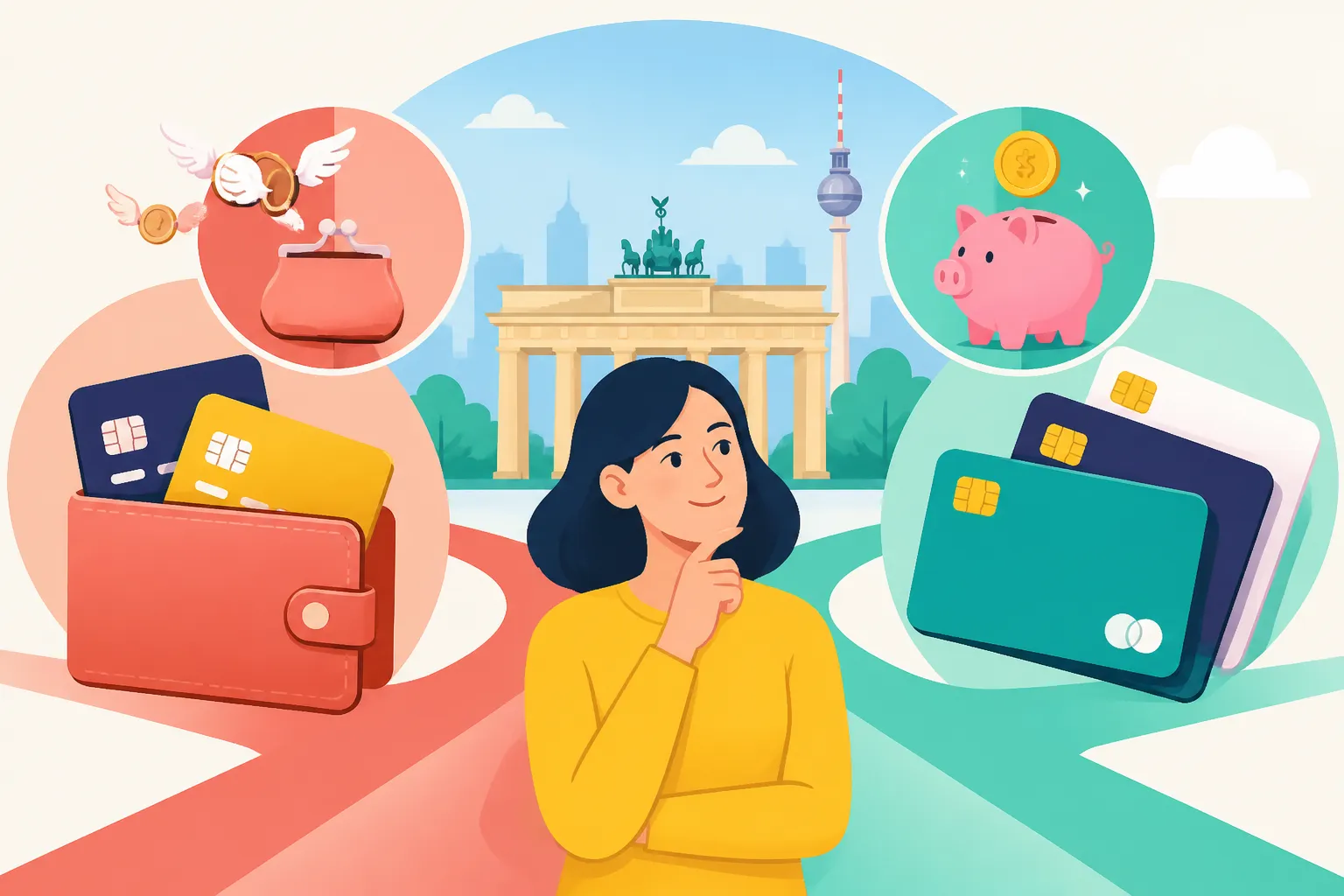
Navigating the German payment landscape as an expat can feel like a labyrinth, especially when you’re constantly wondering which card to whip out and if you’re silently bleeding money through hidden fees. We've all been there, squinting at bank statements, feeling like we're being nickel-and-dimed. This guide cuts through the confusion, offering a realistic look at card usage and comparing popular options based on a month of typical expat spending, so you can keep more of your hard-earned euros.
Disclosure: This post may contain affiliate links. We may earn a commission at no extra cost to you if you make a purchase through these links. Read full disclosure.
The Peculiarities of Payments in Germany: Cash Reigns (Still!)
Ah, Germany. A country famed for its efficiency, engineering prowess, and… its unwavering love affair with cash. It’s a cultural nuance that can send even the most seasoned expat into a spiral of exasperation, especially if you're coming from a country where contactless payments are king and cash is practically a relic. You’ll quickly learn that while progress is being made, the EC-Karte (Girocard) is the local hero, and credit cards are often looked at with a mixture of suspicion and a shrug.
Why Cash Persists: A Cultural Deep Dive
The German affinity for physical money isn't just a quirk; it's rooted in a deep-seated cultural preference for privacy and control over personal finances. Many Germans grew up with the belief that cash transactions offer a level of anonymity and security that digital payments simply can't match. It’s not uncommon to see someone pay for a week's worth of groceries with a crisp 50-euro note, or to encounter a small bakery or a favorite local Späti (late-night shop) that only accepts cash. This phenomenon is a stark contrast to many other developed nations, and it’s something you’ll encounter daily, whether you're trying to pay for a coffee or a ticket at a local museum.
For us expats, this means always carrying a bit of Bargeld (cash). It's not just a recommendation; it's a necessity. You don’t want to be caught at a charming little cafe in Prenzlauer Berg or a bustling Wochenmarkt (weekly market) in Cologne, only to find your shiny international credit card is politely refused. It’s a frustrating learning curve, but one that quickly becomes second nature. If you're new to the country, getting to grips with this and other financial basics is crucial, and you might want to read up on Opening a Bank Account in Germany: Step-by-Step for Newcomers to get started.
The Rise of Digital, Slowly But Surely
While cash might still hold a special place in German hearts, things are slowly, very slowly, evolving. The COVID-19 pandemic certainly accelerated the adoption of contactless payments and card usage in places that previously scoffed at them. You'll now find more acceptance for card payments, even for smaller amounts, in many supermarkets, larger retail chains, and some restaurants. Apple Pay and Google Pay are becoming more common, especially in bigger cities, but don't expect universal acceptance just yet.
However, even when card payments are accepted, it's often the German Girocard (EC-Karte) that gets preferential treatment. Visa and Mastercard are increasingly common, but Amex is often still a no-go. This gradual shift means that while you might use your card more often than you would have five years ago, you still need to be prepared for those "cash only" moments. Embracing a hybrid approach – carrying both cash and a reliable card – is the practical path to harmonious financial living here. You’ll find more insights into this evolving situation in our guide Using Cash vs Card in Germany: Is Germany Going Cashless?.
Decoding Card Fees: What Expats Really Pay For
When you're navigating a new country, every penny (or cent, in this case) counts. What might seem like a small fee back home can quickly snowball into a significant chunk of your budget when compounded over various transactions in a foreign currency. As expats, we're particularly vulnerable to these hidden charges, often because our home country banks might not be optimized for international spending. Understanding these fees is the first step to avoiding them.
Currency Conversion Fees and Exchange Rates
This is arguably the sneakiest culprit in the expat fee game. Every time you use a card from your home country bank in Germany (if your account isn't in Euros), your bank performs a currency conversion. This conversion usually comes with two types of charges:
- The Conversion Fee: A percentage (often 1% to 3%) added to the transaction amount for the service of converting your money. This might seem small, but on a 100-euro grocery shop, it’s an extra 1-3 euros. Over a month of groceries, rent, and leisure, this adds up fast.
- Unfavorable Exchange Rates: Banks often don't give you the "real" mid-market exchange rate you see on Google. Instead, they apply their own, slightly less favorable rate, pocketing the difference. This effectively acts as another hidden fee, chipping away at your money without you even realizing it.
Imagine you're buying something for €50. Your bank might charge a 2.5% conversion fee (€1.25) and then give you an exchange rate that's 0.5% worse than the actual rate, costing you another €0.25. That's €1.50 gone in one transaction. Multiply that by dozens of transactions a month, and you're easily losing €20-€50 or more without noticing. This is precisely why services like Wise are revolutionary for expats because they prioritize transparent, mid-market exchange rates and minimal fees, making your money go further. When you're managing your Cost of Living in Germany: Budgeting Guide for Expats, every saving like this makes a difference.
ATM Withdrawal Charges: A Common Trap
Needing cash is inevitable in Germany, but withdrawing it can be a costly affair if you're not careful. When you use an ATM here with an international card, you could face multiple fees:
- Your Home Bank's Fee: Many banks charge a flat fee for international ATM withdrawals, often €3-€5 per transaction, plus their currency conversion fee.
- The German Bank's Fee: The ATM provider itself (e.g., Sparkasse, Deutsche Bank, Commerzbank) might also charge a fee. This is usually displayed on the screen before you confirm the withdrawal, so always read the fine print! These fees can range from €2 to €7 per withdrawal.
It's a double whammy that can make a simple €100 withdrawal cost you €5-€10 in fees alone. That's a significant portion of your cash gone before it even hits your wallet. This is why having a German bank account, or an international money card designed for low-cost withdrawals, is so important. You need reliable options for Transferring Money Internationally: Cheapest Ways to Send Money Abroad without incurring heavy fees.
Monthly Maintenance and Transaction Fees
Beyond the immediate transaction costs, some traditional banks, especially those back in your home country, might charge monthly or annual fees for maintaining your account, particularly if it's considered an "international" account or if you don't meet certain balance requirements. While German banks often have competitive (or even free) basic accounts, if you rely heavily on an overseas account, these fees are another drain.
Furthermore, some foreign cards might have small per-transaction fees, even for purchases, in addition to conversion charges. Always check your card's terms and conditions regarding international usage. These fees are often buried deep in the fine print, making them hard to spot until you see your statement. For a comprehensive overview of financial services, our Banking and Insurance in Germany: Guide to Financial Services for Foreigners offers crucial insights.
Common Card Options for Expats: German Realities
As you settle into life in Germany, you'll encounter a variety of payment cards, each with its own quirks and levels of acceptance. Understanding these is key to navigating everyday transactions smoothly and avoiding unnecessary frustration.
The Ubiquitous EC-Karte (Girocard)
The EC-Karte, officially known as the Girocard, is the undisputed champion of everyday payments in Germany. Nearly every German adult has one, and it's accepted virtually everywhere cards are taken – from your local Edeka or Lidl to small boutiques and many restaurants. It's a debit card, directly linked to your German current account (Girokonto), so payments are deducted almost instantly.
The beauty of the Girocard is its broad acceptance and the fact that it rarely incurs transaction fees within Germany. However, for expats, getting one usually means first opening a German bank account. While this is a necessary step for long-term living, it might take a few days or weeks to set up after you arrive. Until then, you're reliant on other options. The main "downside" for those used to credit card rewards is that Girocards typically offer no such perks. They're purely functional. For more on setting up your finances here, check out Understanding the German Banking System: IBAN, SEPA, and More.
Credit Cards: Necessary, But Not Always Accepted
Unlike in some other countries where credit cards are the primary form of payment and come with enticing rewards programs, in Germany, credit cards (Visa, Mastercard) hold a different status. They're essential for online shopping, booking flights, hotels, and renting cars, but they are often not the preferred method for everyday in-store purchases. You'll find many smaller shops, cafes, and even some restaurants that simply don't accept credit cards, or only accept them for purchases above a certain amount.
If they are accepted, often it's only Visa and Mastercard. American Express is a rare sight outside of larger department stores or international hotel chains. Expats often struggle to get a traditional German credit card right away, as banks typically require a good SCHUFA score (German credit rating) and a stable income history in Germany. This can be a catch-22 for newcomers. However, some online banks or specific expat-friendly banks might offer "revolving" credit cards with a lower limit, or more commonly, a Debit Mastercard or Visa Debit, which functions like a credit card for online purchases but draws directly from your balance.
Debit Cards from Back Home: A Minefield of Fees
Using your debit card from your home country bank in Germany is generally possible, but it’s a strategy fraught with potential fees, as we discussed earlier. Every purchase and ATM withdrawal will likely incur currency conversion charges, and the exchange rate might not be the most favorable. While convenient for your first few days or weeks, relying on these cards long-term will quietly eat away at your savings.
The key frustration here is the unpredictability and the insidious nature of these fees. They don't always jump out at you immediately, but a quick glance at your bank statement at the end of the month will reveal how much those "small" percentages and fixed charges have accumulated. This is where truly international financial solutions designed for expats shine, offering a much more transparent and cost-effective alternative.
Your Toolkit for Smart Spending: Solutions That Save You Money
As an expat in Germany, you need a financial strategy that acknowledges both the country's cash-centric tendencies and the need for efficient, low-fee international transactions. Relying solely on your home country bank card is a recipe for losing money. Thankfully, modern financial technology offers excellent solutions to navigate this landscape.
Wise: The Expat's Financial Champion
When it comes to managing money across borders, Wise (formerly TransferWise) truly stands out as a game-changer for expats in Germany. It's not just a money transfer service anymore; it offers a multi-currency account with a debit Mastercard that is incredibly well-suited for international living.
Here's why Wise is often the hero for expats:
- Mid-Market Exchange Rates: Wise prides itself on offering the real exchange rate – the one you see on Google – with no hidden markups. This alone can save you a significant amount compared to traditional banks.
- Transparent, Low Fees: For currency conversions, you pay a small, upfront fee that's clearly stated before you make a transaction. No surprises.
- Multi-Currency Account: You can hold balances in over 50 currencies, including EUR. This means you can receive your salary in Euros (if your employer supports it or you transfer it in from another German account), spend in Euros, and avoid conversion fees entirely for your everyday German purchases. You also get local bank details for several countries, which is super handy.
- Debit Mastercard: The Wise card is a Mastercard debit card, which is widely accepted in Germany where cards are taken. You can use it for contactless payments, online shopping, and withdrawing cash.
- Free ATM Withdrawals (Up to a Limit): Wise offers a certain amount of free ATM withdrawals per month (€200, typically, but check their latest terms). This is a lifesaver for getting the necessary cash without being dinged by fees, although you still need to watch out for fees charged by the local ATM operator itself.
For example, if you get paid in USD or GBP and need to convert it to EUR for spending, Wise will give you the best rate and lowest fee. If you have Euros in your Wise account, using the card in Germany is like using a local debit card – no conversion fees at all. This makes Wise an indispensable tool for budgeting and saving money as an expat. You can link your Wise account to your main German bank account for easy transfers, or even potentially receive your salary directly into your Wise Euro balance, depending on your employer. Many expats swear by Wise for their day-to-day finances precisely because it cuts through the complexity and cost of cross-border money management. For more details on efficient transfers, check out Transferring Money Internationally: Cheapest Ways to Send Money Abroad.
Other Contenders: N26, Revolut, and Traditional Banks
While Wise is excellent, other options also cater to expats, each with its own strengths:
- N26 & Revolut: These are digital-first banks that operate entirely through a smartphone app, making them incredibly convenient for tech-savvy expats. They offer Euro accounts, debit Mastercards, and often have excellent features for international usage, including good exchange rates and some free ATM withdrawals. They're quick to set up, usually don't require a SCHUFA score to open a basic account, and offer services in English. They are strong contenders, particularly for those who prefer mobile banking. You can find out more about these services in Mobile Banking Apps in Germany: N26, Revolut, and More.
- Traditional German Banks (e.g., Sparkasse, Deutsche Bank, Commerzbank): Opening a Girokonto (current account) with a traditional German bank is ultimately necessary for full integration into the financial system, especially for things like receiving your salary, paying rent via Lastschrift (direct debit), and eventually building a SCHUFA score. These banks will issue you an EC-Karte, and sometimes a Visa or Mastercard debit card. While they might not offer the same low international fees as Wise or N26 for non-Euro transactions, they are crucial for domestic financial stability. For a deep dive into choosing a local bank, read Best Banks in Germany for Expats: Low Fees and English Support.
The best approach often involves a combination: a traditional German bank for your core domestic financial needs, and a service like Wise for efficient international transfers and spending in various currencies without punitive fees. This blend gives you the best of both worlds, ensuring you’re well-equipped for both German bureaucracy and global convenience.
A Month in the Life: Real Spending, Real Savings
Let's get down to brass tacks. Theory is one thing, but seeing how these fees actually impact your wallet over a typical month of expat living in Germany really brings the point home. We’ll imagine an expat, let’s call her Anna, who has recently moved to Berlin and is navigating her first few weeks. She earns her salary in Euros, but her home bank is based in the US, so some of her spending involves conversion if she uses her US card.
Our Hypothetical Expat Budget Breakdown
Anna's typical monthly spending (excluding rent, which is often paid via direct debit from a German account) might look something like this:
| Category | Estimated Monthly Spending (EUR) | Payment Method Tendency | Number of Transactions (Approx.) |
|---|---|---|---|
| Groceries | €300 | Card (EC-Karte/Debit preferred), some cash | 10 |
| Eating Out/Cafes | €150 | Mix of card (EC-Karte/Debit) and cash (especially small cafes) | 8 |
| Public Transport | €80 | Card (online or app), occasional cash for single tickets | 1 |
| Leisure/Shopping | €120 | Card (Visa/Mastercard more accepted), some cash | 5 |
| ATM Withdrawals | €200 | Cash needed for markets, small shops | 2 |
| Online Subscriptions | €30 | Card (Visa/Mastercard, or direct debit) | 3 |
| Miscellaneous Cash Top-up | €50 | Via ATM withdrawal | 1 |
| Total Spending | €930 | 30 |
Assumptions:
- Anna uses her US-issued debit card for international transactions if she hasn't fully set up her German bank account or an expat-friendly solution.
- Her US bank charges a 3% foreign transaction fee on purchases and a $5 (approx. €4.70) fee per ATM withdrawal, plus the 3% conversion fee. The ATM operator in Germany charges €3 per withdrawal.
- She has €500 in her Wise Euro balance and transfers €430 from her USD account via Wise to cover the rest of her Euro spending. Wise charges a small, transparent fee for this conversion (e.g., 0.5% + fixed fee).
Fee Showdown: How Different Cards Stack Up
Let's compare the estimated fees Anna might face using different strategies for her €930 in spending:
Scenario 1: Relying Primarily on a US Debit Card (before setting up a German account/Wise)
- Groceries (€300, 10 transactions): 3% foreign transaction fee = €9.00
- Eating Out/Cafes (€150, 8 transactions): 3% foreign transaction fee = €4.50
- Public Transport (€80, 1 transaction): 3% foreign transaction fee = €2.40
- Leisure/Shopping (€120, 5 transactions): 3% foreign transaction fee = €3.60
- ATM Withdrawals (€250 total over 3 withdrawals):
- US bank fee: 3 x €4.70 = €14.10
- German ATM fee: 3 x €3.00 = €9.00
- 3% foreign transaction on withdrawal amount: 3% of €250 = €7.50
- Online Subscriptions (€30, 3 transactions): 3% foreign transaction fee = €0.90
- Total Estimated Fees: €9.00 + €4.50 + €2.40 + €3.60 + €14.10 + €9.00 + €7.50 + €0.90 = €51.00
In this scenario, Anna loses a staggering €51.00 in just one month, simply because of hidden fees. That's a significant chunk out of a modest budget!
Scenario 2: Using Wise for All Card Spending and ATM Withdrawals (with EUR balance)
Anna has transferred money into her Wise Euro balance. Her Wise card is used for purchases and withdrawals.
- Groceries (€300, 10 transactions): €0 (since she's spending from her EUR balance)
- Eating Out/Cafes (€150, 8 transactions): €0
- Public Transport (€80, 1 transaction): €0
- Leisure/Shopping (€120, 5 transactions): €0
- ATM Withdrawals (€250 total over 3 withdrawals):
- Wise free limit: She can withdraw €200 free (over 2 withdrawals).
- For the remaining €50 (1 withdrawal), Wise might charge a small fee, e.g., €0.75 + 1.75% = €1.63 (Wise fee structure varies, check their site).
- German ATM fee: 3 x €3.00 = €9.00 (This is unavoidable if the local bank charges it, regardless of your card).
- Online Subscriptions (€30, 3 transactions): €0
- Conversion of €430 from USD to EUR (to top up Wise account): Wise fee (e.g., 0.5% + fixed fee) = approximately €2.50
- Total Estimated Fees: €0 + €1.63 + €9.00 + €2.50 = €13.13
With Wise, Anna's total fees drop dramatically to around €13.13. That's a saving of almost €38 in just one month! Over a year, that's nearly €450 that stays in her pocket, not in bank fees. This kind of saving is vital for managing your Budgeting for Life in Germany: Tips to Save Money as an Expat. This demonstrates why Wise is such a powerful tool for expats, significantly reducing the financial burden of international transactions.
Strategies for Savvy Card Use in Germany
Mastering the German payment system might feel like an uphill battle, but with the right strategies, you can minimize fees, avoid awkward cash-only moments, and maintain healthy financial habits. It's all about being prepared and choosing your tools wisely.
Optimizing Your Cash vs. Card Mix
Given Germany's enduring love for Bargeld, a smart expat always carries some cash. This isn't just about avoiding fees; it's about pure practicality. Imagine you're at a charming local market, picking up fresh produce, or grabbing a quick Bratwurst from a street vendor – these are almost always cash-only affairs. The same often goes for many smaller, independent shops and cafes, especially outside major city centers.
The trick is to find your personal sweet spot. Don't carry so much cash that you feel unsafe, but enough to cover spontaneous purchases and potential "card reader down" situations. For larger purchases, supermarkets, and established retail chains, your card (ideally a German Girocard, or a low-fee international card like Wise) will usually be accepted. Planning your cash withdrawals is also crucial; instead of making many small withdrawals that incur repeated ATM fees, try to take out a larger sum once or twice a month, using a card like Wise that offers free withdrawals up to a certain limit. This approach ensures you’re always prepared, whether you're paying your Household Bills in Germany: Understanding Nebenkosten and Monthly Costs or enjoying a weekend outing.
Choosing the Right Bank and Card Provider
Your choice of financial providers can make or break your expat budget. For long-term living in Germany, opening a local Girokonto is non-negotiable. This provides you with the essential EC-Karte, a local IBAN for easy transfers (like receiving your salary or paying rent), and a foundation for building your financial history in Germany, including your All About SCHUFA: Building Credit as a Foreigner in Germany score. Many traditional German banks, such as Sparkasse or Commerzbank, offer basic current accounts.
However, for managing money across currencies and making international transfers or payments without exorbitant fees, a specialized service like Wise is unparalleled. The multi-currency account and associated debit Mastercard mean you can seamlessly switch between currencies, spend in Euros with minimal cost, and avoid those pesky foreign transaction fees entirely when you've pre-loaded your EUR balance. Pairing a traditional German bank account with a Wise account often proves to be the most cost-effective and flexible strategy for expats. You might even consider digital banks like N26 or Revolut as a primary German account, as they offer modern banking experiences with competitive international features.
Staying Alert to Hidden Charges
The financial world can be a maze of jargon and fine print. As an expat, you need to be extra vigilant about hidden charges.
- Dynamic Currency Conversion (DCC): When paying with a non-Euro card, a terminal might ask if you want to pay in EUR or your home currency. ALWAYS choose EUR. If you choose your home currency, the merchant (or their bank) will apply their own, often unfavorable, exchange rate, costing you more.
- ATM Warnings: When withdrawing cash, ATMs often display any fees they charge before you confirm the transaction. Read these warnings carefully. If the fee is too high, try another bank's ATM if possible, or opt for a larger withdrawal to consolidate fees.
- Review Your Statements: Make it a habit to regularly review your bank and card statements. Look for any unexpected fees, charges, or discrepancies. If something doesn't look right, contact your provider immediately. Understanding Your German Payslip: Gross vs Net Salary Explained is just as important as understanding your bank statements.
By actively managing your payment methods, choosing providers like Wise that prioritize transparency and low fees, and staying aware of common financial pitfalls, you can navigate Germany's payment landscape confidently and keep more of your money where it belongs: in your pocket.
Disclaimer
Please remember that I am a veteran expat blogger, not a financial advisor. The information provided in this article is for general guidance and informational purposes only, and does not constitute professional financial advice. Fees, terms, and conditions for financial products and services can change, and specific eligibility requirements may apply. Always consult the official websites of banks and financial service providers (such as Wise, N26, Revolut, etc.) for the most up-to-date information, and consider seeking advice from a qualified financial professional regarding your personal circumstances.