Reaching the Harz and Saxon Switzerland: Regional Rail Access
Oh, the sheer joy (and occasional hair-pulling frustration!) of navigating Germany's public transport system, especially when you're trying to reach those truly breathtaking, off-the-beaten-path destinations. Getting to places like the ancient, mystical Harz Mountains or the dramatic, fairytale landscapes of Saxon Switzerland via regional rail can feel like cracking a secret code. But don't you worry, my fellow expat adventurer, because this guide is all about simplifying that journey, showing you how to unlock these incredible regions using the brilliant network of German regional trains, and introducing you to a truly indispensable tool to help you along the way.
Disclosure: This post may contain affiliate links. We may earn a commission at no extra cost to you if you make a purchase through these links. Read full disclosure.
Unlocking the Harz Mountains by Regional Rail
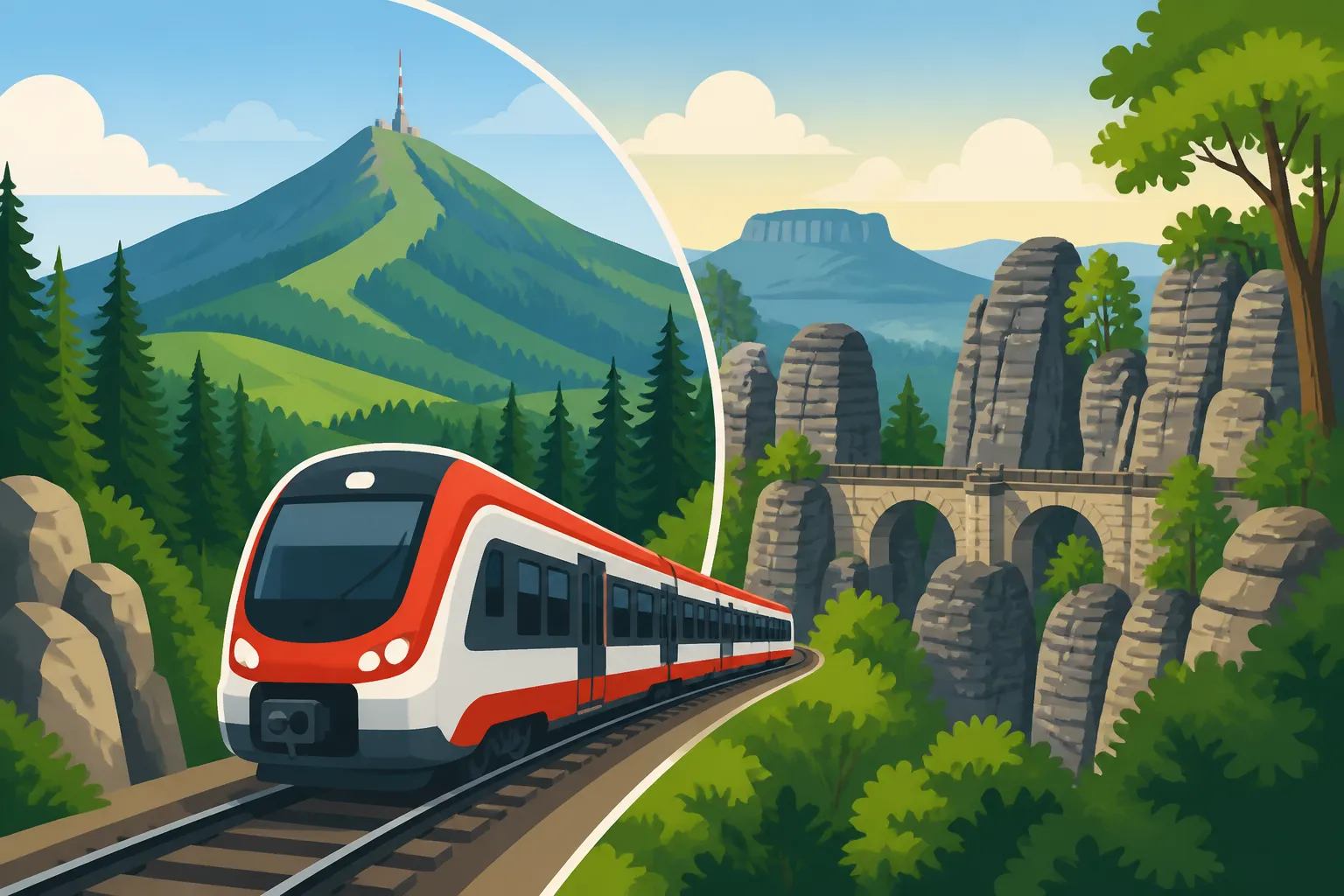
The Harz Mountains, sprawling across parts of Lower Saxony, Saxony-Anhalt, and Thuringia, are an absolute treasure. Think dense forests, mythical peaks, historic towns, and that famous narrow-gauge railway. While the long-distance ICE trains might whisk you to major hubs, the real magic of the Harz is accessed through its regional network. It's not always straightforward, but it’s entirely doable, and with a bit of planning, you'll be chugging through stunning landscapes in no time.
Major Entry Points and Connecting Services
To get to the Harz, you'll typically aim for one of its key gateway cities, often reachable by Deutsche Bahn (DB) regional services. These include towns like Wernigerode, Goslar, Halberstadt, or Quedlinburg. From larger German cities, you'd usually take a regional express (RE) or regionalbahn (RB) train to one of these entry points. For instance, if you're coming from Berlin, you might take an RE to Magdeburg and then connect to another regional train that heads directly into the Harz region. If you're starting from Hanover, a direct regional train to Goslar is a common route.
The beauty of regional rail is that it truly immerses you in the journey. You'll pass through smaller villages and see parts of Germany that fly by unnoticed on the faster trains. However, this also means you need to be mindful of connections and sometimes tighter schedules. This is where a reliable travel planning tool like Omio becomes your best friend. It consolidates schedules from various regional operators and DB, allowing you to see all your connections at a glance, making the whole planning process far less daunting than trying to decipher multiple local transport websites.
The Harz Narrow Gauge Railway (HSB)
No trip to the Harz is complete without experiencing the legendary Harzer Schmalspurbahnen (HSB), the narrow-gauge railway. This isn't just a regional train; it's a historical journey. It crisscrosses the mountains, climbing up to Brocken, the highest peak, often with a nostalgic steam locomotive at the helm. While tickets for the HSB are usually separate from standard DB tickets or the Deutschland-Ticket, it integrates perfectly with regional train travel by connecting its network with the larger regional hubs.
You can often arrive at a town like Wernigerode or Quedlinburg via a regular regional train, then seamlessly switch to an HSB service for the scenic climb up the mountain. Imagine arriving at Wernigerode station after a journey you meticulously planned using Omio, stepping off your modern regional train, and then seeing a puffing steam engine waiting to take you further into the enchanted forest. That's the kind of experience the Harz offers, and it's why embracing regional rail is so worthwhile. Remember to check HSB schedules and book ahead, especially for popular routes to Brocken, as these can fill up quickly, particularly on weekends and during peak season.
Exploring Saxon Switzerland by Regional Rail
Moving southeast, the Elbe Sandstone Mountains, famously known as Saxon Switzerland (Sächsische Schweiz), present a completely different, yet equally captivating, landscape. This region, straddling the German-Czech border, is a paradise for hikers, climbers, and anyone who appreciates dramatic rock formations, lush valleys, and the meandering Elbe River. Like the Harz, its charm truly opens up when you venture beyond the main arterial routes and delve into the local rail network.
Gateway Cities and Local S-Bahn Connections
The main gateway to Saxon Switzerland is, without a doubt, Dresden. This stunning city is well-connected by both long-distance and regional trains from across Germany. From Dresden Hauptbahnhof (main station), you'll primarily use the Dresden S-Bahn (S1 line) to access the heart of Saxon Switzerland. This S-Bahn line runs parallel to the Elbe River, stopping at many of the key towns and attractions within the national park.
Towns like Pirna, Königstein (home to the impressive Königstein Fortress), Rathen (the jumping-off point for the iconic Bastei Bridge), and Bad Schandau (a spa town and national park center) are all conveniently located directly on the S1 line. This makes planning a multi-stop itinerary incredibly easy. You can hop off at Rathen, spend a day hiking the Bastei, then hop back on the S1 to Bad Schandau for dinner and an overnight stay, all without needing a car. A reliable travel platform like Omio can display these S-Bahn connections clearly, helping you visualize your journey and even purchase tickets for the entire route from your starting point. It's truly a game-changer for international travelers who might find the local transport associations a bit overwhelming.
Navigating Regional Lines and Scenic Journeys
Beyond the S-Bahn, there are a few other regional lines that deepen your access to Saxon Switzerland. For example, the Kirnitzschtalbahn is a historic tram line that runs through the picturesque Kirnitzsch Valley from Bad Schandau, offering another unique way to experience the landscape. While it's a tram and not a train, it serves a similar purpose in getting you to hiking trails and points of interest.
The journey itself along the Elbe is incredibly scenic. You'll be treated to views of sandstone cliffs, lush forests, and the tranquil river, all from the comfort of your train seat. Compared to the Harz, where you're often climbing into the mountains, Saxon Switzerland offers more of a valley experience along the river, with short, steep hikes leading you up into the formations. When planning your trip on Omio, look for itineraries that emphasize regional routes through these picturesque areas; sometimes, a slightly longer regional connection can offer a much more rewarding visual experience than a faster but less scenic long-distance alternative.
Practicalities of Booking and Maximizing Regional Rail
Venturing into Germany's scenic regions by train is an experience unto itself, but like anything with German bureaucracy, there are a few practicalities to consider. The good news is that with tools like Omio and a little preparation, you can navigate these with ease and focus on the adventure.
Why Choose Regional Rail and How Omio Helps
Regional trains (RE, RB, S-Bahn) are often overlooked by tourists rushing between major cities on ICE trains. However, for destinations like the Harz and Saxon Switzerland, they are indispensable. They are generally cheaper, offer more frequent stops in smaller towns, and connect directly to the national parks and hiking areas. Moreover, they often provide more flexibility – for example, if you're using a Deutschland-Ticket, you can hop on and off regional trains all day long across the country.
The biggest challenge with regional rail, especially for expats, can be the sheer number of regional transport associations (Verkehrsverbünde) and the bewildering array of ticket options. This is precisely where Omio shines as your ultimate travel companion. Instead of trying to figure out if your journey falls into the VBB (Berlin-Brandenburg) or MDV (Central Germany) zone, or needing to buy separate tickets for each leg of a multi-region journey, Omio simplifies this. It pulls data from all the major German rail providers, including Deutsche Bahn and various regional operators, allowing you to:
- Find the best connections: It will show you all available routes, including regional ones, and suggest the fastest or cheapest options.
- Compare prices: Often, a regional ticket purchased in advance is cheaper than a spontaneous one, and Omio helps you spot these deals.
- Book easily in English: No more struggling with German ticket machines or confusing websites. You can book your tickets directly through the app or website.
- Receive mobile tickets: Keep your tickets on your phone, reducing paperwork and the fear of losing physical tickets.
- Access real-time updates: Get notifications about delays or platform changes, a common occurrence that can be particularly stressful when you're relying on connections in an unfamiliar country.
When planning your trips to the Harz or Saxon Switzerland, open up Omio, input your starting point and desired destination (e.g., "Berlin to Wernigerode" or "Dresden to Rathen"), and let it do the heavy lifting. You'll be amazed at how streamlined the process becomes.
Understanding Ticket Options and Passes
For regional rail, you have a few main ticket options in Germany:
- Standard DB Tickets: These can be purchased for specific routes via the DB Navigator app, at train stations, or through Omio. They are valid for the selected connection and often offer flexibility depending on the fare class.
- Länder-Tickets: These regional day tickets are fantastic value if you're traveling within one specific German federal state (e.g., a "Sachsen-Ticket" for Saxony, which would cover Saxon Switzerland, or a "Niedersachsen-Ticket" for Lower Saxony, which covers part of the Harz). They allow unlimited travel on regional trains within that state for a day, typically for up to 5 people, making them perfect for groups or extensive exploration within a region.
- Deutschland-Ticket (49-Euro Ticket): This monthly subscription offers unlimited travel on all regional (RE, RB, S-Bahn) and local public transport nationwide. If you're planning multiple trips within a month or a longer stay, it's an incredibly cost-effective option. You can use it to get to the main entry points for both Harz and Saxon Switzerland and then for all your travel within those regions on regional services (though remember, the Harz Narrow Gauge Railway often requires a separate ticket). Platforms like Omio can also help you understand how best to integrate passes like the Deutschland-Ticket into your overall travel plans, sometimes even offering subscriptions or clarifying its usage.
| Feature | Regional Rail (RE, RB, S-Bahn) | Long-Distance (ICE, IC) |
|---|---|---|
| Speed | Slower, more frequent stops | Faster, fewer stops between major cities |
| Cost | Generally cheaper, especially with Länder-Tickets/Deutschland-Ticket | More expensive, dynamic pricing for advance bookings |
| Reach | Accesses smaller towns and rural areas directly | Connects major cities |
| Comfort | Varies; standard seating, can be crowded during peak hours | Higher comfort, amenities like dining cars, Wi-Fi |
| Flexibility | High with day passes/Deutschland-Ticket, easy hop-on/off | Less flexible, tickets often tied to specific trains/times |
| Best For | Scenic travel, exploring specific regions (Harz, Saxon Switzerland), local commutes | Fast travel between major cities, business trips, connecting flights |
Overcoming Challenges and General Tips
Even with the best planning, travel can throw a curveball. Regional trains can sometimes be delayed or replaced by rail replacement buses (Schienenersatzverkehr), especially during maintenance work. Don't panic!
- Check the DB Navigator app: Always have it on your phone for real-time updates.
- Use Omio: It also provides updates and helps you re-plan if needed.
- Look for English-speaking staff: At larger stations, you might find English-speaking personnel at information desks.
- Embrace the journey: Sometimes delays lead to unexpected discoveries or a chance to practice your German with fellow passengers. For more on this, check out our guide on German Language and Everyday Communication for Visitors.
Remember, Germany's rail network is vast and generally reliable. By focusing on regional connections, you'll uncover some of the country's most spectacular natural beauty, from the ancient forests of the Harz to the dramatic rock formations of Saxon Switzerland. And with Omio as your digital travel assistant, you'll find the journey itself almost as enjoyable as the destination. So, what are you waiting for? Start planning your next German adventure today! If you're looking for more general travel advice, our comprehensive guide on Getting Around Germany: Trains, Buses, Flights, and Car Hire is a fantastic resource. For longer trips exploring Europe, consider our Travel Insurance for Trips to and Within Germany guide. And if you're keen to maximize your savings on rail, definitely read up on How to Buy Deutsche Bahn Tickets and Save Money.
Essential Tips for a Smooth Regional Rail Adventure
Venturing into Germany's stunning natural parks by regional train is a truly authentic experience, but there are a few extra nuggets of wisdom that can make your journey even smoother. As someone who's spent years navigating these routes, I've learned a thing or two about making the most of it.
Packing Smart for Regional Journeys
Unlike long-distance trains with generous luggage racks, regional trains can sometimes be a bit more cramped, especially if you're traveling during peak commuter hours or on weekends when hikers are out and about. Pack light if you can, especially if you're planning on changing trains multiple times. A good backpack is often more practical than a rolling suitcase. Consider what you'll need for a day of hiking or exploring – sturdy shoes, water, snacks, and layers are always a good idea. Many stations in smaller towns might not have lockers, so you'll want to keep your belongings with you. For a comprehensive overview of how Germany's rail system works, our Using the DB Navigator App in Germany guide offers excellent tips.
When you're heading to places like the Harz or Saxon Switzerland, remember that you're going into nature. That means a good pair of hiking boots will be far more useful than high heels! The trains get you to the doorstep, but your feet do the rest. If you're thinking about a longer stay, our Day Trips and Weekend Getaways Across Germany guide might give you some ideas on how to combine regions.
Language and Local Etiquette on Regional Trains
While many Germans in tourist-heavy areas speak English, venturing into smaller towns on regional trains might mean encountering fewer English speakers. Learning a few basic German phrases can go a long way. "Entschuldigung" (excuse me), "Danke" (thank you), and "Sprechen Sie Englisch?" (Do you speak English?) are incredibly useful. Don't be shy; most Germans appreciate the effort, even if your pronunciation is a bit wobbly. For a more detailed look at German social norms, our German Etiquette and Social Life for Visitors piece is a must-read.
Also, be mindful of "Ruhezeit" (quiet hours) even on trains, especially in the designated quiet zones. German trains are generally much quieter than those in some other countries, and loud conversations or phone calls are often frowned upon. Respecting these small cultural nuances will make your journey more pleasant for everyone. And speaking of culture, after a long day of hiking, you'll be ready to dive into some local cuisine. Our German Regional Dishes Every Visitor Should Try article will give you some delicious ideas!
Money and Connectivity on the Go
While card payments are becoming more widespread in Germany, cash is still king in many smaller towns, especially at independent cafes, local shops, or for smaller purchases. It's always a good idea to have some euros on hand, particularly when you're exploring the more rural parts of the Harz or Saxon Switzerland. ATMs are usually available in larger towns, but don't assume every tiny village station will have one. For more financial insights, read up on Money for Travel in Germany: Cash, Cards, and ATMs.
As for staying connected, Wi-Fi on regional trains can be spotty or non-existent. Make sure to download any maps, tickets (like your Omio mobile tickets!), or entertainment beforehand. Investing in a local SIM card or an eSIM can ensure you have mobile data for navigation, checking train schedules, or emergency calls. Our guide on Mobile Data and eSIMs for Travel in Germany provides excellent recommendations. This way, you'll always be able to check your connections on Omio and stay updated, even in the middle of a picturesque valley.
Remember, the goal of these regional rail trips isn't just to get from A to B, but to truly experience the journey and the beautiful German countryside. With a little planning and the right tools like Omio, you're set for an unforgettable adventure. Happy travels!
Disclaimer
Please note that travel information, especially regarding public transport schedules, ticket prices, and regulations, can change. While every effort has been made to provide accurate and up-to-date information, it is always advisable to check the latest details with Deutsche Bahn (DB), local transport operators, and reliable booking platforms like Omio before planning your trip. This guide is for informational purposes only and does not constitute professional advice.